


iPhone Screen Replacement
Every iPhone screen article on this blog sits under this guide. Work down the routes for the model, the panel and the repair procedure, then the sections for the faults that get mistaken for screen faults.
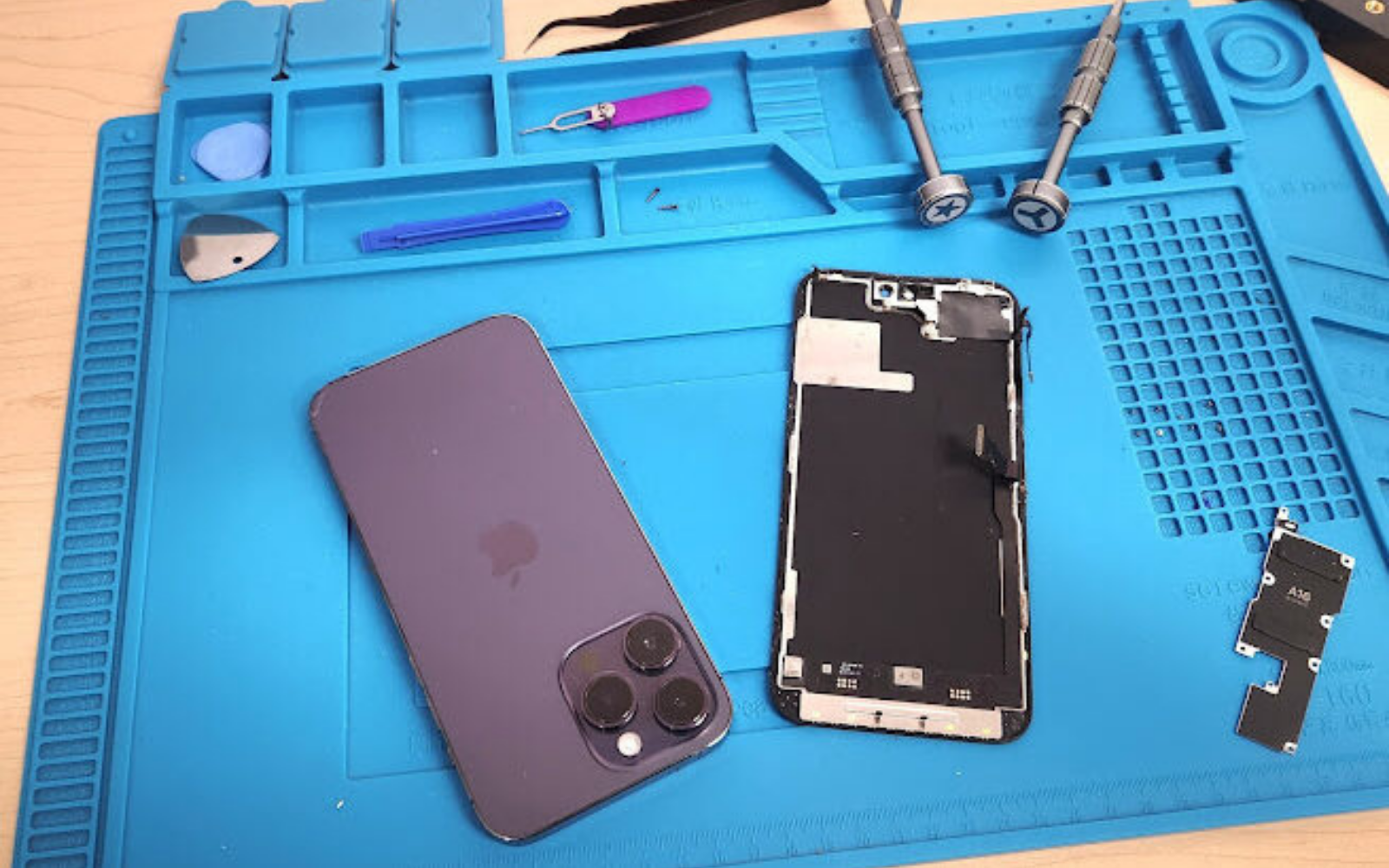
Three routes, and you only need one of them
Take the route that matches what you are trying to do. Each one leads to the articles that answer it.
Pick the model
Take this route when you know the job but not the part. Each generation uses a different panel, a different flex layout and sometimes a different tool set.
Choose the panel
Take this route before you buy stock. Incell, FOG, soft OLED and hard OLED behave differently on the bench and in front of the customer, and the price gap reflects real differences.
Do the repair
Take this route when the parts are on the bench. Most comebacks after a screen job come from the opening technique, the flex routing or a pairing step that was skipped.
Faults that get mistaken for screen faults
A customer reports a screen problem and the panel is fine. These are the parts that actually fail, and the checks that separate them from the display.
Buttons, haptics and microphones
A home button that has stopped responding is usually the flex or the sensor behind it, not the panel, and the same is true of haptic feedback that has gone soft. Microphone complaints are the most commonly misdiagnosed: the customer says the screen, because that is the part they can see, while the fault sits in the charging flex or the top speaker assembly. The diagnostic that saves money is confirming which microphone the customer actually means before ordering anything, because iPhones route different functions through different mics.
Restarts, heat and charging warnings
A phone that restarts after a screen job is usually telling you about a damaged flex, a pinched cable or an incomplete connection rather than a faulty panel. Heat and liquid-detection warnings point at the charging path instead. Reading the pattern before changing parts is the whole skill here: a restart loop that begins immediately after assembly is an assembly problem, while one that develops a week later is a part problem. Both are covered in the articles below with the checks to run first.
Buying and stocking the parts
Screen stock is where a repair shop’s margin is decided. Two decisions matter more than the rest: which grades to hold, and how to tell a good panel from a bad one before it reaches a customer.
Grade mix and stock depth
Holding three grades of every panel ties up cash in parts that may sit for a year, while holding only the cheapest grade costs you the customers who ask for an original-quality repair. The practical approach is to stock the grades your customers actually ask for by model, keep the premium options for the models you see weekly, and order the rest to job. New generations complicate it: the first panels for a new iPhone arrive before the demand curve is clear, so the first order should be small and repeatable.
Opening technique and tooling
Most cracked panels in a repair shop were cracked by the person removing them. Adhesive strength varies by generation, and the generation that needs heat is not the one that needs a stronger suction cup. Shops that move to laser separation do it to remove the glass without stressing the original panel, which matters when the customer wants the original display kept intact. Either way, the tooling decision follows the models you service most.
What actually decides whether a screen job comes back — four things
Four variables explain most comebacks after an iPhone screen repair, and three of them are decided before the panel is fitted.
Which panel grade you fitted
Incell, FOG, soft OLED and hard OLED differ in brightness, touch behaviour and how they age. The grade has to match what the customer paid for.
Parts pairing and IC transfer
On recent iOS versions an unmatched display can trigger warnings. Transferring the IC or using a diagnostic part is a specification decision, not an afterthought.
Install technique
Flex routing, adhesive and connector seating decide whether a good panel behaves like a good panel once the device is closed.
Model identification
Two phones that look identical can take different panels. Confirm the model before ordering, not after the customer has left.
Where to go from here
The screen is one job. These guides cover the rest of the bench.
iPhone screen replacement questions
The short answers. Each one links into the article set that covers it properly.
Should I fit an incell, a hard OLED or a soft OLED?
Incell is the budget option and behaves accordingly: thicker, dimmer and more likely to have touch quirks. Hard OLED is the closest to original in appearance and the one most shops fit as standard. Soft OLED is the premium option with the best colour and brightness consistency, and it suits customers who ask for an original-quality repair.
Why does the phone show an unknown part warning after a screen replacement?
Because the new display is not paired with the logic board. On recent iOS versions the device checks that pairing and warns when it does not match. Transferring the original IC to the new panel, or fitting a diagnostic display, is how shops deal with it rather than ignoring the warning.
How do I know which panel to order before the phone is in front of me?
Confirm the exact model first, because generation names overlap: an iPhone 13 and a 13 mini, or a 12 and a 12 Pro, are different parts. If the customer cannot tell you, ask for the model number in Settings or the A-number on the SIM tray before ordering anything.
What causes touch problems after a replacement?
Usually the connector rather than the panel: a partially seated flex, debris on the contact pads, or a cable that was pinched when the device closed. That is why the touch test belongs before the final assembly, not after the customer has collected the phone.
Is it worth stocking panels for a newly released iPhone?
Start small and repeatable. Demand for the first months of a new generation is driven by accidents rather than by volume, and panel grades and prices settle within a few months. Holding a shallow mix of the grades you can sell, and ordering the rest to job, keeps cash out of parts that may be superseded.
Tell us the model and the grade you need
Send the exact iPhone model, the grade you want to fit and the quantity you order in a typical month. You will get a panel recommendation with the pairing and fitting notes attached, so the part matches the job rather than the shelf.
Ask which panel to order