


iPhone 13 Screen Replacement UK: What the Job Involves and What It Costs
Need this part? We stock tested replacement parts with same-day UK dispatch and a 12-month warranty.
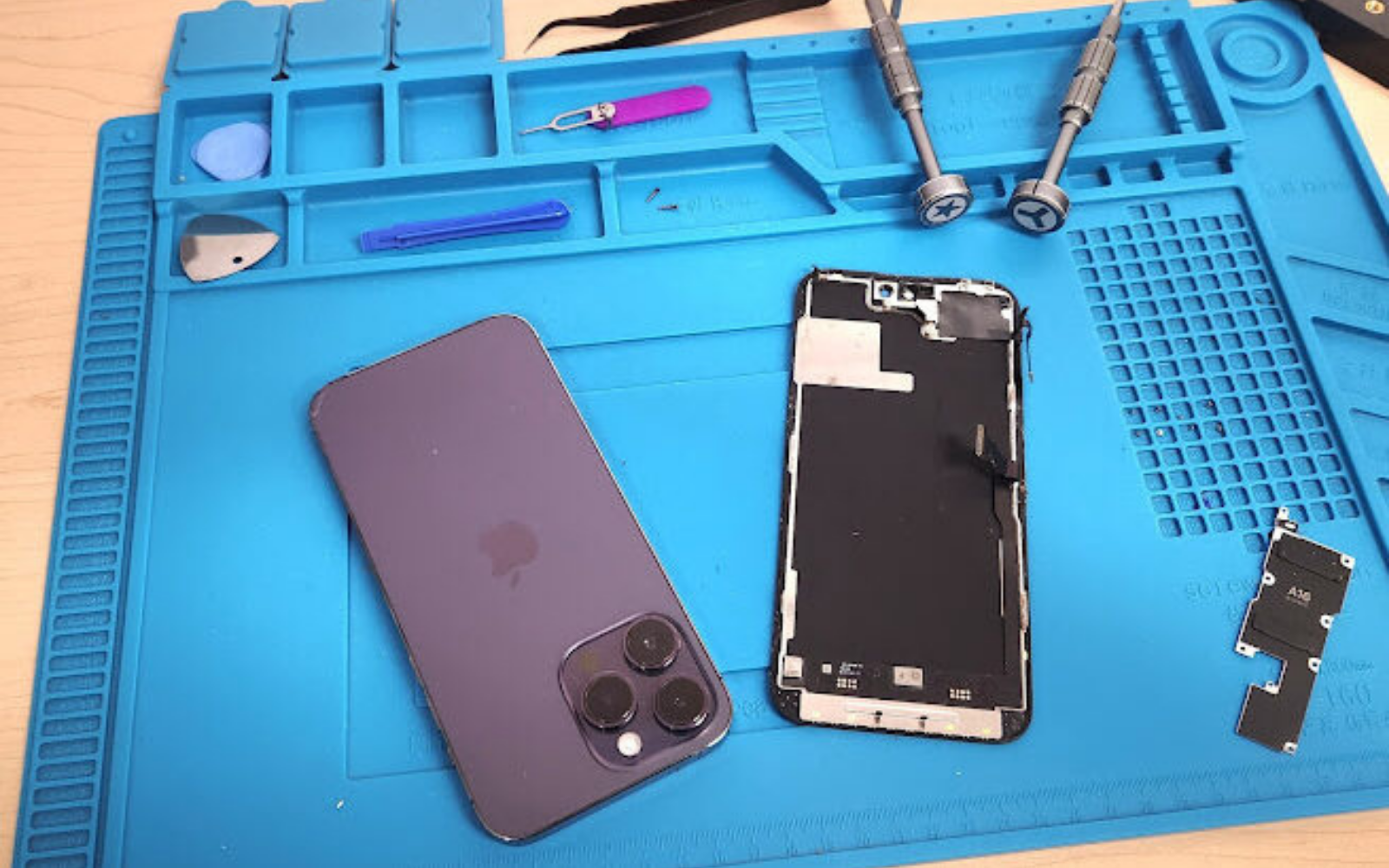
The iPhone 13 is now one of the most repaired handsets in the UK, which makes it one of the most competitive quotes a customer will collect. Three shops will quote three different prices for the same repair, and the difference is almost never labour.
It is the panel. An iPhone 13 screen replacement can be done with an original pull, a refurbished original assembly or an aftermarket copy, and those three products differ in price, in appearance and in how the device behaves afterwards. Understanding which one is being quoted is the whole of the buying decision.
How much does an iPhone 13 screen replacement cost in the UK?
Typically £120 to £260 at an independent shop.
The spread covers the panel choice, the shop’s labour rate and its location. A quote at the bottom of that range is almost always an aftermarket copy; one near the top is a refurbished or original assembly with a longer warranty. Neither is dishonest, provided the customer is told which they are buying.
What customers should compare is not the headline figure but what is included: which panel, what warranty, whether the frame is replaced, and whether the shop tests the device fully before handover. Two quotes £60 apart frequently describe two different products and two different promises.
Why do iPhone 13 quotes vary so much?
Because three different products share one model name.
An original pull is a tested panel removed from a donor device. A refurbished original keeps the original display and replaces the worn glass and frame. An aftermarket assembly is a new copy built for the model. The names are often used loosely, and the price difference between them is not a discount.
That is why the first question a shop should be able to answer is which of those three it is quoting, and why the comparison criteria used across the trade apply directly here. The reasoning is set out in telling an original panel from an aftermarket one, and the same discipline belongs in the quote.
Which iPhone 13 models take which panels?
All three models have their own panel.
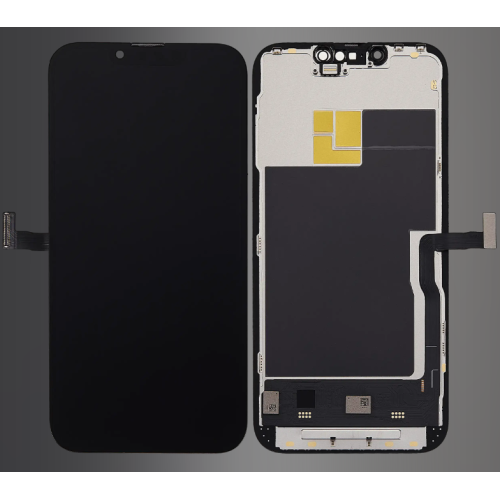
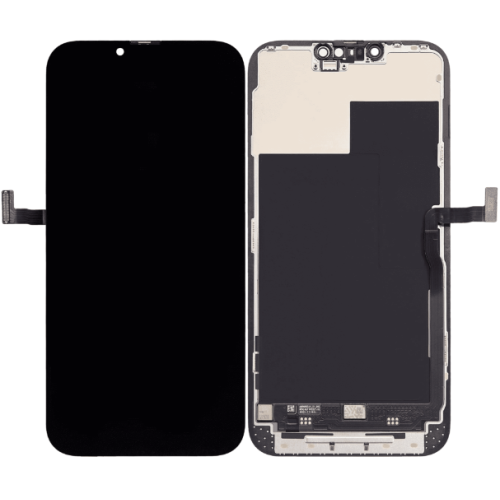
The iPhone 13, 13 Pro and 13 Pro Max take three different assemblies. They look similar in a photograph and they are not interchangeable: connector positions, flex lengths and frame geometry differ. The model code on the device, not the name on the box, is what identifies the right part.
The Pro and Pro Max also add the ProMotion display, which is one reason the aftermarket supply for those two models is thinner and more variable than for the standard iPhone 13. Where a shop sees all three regularly, holding one panel per model as a same-day option is usually worth the shelf space.
What is the difference between the screen options for iPhone 13?
Colour, brightness, glass and the frame.
An original or refurbished original panel usually holds colour and brightness closer to the factory behaviour and offers the original scratch resistance on the glass. An aftermarket copy is dimmer at the top of its range, loses contrast at an angle and is often built on a reused or thinner frame.
The frame is the part customers notice last and complain about first. A panel bonded to a straight, clean frame sits flush; one on a tired frame shows a visible lip or a button that does not sit square. Where the frame is damaged, a with-frame assembly is the only repair that will look right, and the trade-offs are the same ones described in buying refurbished stock on grade.
Does the iPhone 13 screen swap affect Face ID?
Not if the original TrueDepth module is transferred intact.
The Face ID components live in the top of the device and are paired to the logic board, so they have to be moved from the old assembly to the new one rather than replaced. Damage during that transfer is the single most common cause of Face ID failing after a screen repair.
The transfer is a skill rather than a procedure, and the risks are set out in why Face ID fails after a screen replacement. Testing Face ID before the device is sealed is not optional on this model: once the adhesive has set, reopening the phone to fix it means a second panel.
What else should be checked while the phone is open?
The battery, the ear speaker and the port.
An iPhone 13 old enough to need a screen is usually old enough for its battery to be worth testing, and the customer is already paying for the device to be open. Testing the battery takes a minute and sometimes produces the most valuable part of the visit, either as an upsell or as a documented decline.
The two other checks worth making are the ear speaker, which is part of the assembly handling the top of the device, and the charging port. Both are commonly replaced on this generation, and both are cheaper for the customer to have done in the same visit than in a second one.
How long does the repair take?
Around forty-five minutes once the part is in stock.
The iPhone 13 is a well-practised repair for most shops and can be done while the customer waits if the panel is on the shelf. Where the part has to be ordered, the realistic turnaround is one to three working days, and the customer should be told which of those two situations applies at the counter.
Shops that hold one panel per model convert more of these jobs into same-day work, which is often the difference between winning and losing the repair. That stock decision is a judgement about local competition as much as about demand.
What does the job involve on the bench?
Heat, careful separation, and a transfer of paired parts.
The panel is released with controlled heat, the original TrueDepth module and any brackets are transferred to the new assembly, and the device is closed with fresh adhesive. The steps that decide the outcome are the temperature control, the condition of the frame and whether the adhesive and gasket are new.
Nothing in that sequence is unusual, which is why the failures on this model are almost always traceable to the part rather than the technique. A panel whose lamination is poor or whose frame is out of true will fail regardless of how carefully it is fitted.
When is an iPhone 13 screen repair not worth doing?
When the panel costs more than a third of the device.
An iPhone 13 still holds a reasonable second-hand value, so a screen repair is normally the right answer for the customer. Where the device also needs a battery, has liquid damage or has a bent frame, the arithmetic changes and the honest conversation is about the total rather than the screen.
Where liquid damage is involved, the assessment has to come before a quote, because corrosion can continue after a successful repair and the shop should not be carrying that risk. The approach is described in assessing a liquid-damaged device.
What warranty should the customer expect?
At least as long as the panel’s own cover.
Most shops offer three, six or twelve months on the panel, and the figure should match or sit inside the cover the shop receives from its supplier. A shop promising twelve months on a part it buys with three months of cover is funding the gap itself, and doing that repeatedly is how prices get raised for everyone.
The exclusions should be standard and written down: impact damage, liquid contact and later work by another shop. Retail customers also keep the rights set by the Consumer Rights Act 2015, which sit underneath the shop’s own terms rather than being replaced by them.
What should the customer be told before the repair?
Which panel, what it costs, and what the warranty covers.
That is the whole conversation, and it takes a minute. The customer who knows they are buying an aftermarket copy of a ProMotion display is a customer who will not complain about the brightness a week later, and the customer who knows what is excluded will not be surprised by a refusal.
It is also where the shop’s expertise becomes visible. A technician who can explain the difference between a refurbished original and a copy in plain words is worth more than a shop that simply quotes the lowest number, and that explanation is what turns a competitive quote into a booked repair.
What is the one thing that decides the quality of the repair?
The panel and the frame it is bonded to.
Technique matters, but on this model the part decides most of the outcome: colour, brightness, touch behaviour and how long the assembly stays flat. A good panel on a good frame is a straightforward repair; a marginal panel on a reused frame will come back.
Everything else on this page follows from that. Order against the model code, know which grade you are quoting, replace the adhesive, test Face ID before sealing, and record what was fitted. Apple’s own documentation on genuine iPhone displays and on iPhone parts and service history is the reference for what the device will report afterwards, and the Office for Product Safety and Standards covers parts placed on the market, with disposal handled under the Waste Electrical and Electronic Equipment Regulations 2013.
FAQ
How much does it cost to replace an iPhone 13 screen in the UK?
Typically between around £120 and £260 at an independent shop, depending on which panel is used, the shop’s labour rate and its location. A quote at the bottom of that range is almost always an aftermarket copy, and the customer should be told which panel they are buying.
Does the iPhone 13, 13 Pro and 13 Pro Max use the same screen?
No. All three take different assemblies with different flex lengths, connector positions and frame geometry, and the Pro models add a ProMotion display. The model code on the device identifies the correct part.
Will Face ID work after an iPhone 13 screen replacement?
It works if the original TrueDepth module is transferred undamaged from the old assembly, because the Face ID components are paired to the logic board. Damage during that transfer is the most common cause of Face ID failing after a screen repair, so test it before sealing the device.
Is an original iPhone 13 screen better than an aftermarket one?
Original and refurbished original panels generally hold colour, brightness and glass quality closer to factory behaviour, while aftermarket copies are dimmer at the top of the range and lose contrast at an angle. The frame condition matters as much as the panel for how the finished repair looks and lasts.
Order the iPhone 13 panel against the code. Digi4u lists iPhone 13, 13 Pro and 13 Pro Max screens by grade, with frame options and up to 12 months warranty on the parts that carry it.
{
“@context”: “https://schema.org”,
“@type”: “FAQPage”,
“mainEntity”: [
{“@type”: “Question”, “name”: “How much does it cost to replace an iPhone 13 screen in the UK?”,
“acceptedAnswer”: {“@type”: “Answer”, “text”: “Typically between around £120 and £260 at an independent shop, depending on which panel is used, the shop’s labour rate and its location. A quote at the bottom of that range is almost always an aftermarket copy, and the customer should be told which panel they are buying.”}},
{“@type”: “Question”, “name”: “Does the iPhone 13, 13 Pro and 13 Pro Max use the same screen?”,
“acceptedAnswer”: {“@type”: “Answer”, “text”: “No. All three take different assemblies with different flex lengths, connector positions and frame geometry, and the Pro models add a ProMotion display. The model code on the device identifies the correct part.”}},
{“@type”: “Question”, “name”: “Will Face ID work after an iPhone 13 screen replacement?”,
“acceptedAnswer”: {“@type”: “Answer”, “text”: “It works if the original TrueDepth module is transferred undamaged from the old assembly, because the Face ID components are paired to the logic board. Damage during that transfer is the most common cause of Face ID failing after a screen repair, so test it before sealing the device.”}},
{“@type”: “Question”, “name”: “Is an original iPhone 13 screen better than an aftermarket one?”,
“acceptedAnswer”: {“@type”: “Answer”, “text”: “Original and refurbished original panels generally hold colour, brightness and glass quality closer to factory behaviour, while aftermarket copies are dimmer at the top of the range and lose contrast at an angle. The frame condition matters as much as the panel for how the finished repair looks and lasts.”}}
]
}