


ESD Control in a Repair Shop: Mats, Straps and Habits
Need this part? We stock tested replacement parts with same-day UK dispatch and a 12-month warranty.
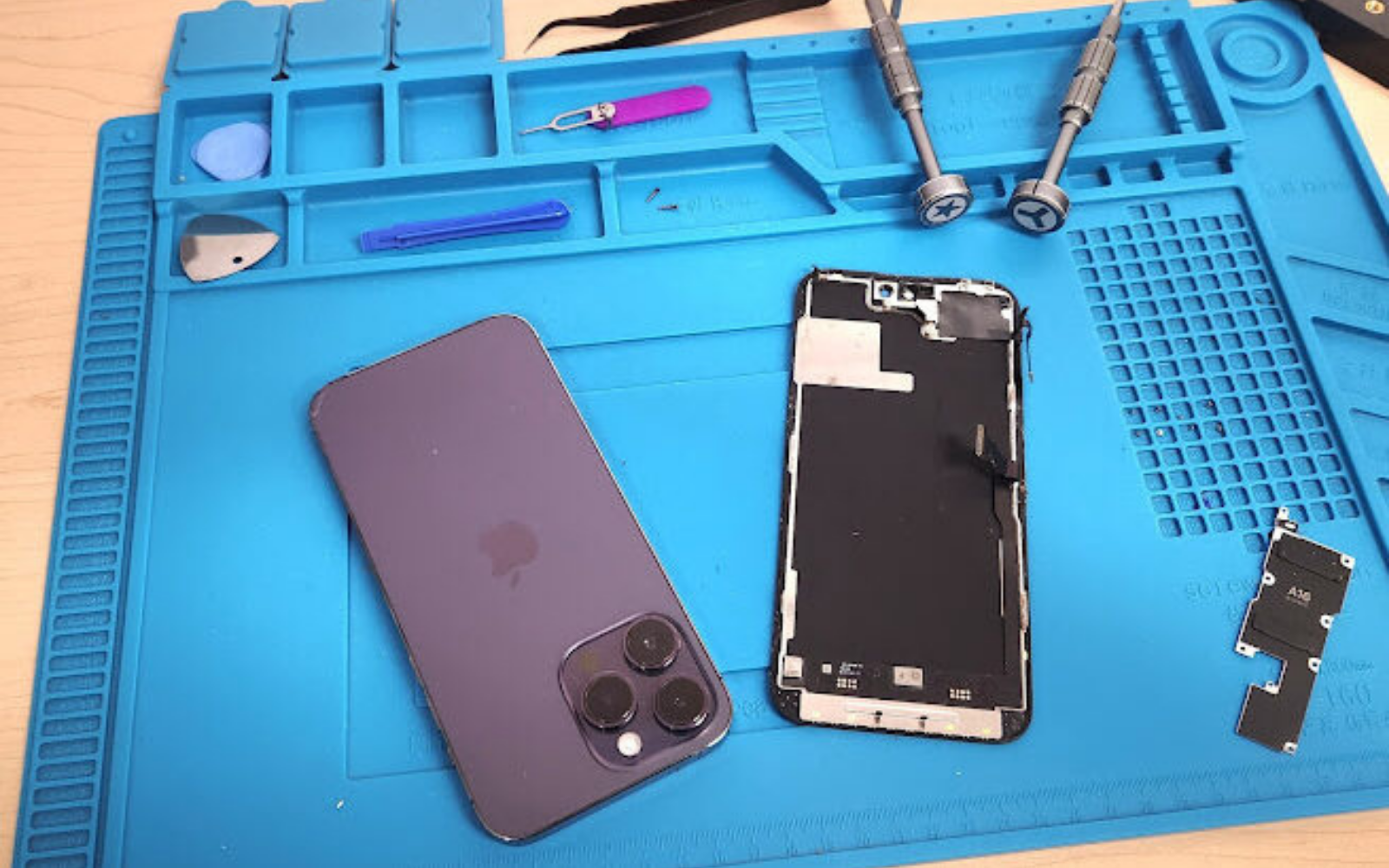
Static discharge is the fault nobody sees happen. A board that was working on the bench becomes a board that will not boot, and the cause is a spark the technician never felt and the customer never saw.
The damage is not always immediate either, which is what makes it expensive. A component weakened by a discharge can fail weeks later, and by then the repair has been paid for, the customer is angry and the shop has no explanation.
What is ESD and why does it matter here?
It is static electricity moving between two objects.
Walking across a carpet, sliding off a chair or handling a plastic bag can leave a charge on a technician’s body that is measured in thousands of volts. When that hand reaches a board, the charge equalises through whatever it touches first.
The voltages involved are far below the level a person can feel, and far above the level that damages a modern integrated circuit. That combination is why the damage is so often attributed to something else.
How does static damage actually happen?
A discharge into a component that cannot take it.
The discharge may burn through a gate oxide, fuse an internal connection or leave a weakness that fails later under heat or load. Some events are catastrophic and immediate; others are latent, which means the board leaves the bench working and returns in a fortnight.
Boards are most vulnerable when they are exposed, which is exactly the condition they are in during a repair. That is why the discipline matters most at the moment a board is outside its shielding. A board still in a chassis with its shield in place is far less exposed than one lying on a bench, and the difference between those two states is a single step in the repair.
What equipment gives real protection?
A grounded mat and a wrist strap.
The mat provides a controlled path to earth across the work surface, and the wrist strap keeps the technician at the same potential as that surface. Together they mean that a charge is bled away continuously rather than discharged into the first component touched.
Both parts are needed. A wrist strap used while leaning on a synthetic worktop achieves very little, and a mat without a strap leaves the technician carrying a charge that the mat cannot remove.
Does a wrist strap need a mat?
Yes, because they do different jobs.
The strap keeps the person at the same potential as the bench; the mat keeps the bench at a known potential. Together they form a single controlled environment, which is what allows a board to be handled without a difference in charge building up anywhere.
The connection to earth matters as well. A strap that is not connected to anything, or a mat that is not connected to earth, provides the appearance of protection without the function, and the fault that follows is invisible.
What about tools and tweezers?
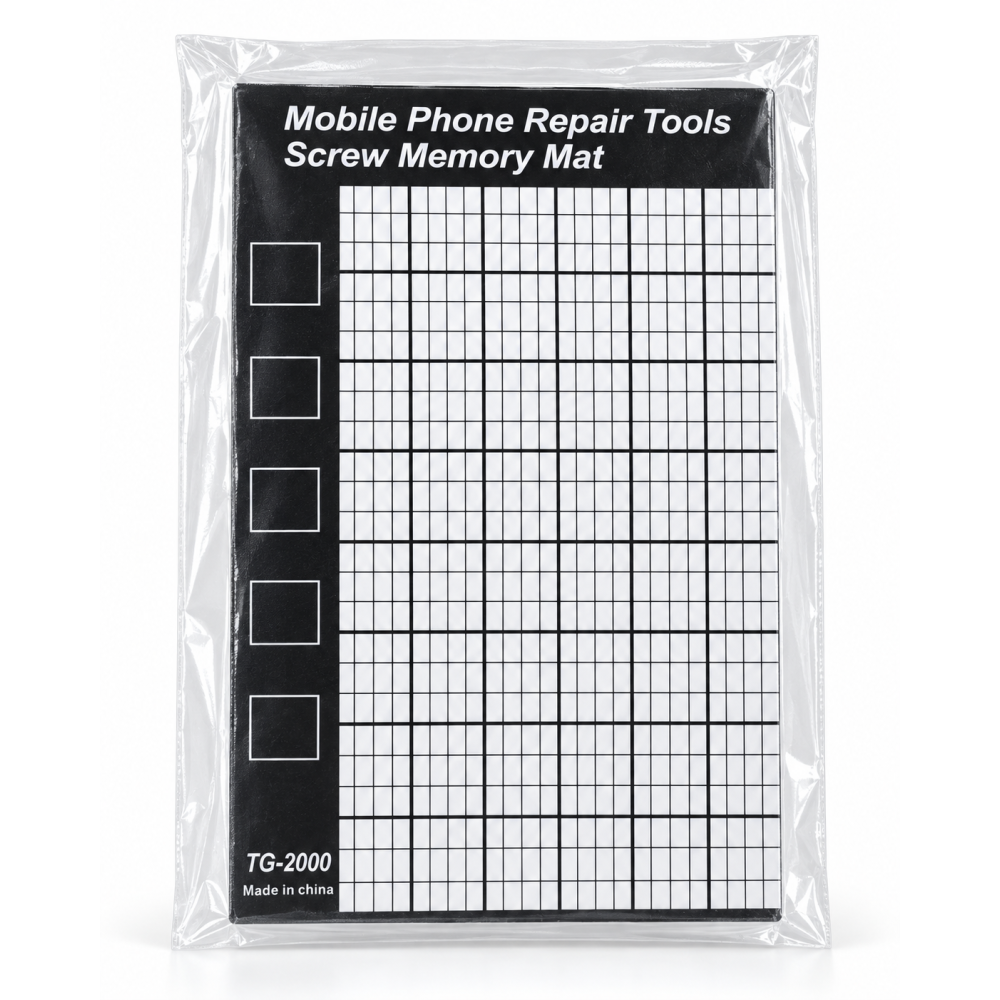
ESD-safe tools, and no plastic scrapers on a board.
Tweezers and drivers marked as ESD-safe are made with a controlled resistance rather than a plain metal handle, which avoids a rapid discharge through the tool. The difference in price is small and the difference in risk is not.
What should not be used on a board is a plastic scraper or a household brush, because plastic generates static as it moves. Cleaning tools intended for electronics exist precisely for that reason, and the general bench list is described in what to buy first for a bench.
How do you set up a bench for ESD control?
Mat on the bench, strap on the wrist, both earthed.
The mat goes where the work happens, sized so that boards and tools both sit on it, and it is connected to a proper earth point. The strap is worn snugly on the wrist and connected to the same point, and the connection is checked rather than assumed.
Everything else follows from that. Where a board is being worked on, it sits on the mat; where it is stored, it sits in a shielded bag or tray. A board that has been protected all afternoon but left on a plastic tray overnight has not been protected. Storage is as much a part of the routine as handling, and it is the step most often forgotten at the end of a shift.
What about handling boards by hand?
By the edges, and never on a component.
The safest way to hold a board is by its outer edges, where there is usually little between the fingers and the substrate. Gripping a board across its face puts fingers directly on components and connectors, which is a mechanical risk as well as an electrical one.
The habit is worth teaching deliberately, because it is the one that survives when equipment is not at hand. A technician who handles boards by the edges at all times is practising ESD control even when the mat is in the wrong room.
How do you protect a device during a repair?
Keep it off synthetics and out of open plastic bags.
Open plastic bags and foam packaging generate charge as they are handled, and a board resting on either is accumulating risk. Anti-static bags and trays are the correct storage, and they should be what the device comes out of and goes back into.
Clothing matters less than equipment but is not irrelevant. Synthetic fleeces and plastic aprons generate more charge than cotton, and a shop working on boards in them will notice more unexplained failures over time. That is a cost with no invoice attached, which is why it goes unnoticed for so long.
What damage is often blamed on something else?
No-boot faults, intermittent charging and dead touch.
Those three symptoms appear after repairs frequently and are attributed to the part, the connector or the customer. A board that fails immediately after handling has a reasonable chance of being an ESD casualty, particularly if the bench has no mat or the strap was not worn.
Diagnosing them properly is the same work described in what to check when a battery connector is suspect. What matters is recognising that the fault may have started on the bench rather than in the customer’s hands. A shop that has recently started board work should consider that possibility before concluding that the board arrived faulty.
What if a shop cannot fit a full ESD setup?
Then do the cheap parts properly.
A wrist strap and a small mat cost very little and cover the majority of the risk, and both fit on any bench. Where a shop has neither, handling boards by the edges and never on synthetics reduces the risk without spending anything.
The bigger picture is that ESD control is a habit rather than a purchase. The equipment makes the habit easier to follow, but a shop that uses neither is not being careful, it is being lucky. Equipment bought and then left in a drawer has never protected a board, and the failure it should have prevented will be attributed to the part every time.
What about a repair where the board stays in the device?
The same rules apply with less room to work.
Many repairs never remove the board, which means the mat and the strap are still the protection and the device itself is the thing being handled. Working on a grounded mat with the strap on covers that case as well as it covers a board on the bench.
What changes is the risk of mechanical damage, because the device is heavier than a board and the working space is tighter. Keeping the strap connected while working inside a chassis is the habit that makes the difference.
How do you build the habit?
By making it part of the setup, not a step to remember.
A bench that has the mat permanently in place and the strap hanging on its hook makes the correct sequence the easiest one to follow. Where the equipment lives in a drawer, it is used occasionally and the discipline never forms.
That is the same principle that applies to any bench habit, from cleaning to testing, and it is why the equipment belongs on the bench rather than in storage.
-1000x1000.jpg)
What is the one habit that makes ESD control work?
Put the strap on before the board comes out.
One sequence, followed every time: mat in place, strap on and connected, then the device opened. Doing it in that order means the protection is present before the exposure happens, which is the only version that works. Doing it in any other order means the first thing the hand touches is the thing at risk.
Around it sit the ordinary disciplines: ESD-safe tools, boards handled by the edges, anti-static storage and a written bench routine. The wider equipment list is described in what to buy first for board work, and the safety expectations around electrical work are set out by the HSE at electrical safety and risk assessment at work. Tools placed on the market fall to the Office for Product Safety and Standards, discarded tools and boards are waste under the Waste Electrical and Electronic Equipment Regulations 2013, and retail customers keep their rights on the finished work under the Consumer Rights Act 2015.
FAQ
Do I really need ESD protection in a phone repair shop?
Yes, if you work on boards. Static discharges below the level a person can feel are enough to damage components, and the failure may appear weeks later rather than immediately, which makes it look like a part fault or a customer fault.
Is a wrist strap enough on its own?
No. The strap keeps the technician at the same potential as the bench, and the mat keeps the bench at a known potential. Used together they form one controlled environment; either alone leaves part of the risk in place.
How much does ESD protection cost?
A wrist strap and a small bench mat are inexpensive and cover most of the risk. The bigger cost is the habit of using them every time, which is what actually prevents damage.
What causes the most ESD damage in a small shop?
Handling boards without a strap, working on synthetic surfaces and storing exposed boards on plastic trays or foam. All three are avoidable with equipment that costs very little.
ESD protection from the mat up. Digi4u carries anti-static mats, straps, tweezers and board tooling for UK repair shops.
{
“@context”: “https://schema.org”,
“@type”: “FAQPage”,
“mainEntity”: [
{“@type”: “Question”, “name”: “Do I really need ESD protection in a phone repair shop?”,
“acceptedAnswer”: {“@type”: “Answer”, “text”: “Yes, if you work on boards. Static discharges below the level a person can feel are enough to damage components, and the failure may appear weeks later rather than immediately, which makes it look like a part fault or a customer fault.”}},
{“@type”: “Question”, “name”: “Is a wrist strap enough on its own?”,
“acceptedAnswer”: {“@type”: “Answer”, “text”: “No. The strap keeps the technician at the same potential as the bench, and the mat keeps the bench at a known potential. Used together they form one controlled environment; either alone leaves part of the risk in place.”}},
{“@type”: “Question”, “name”: “How much does ESD protection cost?”,
“acceptedAnswer”: {“@type”: “Answer”, “text”: “A wrist strap and a small bench mat are inexpensive and cover most of the risk. The bigger cost is the habit of using them every time, which is what actually prevents damage.”}},
{“@type”: “Question”, “name”: “What causes the most ESD damage in a small shop?”,
“acceptedAnswer”: {“@type”: “Answer”, “text”: “Handling boards without a strap, working on synthetic surfaces and storing exposed boards on plastic trays or foam. All three are avoidable with equipment that costs very little.”}}
]
}