


iPhone 16 Series Parts: What Changes for Repair Shops
Need this part? We stock tested replacement parts with same-day UK dispatch and a 12-month warranty.
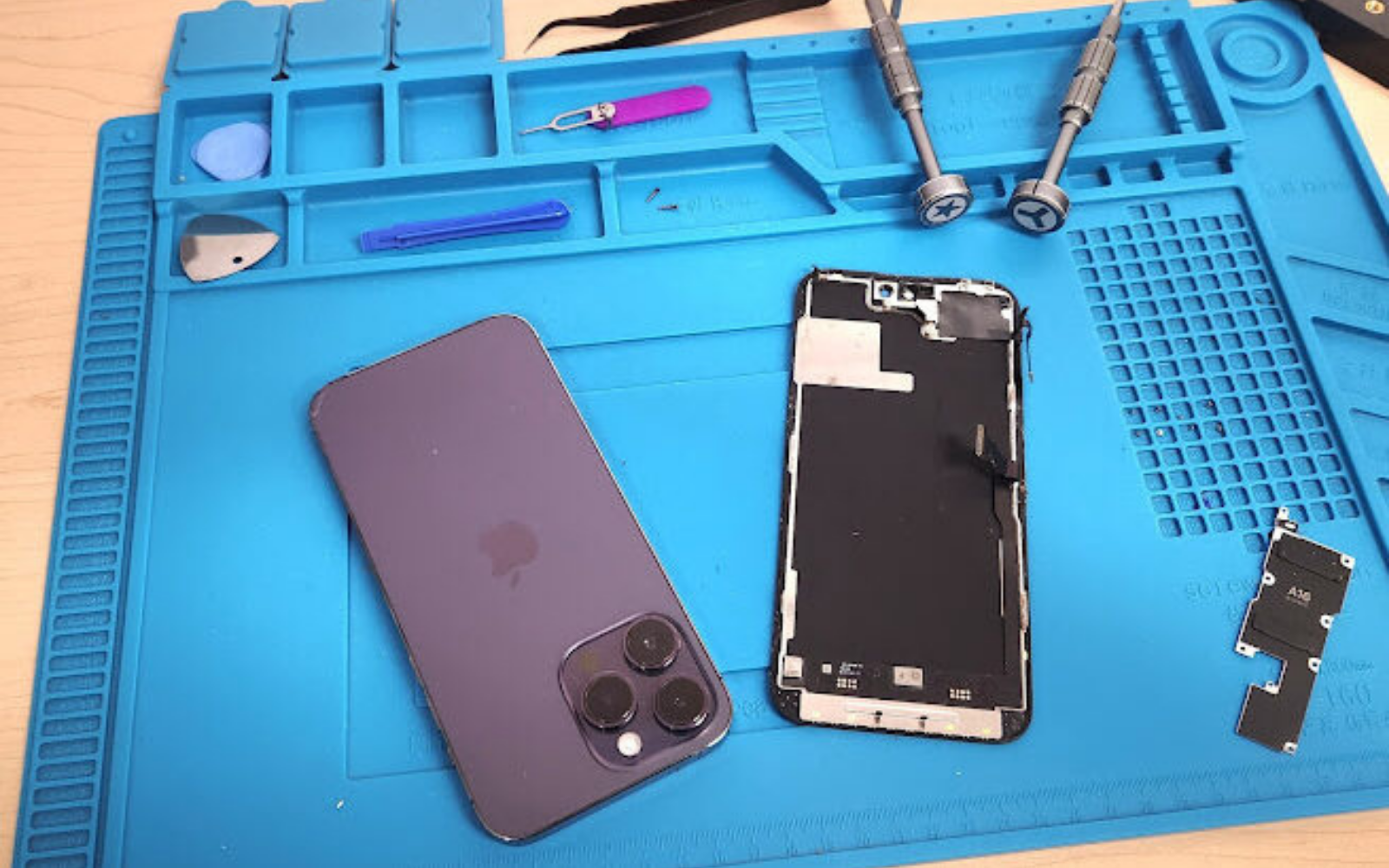
The iPhone 16 range is now old enough to arrive for paid repair and new enough that customers still consider it a current device. That combination produces the best kind of work: high part values, customers who will pay, and a manufacturer’s service price that makes the shop look reasonable.
What it also produces is more ways to order the wrong part. The range has more variants than any generation before it, and the small components are matched as tightly as the screens.
What changed on the iPhone 16 range for repair shops?
More variants, and more parts carried on flexes.
The range spans the standard, Plus, Pro, Pro Max and the e model, each with its own display assembly, battery and camera arrangement. Several components that used to be replaceable as single items now arrive on flex assemblies that include a sensor or a microphone.
That means the part list is longer and the part prices are higher, and it means a shop has to be more careful about what it is ordering. The identification discipline described in checking the model before ordering parts matters more, not less, on a range like this.
Which models are in the range?
Five, and they take different parts.
The standard, Plus, Pro, Pro Max and the e model each have their own display assembly and battery, and the Pro models add different camera hardware. The e model in particular shares a name with the range while using parts that are closer to the previous generation in some places.
That is worth knowing at the counter. A customer who says “iPhone 16” has identified one of five devices, and the model code settles which one it is before anything is ordered.
How do you identify which 16 model you have?
From the settings, confirmed against the model code.
The model name and number are both shown in Settings, About, and the code beginning with A identifies the variant. For a device that will not boot, the SIM tray carries the same information.
Photographing that screen at intake is the habit that keeps the order right, and it takes seconds. On a current model where a display assembly costs what it does, that photograph is worth more than any amount of confidence about which device the customer is holding.
What do the screen assemblies cost and include?
The most expensive part in the device.
The display arrives as a complete unit with the frame and adhesive already fitted, and on these models the assembly is the largest single cost in the repair. The customer’s decision is usually between repairing and replacing the handset rather than between two shops.
Confirming what is included matters as much as the price, particularly where a sensor travels with the display. The comparison criteria used across the trade are the ones the ones that apply to any screen purchase.
What changes in the battery?
Different capacities, and a metal enclosure on some models.
The cells differ across the range in capacity, and on some models the battery is supplied in a metal can rather than a soft pouch. That changes the removal technique: a metal-cased cell is less likely to be punctured, but it is also less forgiving of bending.
The electrical work is unchanged, and the rules about adhesive and force are the same. What matters commercially is that the battery connector and the capacity are model-specific, so the order has to be placed against the code. Where a shop keeps one cell on the shelf for the range, the code on the job sheet is what stops it being fitted to the wrong variant of the same name.
Which cameras use a flex rather than a module?
Several, and the distinction changes the price considerably.
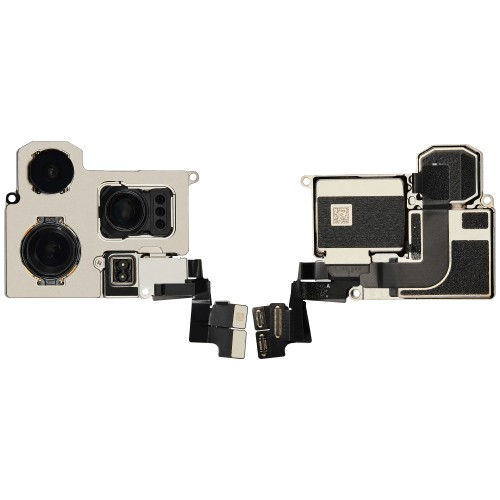
Some camera components in this range are supplied as flex assemblies rather than complete modules, which makes the repair cheaper and the fitting more delicate. Others require the whole module, particularly where the hardware is paired to the board.
Establishing which one a fault needs is the first decision in any camera repair, and it is the same choice that applies on every generation. On a current model, the difference between those two answers can be several hundred pounds.
What does the parts pairing behaviour mean here?
That what the device reports matters as much as how it fits.
Components in this range are checked against the board, and a replacement that the device cannot identify may produce a message or withhold a function. The behaviour is documented by Apple at iPhone parts and service history, and the wider implications are described in what pairing and serial matching mean for a shop.
For a shop, that means the offer should sometimes be two prices rather than one: a part the device reports and a part it may not. Customers understand that choice when it is presented before the repair rather than after it.
What should a shop keep in stock for the 16 range?
Consumables, small parts, and panels only against a job.
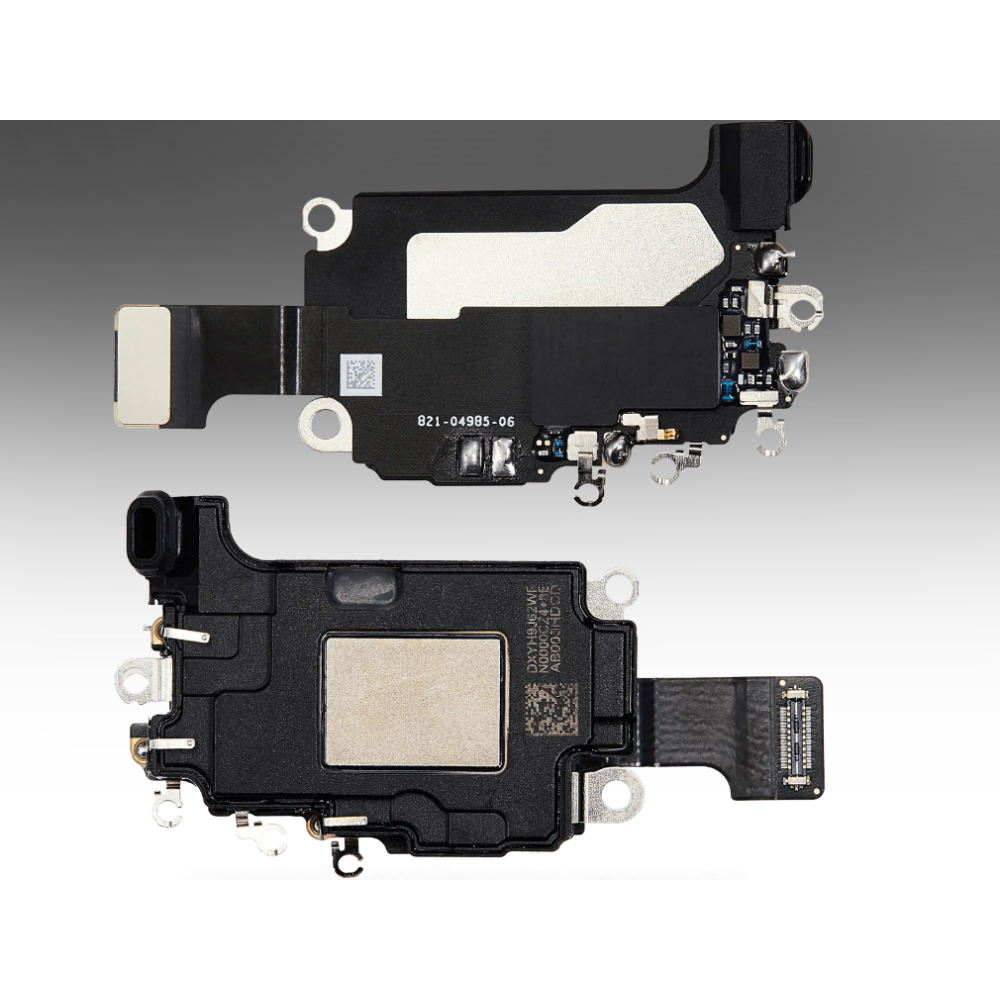
The panels are too expensive to hold speculatively across five variants, so they belong on order rather than on the shelf. What is worth holding are the consumables that fit the whole range, the gaskets, and the small parts that break during a transfer, such as ear speaker assemblies and camera flexes.
That position is the same one described when the iPhone 17 range launched, in stocking parts for a generation. Depth on consumables and breadth on nothing is the pattern that keeps cash free.
What are the common faults on these devices?
Screens, batteries and charging, as usual.
The range is not old enough to produce many board-level failures, so the work is dominated by the familiar three: cracked displays, tired batteries and damaged charging assemblies. Camera faults appear after drops, and the lens glass is the most common of those.
That mix is good news commercially. It means the skills a shop already has are the ones required, and the parts are available from the same suppliers as every other generation. The one fault that appears more often on a current range than an older one is impact damage to a camera lens, because the lens assemblies sit proud of the body and take the first contact.
How do you quote work on a current model?
With the manufacturer’s price alongside your own.
A device this recent may still be in warranty or covered by AppleCare, and a third-party repair can affect how the manufacturer treats it afterwards. Mentioning the alternative costs the shop a job occasionally and keeps the customer.
Where the shop does the work, the quote should state which part is being fitted and what the device will report afterwards. The pricing structure behind that applies to a current model exactly as it does to an older one.
Where the customer is weighing a repair against an upgrade, it is worth mentioning what the device is still worth. A handset with a new display holds far more of its value than one with a cracked screen, and that difference often covers a meaningful share of the repair cost when the device is eventually sold or traded in. It is a concrete argument rather than a sales line, and it is one the customer can verify for themselves.
When should you refer the customer to Apple?
When the device is still covered by Apple.
A handset inside its warranty or under an extended plan is a device where the manufacturer’s route may be better value for the customer, and saying so is good business. Where the customer has already had the device repaired elsewhere, that position may have changed, and honesty about the uncertainty is the right answer.
Apple’s own service routing for iPhone is published at Apple service and repair for iPhone. Knowing what it charges makes the comparison a real one rather than a guess.
What about the e model specifically?
It uses parts that sit closer to the previous generation.
The e model shares the range name but draws on a different supply line in places, and some of its components are closer to the previous generation than to the standard model in the same year. A shop that assumes compatibility because the name matches will order the wrong part.
Treating it as its own device, with its own model code and its own part list, is the discipline that keeps the order correct. It is also why the model code rather than the range name belongs on the job sheet. That single line on the intake form is what makes every later order safer, and it costs nothing to record.
What is the one habit for current-generation work?
Confirm the model, the part and the report.
Three checks, each taking a minute, and each capable of turning a profitable repair into a loss. On a range with five variants, expensive assemblies and parts that the device may or may not recognise, that discipline is the whole job.
Around it sit the ordinary disciplines: photograph the intake, fit fresh adhesive, test before sealing and record what was fitted. Replaced parts are waste under the Waste Electrical and Electronic Equipment Regulations 2013, the display behaviour is described at about genuine iPhone displays, the battery position at about genuine iPhone batteries, and parts placed on the market fall to the Office for Product Safety and Standards.
FAQ
Are iPhone 16 parts harder to source than older models?
Not harder to find, but they are more expensive and there are more variants to match. Displays are the largest cost, and the five models in the range each take their own assembly, battery and small parts.
What is different about an iPhone 16 battery?
Capacity differs across the range, and some models use a metal-cased cell rather than a soft pouch. That changes the removal technique slightly, but the electrical work and the rules about adhesive and force are the same as any other generation.
Will a replacement part show a message on an iPhone 16?
It may. Components are checked against the board, so an unidentified part can produce a notice or withhold a function. Apple documents the behaviour in its parts and service history guidance, and it should be discussed before the repair.
Should I repair an iPhone 16 that is still under warranty?
Tell the customer about the manufacturer’s service route first. A third-party repair can affect how the manufacturer treats the device afterwards, and mentioning the alternative costs a job rather than a customer.
Current-generation parts, listed by model. Digi4u carries iPhone 16 and 17 assemblies, batteries and small parts with the model confirmed before dispatch.
{
“@context”: “https://schema.org”,
“@type”: “FAQPage”,
“mainEntity”: [
{“@type”: “Question”, “name”: “Are iPhone 16 parts harder to source than older models?”,
“acceptedAnswer”: {“@type”: “Answer”, “text”: “Not harder to find, but they are more expensive and there are more variants to match. Displays are the largest cost, and the five models in the range each take their own assembly, battery and small parts.”}},
{“@type”: “Question”, “name”: “What is different about an iPhone 16 battery?”,
“acceptedAnswer”: {“@type”: “Answer”, “text”: “Capacity differs across the range, and some models use a metal-cased cell rather than a soft pouch. That changes the removal technique slightly, but the electrical work and the rules about adhesive and force are the same as any other generation.”}},
{“@type”: “Question”, “name”: “Will a replacement part show a message on an iPhone 16?”,
“acceptedAnswer”: {“@type”: “Answer”, “text”: “It may. Components are checked against the board, so an unidentified part can produce a notice or withhold a function. Apple documents the behaviour in its parts and service history guidance, and it should be discussed before the repair.”}},
{“@type”: “Question”, “name”: “Should I repair an iPhone 16 that is still under warranty?”,
“acceptedAnswer”: {“@type”: “Answer”, “text”: “Tell the customer about the manufacturer’s service route first. A third-party repair can affect how the manufacturer treats the device afterwards, and mentioning the alternative costs a job rather than a customer.”}}
]
}