


Building a Microsoldering Bench: What to Buy First and in What Order
Need this part? We stock tested replacement parts with same-day UK dispatch and a 12-month warranty.
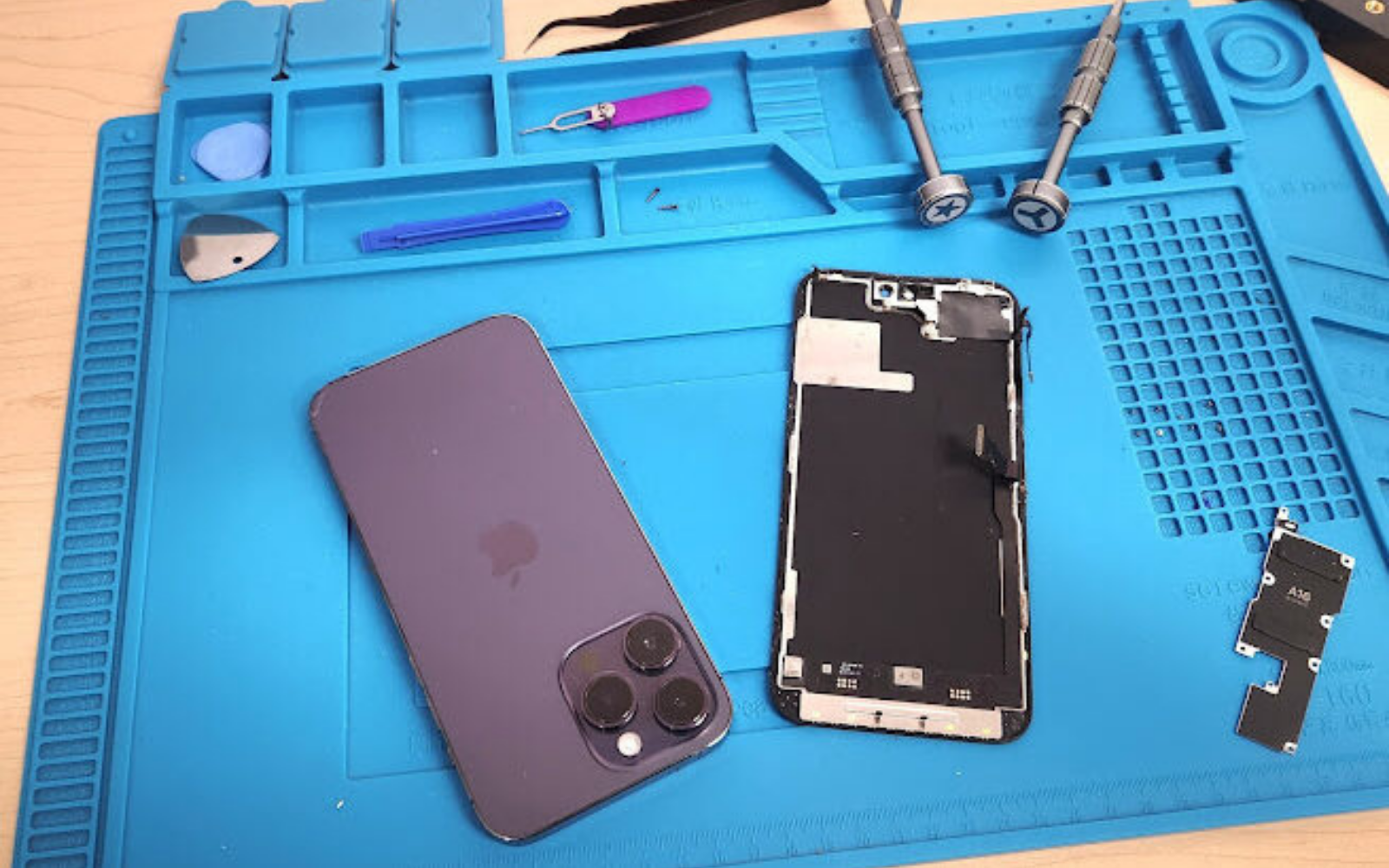
Board-level repair is the step that turns a repair shop into a business with fewer competitors, and the equipment list is shorter and cheaper than most technicians expect. What stops people is not the cost but the order: buying a machine before the skill, or a microscope before the bench can support it.
This is the order that works, what each item actually unlocks, and the safety rules that come with running hot air and flux in a small shop.
What does a microsoldering bench actually need?
Heat, magnification, power, extraction and light.
Those five capabilities cover board-level work. Heat comes from a hot air station and a fine-tip iron; magnification from a stereo microscope; power from a bench supply with a current display; extraction from a fume unit; and light from a proper bench lamp rather than the shop’s ceiling.
Everything else is consumable or specialist. That framing matters because it stops the shopping list from running away: a shop with those five things can diagnose and repair the faults that arrive in a normal UK repair shop, and the exotic equipment is for a later stage.
What should you buy first?
A hot air station and a fine-tip soldering iron.
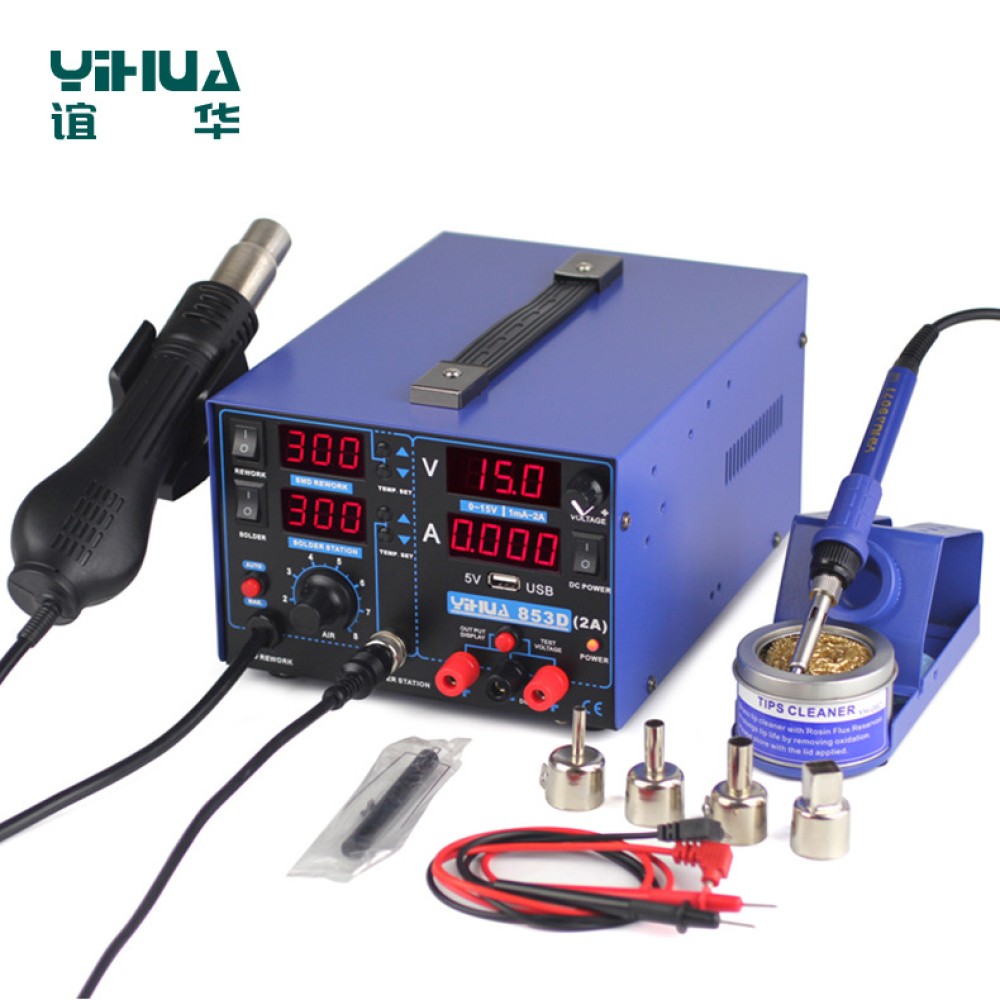
Heat is the entry point. Without controlled hot air there is no component removal, no shield lifting and no reflow, and without a fine-tip iron there is no soldering. A combined station that provides both is the cheapest way to start, and it is a sensible first purchase for a shop testing the water.
Two features are worth paying for: closed-loop temperature control, so the setpoint is the temperature, and a nozzle range that includes a small enough aperture to work on a phone board without cooking the components next door. A station without either is a false economy, because it teaches bad technique.
Which microscope do you need?
A stereo zoom on a boom arm, 7x to 45x.
A stereo microscope gives two eyepieces, real depth perception and no latency, which is what hand work needs. Zoom range from about 7x to 45x covers component identification, connector work and trace inspection, and a boom arm lets it swing over the work rather than confining the board to a fixed platform.
Digital microscopes that display on a screen are useful for documentation and for training, but the delay between hand movement and image makes them poor for fine work. Where a shop wants both, a trinocular head on the stereo unit provides a camera port without compromising the eyepieces.
How much bench space does it take?
A metre and a half, separate from the phone bench.
Board work generates heat, fumes and offcuts, and it needs the board held still while both hands are occupied. That means a dedicated area with a fire-resistant and non-slip surface, room for the microscope arm to swing, and enough space to keep a flux bottle upright without knocking it over.
Separating it from the phone bench is a matter of discipline rather than space. A shop that solders where it also places screen assemblies will eventually leave flux residue or a hot nozzle next to a customer’s panel, and the clean-up cost of that mistake is higher than the cost of a second bench.
What does the fume extraction do?
It removes the flux smoke you would otherwise breathe.
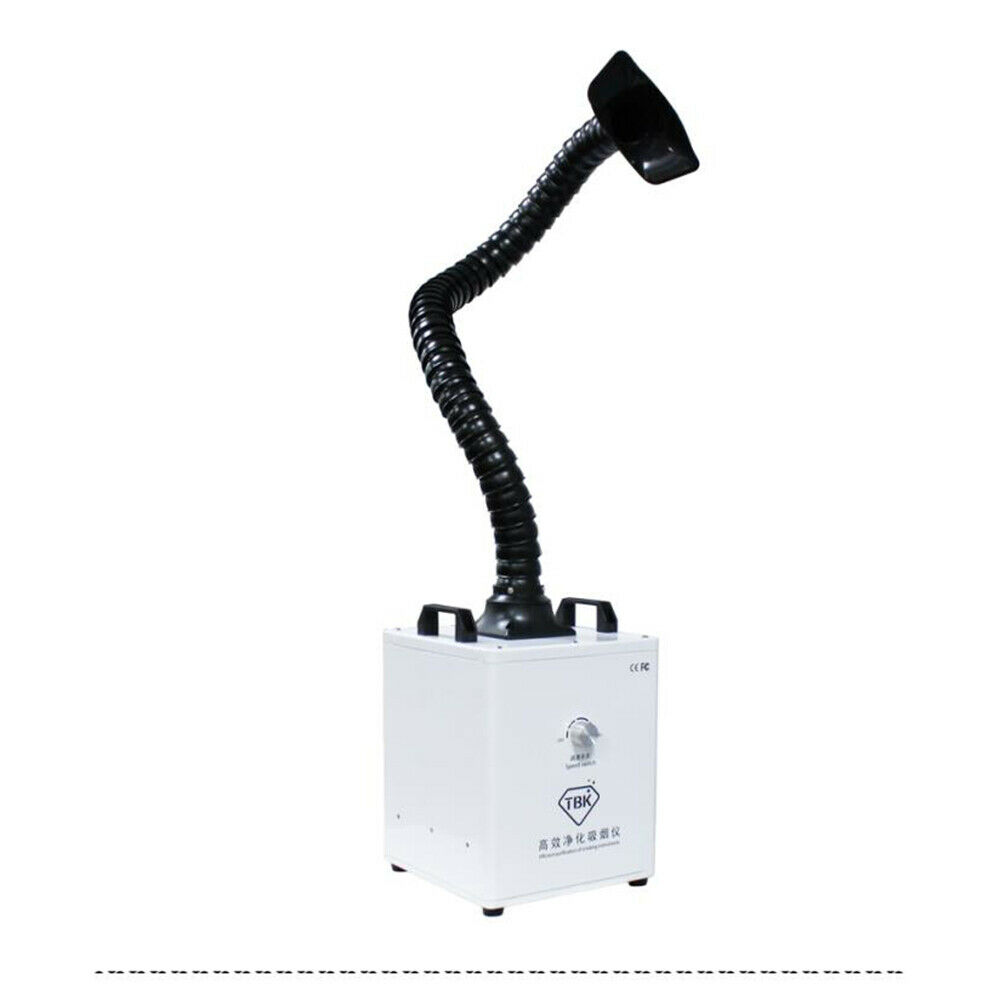
Soldering and reflow produce smoke from the flux, and in a small shop with poor ventilation the concentration builds quickly. A bench extractor with a carbon filter placed close to the work captures most of it at source, which is both a comfort measure and the practical way to meet the general duty to control exposure.
The relevant expectations are set out by the HSE in its guidance on managing risks and risk assessment at work and on electrical safety. For a one-person shop the answer is usually an extractor plus an open window, documented in a one-page risk assessment.
Which tools are needed for board-level work?
Tweezers, wick, flux, a current-limited supply and lighting.
Fine ESD-safe tweezers, solder wick, a flux that suits the job, lead-free or leaded solder depending on the shop’s policy, and a bench power supply with a current display for diagnosis. Add a bench lamp with high colour temperature and a mat that stops small components rolling away.
The power supply is the diagnostic tool rather than a soldering one. Watching current draw on a device that will not power on tells you whether a rail is shorted before anything is removed, and the technique is described in running board diagnostics without a battery.
Everything on that list is bought once and then used for years, which is the opposite of the consumables. The tools set the ceiling on what a shop can attempt; the consumables decide how reliably it can be done, and board work punishes both kinds of shortage.
Why is a preheater different from a hot air station?
One heats the whole board, the other heats a point.
A preheater raises the temperature of the board underneath the work so the hot air only has to supply the difference. That reduces the heat stress on the board and the surrounding components, and it is what makes work on larger ground planes and underfilled components possible without lifting pads.
A preheater is a second-stage purchase rather than a first one. It becomes necessary when a shop starts replacing connectors and larger components rather than only reflowing small ones, and it should be bought when a specific job has already paid for it.
What consumables does board-level work use?
Flux, wick, paste, tips, swabs and cleaning fluid.
Board work consumes more consumables per hour than phone repair does, and the lines that run out first are flux, solder wick and cleaning swabs. Keeping a written minimum for each, as with any consumable that decides your margin, stops a repair stalling for the sake of a two-pound item.
Tip life is the other variable. Fine tips deform quickly at board temperatures, and a shop should budget for replacing them rather than treating them as permanent. A deformed tip is one of the faster routes to a damaged pad.
Cleaning fluid and swabs are the third recurring line. Flux residue left on a board causes intermittent faults that are very hard to trace later, so cleaning is part of the repair rather than a finishing touch, and it consumes both fluid and swabs on every job.
How do you practise before charging for board work?
On written-off boards, systematically.
Every shop has dead logic boards from devices that were not economic to repair, and they are free practice material. Work through a sequence: lift and refit a shield, remove and replace a connector, replace a small passive component, then diagnose a deliberate fault on a supply rail.
The first three build hand skill and the fourth builds diagnostic judgement, and they are different abilities. A technician who can reflow beautifully but cannot find the fault will still decline the job, and the way to avoid that outcome is deliberate practice rather than repetition.
What jobs should you take first?
The ones with a known outcome.
Connector replacements on the board, backlight faults, trace repairs from liquid damage and no-power diagnosis are the sensible first commercial jobs, because the failure mode is understood and the parts are inexpensive. They also pay reasonably, since the alternative for the customer is a replacement device.
What should not be attempted early is anything that depends on reballing large packages or on recovering data from a failed storage chip. Those jobs have a lower success rate, they carry more customer expectation, and they belong with a specialist until the shop has real volume.
What are the safety rules?
Ventilate, keep the bench clear, avoid solvents near heat.
Hot air reaches temperatures that will ignite paper and melt cable insulation, so the bench stays clear of clutter, and nothing flammable is left within reach of the nozzle. Isopropyl alcohol and other solvents should never be open on the bench while a hot air station is running, because the vapour is the hazard rather than the liquid.
Eye protection matters when cutting or wicking, and battery cells should be nowhere near the hot end of the bench. Where a shop takes on board work, the risk assessment has to be updated rather than assumed, and it is worth checking that the insurer knows the trade changed.
What is the one rule that keeps board-level work profitable?
Charge for the diagnosis, not only the repair.
Board work is where the diagnostic time is largest as a share of the job, and a shop that only gets paid when it fixes something will decline the jobs it should decline and undercharge for the ones it takes. A stated diagnostic fee, credited against the repair, fixes both problems at once.
The rest is routine. Test the device before it is reassembled, as set out in testing a replacement screen before sealing it, and treat the skills involved in removing and refitting components with the same care as those described in why an IC transfer can kill touch. Replaced boards and components are waste under the Waste Electrical and Electronic Equipment Regulations 2013, where parts are placed on the market the Office for Product Safety and Standards is the relevant regulator, and the framework for setting the business up is summarised at set up a business.
FAQ
What equipment do I need for microsoldering?
A temperature-controlled hot air station and fine-tip iron, a stereo zoom microscope, a current-limited bench power supply, fume extraction and good bench lighting. Those five capabilities cover most board-level work a UK repair shop will see.
What should I buy first for board-level repair?
Heat. A combined soldering and hot air station with closed-loop temperature control and a range of small nozzles makes component work possible, and it is the cheapest way to test whether board-level work suits the shop.
Do I need a microscope for microsoldering?
Yes, for anything smaller than a connector. A stereo zoom microscope on a boom arm, roughly 7x to 45x, gives depth perception and no latency. Digital microscopes are useful for documentation but the display delay makes them poor for fine hand work.
Is microsoldering safe in a small shop?
It is manageable with three habits: extraction close to the work, a clear bench with nothing flammable near the nozzle, and no open solvents while the hot air station is running. Document it in a risk assessment and make sure your insurer knows the trade has changed.
Build the board-level bench in the right order. Digi4u supplies soldering and hot air stations, fume extraction and the consumables board work uses.