


iPhone 18 Pro Battery and the Power Path: What Booting Without a Battery Changes
Need this part? We stock tested replacement parts with same-day UK dispatch and a 12-month warranty.
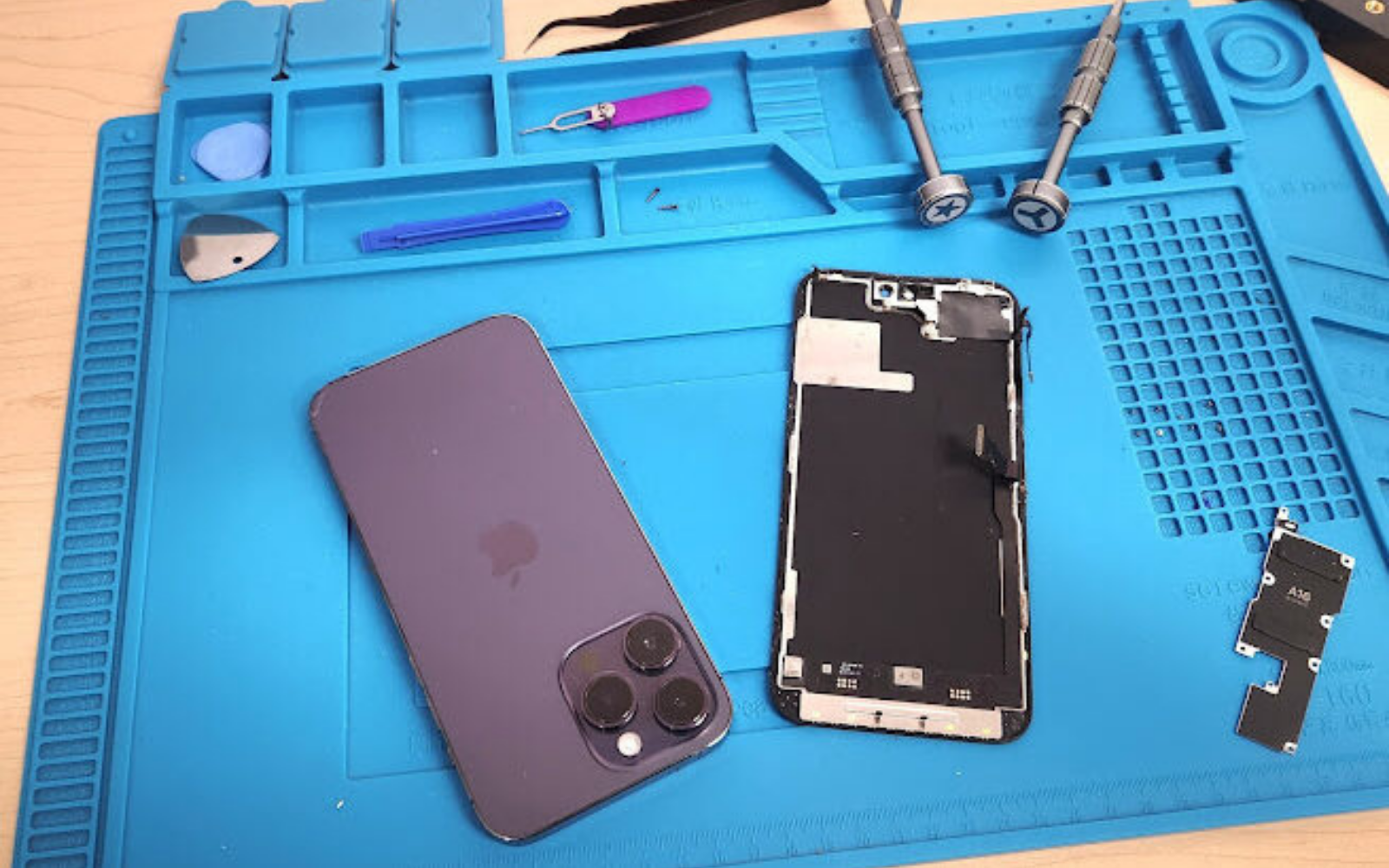
Repairers who have stripped the iPhone 18 Pro report a behaviour that would not have been possible on most earlier models. With the battery flex disconnected, or with power supplied only through the charging port, the device still starts. On most previous generations, removing the battery from the circuit stops the board from running at all.
That is a useful observation and an incomplete one. What matters on a bench is not whether the behaviour is surprising but whether it is reproducible, what it tells you about a fault, and how it changes the tests you already run for battery problems.
What repairers report about the iPhone 18 Pro power path
Two related behaviours, both from teardown and repair work rather than from published documentation. With the battery flex disconnected, the device can still power up. With power supplied through the charging port and no battery connected, the device can start.
Neither has been confirmed by Apple, and neither should be treated as a specification until you have reproduced it on a known-good unit of your own. Teardown reports also tend to leave out the detail that decides what the observation means: whether the device reaches a full boot or stops at a diagnostic or recovery state.
Can an iPhone 18 Pro start without a battery connected?
Repairers report that it can, in teardown conditions.
On most earlier iPhones the main power rails are derived from the battery, so a battery must be present in the circuit even if it is nearly empty. If the report holds up, the board on this generation can be supplied from the port through a path that does not require the battery to be present or to satisfy whatever presence signal the older boards needed.
Three explanations are worth testing and they are not mutually exclusive: a separate power path that lets the logic board draw from the port, a sensing arrangement that only needs the battery’s presence signal rather than its power, or a relaxed requirement for a battery in circuit before a start is allowed. The distinction matters because it decides what you can conclude from a boot, which is the next section.
Why would the power path change at all?
Because it solves problems the previous arrangement created.
A device that can be powered independently of its battery is easier to diagnose and easier to service. Battery faults and board faults currently produce overlapping symptoms, and a technician often has to keep a charged battery in the loop simply to power the board. Removing that dependency narrows the fault window from one test instead of several part substitutions.
It also changes what the device can do when the battery is unusable, although none of that has been confirmed for this generation. Until it is, treat the theory as a working hypothesis rather than a design change to plan around.
What does this change for board-level diagnostics?
It adds a test rather than replacing one.
If the board can run from the port without a battery in circuit, diagnostics get faster in a specific way. A device that runs from external power but not from its own battery narrows the fault to the battery, the battery connector or the charging circuit rather than to the board as a whole. That is one clean test instead of a sequence of substitutions.
The converse also applies, and it is the part most technicians miss. A device that boots from the port can mask a battery management problem, because the symptom disappears the moment a supply is connected. If you build the new test into your routine, keep the old one as well, so you do not lose the signal you currently use to identify a failing cell.
| Task | Before | With a port-powered boot |
|---|---|---|
| Board-level diagnosis | Keep a charged battery in the loop | Possibly run from a bench supply alone |
| Isolating a battery fault | Multi-step, substituting parts to test | Narrower fault window from one test |
| Reading a no-boot fault | Absence of boot was a strong signal | Signal is weaker and needs a different test |
| Customer explanation | Standard battery explanation | Explain why a port-powered test is not proof of a healthy battery |
How do you reproduce the test on your own bench?
On a known-good unit, with a current-limited supply and a written record.
Start with a device that has no existing faults, so the result is not contaminated by another problem. Disconnect the battery flex and attempt a start with a stable bench supply on the port, recording exactly what appears on screen and how long it takes. Repeat with the battery connected but discharged so you can compare the two behaviours. Then repeat on a second unit before drawing any conclusion at all.
The reading that decides whether this is a usable bench technique is the current draw during start-up and at idle. A stable draw suggests the board is behaving normally without a battery in circuit. An erratic one suggests the arrangement is not something to build a diagnostic routine around.
Which battery faults become harder to read?
The ones that previously announced themselves by preventing a boot.
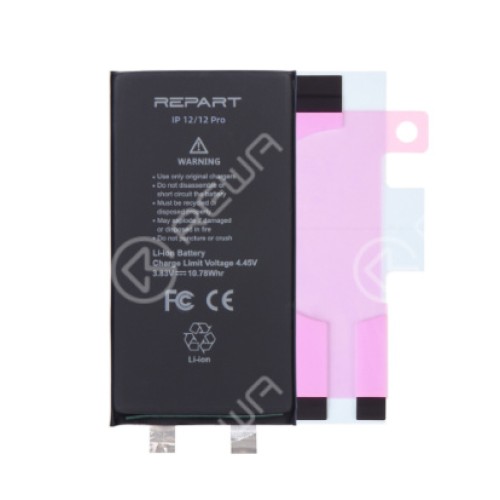
A shorted or deeply discharged cell used to announce itself clearly, because the device would not start. If a port-powered boot becomes normal on this generation, that signal weakens, and a device can appear healthy on the bench while carrying a battery that will fail in the customer’s hand within days.
The replacement signal is behavioural. Run the device down and watch for a sharp drop at low percentages. Put it under load and watch for an early shutdown. Read the current draw rather than the capacity figure. And keep using the health reporting that Apple describes in About genuine iPhone batteries, alongside the parts record described in iPhone Parts and Service History, for what the device claims about the battery it is carrying.

How do you explain a port-powered boot to a customer?
Separate what you proved from what the customer thinks you proved.
A customer who watches a phone start on your bench will reasonably conclude the battery is fine, and that misreading is the risk in this test. Make sure the explanation you give matches the test you actually ran: the board and the display path work, which is useful information, and it says nothing about whether the battery will hold charge or survive a load.
That distinction also protects the warranty conversation. Battery disputes are among the most common in mobile repair, and a shop that can state what it measured and why is in a much stronger position than one that demonstrated a boot screen and then charged for a battery a week later.
What should you record when you test?
Model, iOS version, supply used, and current draw.
A behaviour like this is settled by shared records rather than by a single teardown, and the details are what make a record useful. Note whether the device completed a boot or stopped partway, what the supply was limited to, the draw during start-up and at idle, and whether the result was consistent across repeat attempts and across more than one unit.
If you handle warranty claims on batteries, keep the record with the job. Where you sell to consumers in the UK, statutory rights are set by the Consumer Rights Act 2015, and obligations around the safety of goods you place on the market sit with the Office for Product Safety and Standards. Lithium cells also carry handling obligations in a workplace, which is the remit of the Health and Safety Executive. A written record of what you measured supports all three.
What should you watch for as more units reach the bench?
Consistency, version behaviour, and current draw.
An early teardown describes one device, and often one that arrived before general release. The picture that matters commercially takes months to form, and three specific things are worth tracking as more iPhone 18 Pro units arrive for repair.
First, whether the behaviour is consistent across units or appears only on certain production runs. A consistent result across a dozen devices is a design characteristic; a result that appears on two out of ten is more likely a marginal condition you should not build a routine on. Second, whether it changes with iOS updates, because start-up requirements can be adjusted in software after a device ships, and a behaviour that holds in September may not hold in December.
Third, and most usefully, whether the current draw during a port-powered boot is stable or erratic. Current behaviour is the practical signal for whether this is a usable bench technique, because a stable draw means the board is running normally without a battery in circuit, while an unstable one means the arrangement is a curiosity rather than a diagnostic tool.
This is the kind of question a shared record settles in weeks and no single teardown can answer. If a handful of shops log the same four data points, the ambiguity disappears quickly.
FAQ
Can an iPhone start without a battery connected?
Repairers report that an iPhone 18 Pro can start with the battery flex disconnected, and can be powered from the charging port alone. On most earlier generations the board needs a battery in circuit before it will run. Reproduce the behaviour on your own unit before relying on it, and note whether the device completes a boot or stops partway.
Has Apple confirmed a change to the iPhone power logic?
There is no published confirmation of a power path change on the iPhone 18 Pro. The behaviour is currently a reported observation from teardown and repair work rather than a documented feature. Treat any explanation of why it happens as a hypothesis until you have reproduced it consistently on a known-good unit.
Does a device that boots from the port have a good battery?
No. A port-powered boot tells you the board and the display path work, and nothing about the battery’s capacity or condition. Always follow it with a battery-present test, including a load test, so you do not lose the fault signal you currently rely on for diagnosing a failing cell.
How should I change my diagnostic sequence for this generation?
Add a test rather than removing one. Keep the existing battery-present checks, and add the port-powered test as an extra data point that helps separate a battery fault from a board fault. Record the current draw during start-up and at idle, because that reading is what tells you whether the board is behaving normally without a battery in circuit.
Whether or not this behaviour turns out to be a deliberate design change, the useful response is the same. Reproduce it, measure it, and record it before you build anything on top of it. A port-powered boot is a genuinely useful extra data point for separating battery faults from board faults, and it is only useful if you keep the battery-present test alongside it and remember what it does not prove.
Doing board-level work on the current generation? Digi4u supplies batteries, charging port flexes, screen assemblies and bench equipment to UK repair shops, with trade pricing, same-day dispatch and up to 12 months warranty. Open a trade account to check stock.