


iPhone Home Button Not Working: Button, Sensor or Flex
Need this part? We stock tested replacement parts with same-day UK dispatch and a 12-month warranty.
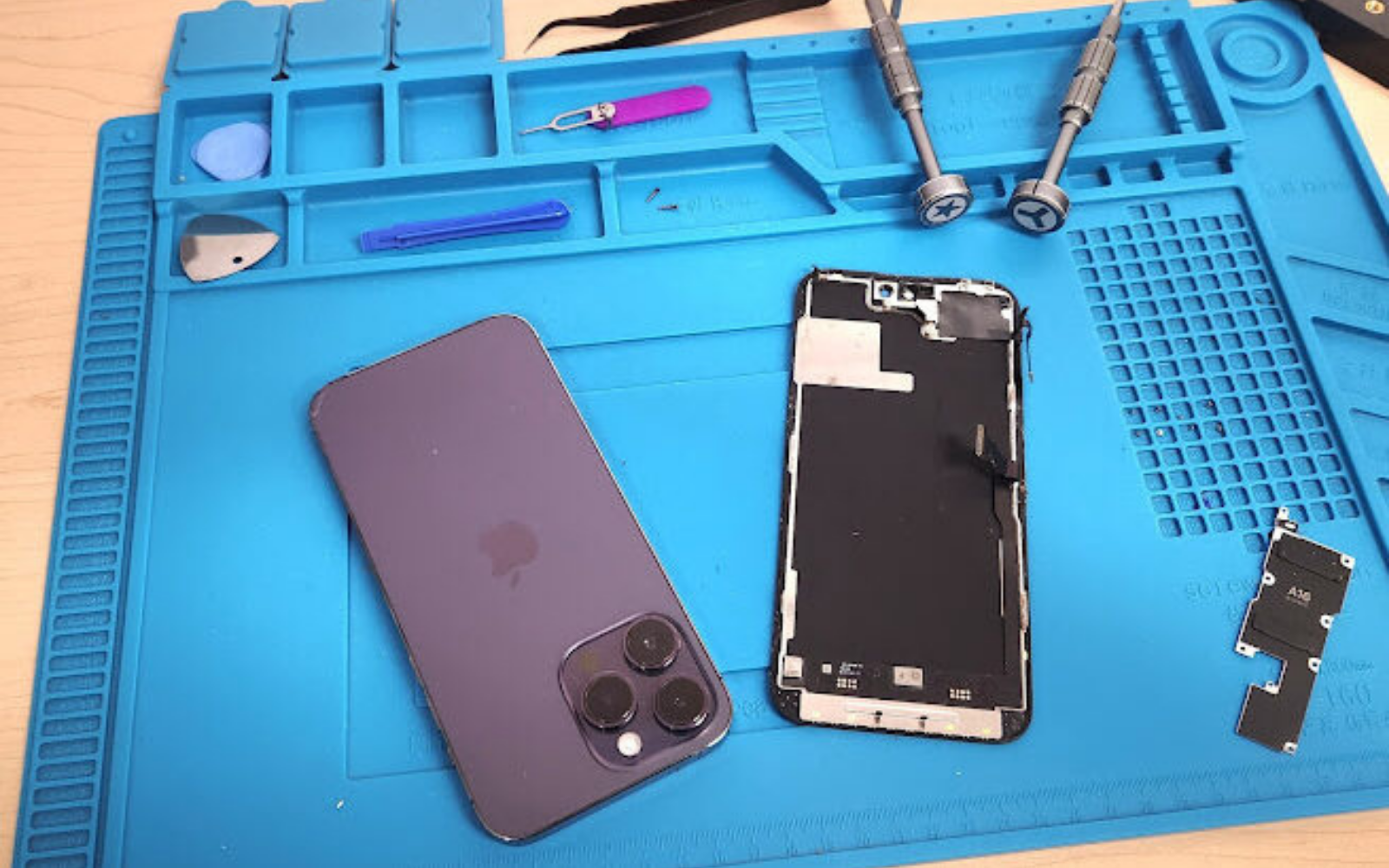
“Home button not working” describes three separate faults on three separate parts. The button can fail mechanically, the Touch ID sensor can stop reading, or the flex that carries both can be damaged. Each has a different repair and a different outcome for the customer.
Separating them takes a few minutes and decides whether the job is straightforward or whether the customer needs to be told something they will not want to hear.
Which models are involved?
The ones with a physical home button, up to the second-generation iPhone SE.
Home buttons with Touch ID appear on the models released before the main line moved to Face ID, and on the SE generations that kept the older design. On later devices there is no home button, so a fault the customer describes that way is something else entirely and the diagnosis starts from a different place.
The model determines whether Touch ID is part of the assembly at all, which is the single most important fact in this repair.
Why does the home button stop working?
Mechanical wear, sensor failure or flex damage.
The button itself is a mechanical switch, and it wears out or jams with use and with debris. Touch ID is a sensor built into the same assembly, and it fails when the sensor is damaged or when the connection to it is lost. The flex carries both signals, and it is damaged by liquid, by impact and by careless work during a screen replacement.
Which of the three has failed decides the repair, and it is worth establishing before quoting rather than discovering after the device is open.
-500x500h.jpg)
How do you tell which has failed?
By testing the click and the fingerprint separately.
Press the button and listen for the click. A button that clicks but does nothing is usually reporting a flex or connection fault, because the switch is working. A button that does not click at all is mechanical. Then test Touch ID in the settings and see whether the device offers to add a fingerprint at all, because a sensor the device cannot see is a different failure from one that reads and rejects.
Recording both results before you open the device answers the question the customer will ask, which is whether their fingerprint is coming back.
| What you find | Most likely cause | What it means for the customer |
|---|---|---|
| Clicks, no response | Flex or connection | Often recoverable by repair |
| No click at all | Mechanical button | Replaceable, sensor outcome depends on the model |
| Touch ID option missing | Sensor or connection fault | May not be recoverable |
| Touch ID reads but rejects | Sensor surface or software | Often resolved without parts |
| Both failed after a screen repair | Flex damaged during the repair | Handling issue rather than a component fault |
Can Touch ID be restored if the sensor has failed?
Usually not by fitting another button.
On models where the sensor sits in the home button, it is matched to the device. Fitting a button pulled from another iPhone restores the mechanical click and does not restore fingerprint recognition. That is the same pairing principle that applies to other matched components, and it is the reason this repair needs a conversation before it needs a part.
Where the fault is the flex or the connection rather than the sensor, the picture is better. A damaged flex that is replaced correctly, or a connector that is reseated, restores both the click and the sensor together. That is why the click test comes first.
How do you avoid causing this during a screen replacement?
By disconnecting before you lift, and by testing the button before you close.
Many home button faults are created during screen work, because the home button flex routes through the area the display passes over. Lifting the display without disconnecting first, or trapping the flex as the panel goes back on, damages it in ways that only show once the device boots.
The removal discipline described in our guide to why Face ID fails after a screen replacement applies here in identical terms, and the post-repair test sequence in our guide to reading a restart loop covers the same principle of testing while the device is still open.
What should you tell the customer?
What is fixable, what is not, and what it costs to find out.
On a device where Touch ID is matched to the button, the honest position is that the button can be restored mechanically and the fingerprint may not return. Saying that before the repair is what turns a difficult conversation into a straightforward one, because the customer can decide whether the mechanical function alone is worth the cost.
For retail customers in the UK, the statutory rights you must honour sit on top of your own warranty and are set by the Consumer Rights Act 2015. Obligations around the safety of goods you place on the market sit with the Office for Product Safety and Standards, and Apple’s own parts and service records are documented in iPhone Parts and Service History.
Where the device is older and the repair is marginal, Apple’s own service route is published under Apple Service and Repair for iPhone, and it is worth knowing the comparison the customer will make. Disposal of replaced parts is covered by the Waste Electrical and Electronic Equipment Regulations 2013.
What should you record on the job sheet?
The click test, the Touch ID test and the model.
Record whether the button clicked, whether the device offered Touch ID, and what the customer was told about the likely outcome. Photograph the assembly before removal if there is any sign of previous work, because a button that has already been replaced is worth knowing about before you open the device.
That record is what distinguishes a fault you inherited from one you created, which on this repair is the difference between a warranty conversation and a chargeable job.
How do you price a home button fault that may not be fixable?
As a diagnostic with the outcome stated, rather than as a guaranteed repair.
The problem with quoting this job as a fixed price is that the outcome depends on which of the three faults is present, and the customer will only care about one of them. They want the button to work and they want their fingerprint back, and the second may not be available at any price.
The workable approach is to quote a diagnostic that covers opening the device, establishing whether the fault is mechanical, the flex or the sensor, and reporting back before any part is fitted. That protects the customer from paying for a repair that cannot achieve what they wanted, and it protects the shop from a dispute it would otherwise lose.
Where the flex is at fault and the sensor is intact, the repair is straightforward and can be quoted normally. Where the sensor itself has failed, the conversation changes from a price to a decision, and it is much better held before the device is open than after.
What else should you check while the device is open?
The things a customer will notice in the week after the repair.
A home button repair means opening a device that is often several years old, and the parts inside it are ageing at the same rate as the button. Check the battery condition, the display connector and the speaker mesh while access is available, and mention anything that is marginal even if the customer did not ask.
That habit does two things. It prevents the call that starts with “since you had it open”, and it creates the next repair rather than the next complaint. On older devices especially, a customer who is told about a failing battery in a neutral way usually books it.
It also affects what you record. Noting the condition of the surrounding components at intake is what makes the difference between a fault you caused and one that was already developing, and on a device of this age that distinction comes up regularly.
What is the one habit that prevents a home button dispute?
Record the click and the Touch ID state before the device is opened.
Both results take a minute, and together they decide what can be promised. A button that clicks and a sensor the device cannot see is a different conversation from a button that has jammed mechanically, and the customer will ask which one they have. Having the answer written down at intake is what keeps the repair a repair rather than an argument about what was working beforehand.
How do you explain the outcome before the customer commits?
State the two possible outcomes and let the customer choose whether to proceed.
The first outcome is the recoverable one: the fault is the flex or the connection, the sensor is intact, and the repair restores both the click and the fingerprint. The second is the limited one: the sensor itself has failed, the button can be restored mechanically, and Touch ID will not return. Presenting both before the device is opened gives the customer a decision rather than a surprise.
In practice most customers on a device old enough to have a home button accept the limited outcome, because their priority is a button that works. What they do not accept is discovering the limit afterwards, which is why the diagnostic step exists and why it is worth charging for on its own.
FAQ
Why did my iPhone home button stop working?
Three things cause it: a mechanical button that has worn or jammed, a Touch ID sensor that no longer reads, or the flex cable that connects the assembly to the board. Which one it is decides the repair. A button that clicks but does not register is usually the flex, while a button that does not click at all is usually mechanical.
Can a home button be replaced without losing Touch ID?
On models where Touch ID is built into the home button, the sensor is matched to the device and a replacement button does not restore fingerprint recognition. The button can still be replaced for mechanical function, but the customer should be told before the repair that Touch ID will not return. Establish which function has failed before quoting.
Which iPhone models have a home button?
Home buttons with Touch ID appear on the models up to and including the second-generation iPhone SE. From the iPhone X onwards the main line moved to Face ID, and the home button disappeared. On those models a button fault is not a home button fault at all, so the model determines the whole diagnosis.
Is it worth repairing a home button on an older iPhone?
It depends on the model and on what else has failed. On a device with a worn button and a healthy battery, the repair is worthwhile. On a device where Touch ID has failed and the customer relies on it, the honest answer is often that it cannot be restored, which changes the conversation from a repair to a replacement decision.
Home button faults come down to one question asked before the device is opened: is the click still there, and does the device still see the sensor? Those two answers decide whether you are replacing a part, reseating a connection, or explaining a limit. Test them first and the repair prices itself.
Repairing older iPhone models? Digi4u supplies home buttons, screen assemblies, batteries and small parts to UK repair shops, with trade pricing, same-day dispatch and up to 12 months warranty. Send us the model and we will confirm stock.