


Repair Shop Security: Protecting Devices, Parts and Staff
Need this part? We stock tested replacement parts with same-day UK dispatch and a 12-month warranty.
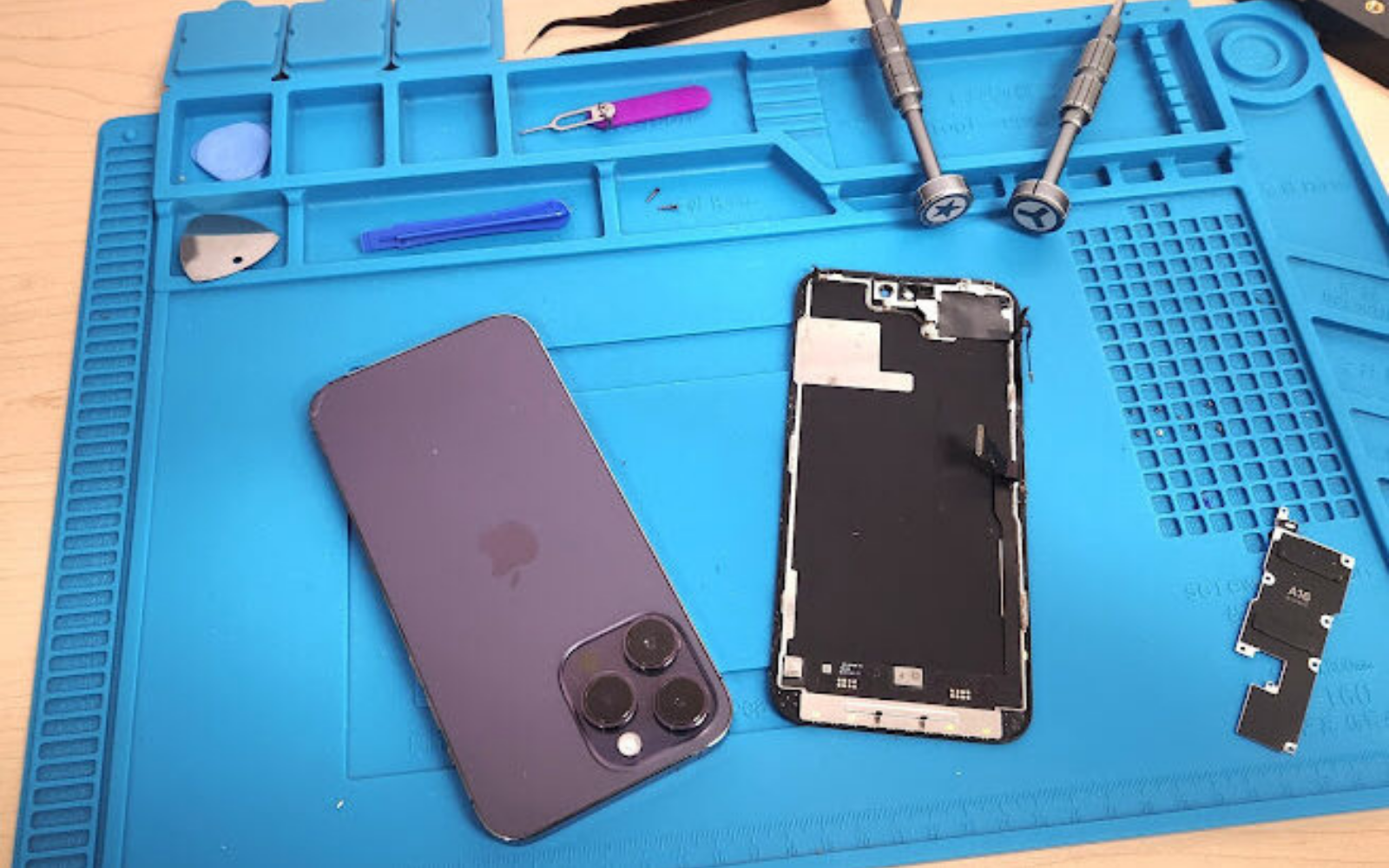
A repair shop holds other people’s property, often several thousand pounds of it at a time. The security of that property is part of the service, not an afterthought.
The risks are ordinary: a distraction at the counter, a device left in view overnight, a bag of parts on an open shelf. Most losses come from routine gaps rather than planned raids.
What are the real security risks?
Opportunity, insider knowledge and poor records.
The most common loss is a device that cannot be found and cannot be proved to have arrived. Without an intake record, the shop cannot even establish what is missing.
The second is a counter distraction: one person asks a long question while another lifts a device from the desk. The third is a staff member or visitor who knows where the stock is kept.
Each of those is addressed by a process rather than by a gadget.
How do you secure the front counter?
Keep the working area behind a physical line.
A counter that separates the customer from the devices prevents the simplest theft. Devices should never be left on the customer side, even for a moment.
Fix the till and the card terminal down, and keep the cash drawer locked when it is not in use.
A bell or a door sensor tells staff when somebody enters, which matters when the workshop is at the back.
How do you store customer devices?
In a locked cabinet, logged in and out.
Every device should have an intake record with the model, the fault, the accessories and the customer’s details. That record is the basis for both recovery and insurance.
Devices should be stored out of sight, in a locked cabinet or a secure room, not on the bench overnight.
A simple shelf with numbered bags and a log is enough for a small shop. The important part is that the log is used every time.
| Risk | Control | Check |
|---|---|---|
| Counter distraction | Devices behind the line | Staff briefing |
| Device lost | Intake log and locked store | Daily count |
| Parts missing | Locked stock and pick log | Weekly count |
| Key copied | Key register | Quarterly audit |
| Break-in | Alarm and CCTV | Monthly test |

What about parts stock?
Keep high-value lines locked and counted.
Screens and batteries are the most valuable stock and the easiest to move. They should be kept in a locked area, with a pick log for the lines that matter.
Count the top lines weekly rather than the whole shelf monthly. The fast-moving lines are where a loss is most likely and easiest to hide.
The stock discipline is the same one described in planning stock by the numbers.
How do you handle keys and codes?
A register, a named holder and a rule for return.
Every key should be recorded against a person. Spare keys should be kept off site or in a safe, not in a drawer.
Alarm codes and safe combinations should be changed when somebody leaves, and the change recorded.
A key register sounds bureaucratic until a key goes missing and nobody can say who had it.
What does CCTV actually deter?
Opportunistic theft and disputes, not determined break-ins.
A visible camera at the entrance and over the counter discourages the casual theft and provides evidence when a device is disputed.
It does not stop somebody who has planned the job, and it is not a substitute for locks and records.
Check the recording monthly. A camera that has not recorded for a month is worse than no camera.
How do you vet staff?
References, a clear process and a probation period.
Ask for references and follow them up. Give new staff access only to what they need, and review it after the trial.
Do not leave the key register or the alarm code with somebody who has not completed a trial.
The hiring process is described in hiring your first technician.
What should the opening and closing routine be?
A short checklist, done the same way every day.
Opening: check the door, the alarm log, the cabinet and the till float. Closing: lock the stock, set the alarm, check the back door and record anything unusual.
The checklist should take two minutes and be signed. A routine that depends on memory is a routine that fails on the busy day.
Keep the checklist by the door, not in a folder.
Audit the routine once a month. Pick a random closing and check that the cabinet, the alarm and the back door were all secured.
An audit is not an accusation. It is the same principle as testing a repair: the process is only real if somebody checks it.
Record the result and fix the first gap you find. A long list of improvements is less useful than one change that sticks.
Review the camera footage at the same time, if only to confirm it is recording and the time stamp is right.
Check the key register against the people who actually hold keys. A register that has not been updated is a list of intentions.
Walk the shop as a stranger would. Look for devices in view, bags on the floor and anything that would be easy to pick up and walk out with.
Fix the obvious things first. Most losses are opportunities, not conspiracies.
Tell the team what changed and why. A security change that is not explained feels like distrust.
Review the insurance cover at the same time, so the records and the policy stay aligned.
That annual review is what keeps the routine from drifting into a ritual.
Keep a simple incident log, even when nothing is stolen. A record of attempted break-ins, missing parts and odd customer behaviour shows the pattern before it becomes a loss.
Review the log quarterly and look for the same time of day or the same part of the shop.
Most security improvements come from those patterns rather than from a single dramatic event.
A camera that covers the gap identified in the log is worth more than one chosen for the front window.
That is how a small shop gets the most from a limited budget.
Review the log with the team, not at them. Most staff want the shop to be secure and will point out gaps you have stopped seeing.
Fix one gap a month and record the change. A shop that improves steadily is harder to target than one that buys a single expensive system.
Keep the records together, so the pattern and the response are in the same place.
That is what makes the next incident easier to handle.
A written incident log is also the evidence an insurer will ask for after a claim, so keep it with the intake records.
Review the log quarterly and update the routine rather than the story.
A short, signed closing check is the cheapest security measure a shop can install.
How do you record serial numbers?
On the intake record, every time.
The serial or IMEI is the only reliable way to identify a device after a loss. A photograph of the settings screen or the SIM tray is enough.
Record the accessories as well: case, SIM, memory card and any notes the customer left.
That record supports the police report, the insurance claim and the conversation with the customer.
What do you do after a theft?
Secure the site, record the loss and report it.
Do not disturb the area more than necessary. Photograph what you can and list what is missing from the records.
Report to the police and to the insurer with the intake records and the serial numbers. Change the codes and the locks if a key is missing.
Tell affected customers promptly. A customer who hears from the shop before reading about it is more likely to stay.
How does insurance fit in?
It covers the loss only if the records support it.
Most policies require a record of the stock and the customer property. Without it, the claim becomes a negotiation about value.
Check the policy’s requirements before a loss, not after. The cover and the records should match.
Keep photographs of the stock and the shop as part of the annual review.
How do you train the team?
With the routine, not with a lecture.
Walk new staff through the opening and closing checklist, the intake record and the cabinet. Then watch them do it once.
Review the routine after any incident, and change what did not work.
A team that understands why the routine exists follows it more reliably than one that has only been told to.
What is the one rule for shop security?
If it is not recorded, it is not protected.
The intake log, the stock count and the serial number are what turn a loss into a recoverable event. Locks and cameras help, but the record is what makes them useful.
Around it sit the ordinary disciplines: devices behind the line, stock locked and counted, keys registered and the closing checklist signed. The warehouse standards are described in inside a parts warehouse, slow stock in clearing dead stock, customer data under ICO guidance for organisations, consumer contracts under the Consumer Rights Act 2015, product safety with the Office for Product Safety and Standards, bench safety under risk assessment at work, and company filing at running a limited company.
FAQ
How should a repair shop store customer devices?
In a locked cabinet or secure room, out of sight, with an intake record for every device and a daily count of what is held.
Is CCTV enough security for a repair shop?
No. It deters opportunistic theft and helps with disputes, but it does not replace locks, records and a closing routine.
What should I do if a customer device is stolen?
Report it to the police and the insurer with the intake record and the serial number, change any compromised codes, and tell the customer promptly.
Why do I need serial numbers?
They identify the device after a loss and support both the police report and the insurance claim. A photo of the settings screen is enough.
Protect the stock you have paid for. Digi4u supplies across the model range so a single account covers the shelf.