


Dead Stock in a Repair Shop: How to Clear Parts You No Longer Fit
Need this part? We stock tested replacement parts with same-day UK dispatch and a 12-month warranty.
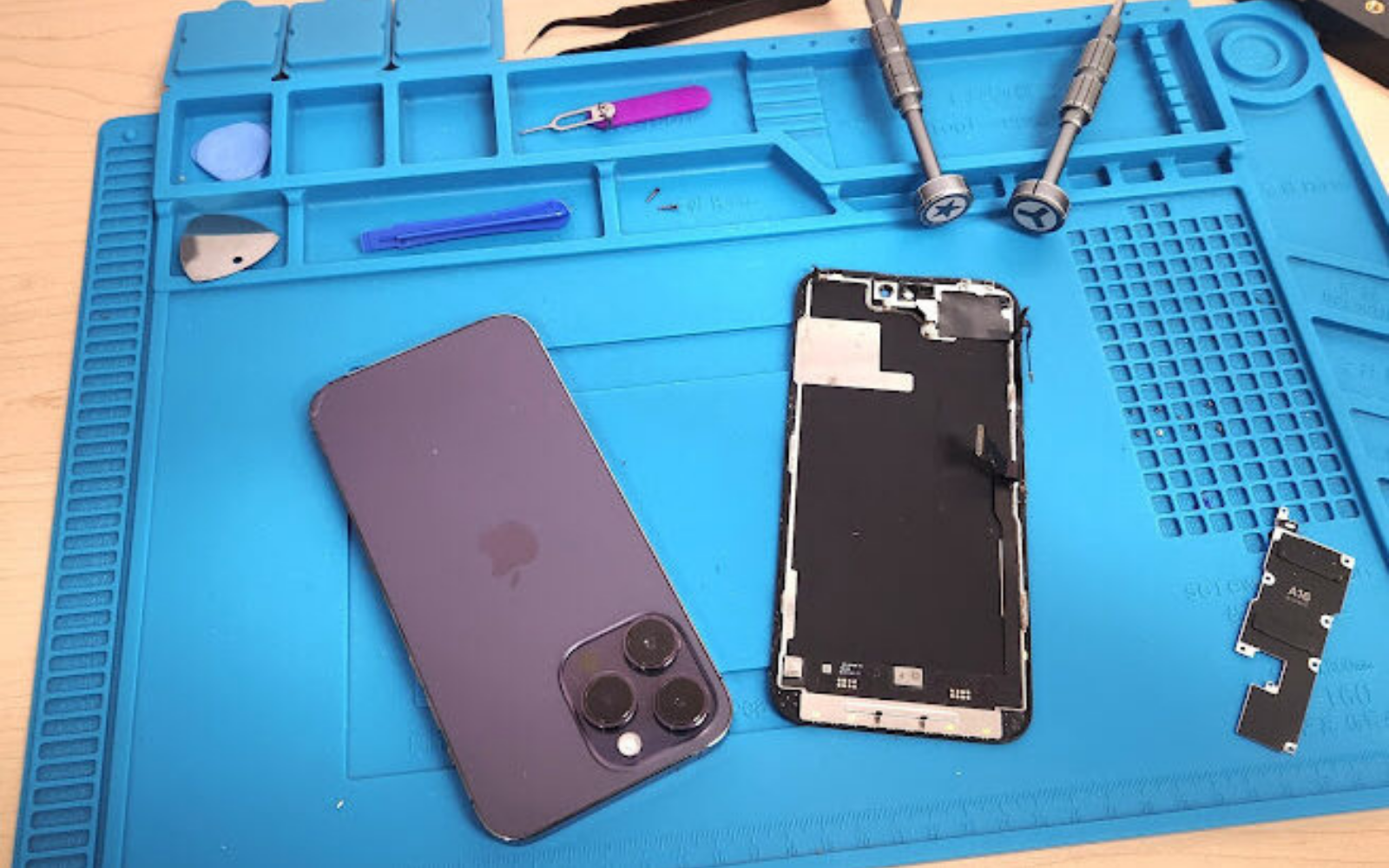
Every repair shop has a shelf of parts it will never fit. A screen for a model that stopped coming in, a battery for a variant that was ordered by mistake, a batch of flexes for a device the shop no longer supports. The parts are not faulty; they are just in the wrong place at the wrong time.
Dead stock is a cash problem before it is a storage problem. The money is already spent, and the only question left is how much of it can be recovered and how quickly.
What counts as dead stock?
A part with no realistic route to a job.
The usual test is twelve months without a sale or a fit. If a line has not moved in a year and the shop has not seen the model in that time, it is dead rather than slow. Slow stock still has a market; dead stock has lost one.
There is a second category: parts bought in error. A flex for the wrong variant, a screen with the wrong frame colour, a battery for a regional model. Those are dead from the day they arrive, regardless of age, and they should be separated from the slow-moving lines.
Slow stock is different. A part that sells twice a year is still worth holding if the margin covers the space, while a part that has not sold at all is not. That distinction decides whether the answer is clearance or patience.
How do you identify it without guessing?
List everything and match it to twelve months of jobs.
Export or write out every part line, then mark the date it was last fitted or sold. Anything without a date in the last year goes on the list. That is a mechanical exercise, not a judgement, which is why it produces a usable answer.
Then add the value. A shelf of dead flexes worth £200 is an admin problem; a shelf of dead OLED assemblies worth £4,000 is a cash-flow problem. Sorting by value rather than quantity tells the shop where to spend its effort.
Include the parts that are not on the system. Every shop has a drawer or a box of loose items that never made it onto the stock list, and those are usually the oldest and least recoverable of all.
Why does dead stock accumulate?
Because buying decisions are made on hope, not on jobs.
The common pattern is a bulk deal, a minimum order or a new model launch that looks like an opportunity. The parts arrive, the work does not, and the stock sits. Each individual decision was defensible; together they fill a shelf.
The second cause is range creep. A shop adds a brand or a model family to win a few jobs, then holds the full range to justify the addition. The range grows faster than the repair mix, and the tail becomes dead stock.
There is an emotional component as well. Parts bought during a difficult month feel like a bet the shop wants to win, so they stay on the shelf long after the evidence says the market has moved on.

What should you do first with slow lines?
Stop buying them, then decide their fate.
The first action costs nothing and prevents the problem getting worse. Mark the line as do-not-reorder, remove it from the automatic replenishment list and tell whoever places orders. Only then is it worth deciding whether to sell, bundle or write off.
That order matters because shops often clear a line and then buy it again a month later. Clearing without changing the buying rule simply resets the clock.
Tell the whole team, not just the buyer. A line that is marked do-not-reorder but still appears on a technician’s mental list will be ordered again by somebody who never saw the note.
How do you bundle slow parts into jobs?
Attach them to a repair the customer already wants.
A dead battery for an older model can be offered as a preventive replacement when the device is in for a screen. A slow port flex can be fitted during a teardown that already exposes it. The part moves at a small marginal price rather than at a loss.
This works best with parts that are genuinely useful to the customer. Offering an unwanted accessory damages trust; offering a battery that will fail within a year is a service. The distinction is whether the part solves a problem the customer has.
Price the bundle as a single job rather than as a discount on the part. The customer sees a repair at a fair price, and the shop recovers the stock without advertising a clearance sale at the counter.
When should you sell stock on?
When another shop has the demand you do not.
Other repair shops, trade groups and online marketplaces all provide a route for lines that still have a market somewhere. The price will be below cost, and that is the point: recovering sixty per cent of a dead line is better than recovering nothing and paying to store it.
Selling on works best in batches. A single old screen is not worth listing; a box of them is worth a conversation with a shop that still services that model family. The same logic applies to refurbished stock, where grade and volume decide the price.
Photograph the batch and list the model codes. A buyer needs to know exactly what is in the box, and a vague listing attracts offers that waste both sides’ time.
What is the accounting treatment?
Write down the value, then record the disposal.
Dead stock should be written down to its recoverable value rather than carried at cost. That reduces the stock figure on the balance sheet and makes the loss visible, which is the point: an invisible loss keeps being repeated.
The records should show what was written off, when and why. That trail matters at year end and it matters for VAT if the stock was bought through the business. The routine sits alongside the wider process described in invoices, VAT and records for a repair shop.
Keep the write-off separate from normal shrinkage. Mixing the two hides the buying decision that created the dead stock, which is exactly the information needed to stop it recurring.
How do you stop it coming back?
Buy to the repair mix, not to the catalogue.
The buying rule should be tied to jobs the shop has actually done. A part qualifies for stock when it has been fitted more than once in a quarter, or when a supplier’s minimum makes a small depth cheaper than ordering per job.
Review the range every quarter against the job list. Lines that have not appeared in the last quarter are candidates for removal, and the review is more effective than an annual clear-out because it catches the drift while it is still small.
Set a rule for new models as well. A part enters stock only after the shop has repaired the model at least twice, unless a supplier minimum makes a single unit impractical. That one rule prevents most of the range creep described above.
What should you never do with dead stock?
Keep it because it was expensive.
The purchase price is gone. Keeping a part on the shelf does not recover it; it adds storage cost and makes the next stock decision harder. The only relevant question is what the part is worth now.
The second mistake is discounting it into a repair without telling the customer. Fitting an old battery or a discontinued panel to clear stock creates a warranty problem later, and the saving is small compared with the cost of a return.
The third mistake is clearing stock by buying more of something else to hit a delivery threshold. That trades one dead line for another and makes the shelf problem worse while appearing to solve it.
How does dead stock affect buying terms?
It makes a smaller, more frequent order the better deal.
A shop carrying dead stock is usually over-buying to hit a minimum or a discount tier. The discount is visible and the dead stock is not, so the buying decision looks better than it is. A smaller order at a slightly higher unit price often produces a better overall result.
That calculation is the reason a minimum order should be fillable with lines the shop actually consumes. The logic is set out in how a minimum order works in practice, and it is the same arithmetic that governs planning stock by the numbers.
What is the one rule for clearing stock?
Price it to move, and move it once.
A half-hearted clearance leaves the same parts on the shelf a year later. Decide the route, set the price, and clear the line in one pass. The recovered cash is worth more than the hope of a better price later.
It also clears the mental load. A shelf of parts nobody can sell is a daily reminder of a decision that did not work, and removing it makes the next buying decision easier to take on evidence rather than on hope.
Around it sit the ordinary disciplines: mark the line as do-not-reorder first, sort by value rather than quantity, sell in batches and record the write-off. Discarded parts are waste under the Waste Electrical and Electronic Equipment Regulations 2013, batteries need the handling set out under risk assessment at work, company records follow running a limited company, product safety sits with the Office for Product Safety and Standards, and retail customers keep their rights under the Consumer Rights Act 2015.

FAQ
How long before a part counts as dead stock?
Twelve months without a sale or a fit is the usual test, provided the shop has not seen the model in that period. Parts bought for the wrong variant are dead from arrival and should be treated separately.
Should I sell dead stock at a loss?
Usually yes, if there is a buyer. Recovering part of the cost is better than storing the part indefinitely. The loss is already real; selling it only makes the loss visible and frees the cash.
How do I stop dead stock building up again?
Tie buying to jobs actually done, review the range quarterly, and mark slow lines as do-not-reorder before deciding what to do with them. Most dead stock comes from buying to a catalogue rather than to a repair mix.
Can I fit old stock to clear it?
Only if the part is appropriate and the customer knows what is being fitted. Using a discontinued or aged part to clear a shelf creates a warranty problem that costs more than the stock is worth.
Clear the shelf without writing off the margin. Digi4u supplies across the model range, so slow lines can be steered toward the jobs that still use them.