


Samsung Galaxy A54 5G Battery Replacement: Which Cell Fits
Need this part? We stock tested replacement parts with same-day UK dispatch and a 12-month warranty.
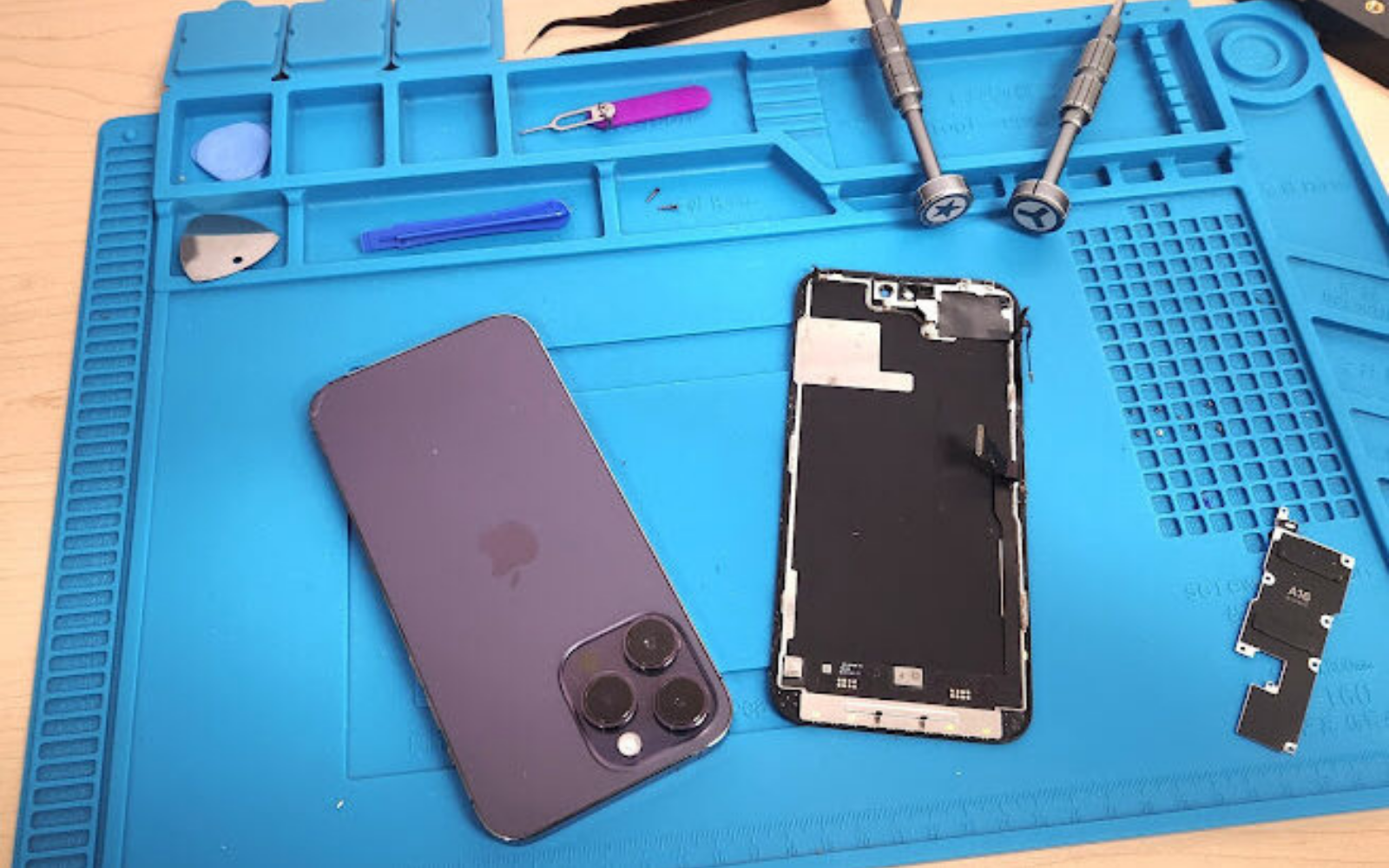
The Galaxy A54 5G is now old enough to need batteries and young enough to be worth repairing. That combination produces a steady stream of jobs, and most of them are straightforward if the cell is matched correctly.
The part number is the whole game. The A54 shares a battery with the A34, which makes it easy to source and easy to fit to the wrong device if the model is not confirmed.
Which battery does the Galaxy A54 5G use?
EB-BA546ABY, shared with the Galaxy A34.
The A54 5G uses a 5,000 mAh cell under the EB-BA546ABY part number, and the same part is used in the A34. That sharing is useful for stock, because one line covers two models that arrive in similar numbers.
It also creates a trap. A shop that stocks “A54 batteries” and fits one to an A34 without checking will usually get away with it, then assume the reverse is true for a different model. Confirm the part number against the device, not against the family name.
The shared part number is also a stocking advantage. One line covers two models, which means the shop can hold a sensible depth without splitting the investment across two nearly identical cells.
How do you confirm the model before ordering?
Read the model code from Settings, not the box.
The A54 5G carries the code SM-A546B in the UK, with regional variants using different suffixes. The code is shown in Settings, About phone, and it is the only reliable identifier once a device has been refurbished or reboxed.
Write the code on the job sheet before the part is ordered. That single field prevents the most common A54 error, which is ordering for the A34 because the two devices look similar and share a battery.
What capacity and voltage should you expect?
5,000 mAh at 3.86 volts, with the same connector.
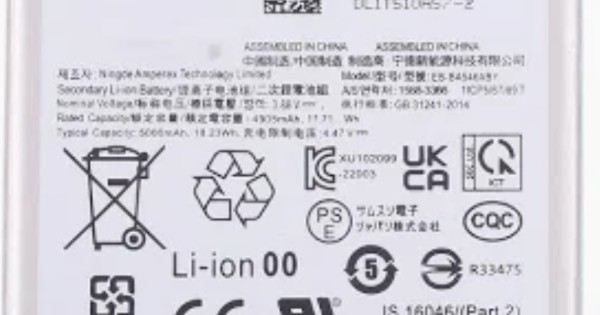
The replacement should match the original capacity and nominal voltage, and the connector should be the same shape and pin count. A cell that claims a higher capacity in the same physical size is usually a marketing figure rather than a larger battery.
Check the label on arrival. A part number that matches but a capacity that does not is a reason to query the line before fitting, because the device’s charging profile is built around the original specification.
The label should also carry a production date and a batch code. Those two fields are what a supplier needs if the cell fails early, and they are the first thing to photograph when a claim is opened.
Why do A54 battery jobs come in?
Age, heat and heavy charging, in that order.
The A54 was a volume seller, so a large installed base is now reaching the point where capacity loss becomes visible. Users report a phone that drains faster, charges more slowly or shuts down at a low percentage.
Heat accelerates the process. A device used for navigation, gaming or long calls while charging has spent more time at a high temperature than one charged overnight, and the difference shows up in how quickly the cell ages.
The fourth factor is charging habit. A device left on a charger overnight every night spends hours at full charge, which is harder on the cell than a partial charge during the day. None of this changes the repair, but it explains why two A54s of the same age behave differently.
How do you test the old cell before replacing it?
Read the reported health, then load the device.
Samsung reports battery information through the device care settings, though the detail varies by software version. The figure is an estimate, so it establishes context rather than a verdict, in the same way as the numbers described in reading cycle count and health together.
Then exercise the device. A bright screen, Wi-Fi and a demanding task for ten minutes will show whether the cell collapses under load or holds its percentage. That behaviour is what justifies the repair.
Test at room temperature. A device that has just come in from a cold street will report and behave differently, and a result taken in the first minute is not a fair test of the cell.
What does the replacement involve?
Opening the back, then disconnecting and lifting the cell.
The A54 is a glued-back design, so the job starts with heat and a pick rather than screws. Once the back is off, the battery connector is accessible, and the cell is held by adhesive strips that need to be softened before it is levered out.
Work slowly around the cell. The pouch is soft, and a bent or punctured cell is a fire risk rather than a warranty problem. The handling rules for a swollen or damaged cell are described in storing and quarantining lithium cells safely.
What damages the connector during the job?
Levering the board instead of the plug.
The connector is small and sits close to other components. A pick inserted under the socket rather than the plug can lift the connector from the board, which turns a battery job into a microsoldering job.
Disconnect with a plastic tool under the plug, and support the board while doing it. The failure modes and the repair options are set out in battery connector damage.
How do you calibrate after fitting?
Charge to full, then discharge to shutdown once.
A full charge followed by a full discharge lets the device relearn the cell’s range. It does not change the battery, but it changes what the device reports, which is what the customer sees.
Record the result on the job sheet. If the percentage still behaves erratically after a calibration cycle, the fault may be in the charging path rather than the cell, and that distinction should be tested before the device goes back.
Give the customer a simple way to judge the repair as well: a full day of normal use without a shutdown. That is a test they can run themselves, and it matters more than any number in a menu.
What should you tell the customer about health reporting?
That the figure may not reset immediately, or at all.
Samsung devices do not always expose a health percentage in the same way as an iPhone, and a replacement does not guarantee a new number on screen. Explain that the repair changes behaviour, not necessarily the reported figure.
That conversation prevents a return visit. A customer who expects a number to change and sees the old one will assume the battery was not replaced, even when it was.
How should you store A54 batteries before fitting?
Cool, dry and away from loose metal.
A lithium pouch should sit at room temperature, in its original packaging, with the connector protected. Heat, moisture and loose metal parts are the three things that shorten its shelf life or damage it before it is ever fitted.
Keep the cells in a labelled box rather than loose in a drawer. The label should show the part number and the date received, so the oldest stock is used first and a batch problem can be traced back to a delivery.
A cell that has been dropped, swollen or stored in a cold workshop should be quarantined rather than fitted. The handling rules for a damaged cell are not the same as for a good one, and the workshop routine matters more than the storage shelf.
When is a battery not the fault?
When the device charges slowly or runs hot while charging.
Those symptoms can come from the charging port, the cable or the charging circuit rather than the cell. Replacing a battery in that situation changes nothing and costs the shop a part it cannot claim.
Test the charging path first. A different cable and charger, a check of the port for debris and a look at the current draw will separate the two faults before any part is ordered.
What should the job be priced at?
Part cost, labour and an allowance for returns.
The price should cover the cell, the bench time, the adhesive and a realistic allowance for the occasional warranty claim. A battery job priced at part cost plus ten minutes is a job that loses money when one in twenty comes back.
Look at the total time rather than the swap alone. Opening a glued back, cleaning the frame and resealing takes longer than the cell replacement itself, and that time belongs in the quote.
Keep the price consistent across models. A customer quoted one figure for an A54 and a much lower one for a similar phone will ask why, and the answer is usually that one quote was built properly and the other was not.
What is the one rule for A54 batteries?
Confirm SM-A546B and EB-BA546ABY before you fit.
Two fields, both written on the job sheet. The model code decides the device, and the part number decides the cell. Everything else about the job follows from getting those two right.
Around it sit the ordinary disciplines: test before replacing, disconnect by the plug, calibrate once and record what was fitted. Replaced cells are waste under the Waste Electrical and Electronic Equipment Regulations 2013, storage and handling come under risk assessment at work, retail customers keep their rights under the Consumer Rights Act 2015, product safety sits with the Office for Product Safety and Standards, and Samsung publishes model support at Samsung UK support.
FAQ
What battery does the Samsung Galaxy A54 5G use?
The EB-BA546ABY, a 5,000 mAh cell that is also used in the Galaxy A34. Confirm the model code SM-A546B and the part number on the label before fitting.
Does the A54 battery need calibration after replacement?
A full charge followed by a full discharge is worth doing so the device relearns the cell’s range. It changes what the device reports, not the cell itself.
Why does my A54 battery health not reset after replacement?
Samsung devices do not always expose a health percentage in the same way as an iPhone, and a replacement does not guarantee a new figure on screen. Judge the repair by behaviour rather than the display.
How long does an A54 battery replacement take?
Typically under an hour for an experienced technician. The back is glued, the cell is held by adhesive strips, and the main risk is damage to the connector or the pouch during removal.
The right cell for the A54, confirmed by model code. Digi4u supplies Samsung batteries with the model and part number checked before dispatch.