

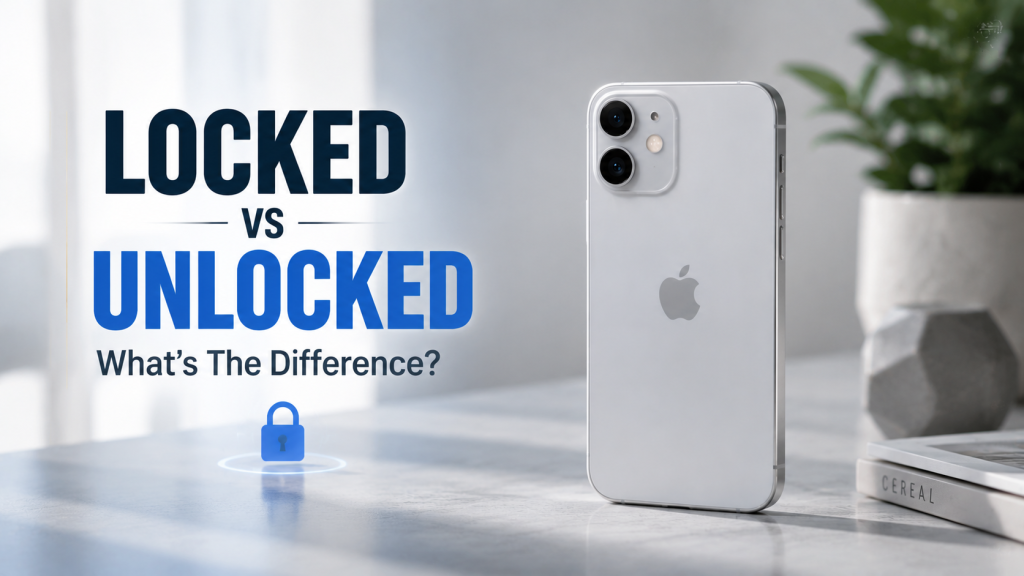
Locked vs Unlocked iPhone: What’s the Difference?
Need this part? We stock tested replacement parts with same-day UK dispatch and a 12-month warranty.
Posted on by digi4u
When buying a used or new iPhone, one of the most important—but often misunderstood—terms you’ll see is “locked” vs “unlocked.” At first glance, they may seem technical, but the difference has a big impact on how you can use your phone, especially if you travel, switch carriers, or buy second-hand devices.
This guide breaks everything down in simple terms so even beginners can fully understand what these terms mean, how they affect your iPhone, and which option is better for your needs.
What Does a “Locked iPhone” Mean?
A locked iPhone is a device that is restricted to work with only one mobile carrier (for example, EE, Vodafone, or O2 in the UK).
This means:
- You can only use SIM cards from that specific carrier
- The phone is tied to a contract or financing plan
- Other network SIM cards will not work unless the phone is unlocked
Why carriers lock phones
Mobile network providers often lock iPhones when:
- The phone is purchased on a monthly contract
- The phone is subsidized (discounted upfront cost)
- The device is still being paid off
This ensures the customer stays with the network until the contract ends or the device is fully paid.
What Does an “Unlocked iPhone” Mean?
An unlocked iPhone is not restricted to any carrier. You can use it with almost any compatible SIM card worldwide.
This means:
- You can switch between carriers freely
- You can use local SIM cards when traveling abroad
- The phone is more flexible and easier to resell
Example:
If your iPhone is unlocked, you can use:
- EE today
- Switch to Vodafone next month
- Insert a European SIM while traveling
No restrictions.
Key Differences Between Locked and Unlocked iPhones
Here’s a simple comparison:
Carrier Flexibility
- Locked iPhone: Works with only one carrier
- Unlocked iPhone: Works with any compatible carrier
Price
- Locked iPhone: Often cheaper upfront (or included in contract deals)
- Unlocked iPhone: Usually more expensive upfront
Travel Use
- Locked iPhone: Expensive roaming fees or limited usability abroad
- Unlocked iPhone: Can use local SIM cards anywhere
Resale Value
- Locked iPhone: Lower resale value
- Unlocked iPhone: Higher resale value and easier to sell
How to Check If Your iPhone Is Locked or Unlocked
You can easily check this on your iPhone:
Method 1: Settings
- Go to Settings
- Tap General
- Tap About
- Scroll to Carrier Lock
- If it says “No SIM restrictions” → Unlocked
- If it shows a carrier name → Likely locked
Method 2: SIM Test
- Insert a SIM card from another network
- If it works → Unlocked
- If it shows “SIM not supported” → Locked
Can a Locked iPhone Be Unlocked?
Yes—most locked iPhones can be unlocked, but conditions apply.
Requirements usually include:
- Contract fully paid off
- No outstanding balance on the device
- Request made to the original carrier
Once approved, the carrier will unlock it remotely.
Some third-party services also offer unlocking, but these should be used carefully, as not all are legitimate or permanent.
Which One Should You Choose?
It depends on your situation.
Choose a Locked iPhone if:
- You want a cheaper upfront price
- You plan to stay with one carrier long-term
- You’re buying a contract phone
Choose an Unlocked iPhone if:
- You travel frequently
- You want flexibility between carriers
- You buy/sell phones often
- You want better resale value
Common Misconceptions
“Unlocked iPhones are fake or modified”
Not true. Unlocked simply means the carrier restriction has been removed.
“All new iPhones are unlocked”
Also not true. Many iPhones bought from carriers are still locked until the contract ends or they are officially unlocked.
“Unlocked phones don’t work as well”
False. Hardware and performance are exactly the same. The only difference is network restriction.
Why This Matters in Real Life
Understanding locked vs unlocked iPhones helps you avoid problems such as:
- Buying a phone that doesn’t work with your SIM
- Paying expensive roaming charges abroad
- Struggling to resell a locked device
- Getting stuck in a carrier contract unintentionally
For repair shops and resellers, this knowledge is also crucial because unlocked phones generally have higher demand and faster turnover.
Final Thoughts
The difference between locked and unlocked iPhones is not about quality—it’s about freedom and flexibility.
- A locked iPhone ties you to one carrier but can reduce upfront cost
- An unlocked iPhone gives you full control, better travel options, and higher resale value
If you’re buying a phone today, most users benefit more from an unlocked device unless they are specifically taking a carrier contract deal.