


How to Check Whether a USB-C Cable Supports Data Transfer
Need this part? We stock tested replacement parts with same-day UK dispatch and a 12-month warranty.

A USB‑C connector looks the same on every cable, yet the internal wiring decides whether the lead can move files, drive a monitor or simply charge a phone. Checking the printed specification and running a controlled file‑transfer test are the only reliable ways to know what a particular cable can do.
Last updated:
Charging is not the same as data
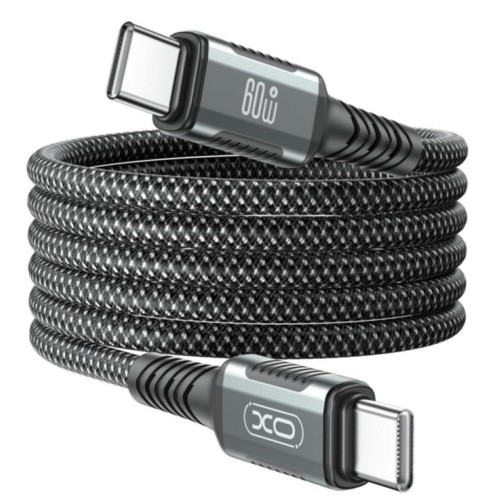
The USB‑C plug shape tells you nothing about data speed, video capability or power delivery. Two cables that appear identical can be charge‑only, limited to USB 2.0 at 480 Mbps, or support USB 3.x at 5 Gbps or 10 Gbps, and some also carry DisplayPort or Thunderbolt signals. A successful charge only proves that the power conductors are intact; it does not confirm that the data pairs are present or functional. The USB‑IF specification separates power markings from data‑rate markings, so a 60 W or 240 W logo alone cannot be used to infer any data capability (USB‑IF cable and connector page). Apple’s own documentation illustrates the point: the Apple Thunderbolt 3 (USB‑C) cable supports far higher data rates and video than the basic USB‑C charge cable, which is limited to USB 2.0 data and no video (Apple support article 111750).
Charge‑only, USB 2.0 and USB 3.x markings
| Cable type | Typical markings | e‑marker notes | Expected file‑transfer result | What the test does not prove |
|---|---|---|---|---|
| Charge‑only | Only a power rating (e.g. 60 W, 100 W) or no data logo | Usually no e‑marker; if present it stores only power data | Device charges but never appears in file manager | Cannot confirm video or higher‑speed data |
| USB 2.0 data (up to 480 Mbps) | “USB 2.0”, “480 Mbps”, “Hi‑Speed” logo | May lack an e‑marker; if present it reports USB 2.0 capability | Files copy at modest speed; device visible in Explorer/Finder | Does not guarantee video output or USB 3.x speeds |
| USB 3.x 5 Gbps (USB 3.1 Gen 1 / USB 3.2 Gen 1) | “SuperSpeed”, “SS”, “5 Gbps”, “USB 3.1” | e‑marker usually present and reports 5 Gbps capability | Noticeably faster transfers; device visible | Does not prove 10 Gbps or video support |
| USB 3.x 10 Gbps (USB 3.1 Gen 2 / USB 3.2 Gen 2) | “SuperSpeed+”, “10 Gbps”, “USB 3.2” | e‑marker reports 10 Gbps; often required for active cables | Very fast transfers; device visible | Does not prove DisplayPort/Thunderbolt video |
Markings are printed on the cable sheath, the plug housing or the retail packaging. Charge‑only leads often feel slightly thinner because they omit the four high‑speed data pairs, but thickness is only a rough clue. The definitive check remains a file‑transfer test on a known‑good host.
How to check if a USB‑C cable supports data transfer
- Unlock the phone or tablet and connect it directly to a computer USB‑C port that you have previously verified works with another data cable. Do not use a hub, dock or adapter.
- Watch the phone for a USB notification. On Android, select “File transfer”, “MTP” or “PTP” as appropriate. On iOS, the device will appear in Finder (macOS) or the Photos app (Windows) once the correct mode is chosen.
- Open the computer’s file manager – File Explorer on Windows, Finder on macOS – and confirm that the device’s internal storage or SD card is listed.
- Copy a small test file (e.g. a 10 MB image) to and from the device to verify that data moves in both directions.
- Repeat the entire sequence with a second cable that you know supports data, changing only the cable. If the known cable works and the test cable does not, the test cable is charge‑only or defective.
- If neither cable produces a device entry, try a different USB‑C port on the same computer, then a different computer. Inspect both ports for lint, bent pins or physical damage. Never insert metal tools into a powered USB‑C port.
Windows, Mac and Android checks
Windows File Explorer
After connecting the unlocked phone, a toast notification may appear. If it does not, open File Explorer and look under “This PC”. The device should appear with its model name. Right‑click and choose “Open” to browse folders. If the device shows only “Charge only” or does not appear, open Settings → Devices → USB and verify that the port is not set to “Charge only”. Some OEM drivers (e.g. Samsung, Google) install a companion app that must be allowed to run.
macOS Finder
On macOS 13 and later, the connected Android phone appears in the Finder sidebar under “Locations”. Click it to view the file system. If the device is missing, open “Image Capture” or “Android File Transfer” (legacy) to see whether the OS recognises the hardware. Ensure the phone’s USB mode is set to “File transfer” – the setting lives in the notification shade after the cable is attached.
Android USB transfer modes
When a USB‑C cable is plugged in, Android displays a “Charging this device via USB” notification. Tapping it reveals options: “Charge only”, “File transfer (MTP)”, “Photo transfer (PTP)”, “MIDI”. Select “File transfer” for full folder access. Some manufacturers hide the notification behind a “USB preferences” screen in Settings → Connected devices → USB. If the phone stays in “Charge only” despite a data‑capable cable, the cable is likely charge‑only or the port is damaged.
What each test result means
Known data cable works, test cable fails: The test cable is either charge‑only, damaged, or rated below the data speed required by the host. Relabel or replace it.
Device appears but no files are visible: The phone is probably still in “Charge only” mode. Unlock the screen, pull down the notification shade, and switch to “File transfer”. Consult the phone maker’s support page if the option is missing.
Neither cable works on a single computer port: Try another USB‑C port on the same machine. If the second port works, the first port may be faulty or disabled in BIOS/UEFI.
Neither cable works on multiple known‑good hosts: The phone’s USB‑C port, its USB controller firmware, or a software restriction (e.g. corporate policy) is the likely cause. Further diagnosis may require a service centre.
Basic file transfer works but an external SSD, dock or monitor does not: The cable may lack the higher data rate (5 Gbps/10 Gbps) or the DisplayPort/Thunderbolt alternate mode required by the peripheral. Check the peripheral’s specification and match the cable’s stated data and video capabilities.
Choosing a replacement cable for the job
Before buying, read the product listing for three independent fields: connector type (USB‑C to USB‑C, USB‑C to USB‑A, etc.), stated data capability (USB 2.0, 5 Gbps, 10 Gbps, Thunderbolt 3/4) and supported charging power (e.g. 60 W, 100 W, 240 W). A title that mentions only wattage does not confirm data speed or video support. For ordinary phone backups, a cable that explicitly states “USB 2.0 data” or “480 Mbps” is sufficient. For an external SSD, docking station or monitor, you need a cable that lists the required data rate (5 Gbps or 10 Gbps) and, if a display is involved, an explicit video specification such as “DisplayPort Alt Mode” or “Thunderbolt 3”. Charging requirements are a separate decision; see the guide on 60 W, 100 W or 240 W USB‑C cable ratings for power‑only considerations.
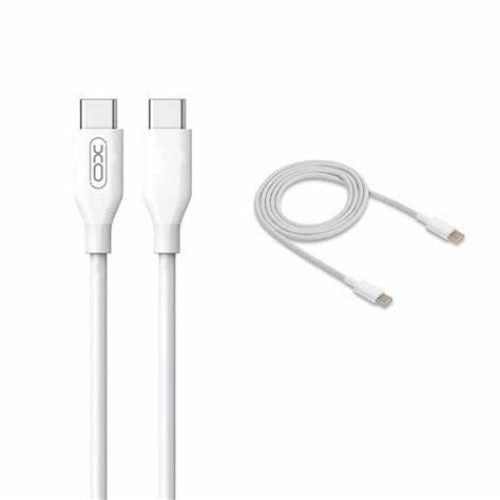
Digi4u’s USB‑C cable collection includes both charging‑only and data‑enabled leads. Always open the individual product page to verify the data rating before adding to basket. Same‑day dispatch is available for orders placed before 4 pm Monday‑Friday.
Repair shops that stock both USB‑C and Lightning cables should also review the USB‑C vs Lightning guide for UK repair shops to ensure the right mix of connectors for customer devices.
Frequently asked questions
How do I check if a USB‑C cable supports data transfer?
Connect the unlocked phone directly to a computer port known to work with a data cable, select “File transfer” on the phone, and verify that the device appears in File Explorer (Windows) or Finder (macOS). Repeat with a known‑good data cable; if only the known cable works, the test cable is charge‑only or defective.
Do all USB‑C cables transfer data?
No. The USB‑C connector shape is common to charge‑only, USB 2.0, USB 3.x and Thunderbolt cables. Only cables that explicitly state a data rate (e.g. 480 Mbps, 5 Gbps, 10 Gbps) are guaranteed to move files.
How can I tell a charge‑only USB‑C cable from a data cable?
Look for printed markings such as “USB 2.0”, “SuperSpeed”, “5 Gbps”, “10 Gbps” or a Thunderbolt logo. Charge‑only leads usually show only a power rating (60 W, 100 W, 240 W) or no data logo at all. Thickness can hint at missing data pairs but is not proof.
Does a high wattage rating mean the cable is fast for files?
Power rating and data capability are independent. A 240 W cable may still be limited to USB 2.0 data. For file‑transfer speed, check the data‑rate marking; for charging, consult the 60 W, 100 W or 240 W USB‑C cable ratings guide.
Why does my phone charge but not appear on my computer?
The phone is likely still in “Charge only” USB mode. Unlock the screen, open the USB notification, and switch to “File transfer” (MTP) or “Photo transfer” (PTP). If the mode cannot be changed, the cable may be charge‑only or the phone’s port may be damaged.
