


iPhone Model Identification: Check the Number Before You Order the Part
Need this part? We stock tested replacement parts with same-day UK dispatch and a 12-month warranty.
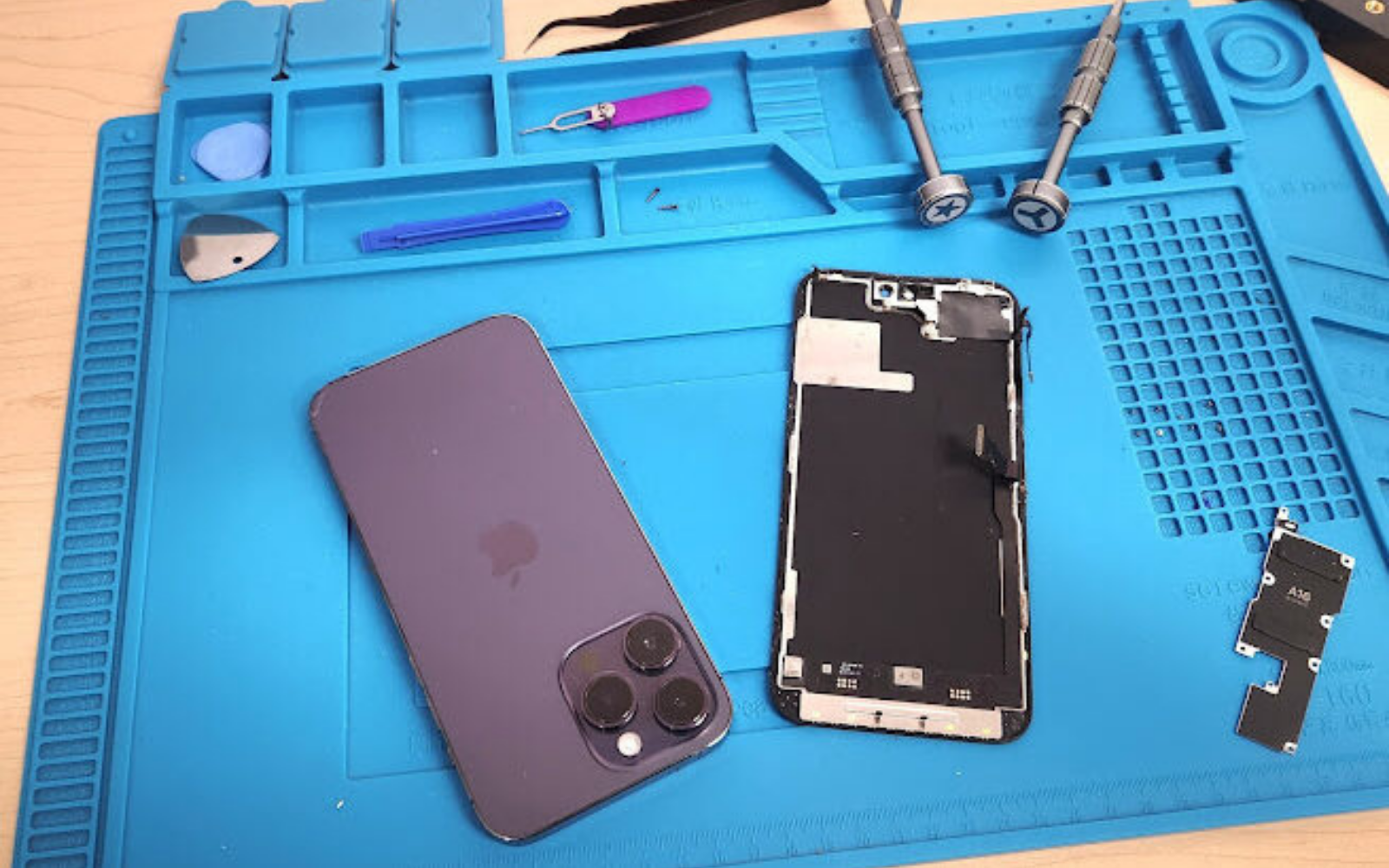
Almost every wrong-part order in a repair shop starts the same way: with a name instead of a number. The customer says “iPhone 13”, the shop orders an iPhone 13 screen, and the device turns out to be a 13 Pro Max, a 13 mini, or a model the customer misremembered.
The fix takes about twenty seconds at the counter and it is the single highest-return habit in parts ordering. This is how to identify an iPhone properly, what the numbers mean, and what to write down.
Why does the model number matter more than the model name?
Because one name covers several different devices.
Apple’s marketing names describe a generation and a tier, not a specification. Within one generation there are usually four or more distinct models, each with its own display assembly, battery, camera module and frame. The numbers on the box and in the settings identify which one you are holding.
The same structure exists in every other brand, which is why the discipline is consistent across the catalogue. Samsung identifies variants with a model code, iPad with an A-number, and Huawei with a version code that separates, for example, a 4G model from its 5G counterpart. The method differs; the principle does not.
Where do you find the model number on an iPhone?
Settings, the SIM tray, or the back of older models.
On a device that boots, open Settings, then General, then About, and tap the model number to reveal the full code beginning with A. That code is the definitive answer. On a device that does not boot, the SIM tray carries the model number and the IMEI, and the number is also printed on the back of the iPhone 7 and earlier.
Where none of those are reachable, the IMEI can be checked against the device records, or the device can be connected to a computer to read the identifier. Whatever route is used, the objective is the same: a code you can hold a supplier to.
What is the difference between the model number and the model identifier?
One is for ordering; the other is what software reports.
The model number beginning with A, such as A2633, is the part-matching code and the one a trade catalogue is indexed by. The model identifier, such as iPhone14,5, is what a computer reports when the device is connected, and it is useful for confirming what the software thinks the device is rather than what the case says.
Both are worth recording, because a device that has been repaired elsewhere may report a different device from the one its chassis suggests. On a trade-in or a repair with unclear history, that mismatch is a finding in itself, and the checks involved are set out in checking a used iPhone before you buy it in.
Which iPhones share a name but take different parts?
Every generation, at every size.
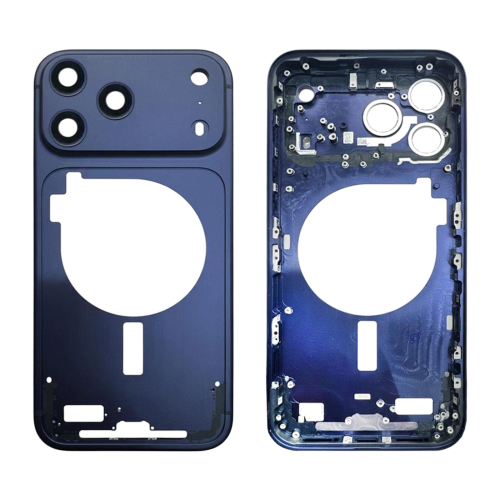
The iPhone 13, 13 mini, 13 Pro and 13 Pro Max take four different display assemblies, four battery types and four camera configurations. The iPhone 15 range adds a USB-C port assembly that differs between models, and the 17 range continues the pattern with its Pro and Pro Max variants.
The rear camera is where the differences bite hardest, because a camera module that fits the frame of one model may not be the module that model uses. The matching decisions for those parts are the same ones described in choosing between a camera lens and a module, and they all begin with the code.
Why does the same generation take different displays?
Because size, brightness and refresh differ by tier.
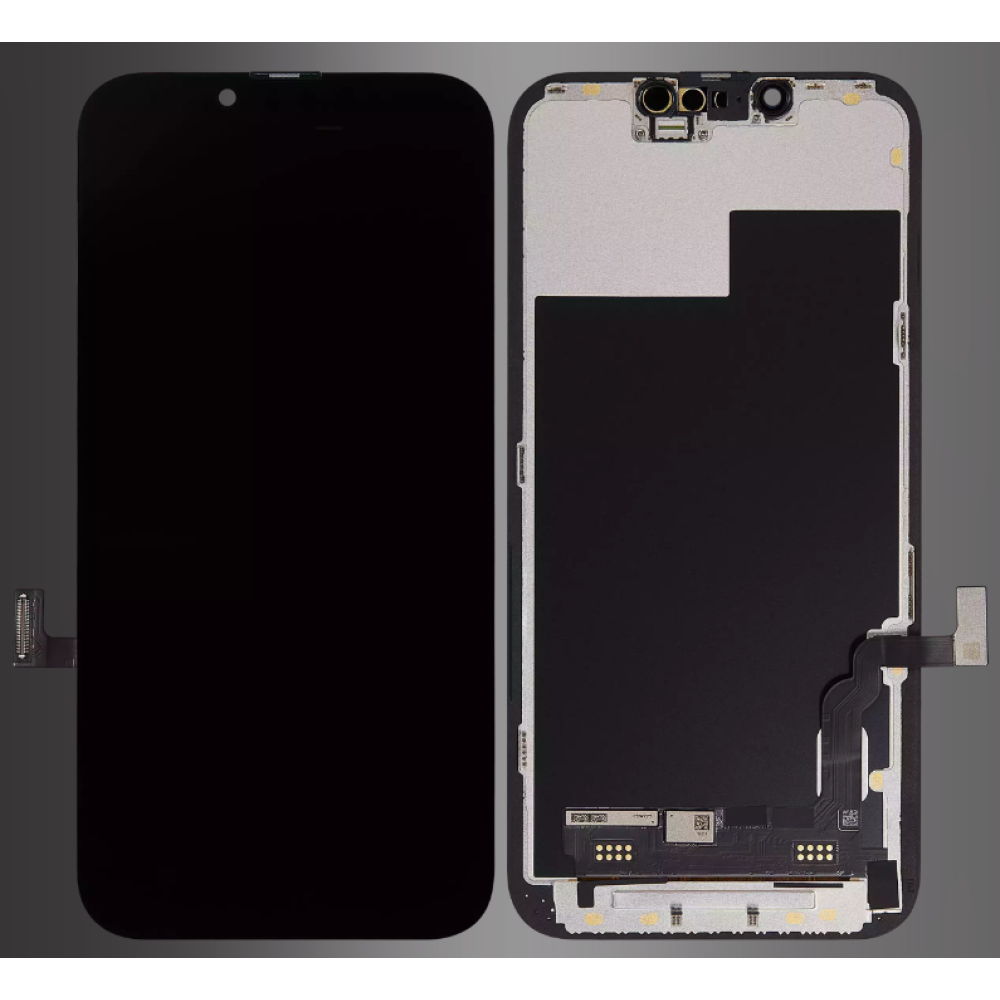
A Pro model in a generation typically runs a higher refresh rate and a brighter panel than the standard model, and the physical size differs between the standard, mini, Pro and Pro Max variants. Those differences change the flex routing, the connector position and the frame geometry, so the assemblies are not interchangeable even when the diagonal measurement is close.
Where a device has been repaired before with a substitute panel, the mismatch can also affect the functions that depend on the display, such as automatic brightness and, on some models, the Face ID path. That is an argument for confirming the model before assessment, not after.
How do you confirm the model before ordering parts?
Photograph the About screen at intake.
One photograph, taken at the counter, shows the model name, the model number and the serial in a single frame. It takes twenty seconds, it is unambiguous, and it removes the need to reopen the device when the part has to be reordered or the customer disputes what was discussed.
Where the device will not boot, photograph the SIM tray on the tray itself and note the IMEI. Where neither is possible, do not order on an assumption: quote only after the device has been opened far enough to identify the assembly, and say so honestly at the counter.
What else should be recorded at intake?
Condition, damage, passcode status and the agreed work.
The model is the ordering record; the rest is the dispute record. Existing scratches, a cracked camera lens, a dented frame and whether a passcode has been provided all belong on the sheet, signed by the customer, because those are the facts that settle a later disagreement.
Two fields are worth adding on any device that has been repaired elsewhere: whether it has been opened before, and whether any part of it looks newer than the rest. Those observations change how the repair is approached and how far the shop is prepared to warrant it, and they take a moment to write down at intake.
This is the same intake discipline that applies to a trade purchase or a warranty claim. A device whose condition was documented at intake is a device whose outcome can be discussed factually, and the process costs three minutes per job.
How does the model number change what you stock?
It defines the line, not the family.
A stock list built on model names is a guess; one built on model numbers is a plan. Instead of holding “iPhone 13 screens” a shop holds the assembly for the specific model that comes through the door most often, and it can count its stock accurately because each line is one product.
That clarity also makes the buy list easier to review. Lines that have not moved in a quarter are visible as individual numbers rather than hidden in a general category, and the review that follows is the one described in choosing a phone parts supplier.
The same record makes a reorder straightforward. When the device comes back, or an identical model arrives, the job sheet already names the part that was fitted, and the shop can order the same line from the same account without repeating the identification work.
What about non-Apple devices with the same problem?
The codes are different and the principle is identical.
Samsung uses model codes such as SM-A546B, where the suffix identifies the regional variant and can determine which panel fits. iPad uses A-numbers, and Huawei splits a single marketing name into 4G and 5G versions with different panels. In each case the code decides, and the family name does not.
Those systems are worth learning rather than looking up each time, because they turn a three-minute enquiry into a ten-second one. The matching process for the two most common non-Apple families is described in matching Galaxy parts by model number, and the same method applies to iPad screens and batteries.
How do you explain this to a customer?
By showing them the two devices.
“These two phones have the same name on the box and take different screens” is a sentence customers understand immediately when they can see the difference between a standard and a Pro model on the counter. It also explains why the quote for one is not the quote for the other.
That conversation is worth having before the price, not after. A customer who understands why the part costs what it does is far easier to deal with than one who believes they are being charged more for the same repair their friend had done last month.
What is the one habit that prevents wrong-part orders?
No order without a code on the job sheet.
A single rule, applied without exception, removes the largest category of avoidable ordering errors a repair shop makes. It also protects the customer, because the part that arrives is the part their device needs rather than the part their description suggested.
The rule is worth writing into the intake form rather than leaving to memory. A printed field for the model number, filled in before the customer leaves the counter, does more for a shop’s ordering accuracy than any amount of care taken later, because it removes the moment where someone decides the answer is obvious.
Around it sit the checks that make high-value work safe. Apple documents what a device reports about the parts it can identify at iPhone parts and service history, and the difference between genuine and aftermarket displays is set out at about genuine iPhone displays. Retail customers keep their rights on the finished work under the Consumer Rights Act 2015, replaced parts are waste under the Waste Electrical and Electronic Equipment Regulations 2013, and parts placed on the market fall to the Office for Product Safety and Standards.
FAQ
How do I find my iPhone model number?
Open Settings, then General, then About, and tap the model number to reveal the full code beginning with A. On a device that will not boot, the model number and IMEI are on the SIM tray. Older iPhones also have the number printed on the back.
Why do I need the model number to order a part?
Because a marketing name covers several different devices. The iPhone 13, 13 mini, 13 Pro and 13 Pro Max take four different display assemblies, batteries and camera modules, and only the model number identifies which one a device needs.
What is the difference between an iPhone model number and its model identifier?
The model number beginning with A is the part-matching code that a trade catalogue is indexed by. The model identifier, such as iPhone14,5, is what software reports when the device is connected, and it is useful for confirming the software’s view of the device.
Do Samsung and iPad models work the same way?
Yes, with different codes. Samsung uses model codes such as SM-A546B where the suffix identifies the regional variant, iPad uses A-numbers, and Huawei splits one name into 4G and 5G versions with different panels. The code decides in every case.
Order against the code, every time. Digi4u lists parts by model number and A-number, so the part that ships is the part the device needs.