


Mobile Phone Repair Tools for Beginners: What to Buy First and What to Skip
Need this part? We stock tested replacement parts with same-day UK dispatch and a 12-month warranty.
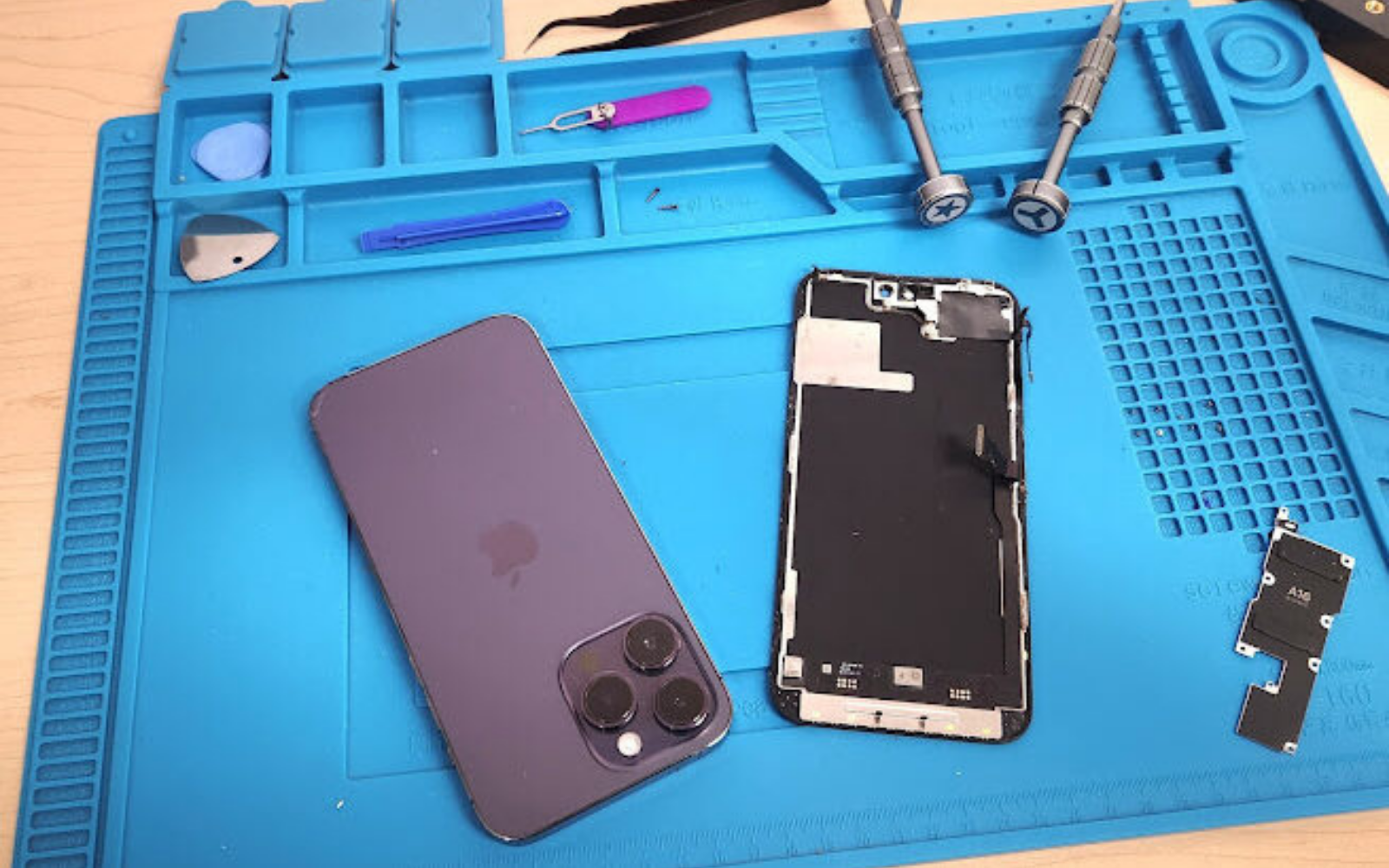
Most beginner tool guides are lists, and lists are the wrong shape for this problem. A new shop does not need to know that a hot air station exists; it needs to know whether to buy one this month, next year, or after the first board-level job has already been paid for.
What follows is a buying order with reasoning attached. Three stages, an indicative budget for each, and a short list of equipment that is genuinely worth deferring. The rule behind the whole sequence is that a tool should be bought when the work it unlocks is already arriving, not when it appears on somebody else’s bench.
What are the basic tools needed for mobile phone repair?
A driver set, tweezers, pry tools and heat.
Those four categories cover the majority of phone repairs, because most jobs are disassembly, part substitution and reassembly. Everything else on a bench either supports those tasks, measures something about them or extends what you can attempt. When a shop stalls on a job, the missing item is almost always inside one of those four groups rather than in a specialist machine.
The specific set worth owning is a precision driver set with pentalobe 0.8, Y000, Torx T2 and T5, Phillips 000 and 1.5, and flat and tri-point bits for older models; a pair of ESD-safe fine tweezers and a pair of curved ones; plastic pry tools, opening picks and a suction cup; and controlled heat from either a heat mat or a hot air station on its lowest setting. Add a magnetic screw mat, a multimeter, 99 per cent isopropyl alcohol, lint-free wipes and screen adhesive, and that bench can take on the overwhelming majority of screen, battery, port and back-glass work.
What should a new shop buy before its first customer?
Only what the first month of repairs needs.
A shop that buys for every repair it might one day perform spends money on capability it cannot yet use. A shop that buys for the jobs it can already sell spends nothing it does not immediately recover, and it learns what its actual repair mix is before committing to equipment that only suits a different mix.
The practical first purchase is therefore a complete but modest bench: drivers, tweezers, pry tools, heat, a screw mat, a multimeter, consumables and a test screen or two for the model families the shop expects. A test screen is worth calling out because it converts a screen repair from a sequence of “does it work now” moments into a single controlled test, and it is the difference between confident work and hopeful work.
How much should a first bench cost?
Broadly £350 to £600, and that is enough to trade.
The range depends on how much of it is bought as a set and how much is bought individually. A generic 30-in-1 driver set costs a fraction of a branded precision set, and the branded set is worth it once you have spent an afternoon with a stripped screw that the cheap bit rounded. The same logic applies to tweezers, where tip alignment is the whole product.
Consumables are not part of that figure and should not be, because they recur. Isopropyl alcohol, adhesive, battery tabs, screen tape, gloves and lint-free wipes will cost more over a year than the tools did, and a shop that forgets to allow for them will find its material cost per repair drifting upward without any single purchase to explain it.
| Stage | Indicative spend | Bought when | Unlocks |
|---|---|---|---|
| Stage 1: bench basics | £350–£600 | Before the first customer | Screens, batteries, ports, back glass |
| Stage 2: test and power | £400–£1,200 | When the repair mix settles | Charging faults, boot faults, no-power work |
| Stage 3: specialisation | £1,500+ | Once one line is profitable | Board-level, laminating, a second device family |
What can wait until the work pays for it?
Almost everything that costs more than £200.
An OCA laminating machine, a vacuum separator, a laser back-glass machine and an ultrasonic cleaner are all real tools that do real work, and every one of them is a business decision rather than a starting point. Each has a minimum volume below which it costs more in space, setup time and learning than it returns.
Take laminating as the clearest example. Refurbishing panels in house only makes sense when you are already buying enough screens to have a steady supply of cores, already doing the separation and lamination work well enough to trust it into a customer’s device, and already selling that grade of part. Until all three are true, buying re-glassed panels from a supplier is cheaper than buying a machine, and that comparison changes only when volume does.

Why do cheap tool kits cost more than they save?
Because they fail on the job that pays for them.
A rounded screw head, a tweeter whose tips do not meet and a driver bit that cambers out of a Y000 screw all cost the same thing: time on a device that is already open, plus the risk of a scratch, a torn flex or a damaged thread. Those costs do not appear on the tool’s price tag, so a cheap kit looks like a saving until the first absorbed repair.
The pattern to buy around is duplication. A large kit that includes forty bits you will never use and three that you will, in a quality grade below the job, is worse value than six good bits. Tool brands that are consistent about temper, tolerance and finish exist at three price levels, and the middle one is almost always the right answer for a working shop.
How do you set up a bench that does not create faults?
By removing the four things that cause them.
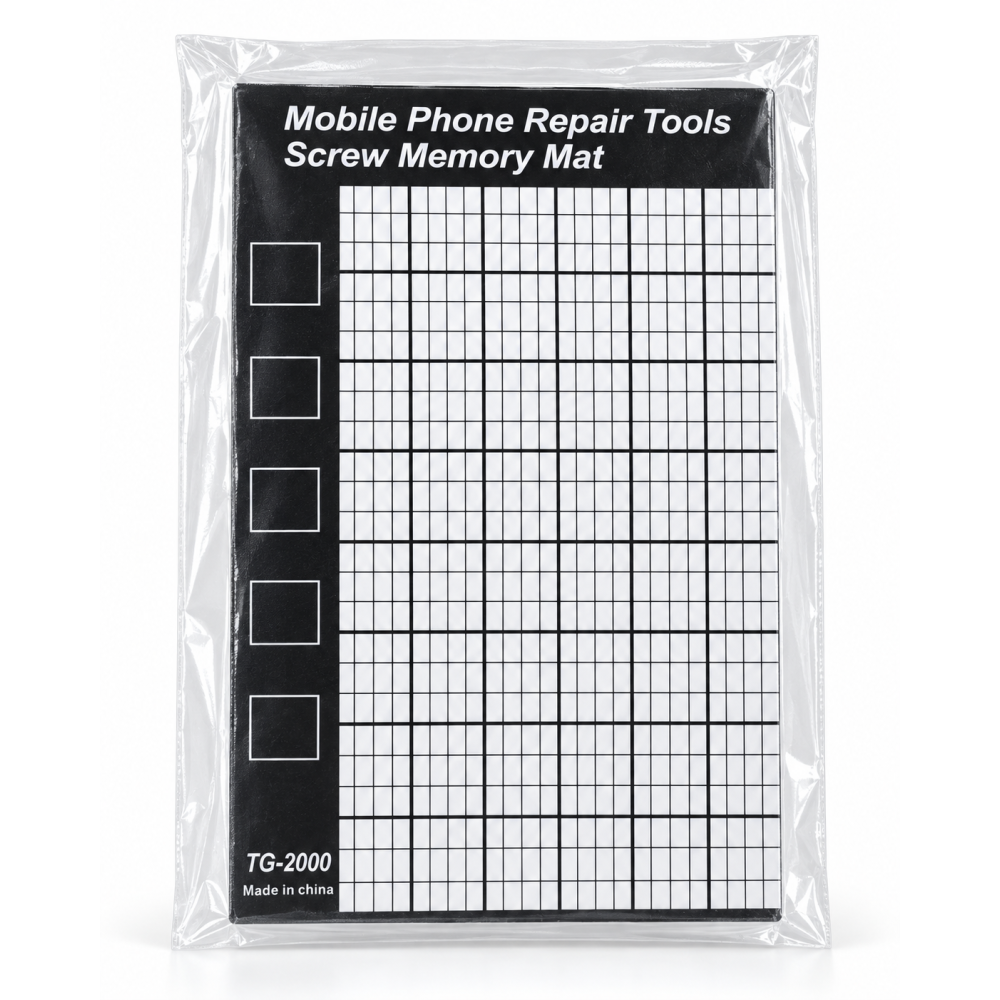
Static, heat, contamination and disorganisation cause most self-inflicted damage. An anti-static wrist strap and a mat address the first, temperature control on the heat source addresses the second, alcohol and lint-free wipes with a clean working surface address the third, and a labelled screw mat with a tray for each device addresses the fourth.
Lighting and position matter more than they sound. A bench lamp with a high colour temperature and magnification makes small connectors visible, and sitting squarely to the device rather than reaching across it prevents the small levering accidents that cost the most. A magnetic screw mat is the cheapest part of that setup and the one that most often stops a job ending in a lost spring.
Which consumables are a recurring cost rather than a one-off?
Adhesive, alcohol, tabs, gloves and wipes.
Consumables are where a repair shop’s material cost actually lives. Screen adhesive and gaskets are single use by definition, battery tabs are consumed once per battery, alcohol and wipes are used on every intake, and gloves are used on anything that touches a board or a customer’s device. None of them are optional and none of them last.
The mistake is to buy them in the smallest available quantity and then run out mid-job, so it is worth keeping a written minimum for each line and ordering against it rather than against memory. Buying consumables from the same trade account as parts keeps that simple and avoids the situation where a £4 item holds up a £90 repair for two days.
Do you need a microscope or a power supply in year one?
Not unless you are already doing board-level work.
Both are stage two purchases and both are often bought too early, because they look like the difference between a hobby bench and a professional one. A DC power supply earns its place when you test devices that will not power on, because it shows current draw before and after a repair. A microscope earns its place when you work under magnification on components.
Where a moving device gives you a reason to buy earlier, it is usually a rising share of no-power work rather than ambition. Watching three devices a week leave the shop as unrepairable is the signal; buying a microscope and then finding you have no board-level customers is the version that costs money.
How do you learn to use the tools you have bought?
On dead devices, before you use them on live ones.
Every shop accumulates unrepairable handsets, and they are the cheapest practice material available. Separating a bonded panel, removing a battery without deforming it, running a hot air station at a temperature that does not discolour a shield: all of these are skills that improve with repetition and all of them are better learned on a device that is already written off.
The second learning route is doing fewer repairs more thoroughly. A shop that attempts a screen replacement on a family of models it knows well, records what it did and keeps the parts it removed will improve faster than one that accepts every model and learns nothing repeatable. The same discipline pays off when the shop eventually adds a second device family, for the reasons set out in matching a MacBook part to the chassis: model identification is a skill, and it is learned the same way.
How do you buy tools without stalling a job?
By keeping tools and parts on one trade account.
A repair that stops because a £6 bit is missing costs far more than the bit, and the delay is not the only cost: a device held open on a bench overnight is a device at risk. Buying tools and parts from one trade supplier reduces the number of orders in flight, consolidates the returns process and means a missing item is a phone call rather than a separate delivery.
A trade account also lets a shop buy against a real price rather than a retail listing, which matters most on the lines bought repeatedly. The registration process for a UK trade account is short and is described at how to register a trade account, including what documentation a supplier typically asks for.
What about insurance and safety paperwork for a new bench?
It belongs in the same first month as the tools.
A soldering iron, a hot air station and a lithium battery charging area are the three things an insurer and a safety inspector will ask about, and the answers are cheap in advance and expensive to improvise afterwards. A written risk assessment, a fire-extinguisher position and a documented battery charging process cover most of it.
The HSE publishes practical guidance on managing risks and risk assessment at work and on electrical safety that a small shop can work through in an afternoon. Waste from the bench, including replaced batteries and scrap boards, falls under the Waste Electrical and Electronic Equipment Regulations 2013, and the general framework for setting the business up is summarised in the government’s set up a business guidance. Where tools and parts are placed on the market rather than used internally, the Office for Product Safety and Standards is the relevant regulator.
What is the one rule that keeps tool spending under control?
Buy the tool the job has already paid for.
Every purchase on a repair bench should be traceable to work that is already coming through the door or that a specific, identified customer has already asked for. That single rule keeps a new shop solvent, keeps the bench uncluttered and, more importantly, keeps attention on the repairs it can already do well.
The shop that follows it ends up buying less equipment and better equipment, replacing the tools that earn their keep and ignoring the ones that only look impressive. Six months in, that bench looks unremarkable and produces clean work, which is the only outcome that matters.
FAQ
What are the basic tools needed for mobile phone repair?
A precision driver set with pentalobe, Y000 and Torx bits, ESD-safe tweezers, plastic pry tools and picks, controlled heat, a magnetic screw mat and a multimeter. With isopropyl alcohol, lint-free wipes and screen adhesive alongside, that covers most screen, battery, port and back-glass work.
What tools do I need to start a phone repair business?
The same bench basics, plus two things beginners overlook: consumables, which cost more over a year than the tools did, and one or two test screens for the model families you expect. Equipment like a DC power supply or a microscope belongs in a later stage, bought when the work it unlocks is already arriving.
How much should a beginner spend on phone repair tools?
Around £350 to £600 is enough to open with, and it buys a complete bench rather than a partial one. Beyond that figure you are buying capability rather than capability you can use, and the money is better held until the repair mix tells you which direction to specialise in.
Do I need a microscope to start repairing phones?
No. A microscope becomes necessary when you are working on components under magnification, which is when board-level work turns into a revenue line. Until then it is an expensive item on a bench that needs lighting, magnification and a clean working surface more than it needs a second lens system.
Build the bench in the right order. Digi4u supplies repair tools, bench equipment and consumables on the same trade account as your parts, so a missing bit never holds up a repair.