


Soldering Iron and Hot Air Station: What a Repair Bench Actually Needs
Need this part? We stock tested replacement parts with same-day UK dispatch and a 12-month warranty.

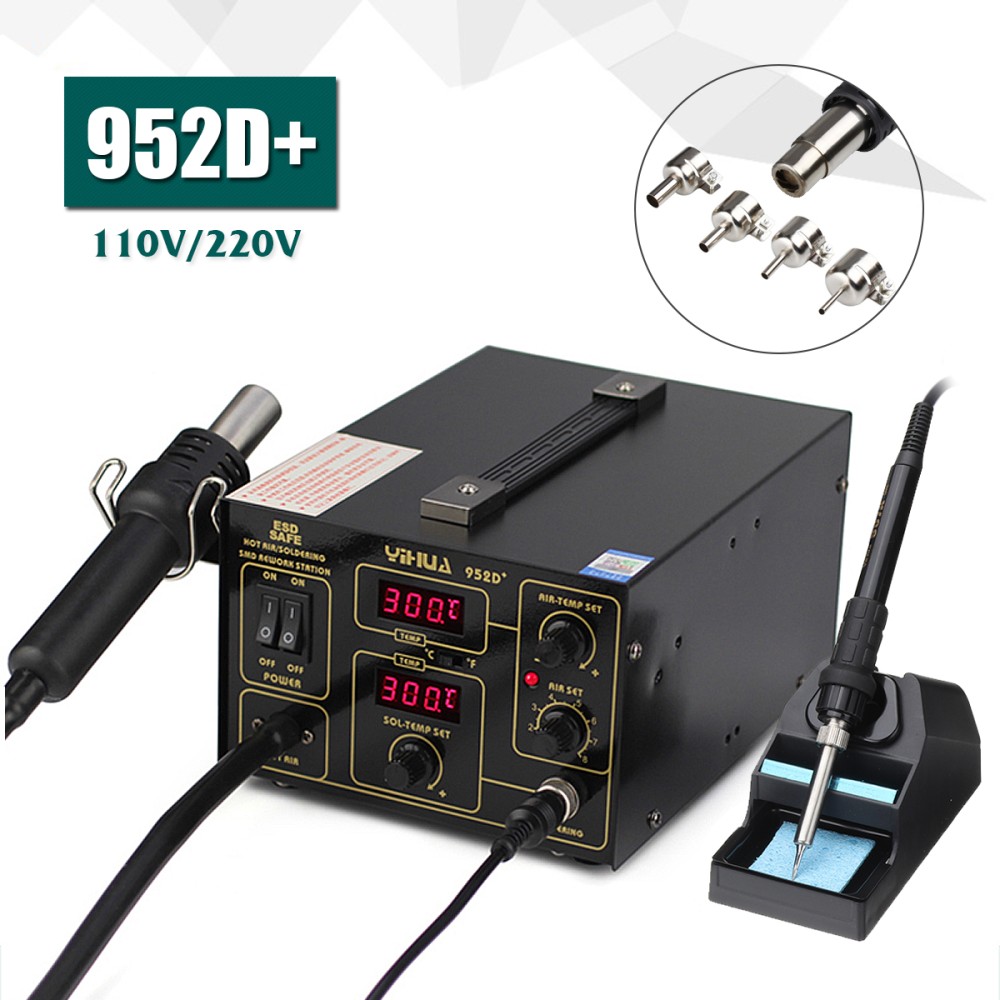
A soldering iron and a hot air station solve different halves of the same problem, and most board work needs both of them on the bench. The iron makes and breaks individual joints; the air moves components and reflows solder across an area that a tip cannot reach.
Understanding which tool suits which job, and how much heat each should apply, is what separates a bench that produces reliable work from one that lifts pads.
What does each tool actually do?
One works point by point; the other works across an area.
An iron transfers heat through a tip in contact with a single joint. A hot air station blows temperature-controlled air across a nozzle, heating several joints or a whole component at once. The iron is precise and slow, and the air is broad and fast.
That distinction decides which tool a technician reaches for. A single connector pin is an iron job, and a shielded component with twenty pads underneath it is an air job. Trying to do the second with the first is how pads and traces get destroyed.
It also decides the order of work. Air is used to release a component and the iron is used to clean up the pads afterwards, so the two tools are normally used together on the same repair rather than as alternatives to each other.
What temperature should an iron run at?
Hot enough to flow solder in a couple of seconds.
For lead-free work on phone boards that usually means somewhere between 330 and 380 degrees Celsius, adjusted for the tip and for the joint. The temperature should be set so the joint reaches flow quickly, rather than so the iron recovers quickly.
Higher is not better. Excess temperature burns flux, oxidises the tip and drives heat into the board, where it destroys laminate and lifts pads. A hotter iron does not make a joint in less time; it makes a damaged joint in the same time.
The correct setting is the lowest one that does the job, and it changes with the work. A large ground plane pulls heat away faster than a thin flex, so a single number will not suit every joint, and a technician who understands that stops chasing the dial.
What does a hot air station add?
Broad, controlled heat that an iron cannot deliver.
Air is what makes it possible to remove a shielding can, lift a multi-pin connector or reflow a component with pads underneath it. The station lets the technician control flow as well as temperature, which matters because too much flow moves small parts off their pads.
It also does work the iron cannot approach at all. A chip with its pads underneath cannot be touched by a tip, and a flex attached along a line of joints cannot be heated one pin at a time without lifting the tail.
Flow rate is the setting that catches people out. Turning it up to speed a job moves components and blows solder away from the joint, and the repair then takes longer than it would have done at a lower setting.
What power does a shop actually need?
Enough to hold temperature under load.
The specification that matters is not the peak wattage printed on the box but whether the station recovers temperature while it is working. A station that drops twenty degrees every time it touches a ground plane produces cold joints and long dwell times.
For phone work, a station in the region of sixty to ninety watts with good thermal recovery is generally ample. The heavier the board and the larger the ground plane, the more that recovery matters, and the more a cheap station struggles.
A preheater changes the arithmetic as well. Where the board is already warm, the iron or the air only has to supply the difference at the joint, so a modest station performs better than its rating alone would suggest.
Which tips and nozzles should be stocked?
A small range, replaced often, matched to the work.
Tips are consumables rather than permanent tools. A tip that has lost its plating cannot transfer heat properly and makes every joint harder, which is why a shop should hold several shapes and replace them as they wear.
For air, the nozzle diameter sets how concentrated the heat is. A narrow nozzle suits a single component and a wide one suits a shield, and having both stops a technician turning the temperature up to compensate for the wrong nozzle.
A worked set for phone repair is small: a fine chisel or knife for general joints, a heavier chisel for ground connections, a bent tip for awkward angles, and two or three nozzle sizes. Everything beyond that is bought for a specific job.
What about solder, flux and wick?
They decide the joint as much as the iron does.
Flux removes oxide and lets solder flow at a lower temperature, which is why a joint made with good flux needs less heat and less time on the pad. Wick and a pump remove solder from a joint or a pad before a component is lifted.
The consumables around the station are consumed on every job and they are the cheapest part of it. Running out in the middle of a repair costs more bench time than holding a spare reel, which is the same arithmetic that applies to the consumables that decide your margin.
Solder choice matters too. Leaded solder flows at a lower temperature and is easier to work with, while lead-free solder is what most modern boards use and is the safer choice where a device may be worked on by others later. The two are not interchangeable on the same joint.
Why does a station beat a fixed iron?
Because temperature control is the whole job.
A variable station lets the technician set a temperature, watch it hold and change it for a different joint without swapping tools. An uncontrolled iron simply becomes as hot as it becomes, which is the shortest route to a lifted pad.
Good stations also show the set temperature rather than leaving it to judgement. That display is what makes a process repeatable, because a technician who cannot see the number cannot reproduce the result on the next device.
The difference is easiest to see over a month. A shop working with a controlled station can explain why one board came out clean and another did not, which is what allows technique to improve rather than simply being repeated.
What damage does excess heat cause?
Lifted pads, damaged laminate and ruined connectors.
Heat that is too high, applied for too long, or applied to a component that has absorbed moisture causes damage that cannot be undone. A lifted pad can sometimes be repaired with a jumper; a delaminated board cannot be repaired at all.
Most of that damage looks like a fault in the board rather than a fault in the technique, which is why these failures are often misread as the faults that reach a board bench. Recording what was done, and at what temperature, is what makes the difference visible.
Moisture is the hidden variable. A board that has been near liquid, or stored in a cold workshop, can absorb water that turns to steam under a hot nozzle, and the resulting damage appears underneath a component where it is hardest to see.
How should the bench be set up around them?
Extraction, lighting, magnification and space.
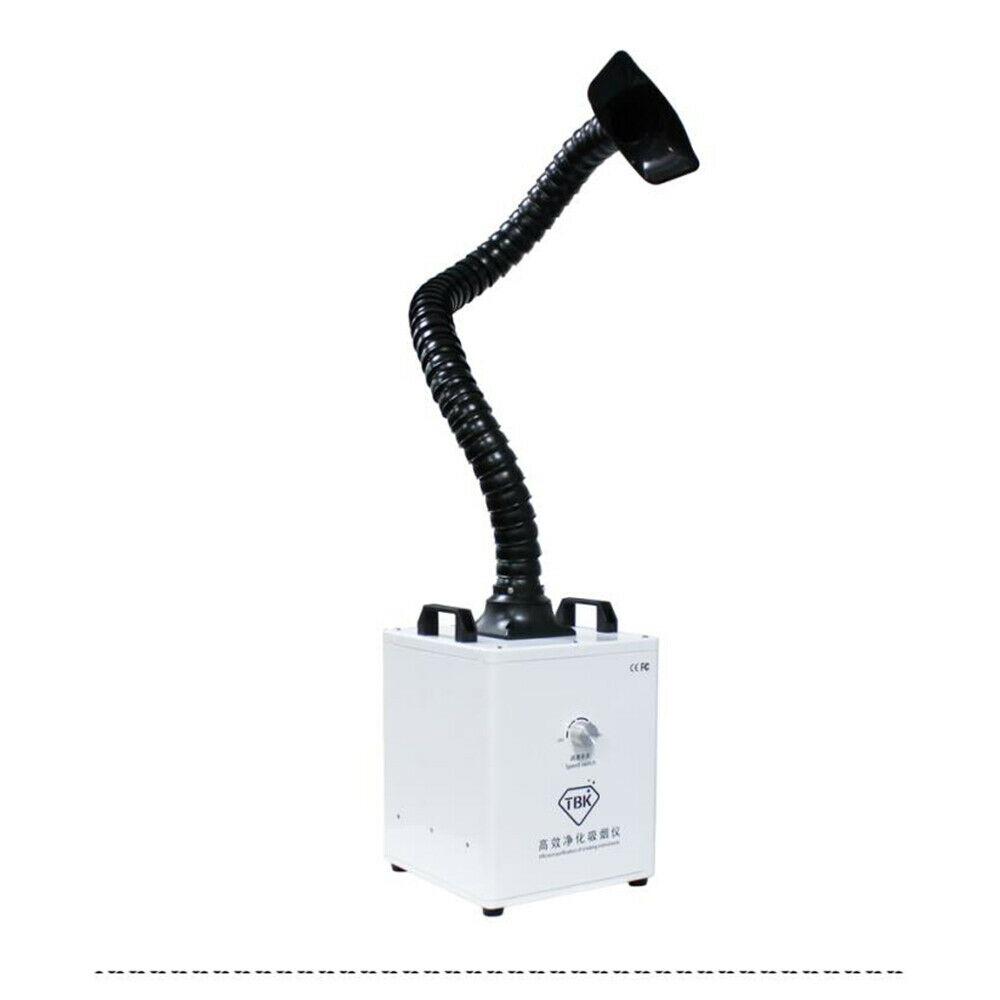
Every joint made produces flux fume, so extraction belongs with the station rather than after it. Magnification and good lighting are what let a technician see a bridged joint before it becomes a return visit.
Space matters too. A station, a preheater, a microscope and an extractor need a bench that is not also being used to strip phones, and the order those pieces are bought in is described in what to buy first for board work.
Keeping the bench clear is part of the same discipline. A bench being used for two jobs at once is a bench where a hot iron gets left near a customer’s device, and where a small part goes missing between jobs. The expectations for equipment used at work are set out by the HSE at electrical safety and risk assessment at work.
What if the shop does not do board work?
Buy the iron for the jobs that still need one.
An iron that never touches a logic board still earns its place: repairing a connector, resoldering a battery tag, rejoining a speaker flex or restoring a charging pad contact. Those are ordinary repairs and they need a controlled iron.
A hot air station is harder to justify without board work. Where the shop refers that work out, the station can wait until the volume of referrals makes the case, and the money is better spent on the tooling the shop uses every day.
That is not a permanent decision. The referrals themselves are the evidence: a shop that sends two or three boards away every week has a bench worth building, and one that sends one a month does not.
When is a second station worth it?
When a technician is waiting rather than working.
Two technicians sharing one station spend part of every board job queued behind each other, and a station is cheap relative to the time it costs. The same argument applies to a second microscope or a second preheater.
The measurable test is whether the bench is idle waiting for a tool. If it is, then the tool is the bottleneck, and a second one pays for itself faster than most parts purchases of the same value.
It is worth checking that a second station is the answer rather than a faster one. Where the queue exists because a single technician works slowly, extra equipment adds cost without adding throughput.
What is the one rule for buying one?
Temperature control, not raw power, is the thing to buy.
The difference in price between a controlled station and a fixed iron is small, and the difference in what they can do is the whole of board-level repair. A temperature the technician can set and see is the foundation of every reliable joint.
Everything else follows from that. Tips, nozzles, flux and technique all assume that heat is being applied at a number somebody chose, rather than at whatever a fixed element happens to reach on the day.
Around it sit the ordinary disciplines: match the tip and nozzle to the job, keep the temperature as low as will flow the solder, replace worn tips rather than compensating with heat, and record what was done. Stations disposed of are waste under the Waste Electrical and Electronic Equipment Regulations 2013, equipment placed on the market falls to the Office for Product Safety and Standards, the safety requirements for equipment used at work come from the Electrical Equipment (Safety) Regulations 2016, and retail customers keep their rights on the finished work under the Consumer Rights Act 2015.
FAQ
Do I need a hot air station as well as a soldering iron?
For board-level work, yes. An iron makes and breaks individual joints, while hot air heats several joints or a whole component at once, which is the only practical way to remove parts with their pads underneath them.
What temperature should I set a soldering iron to for phone repair?
Around 330 to 380 degrees Celsius for lead-free work on phone boards, adjusted for the tip and the joint. Set it so the solder flows in a couple of seconds rather than turning it up to recover faster.
What wattage soldering station does a repair shop need?
Roughly sixty to ninety watts with good thermal recovery is enough for phone work. What matters is whether the station holds its temperature while it is working, not the peak figure printed on the box.
How often should soldering tips be replaced?
As soon as the plating has gone or the tip stops wetting solder, because a worn tip transfers heat badly and makes every joint harder. Treat tips as consumables and keep a small range of shapes in stock.
Soldering and hot air that earn their keep. Digi4u supplies stations, tips and consumables for UK repair shops, with board-level parts on the same account.
