


Handling Warranty Claims: A Process That Ends Well
Need this part? We stock tested replacement parts with same-day UK dispatch and a 12-month warranty.
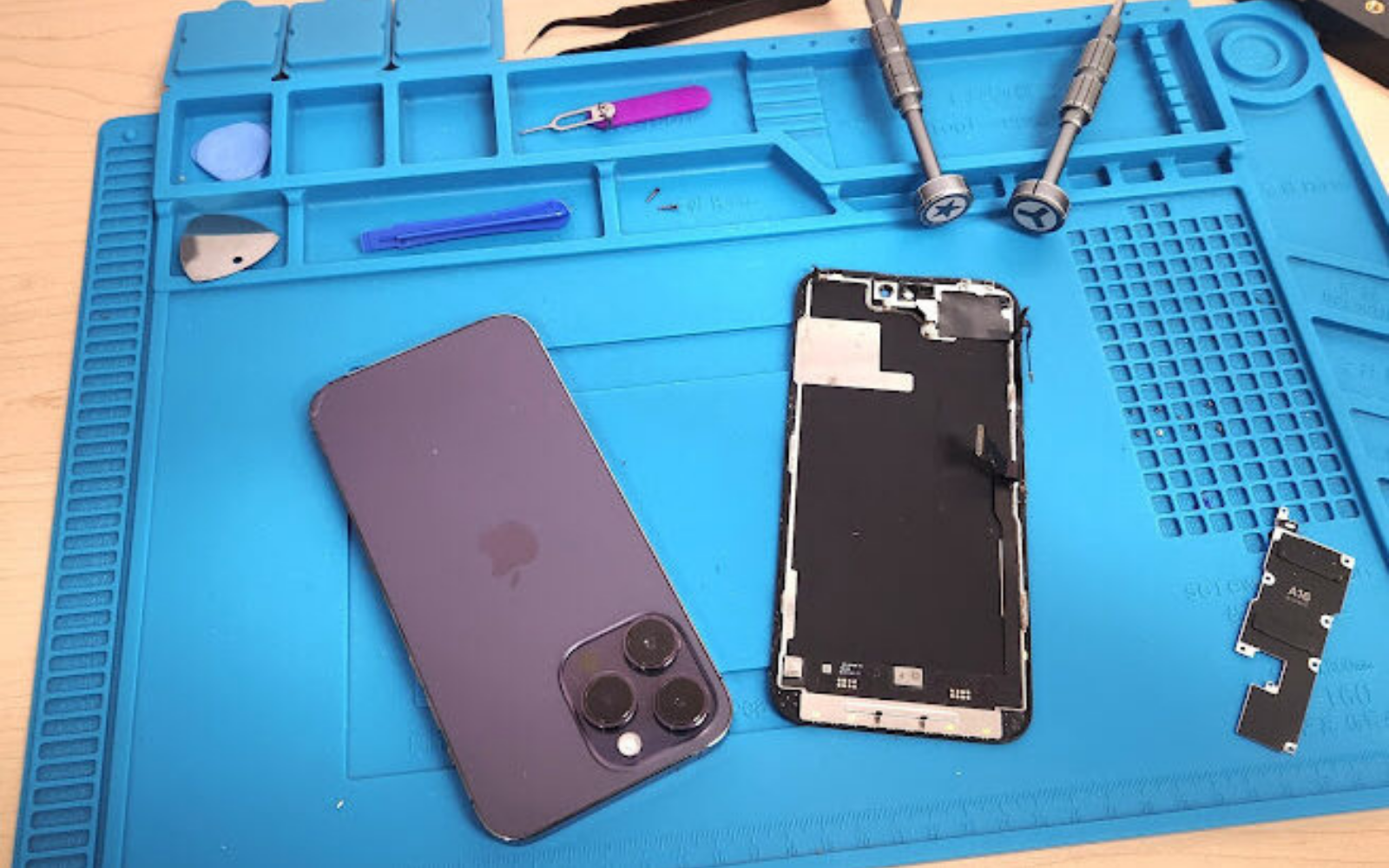
Warranty claims are the part of repair work where paperwork decides the outcome. Two shops can face the same returning device and reach opposite conclusions, purely because one has a record of what was fitted and what the device did before.
The process is short: capture the facts, separate the fault types, decide, and either repair it or explain why not. What makes it work is doing the first step properly, weeks earlier, at intake.
Why do warranty claims go wrong?
Because the facts are missing when the device comes back.
A customer returns with a device that has stopped working and a reasonable expectation that the shop will fix it. Without a record of the part fitted, the condition at intake and what the customer was told, that expectation is impossible to assess fairly.
The same gap makes the supplier claim impossible too. A shop that cannot say which part is in the device cannot claim against the supplier who sold it, so the cost lands entirely on the business.
What should the customer’s terms say?
The part, the period, the exclusions and the process.
The written terms should name what is covered, state the period in dates rather than as a duration, list the standard exclusions and explain what the customer should do if a fault returns. Retail customers keep the rights set by the Consumer Rights Act 2015, and a shop’s own terms sit on top of that position.
The wider structure of those terms is described in what a repair warranty should cover. What matters here is that the terms are on the invoice rather than in a drawer, because that is where the shop and the customer will both look.
What should you record when a claim comes in?
The device, the symptom, the date and the original part.
Photographing the device on arrival and matching it to the original job sheet takes a minute and establishes whether this is even the same repair. Devices that were repaired elsewhere, or that have clearly been opened since, change the conversation immediately.
Recording the customer’s description in their own words is worth the effort too. A description that has changed since the first visit tells the shop something, and a description that matches is easier to work from.
How do you decide whether a claim is covered?
Separate part failure, workmanship and damage.
A panel that lifts, a battery that stops holding charge or a port assembly that stops working are part and workmanship questions. A cracked screen, a dented frame or a device that has been in liquid are damage questions, and they are excluded by standard terms.
Making that separation explicit at the counter is what turns a difficult conversation into a short one. The judgement is not personal, it is the terms the customer already has.

What do you do when the fault is not your work?
Show the customer what you found, and be specific.
Impact damage, liquid contact and work by another shop are the three common cases. Each is easier to discuss with evidence: a photograph of a dent, traces of corrosion under a shield, or tool marks that are not the shop’s own.
Where the fault is genuinely ambiguous, the commercial answer is usually to repair it and treat the cost as goodwill. That decision should be deliberate and recorded, rather than a habit that quietly erodes margin.
How do you claim against a supplier?
With the batch reference and the original part.
Most suppliers operate a defined window for defective parts, and a claim needs the batch reference, the date of purchase and a description of the failure. Photographs help, particularly where a panel has lifted or a cell has swollen.
The process that supports this is described in building a parts returns process. The shop that keeps batch references gets its claim paid; one that does not is funding a part failure out of margin.
What does a repair warranty actually cover?
A shorter period than most customers assume.
A repair warranty covers the part and the workmanship for a defined window, not the whole device and not future accidents. That is a legitimate position, and it is the same one the trade has used for years, provided it is written down.
Where the shop receives cover from its supplier, the customer-facing period should sit inside it. Promising longer than the supplier covers is a commercial choice, and it should be a deliberate one rather than an oversight.
How do you handle a repeat failure?
The second failure gets a new diagnosis.
If a screen lifts twice, the cause is unlikely to be the panel twice over; it is more likely to be the frame, the adhesive or the fitting process. Repairing the same way twice and expecting a different result is how a shop ends up with an open-ended claim.
That is why the second visit should start with the question the first one answered too quickly. The checks that establish the real cause are the ones described in why replacement screens lift from the frame.
When should you replace rather than repair again?
When the repair cannot be made to hold.
A second panel on a distorted frame will fail again, and the honest answer is that the device needs a different repair or a replacement. Saying so costs a part and keeps the customer, which is usually the better trade.
The same applies to devices with liquid history, where the pattern of failures is unpredictable. Where the shop cannot make the repair stand, refunding or replacing closes the matter rather than extending it.
What about goodwill claims out of warranty?
They should be a policy, not a mood.
Most shops choose to help a customer whose device fails just outside the window, and that is good business. What matters is that the decision comes from a written policy rather than from how busy the day was.
A simple rule, such as covering parts at cost within a month of the period ending, removes the argument. It also keeps the shop’s position defendable, since every customer is treated the same way.
When should you decline a claim?
When the terms clearly exclude it.
Clear exclusions, documented and explained at the counter, are the shop’s protection. What should never happen is a claim being declined on a technicality the customer was never told about, because that is a complaint rather than a policy.
Declining well is the skill described in building a decline policy: say what was found, show the terms, and offer the alternatives. Most customers accept that, and the ones who do not were going to be difficult either way.

The conversation matters as much as the record. A claim handled by showing the terms first and the evidence second goes smoothly; the same claim handled by explaining the shop’s position goes badly, because the customer hears an excuse rather than a process.
Keeping a claims log is the other half of the habit. Two fields, the part line and the outcome, are enough to show which suppliers produce returns and which repairs generate repeat visits, and that information feeds directly into buying and pricing decisions.
Keeping the customer informed through a claim is what prevents most of them becoming disputes. A message on the day the device arrives, a decision within a day or two and a clear statement of what happens next cost almost nothing and remove the uncertainty that makes people angry.
The claim log pays for itself in pricing. Once the shop can see that one part line produces returns and another does not, the cheaper line stops looking cheaper, and the price of a repair can be set from evidence rather than from a supplier’s list price.
Documentation serves beyond the counter. Where a customer disputes a payment, the same record of what was fitted, what was agreed and what the device did afterwards is the evidence a card provider or an insurer will ask for.
Where a claim is partly the shop’s fault, the cheapest resolution is usually to repair it and say so plainly. Arguing about a partial responsibility costs more in time than the part, and customers remember which shop made it easy.
Where a claim is clearly the shop’s to meet, meeting it without argument is the cheapest option available. The part costs less than the time spent discussing it, and the customer’s account of how it was handled is worth more than the margin on the job.
What is the one habit that keeps claims cheap?
Photograph the device and write down the part, every time.
Two minutes at intake and one minute at handover produce the record that settles almost every claim. Without it, the shop is negotiating on memory, and memory is a poor defence.
Around it sit the ordinary disciplines: written terms on the invoice, batch references on part orders, honest diagnosis on a repeat failure and a goodwill policy that is the same for everyone. Replaced parts are waste under the Waste Electrical and Electronic Equipment Regulations 2013, parts placed on the market fall to the Office for Product Safety and Standards, customer records are handled under the rules published at ICO guidance for organisations, and the safety expectations around soldering and battery work are set out by the HSE at risk assessment at work.
FAQ
How long should a repair warranty last?
At least as long as the cover you receive from your supplier, and no longer than you can afford to honour. Match the customer-facing period to your supplier terms, or price the difference deliberately.
What should be recorded when a warranty claim comes in?
The device and its condition, the customer’s description in their own words, the date, and the part originally fitted. Matching that to the original job sheet takes a minute and settles whether it is the same repair.
Can a shop refuse a warranty claim?
Yes, where the written terms exclude it and the evidence supports that. Impact damage, liquid contact and work by another shop are standard exclusions, provided the customer was told about them at the time.
What should a shop do about a repeat failure?
Diagnose it differently rather than fitting the same part again. If a screen lifts twice, the cause is usually the frame, the adhesive or the fitting process rather than the panel.
Parts with the returns process behind them. Digi4u lists every line by grade with batch references, which is what a warranty claim rests on.