


How to Tell If an iPhone Screen Is Original
Need this part? We stock tested replacement parts with same-day UK dispatch and a 12-month warranty.
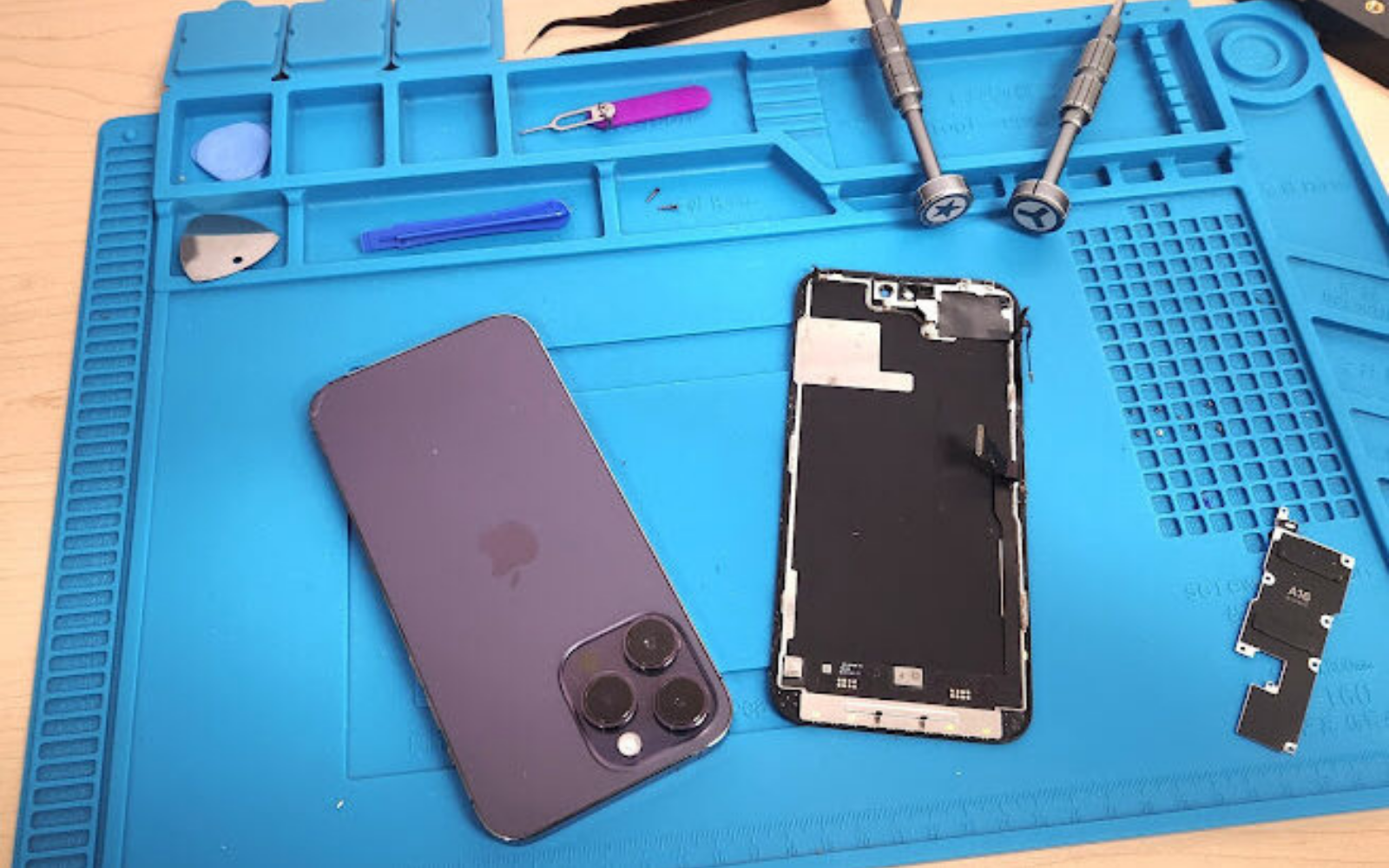
The UV torch that once settled “is this iPhone screen original?” is no longer decisive. Modern FOG assemblies can pass the old light-shield tells. What still separates an original display from a well-made aftermarket panel is device history messaging plus how the screen behaves under load — not how it looks under a lamp.
Last updated:
Digi4u supplies iPhone screens and repair parts from Cardiff to UK shops and wholesale buyers. This refresh keeps the bench-first spine of the original guide and adds an Apple Parts & Service History message matrix plus a tighter intake checklist, so high-impression authenticity searches get a defensible answer without discarding ranking assets.
Why the UV torch test no longer settles the question
FOG assemblies are manufactured well enough that a torch-and-peek ritual alone is weak evidence. Repairers who still rely on a single optical trick get false confidence from good aftermarket panels and false alarms from dirty original glass. Move the burden of proof to history messages and behavioural tests.
How to tell if an iPhone screen is original
Check the device first, then confirm on the bench.
- On supported models, open Settings → General → About and read Parts and Service History for Display.
- Confirm True Tone on models that should offer it.
- Run three bench checks: edge compression, slow border touch trace, and low-brightness uniformity in a dark room.
- Repeat touch and uniformity once warm (about ten minutes of use) — marginal panels fail after heat more often than cold.
Individually none of these is absolute proof. Together they are enough to accept, quarantine or reject a panel with a written reason.
Parts & Service History message matrix
Apple documents display messaging in “About genuine iPhone displays” and the broader “iPhone Parts and Service History” article. Use this matrix on intake (supported iPhone 11 and later models, excluding listed SE generations — always re-check Apple’s current model list):
| Message next to Display | What Apple indicates | Shop / buyer action |
|---|---|---|
| Genuine | Repair used genuine Apple parts and processes | Strong positive signal; still run functional QC before warranty sign-off |
| Used | On supported iPhone 15+ with recent iOS, a genuine display previously installed in another iPhone | Disclose to customer; treat as genuine hardware with prior install history |
| Unknown | Not genuine, not functioning as expected, not linked/verified after repair, or modified / unverifiable | Do not call it original; investigate part quality and calibration state |
| Finish Repair | New Apple display installed but Repair Assistant calibration not finished | Complete calibration before promising full feature behaviour |
Important limits: these messages do not appear on every older model, and an Unknown part can affect trade-in value even when the phone still works. Never invent a “passcode” test as proof of originality.
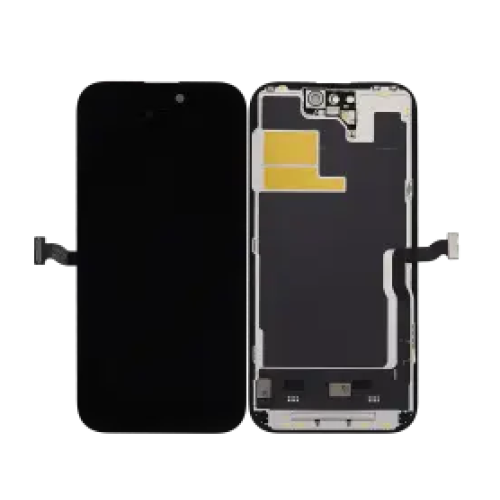
What does the phone itself report about a replaced display?
True Tone depends on display-linked data. After many non-original or incomplete transfers it is missing. Parts history messaging, where available, tells you whether Apple’s verification path saw a genuine, used, unknown or unfinished repair. Treat both as evidence streams, not courtroom proof on their own — service channel and iOS version change wording.
Bench intake checklist (accept / quarantine / reject)
| Check | Pass looks like | Fail / quarantine looks like |
|---|---|---|
| Edge compression | Even perimeter; no ripple or bright pressure line | Wave, bright arc or delamination tell at the bezel |
| Touch linearity | Slow trace including outer millimetres and corners stays smooth | Dead edge, jump, or corner drop-outs |
| Low-brightness uniformity | Clean white field at minimum brightness in a dark room | Clouding, dirty corners, tint bands |
| Warm retest | Same result after ~10 minutes use | Fault appears only when warm (common callback pattern) |
| History + True Tone | Matches the story you were sold | Unknown part, missing True Tone on a model that should have it, unfinished repair |
Which bench tests still separate original from aftermarket?
Pressure, touch linearity and low-light uniformity survive process improvements because they test physical behaviour rather than a manufacturing artefact. Apply gentle pressure around the perimeter and watch for ripple. Draw a slow continuous trace across the outer edges. Dim a plain white field to minimum in the dark. Run touch and brightness twice — cold and warm.
What is a FOG screen, and why does the name cause confusion?
In repair supply, FOG means film-on-glass construction: layers laminated onto glass and bonded to a bracket. In general search traffic the same letters often mean moisture fogging. The commercial distinction that matters is assembly route — how much original Apple structure was retained — because that shows up in callback patterns more than in unboxing cosmetics.
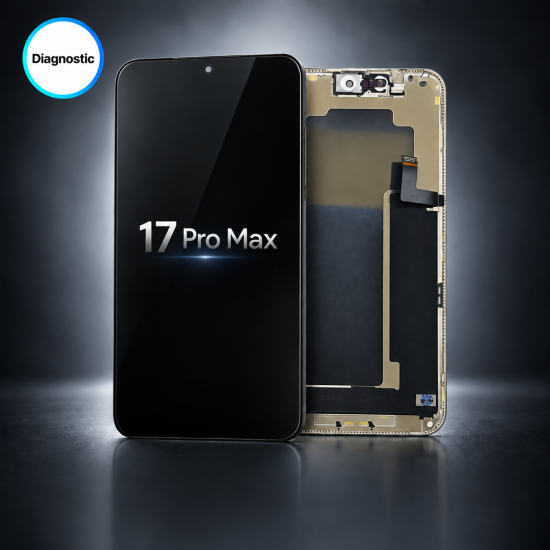
What should you check on a refurbished iPhone screen before buying?
- Supplier grade language vs your own QC checklist (do not outsource the definition of “original”)
- Bracket condition, screw posts and flex integrity
- Whether the seller’s photos match the exact model (Pro vs non-Pro refresh rates and cutouts)
- Return terms if Parts history shows Unknown after install
Browse Digi4u’s iPhone screen category for current diagnostic and replacement panels stocked for UK shops.
Why does edge compression catch what bright-light inspection misses?
Bright-light inspection rewards cosmetic polish. Edge compression loads the laminate and bracket the way a pocket and a customer thumb will. Soft assemblies that look perfect on a desk can still telegraph a bright line under perimeter pressure — exactly the defect that becomes a Monday morning return.
How do Apple’s own checks differ from a bench test?
Apple’s Parts and Service History path verifies linkage and genuineness signalling on supported devices. Bench tests verify optical and touch behaviour under shop conditions. You need both when the commercial claim is “original screen”: history without behaviour can hide a damaged genuine panel; behaviour without history can hide a convincing FOG.
What should you record for each screen you accept?
Model and part grade claimed, Parts history wording (screenshot where possible), True Tone state, cold/warm results for compression, touch and uniformity, and the accept / quarantine / reject decision with initials. That record protects the shop when a later Unknown message or callback appears.
UK dispatch for screens and parts follows the live delivery policy (same-day dispatch aim before 4:00 PM Monday–Friday).
What customers often confuse with “original”
“Looks bright”, “has a box”, or “seller said OEM” are not originality tests. Equally, an Unknown Parts history message does not always mean a cheap copy — it can mean unfinished calibration, a modified part, or a genuine part that failed verification. Write the evidence you actually have on the ticket instead of upgrading the language for the sale.
When you pick a panel grade next, use OLED and LCD grade options for iPhone screen parts.
After a screen decision, shops still need protector mix depth — tempered glass wholesale UK stocking guide.
FAQ
How can I tell if an iPhone screen is original without opening it?
Start with Settings → General → About → Parts and Service History on supported models, and check whether True Tone is present on a model that should have it. Treat those as strong clues, then confirm with bench behaviour if you are buying or warrantying a panel.
What does Genuine, Used, Unknown or Finish Repair mean next to Display?
Apple documents Genuine for genuine parts and processes, Used for a genuine display previously installed in another iPhone (on supported iOS/model combinations), Unknown when the part cannot be verified as expected, and Finish Repair when calibration with Repair Assistant is still required after installing a new Apple display.
Is a UV torch enough to spot a FOG or aftermarket screen?
Not reliably anymore. Many FOG assemblies now pass older light-shield tricks. Combine device history messages with edge compression, touch linearity at the borders and low-brightness uniformity.
What is a FOG screen in repair supply?
FOG means film-on-glass: touch/display layers laminated on glass and bonded to a bracket. It is a construction route, not moisture fog. Commercially it differs from a complete original-style module in how much of the original structure was retained.
Should customers rely only on Parts and Service History?
No. It is excellent evidence on supported iPhone 11-and-later models (with listed exclusions), but wording varies by iOS version and service channel. Pair it with functional bench checks when you are accepting stock or signing off a repair.