


Phone Data Recovery UK: What a Repair Shop Can Recover and What It Cannot
Need this part? We stock tested replacement parts with same-day UK dispatch and a 12-month warranty.
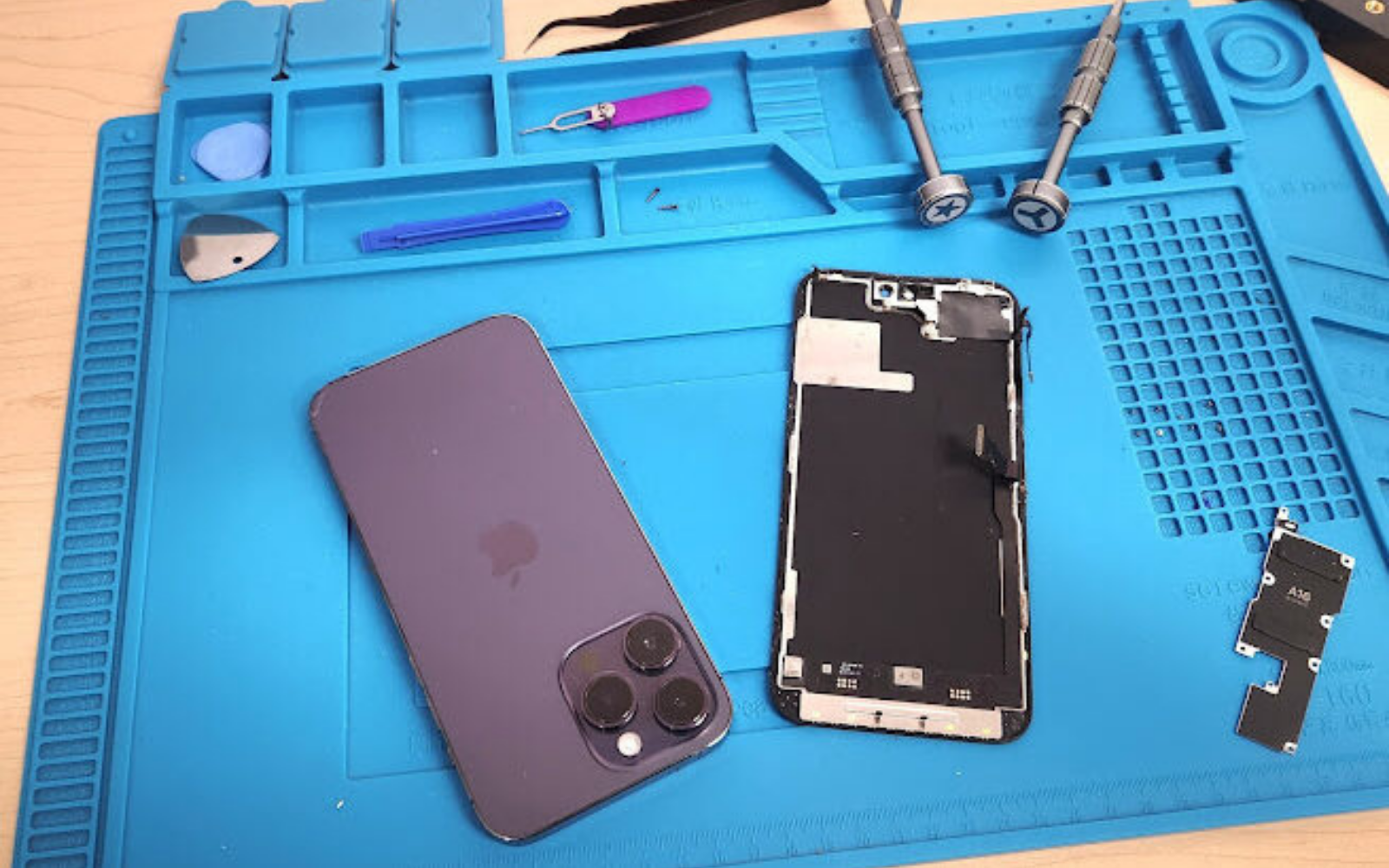
Data recovery listings in the UK are dominated by specialist laboratories, and that is a fair reflection of where the hard work happens. What it obscures is the much larger number of cases where the data is not lost at all and the device simply will not start, which is a repair problem rather than a recovery problem.
For a high street shop, that distinction is the whole business case. A device that will not power on, will not charge or has a failed screen usually needs a repair before a backup can run, and the customer does not care which of those two things is called what. Getting the diagnosis right decides whether the shop solves the problem or wastes a week on it.
What can a repair shop actually recover from a phone?
Data from devices that can be made to work again.
The realistic list is: a device whose battery, port or power path has failed and which can be brought back to a working state so the customer’s own backup runs; a device with a broken screen that needs a test display before the data can be copied off; removable storage such as a microSD card; and files that a customer can restore from a backup they already have.
Everything on that list is a repair that enables access rather than a recovery of data from failed media. That distinction should be the first thing explained to a customer, because it sets the fee structure, the timescale and the expectation. The power path diagnostics that make the first case possible are covered in running board diagnostics without a battery.
What is the difference between a logical failure and a physical one?
Whether the device can still read its own storage.
A logical failure means the hardware works and the file system or the operating system does not. Typical cases are a failed update, a corrupted partition, a storage that has filled completely and a device that boots but will not finish starting up. These are the cases where a shop has a chance, because the storage is alive and the problem is software.
A physical failure means the storage itself, the controller or the board it sits on has failed. Modern handsets store data in UFS packages whose controller is integrated, and on encrypted devices the key material is protected by hardware tied to the processor. That combination makes chip-level work a laboratory job, frequently uneconomic, and on many models impossible without the original key. Recognising that boundary early is what stops a shop spending three days on a job it cannot finish.
Can a repair shop get past a forgotten passcode?
No, and no legitimate shop claims otherwise.
Modern iOS devices are encrypted with a key derived from the passcode and stored in hardware designed to resist extraction, and Android devices use file-based encryption in the same way. There is no bench technique that defeats that, and the tools that claim to are aimed at older or already-unlocked devices.
What a shop can do is help a customer through the legitimate routes: an account recovery process with the manufacturer or the platform provider, a restore from a backup, or in the case of corporate devices, a route through the organisation that manages them. Saying this plainly at the counter protects the customer from the people who advertise passcode bypass services and protect the shop from a job it should never have accepted.
What should you do first when a device will not power on?
Establish whether it can be made to start at all.
The sequence is charging path first, then power path, then storage. Confirm that current is reaching the device, check whether it draws current without a battery in circuit, and look for the pattern of a short or a failed rail rather than a dead system. A phone that has been pronounced dead by its owner is very often a phone with a failed port or a deeply discharged cell.
Only when the device can be brought to a booting state does the data conversation begin, and only then is it worth quoting anything. Devices that repeatedly restart need their own diagnosis before storage is considered, and the pattern-reading approach in reading a restart loop is the right starting point.
When should you refer a job to a data recovery lab?
As soon as the storage itself is in question.
Refer when the device will not boot after the charging and power paths have been cleared, when there is physical or liquid damage to the board, when the storage package is suspect, or when the data matters more than the device and a wrong attempt would destroy it. Further attempts at that point reduce the chance of success rather than improving it.
Referring well is a skill. Ask the laboratory what it does with encrypted UFS devices, what the turnaround is, whether the original media comes back, what happens to the data afterwards, and what the assessment fee is if nothing can be recovered. A shop that asks those questions once can reuse the answers for years, and it can tell a customer honestly what the referral means.
How do you handle customer data lawfully?
By treating it as personal data you are responsible for.
A shop that takes a customer’s phone into its possession is processing personal data, and under the Data Protection Act 2018 that brings obligations: process only what the job requires, keep it secure, keep it no longer than necessary, and be able to describe what you did. The practical guidance a small business needs is published by the Information Commissioner’s Office.
The operational version is short. Get written authorisation for the work, record what was taken in and returned, never browse a customer’s content, keep devices in a locked area when they are unattended, and delete any working copies as soon as the job is closed. The guidance a small business needs is published at ICO guidance for organisations. If something does go wrong, the ICO’s route for reporting a breach sets out what has to be notified and when. Where the shop is a limited company, these duties sit alongside the general responsibilities described at running a limited company.
What should a data recovery quote look like?
An assessment fee, then a price, then a decision point.
Quoting a single figure for data recovery at the counter is a promise the shop cannot keep. The workable structure is an assessment fee that covers the diagnostic time, a price for the repair or recovery once the cause is known, and a clear point at which the customer decides whether to continue. Where nothing can be recovered, the assessment fee is what the shop has earned.
Two features make that structure easier to sell. The first is offering the customer their device back in whatever state it is in, which makes the boundary clear. The second is telling them what a laboratory route would cost, so the decision about how much the data is worth is made with real numbers rather than with a hope that the shop can do it for £40.
What makes water-damaged devices different?
Corrosion keeps working after the liquid has gone.
A liquid-damaged device can pass an initial test and fail a week later, because corrosion continues on the board and around connectors while it is in use. That makes every data outcome provisional, and it is why the assessment has to happen before any promise is made rather than after the fee is taken.
The practical advice for the customer is equally important and should be given at intake: do not keep trying to charge a wet device, do not repeatedly force it to restart, and do not attempt an update while it is unstable. Each of those actions reduces the chance of a successful outcome, and a customer who has been told why will usually stop.
What can be recovered from a device that still boots?
Usually everything, if a backup can be taken.
This is the easiest and most underrated case. A phone with a failed screen, a dead charging port or a swollen battery can often be made to run long enough for the data to be copied to a computer or pushed to cloud storage. That work is a repair with a data objective, and it should be quoted as such.
The window matters. A device with a failing board can stop working between the quote and the appointment, so the backup should be taken at the earliest opportunity rather than after the cosmetic repair. Where the customer has a cloud backup that is simply out of date, bringing it up to date is often the entire job.
How do you tell a customer the data is gone?
Plainly, with what you tried and why it failed.
The conversation is easier when it has been prepared at intake. A customer who was told on day one that the board is the question, and that a laboratory is the fallback, hears bad news as a result rather than as a mistake. A customer who was promised a recovery hears the same news as a failure by the shop.
Give them something concrete to act on: the specialist referral, the account recovery route if the device is merely locked, and advice about backups so the next device is protected. That last item is worth offering as a service rather than as a lecture, because a shop that sets up a customer’s backup routine has both solved the next problem in advance and earned a reason to be remembered.
What is the one rule that protects the shop and the customer?
Never promise data, and record what you did.
Every recovery case should be run on a written authorisation, with a note of the device’s condition at intake, what was attempted, what was found and what was returned. That record is what converts an argument into a conversation, and it is also what the data protection obligations described above expect a business to be able to produce.
The commercial discipline follows from the same rule. Quote an assessment, set the decision point, refer early when the storage is in question, and keep the customer informed at each step. A shop that does this will not win every case, and it will keep the ones it does win profitable, honest and defensible.
One piece of housekeeping sits alongside it. Where a device cannot be returned to a working state and the customer does not want it back, it becomes waste electrical equipment and falls under the Waste Electrical and Electronic Equipment Regulations 2013, which means it has to go through a registered collection route rather than the bin.
FAQ
Can a phone repair shop recover deleted data from a phone?
Usually not from a modern encrypted handset, because the key material is protected by hardware and the deleted blocks are not reachable without it. Recoveries in a shop normally come from a backup, from removable storage such as a microSD card, or from making a device work again so the customer’s own backup can run.
How much does phone data recovery cost in the UK?
A shop should charge an assessment fee for the diagnostic time and then quote once the cause is known, rather than naming a single figure at the counter. Specialist laboratory work costs considerably more, and the customer should be given that figure before deciding how far to go.
Can data be recovered from a phone that will not turn on?
Sometimes. Charging path, power path and port faults are common causes of a device that appears dead, and repairing those can bring it back long enough for a backup. If the storage or the board has failed, the case belongs with a data recovery laboratory rather than on a repair bench.
What should I do if my phone is water damaged and I need the data?
Stop trying to charge it, stop forcing restarts and do not attempt a software update while it is unstable. Take it to a shop for assessment before further use, and expect any recovery outcome to be provisional, because corrosion continues to progress after the liquid has gone.
Fix the phone, then take the backup. Digi4u supplies the batteries, ports, screens and bench tools that bring a device back to a state where its data can be copied off.
{
“@context”: “https://schema.org”,
“@type”: “FAQPage”,
“mainEntity”: [
{“@type”: “Question”, “name”: “Can a phone repair shop recover deleted data from a phone?”,
“acceptedAnswer”: {“@type”: “Answer”, “text”: “Usually not from a modern encrypted handset, because the key material is protected by hardware and the deleted blocks are not reachable without it. Recoveries in a shop normally come from a backup, from removable storage such as a microSD card, or from making a device work again so the customer’s own backup can run.”}},
{“@type”: “Question”, “name”: “How much does phone data recovery cost in the UK?”,
“acceptedAnswer”: {“@type”: “Answer”, “text”: “A shop should charge an assessment fee for the diagnostic time and then quote once the cause is known, rather than naming a single figure at the counter. Specialist laboratory work costs considerably more, and the customer should be given that figure before deciding how far to go.”}},
{“@type”: “Question”, “name”: “Can data be recovered from a phone that will not turn on?”,
“acceptedAnswer”: {“@type”: “Answer”, “text”: “Sometimes. Charging path, power path and port faults are common causes of a device that appears dead, and repairing those can bring it back long enough for a backup. If the storage or the board has failed, the case belongs with a data recovery laboratory rather than on a repair bench.”}},
{“@type”: “Question”, “name”: “What should I do if my phone is water damaged and I need the data?”,
“acceptedAnswer”: {“@type”: “Answer”, “text”: “Stop trying to charge it, stop forcing restarts and do not attempt a software update while it is unstable. Take it to a shop for assessment before further use, and expect any recovery outcome to be provisional, because corrosion continues to progress after the liquid has gone.”}}
]
}