

Hydrogel Film Cutting Machine UK: Shop Stock for Cut-to-Fit Protectors
Need this part? We stock tested replacement parts with same-day UK dispatch and a 12-month warranty.
UK repair shops looking to add a cut‑to‑fit protector service often start by evaluating a hydrogel film cutting machine uk that can handle a wide range of device models. The ability to produce a screen protector on demand reduces the need to stock dozens of pre‑cut glass SKUs and lets your team respond to new phone releases within hours. This guide walks through machine selection, film compatibility, service workflow and dispatch considerations so you can decide whether the investment fits your bench.
Why shops cut hydrogel to fit instead of holding only pre‑cut glass
Cut‑to‑fit hydrogel cuts SKU count, speeds new‑model service
By cutting hydrogel on demand you avoid stocking dozens of pre‑cut glass variants, lower waste, and can protect the latest handset the day it launches.
Pre‑cut tempered glass requires a separate SKU for every model and screen size, which inflates inventory cost and creates dead stock when a handset is discontinued. A hydrogel film cutting machine lets your team keep a single roll of film and a digital template library, producing a protector only when a customer asks for it. The film is thinner, self‑healing and conforms to curved edges better than rigid glass, so rework rates drop. Shops that also sell tempered glass wholesale can keep a small core range for customers who prefer glass while using hydrogel for the long tail of models. The combined approach reduces capital tied up in stock and shortens the time from order to fit.
In practice, many UK shops find that a single 50‑metre roll of 180 mm hydrogel film sits on the shelf for weeks without expiring, whereas a box of pre‑cut glass for a model that sells once a month ties up cash and shelf space. When a new flagship drops, you can cut a protector the same afternoon the handset arrives in your shop, rather than waiting for a distributor to ship a glass SKU that may not exist yet. This agility is the primary reason independents add a cutter to the bench.
What to read on a live cutting‑machine listing before you buy
Check template library, activation terms, and supported film widths
The live listing describes the template library size, activation steps for the manufacturer’s “Unlimited Usage” programme, and the maximum film width the cutter accepts; treat those details as listing language and verify them on the product page.
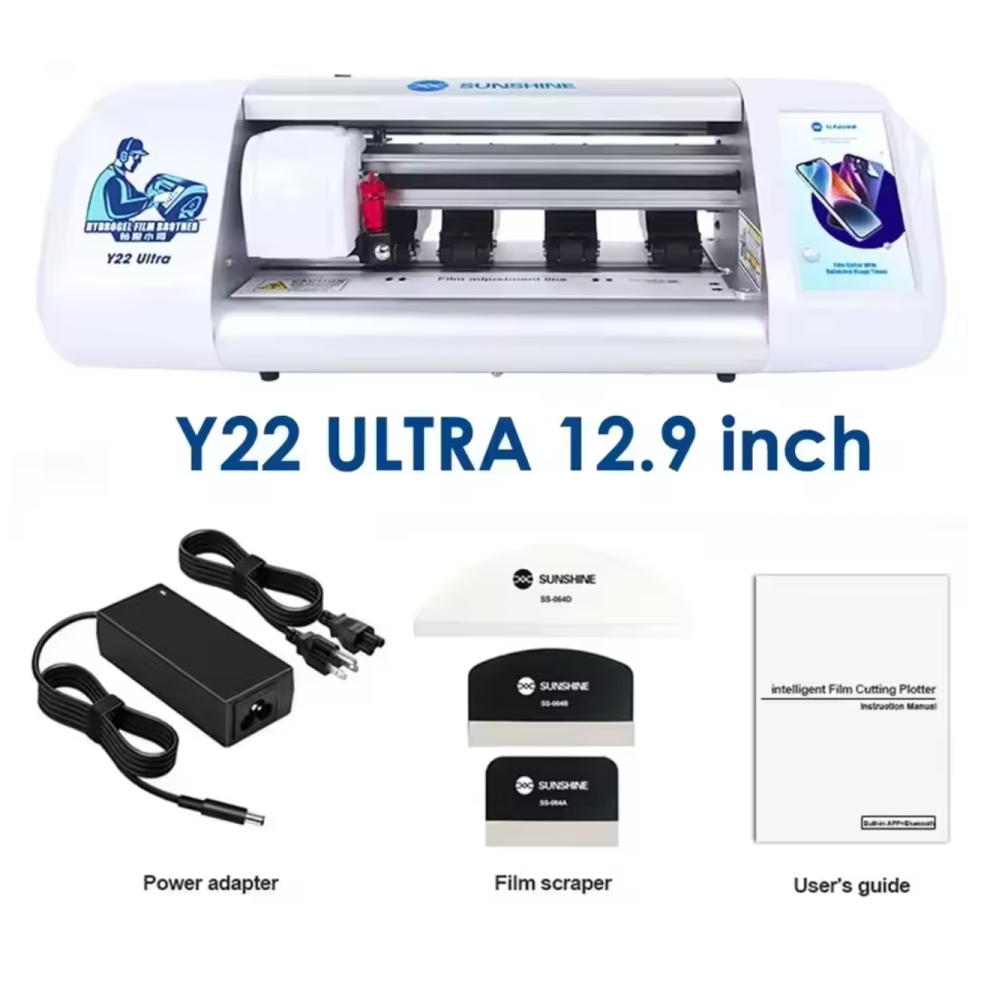
When you open the SUNSHINE Y22 ULTRA page, note the stated template count, whether the “Unlimited Usage” wording requires an online activation with the manufacturer, and the cutter’s maximum film width (typically 180 mm). The listing also mentions Wi‑Fi connectivity and automatic film feeding; these are manufacturer claims and should be re‑checked against the current page before you commit. Compare the spec sheet with your bench space and the volume of devices you service. If you need a broader template library, confirm whether the manufacturer offers regular updates or if you must import templates manually. The Sunshine tools hub lists all current cutters and accessories for quick cross‑reference.
Before placing an order, measure the clear bench depth you have available; the Y22 footprint is roughly 300 mm deep by 200 mm wide, and you will need room for the film roll holder and a squeegee station. Ask the supplier whether the machine ships with a UK plug or if an adapter is required, and confirm the warranty process by reading the warranty terms on the live listing, as this affects downtime if a cutter fails during a busy period.
Which film SKUs belong with the machine, and which do not
Match film width, material type and pack size to the cutter’s specs
Only film rolls that fit the cutter’s maximum width and are labelled as hydrogel or TPU for cutting machines will work; UV‑cured fibreglass packs such as the SS‑U300 require a separate light box and are not cut on the Y22.
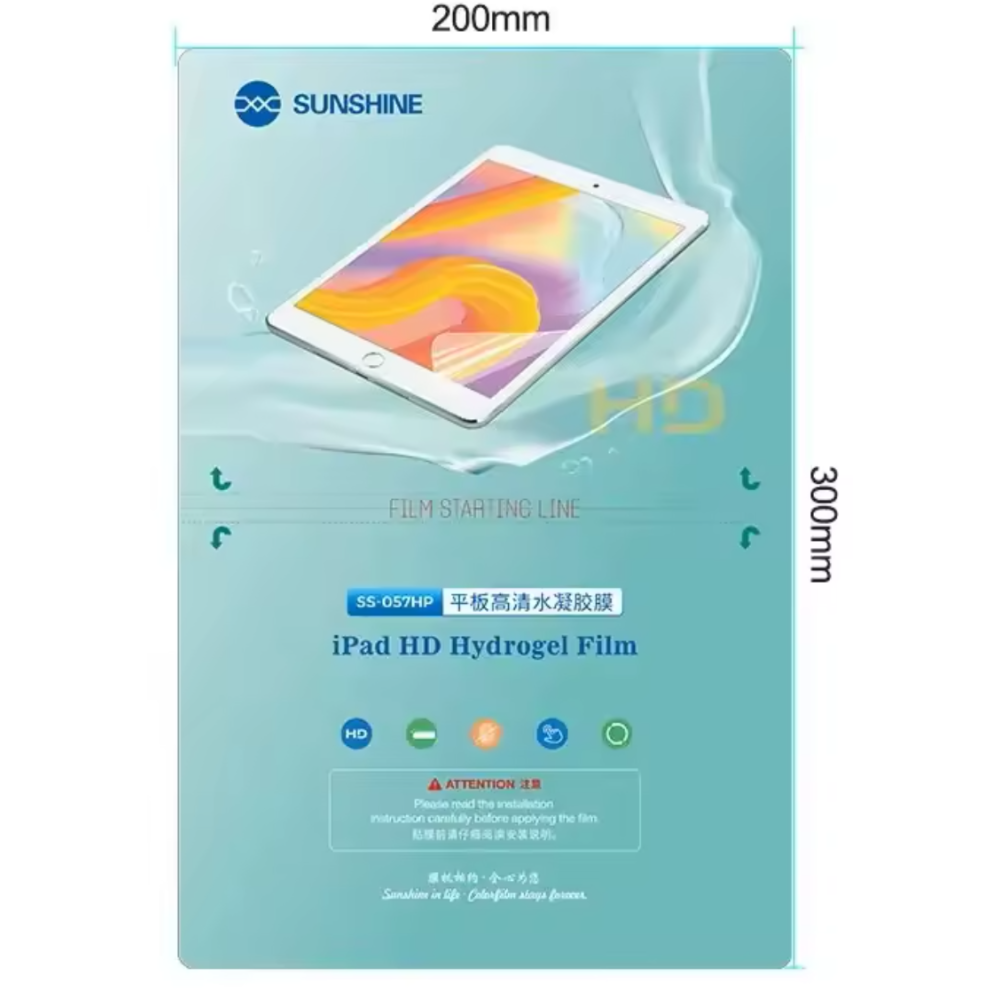
The Y22 accepts standard hydrogel rolls up to 180 mm wide. The SUNSHINE SS‑057HP HD hydrogel film for tablet comes in a 20‑piece pack of pre‑cut sheets sized for larger tablets; these sheets are not a continuous roll and therefore cannot be fed through the automatic cutter. For continuous cutting you need a roll product (often sold separately under the Sunshine or Relife brands). The SS‑U300 UV fibreglass protective film with UV light box is a different product line; it cures under UV and is not compatible with the Y22’s cutting mechanism. Shops should confirm current film SKUs on the live Sunshine and Relife tool hubs before ordering. A quick comparison helps avoid mismatched stock:
| Product | Type | Format | Compatible with Y22 |
|---|---|---|---|
| SUNSHINE SS‑057HP HD hydrogel film | Hydrogel (tablet sheets) | 20‑piece pre‑cut pack | No – not a roll |
| SUNSHINE hydrogel roll (generic) | Hydrogel/TPU | Continuous roll ≤180 mm | Yes |
| RELIFE GF‑9 HD TPU hydrogel film | TPU hydrogel | Roll (check width) | Likely – verify width |
| SUNSHINE SS‑U300 UV fibreglass film | UV‑cured fibreglass | Sheet + light box | No – requires UV cure |
When you receive a new roll, unroll the first metre and inspect for creases or contamination; a single dust particle can ruin a cut. Store rolls upright in their original box at room temperature, away from direct sunlight, to prevent the adhesive layer from degrading. If you stock multiple widths, label each box clearly so the bench technician grabs the correct roll without guesswork.
How a cut‑to‑fit service sits beside tempered glass stock
Offer hydrogel for niche models; keep glass for high‑volume flagships
Position the cut‑to‑fit service as a complement to your core tempered glass range, using hydrogel for low‑volume or newly released handsets while retaining glass for the top‑selling models your customers expect.
Most shops find that 70‑80 % of protector sales come from a handful of flagship phones. Keeping those models in pre‑cut tempered glass satisfies the bulk of demand and preserves the higher margin glass customers associate with premium feel. For the remaining models — older devices, niche brands, or brand‑new releases — a hydrogel cutter eliminates the need to order and store a separate glass SKU for each. The workflow is simple: the customer selects a device, your team pulls the digital template, cuts the film, and applies it in under five minutes. This hybrid model reduces dead stock, frees shelf space, and lets you advertise “same‑day protector for any phone”. The case and protector bundles post outlines how bundles can be built around either material.
Train staff to explain the difference in feel: hydrogel is softer, self‑healing, and almost invisible once applied, while tempered glass adds a rigid layer that some users prefer for impact resistance. Offer a quick demo on a display handset so the customer can feel both surfaces before deciding. This consultative approach increases average transaction value because many buyers add a case or a second protector for a family member.
What to tell a customer about fit, bubbles and rework
Explain self‑healing properties, bubble‑removal technique, and re‑cut policy
Hydrogel films are self‑healing for minor scratches; most bubbles disappear with a squeegee pass, and a re‑cut is offered if the fit is unsatisfactory.
When a customer asks about durability, describe the film’s self‑healing layer that absorbs light surface marks over 24‑48 hours. Show the squeegee method: press from the centre outward to push trapped air to the edges. If a bubble persists, a quick re‑cut from the same roll takes seconds and costs only the film material. Set a clear policy — for example, one free re‑cut per device — and communicate it before the job starts. This manages expectations and reduces disputes. For consumer‑rights context, the UK consumer protection guidance outlines the statutory remedies that apply to any paid service.
Keep a small “fit kit” at the bench: a lint‑free wipe, an alcohol pad, a dust‑removal sticker, and a felt‑edge squeegee. A consistent prep routine — clean, dust, align, squeegee — cuts rework to near zero. If a customer returns with a lifted edge after a few days, it is usually due to oil residue; a free re‑apply reinforces trust and costs pennies in film.
How to quote the service without inventing machine or film prices
Base the quote on your labour rate plus the current film cost per cut
Calculate a per‑cut film cost from the roll price divided by the number of successful cuts you actually get, then add your own labour.
Because Digi4u does not publish wholesale price lists or MOQs, you should read the live listing for the film roll you intend to use and note the price per roll. Divide that price by the number of protectors a roll yields in your hands — count the successful cuts you achieve — to get a material cost per job. Add your standard bench labour charge and quote the combined figure as a starting service fee. Avoid stating a fixed “machine cost” or “film price” in marketing; This keeps the quote transparent and lets you adjust if supplier pricing changes. The delivery policy page shows current shipping rates so you can factor any carriage cost into the overall margin.
Track your yield per roll in a simple spreadsheet: note the roll length, the number of phones cut, and any waste from misfeeds. After three or four rolls you will have a reliable per‑cut cost that you can use for quoting and for setting a minimum service price that covers overheads. If you offer a “while‑you‑wait” premium slot, factor the opportunity cost of bench time into the labour component.
Dispatch notes when the basket is tools and film, not a lithium cell
Orders without loose batteries ship via Royal Mail 48; mixed baskets go DPD
A basket containing only the cutter and hydrogel rolls qualifies for standard Royal Mail 48 tracked delivery; add a loose battery or power bank and the whole order switches to DPD.
Digi4u’s shipping rules treat devices with a fitted internal battery (phones, tablets) as non‑hazardous, so a screen‑only basket travels by Royal Mail 48 at £3.00 (free over £100). The cutter itself contains no loose lithium cell, so it follows the same rule. However, if you add a standalone battery pack or a power bank to the same order, the entire shipment must go by DPD (Zone 1 £10, Zone 2 £15, free over £100). Next‑day DPD is available for Zone 1 at £10 (free over £150) but is not guaranteed for Zone 2. Check the live delivery policy for the latest thresholds and zone definitions before you place a mixed order.
If you order the cutter and a few rolls on a Friday, Royal Mail 48 typically delivers Tuesday; plan your stock arrival so you are not promising same‑day protector fits before the machine lands. For urgent replenishment, DPD next‑day (Zone 1) gets film to you by 1 pm the next working day, but remember the £150 free‑delivery threshold. Consolidate orders where possible to avoid paying carriage twice in one week.
Conclusion
A hydrogel film cutting machine lets your team serve any handset model without the inventory burden of pre‑cut glass. By pairing the cutter with compatible film rolls, you can offer a same‑day protector service that complements your existing tempered glass range. Verify the live listing for template library details, activation terms, and film width limits before purchase. Use the per‑cut material cost plus your labour rate to build a transparent quote, and remember that dispatch method depends on whether the order contains loose lithium cells. This approach keeps stock lean, reduces waste, and meets customer demand for immediate protection.
Check delivery options for tools and film
FAQ
What is a hydrogel film cutting machine and how does it differ from a tempered glass cutter?
A hydrogel film cutting machine uses a digital template library to cut flexible TPU or hydrogel rolls into custom screen protectors on demand. Unlike a tempered glass cutter, which scores and snaps rigid glass sheets, the hydrogel cutter feeds a continuous roll and produces a thin, self‑healing film that conforms to curved edges. The process is faster for low‑volume models and eliminates the need to stock multiple glass SKUs.
Which hydrogel film packs are compatible with the SUNSHINE Y22 ULTRA?
The Y22 accepts continuous hydrogel or TPU rolls up to 180 mm wide. Pre‑cut sheet packs such as the SUNSHINE SS‑057HP 20‑piece tablet pack are not rolls and cannot be fed through the automatic cutter. Shops should source roll‑format hydrogel film from the Sunshine or Relife ranges and confirm the roll width on the live product page before ordering.
Do I need a separate UV light box for the SS‑U300 film?
Yes. The SUNSHINE SS‑U300 is a UV‑cured fibreglass protective film that requires the supplied UV light box for curing after application. It is not a hydrogel product and cannot be cut on the Y22. If you want a cut‑to‑fit hydrogel service, stick to roll‑format hydrogel or TPU films that the Y22 supports.
How should I price a cut‑to‑fit protector service for my customers?
Calculate the film cost per cut by dividing the roll price by the number of successful cuts you actually achieve. Add your standard bench labour charge for the fitting time. Present the combined amount as a single service fee. Avoid quoting a separate machine cost; keep the price tied to material usage and labour.
What dispatch options apply when my order contains only the cutter and film rolls?
An order with only the cutter and hydrogel rolls contains no loose lithium cells, so it ships via Royal Mail 48 tracked at £3.00 (free over £100). If you add a standalone battery or power bank, the whole order must go by DPD (Zone 1 £10, Zone 2 £15, free over £100). Next‑day DPD is available for Zone 1 at £10 (free over £150) but is not guaranteed for Zone 2. Always check the live delivery policy for current rates.