


Tempered Glass Wholesale UK: What Phone Repair Shops Should Stock
Need this part? We stock tested replacement parts with same-day UK dispatch and a 12-month warranty.
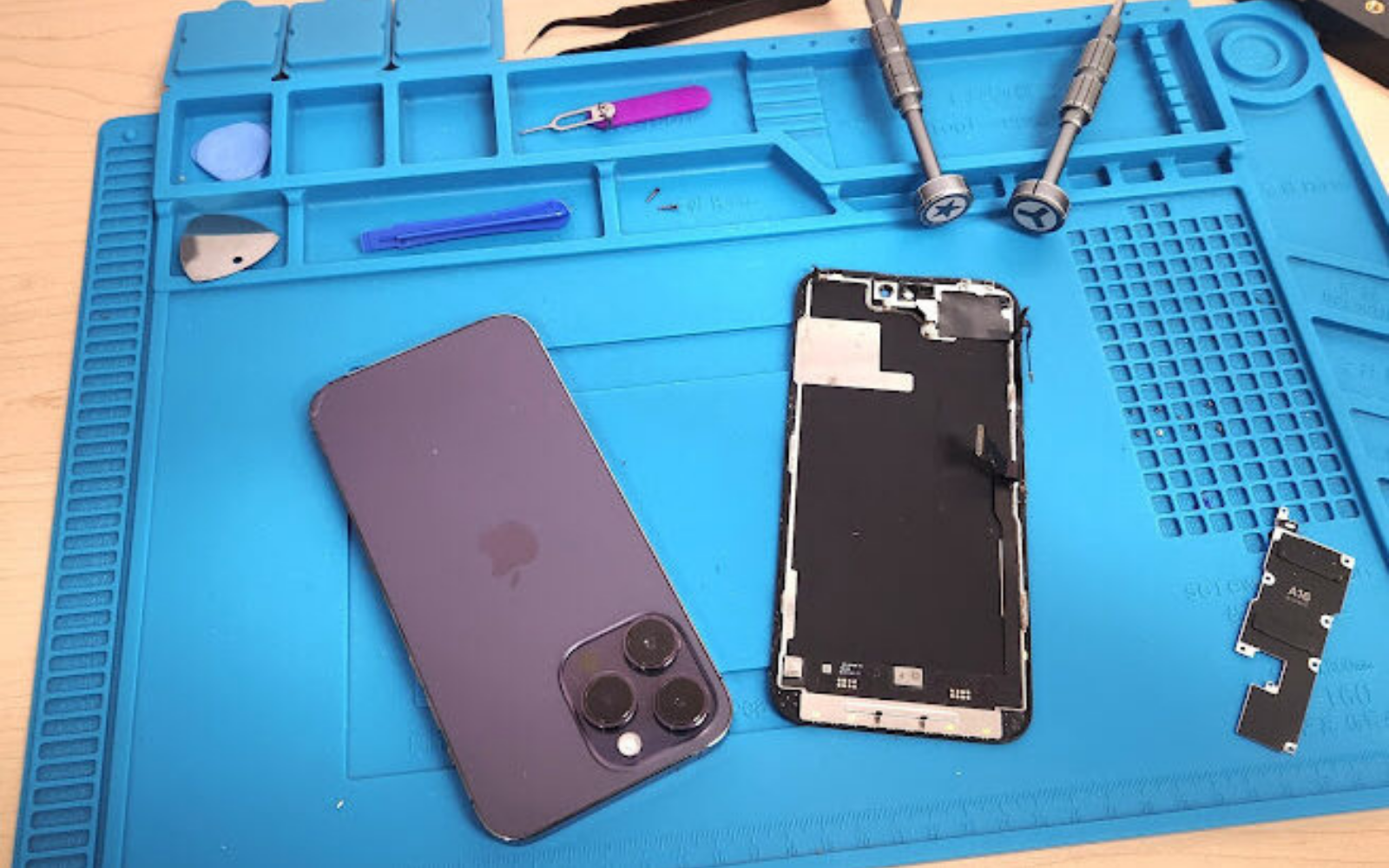
For teams researching tempered glass wholesale UK repair shops need an inventory plan, not simply a long catalogue. The useful range is the one that covers routine handset demand, offers clear customer choices and can be fitted consistently at the counter. A disciplined mix of clear, privacy and matte protectors can support attachment sales while limiting cash tied up in obscure shapes.
Why are protectors margin and retention SKUs?
Protectors turn a completed repair or handset sale into a practical follow-on purchase while giving the customer a reason to return for fitting and replacement.
The commercial value comes from reliable attachment, repeatable installation and sensible replenishment, rather than treating every protector as an interchangeable accessory.
A protector is unusually close to the repair conversation. After paying for a screen replacement, a customer already understands the cost and disruption of impact damage. Your team can therefore explain protection in terms of use, fit and limitations without forcing an unrelated add-on. The sale may be modest in isolation, but a well-run fitting service makes the workshop more useful and leaves the customer with a visible example of careful workmanship.
Shops should measure more than unit margin. Track the attachment rate by repair type, fitting failure rate, returns caused by poor compatibility, and replenishment speed by model. A low-priced line that produces dust inclusions, lifted corners or sensor complaints can consume counter time and erode trust. Conversely, a defined range with a fitting routine helps staff quote consistently and reduces the temptation to buy arbitrary bulk lots.
The existing Digi4u guide to tempered glass and screen protectors explains the consumer-facing product basics. This guide focuses instead on the buying decisions behind a repair-shop range: which formats earn space, how deeply to cover models, and how to control installation quality.
How should a shop mix clear, privacy and matte protectors?
Clear glass should form the core range, with privacy and matte options added selectively where customer demand and handset turnover justify the extra variants.
Use clear protectors as the default, privacy glass for customers handling sensitive content, and matte products for glare or fingerprint preferences.
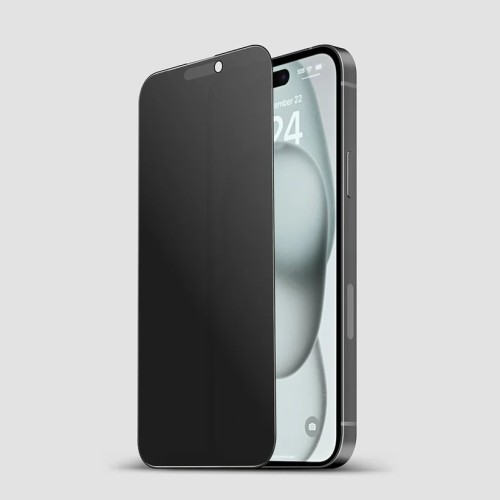
Clear glass offers the simplest explanation at the counter: it aims to preserve normal display appearance while adding a sacrificial surface. Privacy glass serves a specific need, but its viewing-angle effect and possible brightness trade-off should be demonstrated before fitting. Matte products can reduce reflections and visible fingerprints, although the surface texture and perceived sharpness differ from conventional clear glass.
| Format | Best role in the range | Counter explanation | Stocking approach |
|---|---|---|---|
| Clear | Core, high-turnover option | Neutral appearance and straightforward everyday protection | Broad model coverage with deeper holding for proven sellers |
| Privacy | Targeted upgrade | Narrows side viewing; may alter brightness or viewing experience | Concentrate on popular business and premium handsets |
| Matte | Preference-led alternative | Reduces glare and fingerprints but changes surface feel | Test demand before extending across many models |
A useful opening mix is based on sales evidence, not a fixed percentage. Review repair tickets and accessory enquiries monthly, then promote a variant from trial status only when it turns repeatedly. The Digi4u tempered-glass range can be used to compare available formats by device without assuming that every model needs every finish.
How can model coverage be built without overstocking odd sizes?
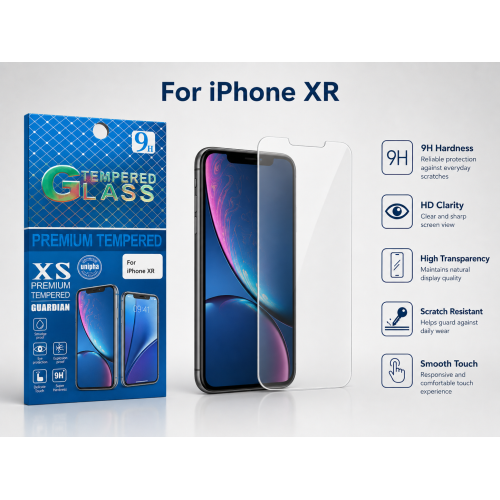
Build coverage from repair history and local installed base, then separate dependable runners from small trial holdings and special-order models.
A tiered model matrix gives popular devices breadth and depth while preventing slow-moving, similar-looking protectors from occupying disproportionate space.
Start with the handsets actually appearing at the bench. Export or tally three to six months of jobs, enquiries and protector fittings, grouping exact models rather than brand families. An iPhone generation may share a screen size with another device yet differ around the earpiece, bezel or camera area. Samsung ranges can also contain closely named models with distinct dimensions. The label must therefore include the complete supported model designation.
A practical matrix uses three tiers. Tier A covers frequent repairs and deserves clear glass plus any demonstrated privacy or matte demand. Tier B covers regular but less common devices and normally begins with clear glass. Tier C contains ageing, unusual or newly launched models; hold a small trial position or source them when requested. Review demotions as well as additions so that yesterday’s popular handset does not quietly become dead inventory.
- Record sales and fitting failures against exact device names.
- Use a bin location and scannable internal code to prevent lookalike picking errors.
- Set a review point based on turnover and lead time, not intuition alone.
- Quarantine unverified returns rather than putting opened protectors back into saleable stock.
For buying governance, official guidance on product safety for businesses and placing manufactured goods on the market in Great Britain helps a shop understand its responsibilities. The British Standards Institution is also a useful starting point when identifying standards relevant to products and business processes.
What fit checks matter around cameras, sensors and curved edges?
Every incoming line should be dry-checked on the exact handset for alignment, usable display coverage, sensor clearance and compatibility with common cases.
Fit quality is determined by the whole geometry, including cut-outs, black borders, edge profile and adhesive contact, not the diagonal screen size.
Before moving a new protector into the main range, place an unopened sample over a clean reference device and confirm the orientation. Check that the active display is not masked, front cameras remain unobstructed and speaker openings align. Where a device uses proximity, ambient-light or under-display fingerprint sensing, test normal operation after fitting. A protector can appear centred yet still interfere with a sensor or leave an edge vulnerable to lifting.
Curved displays require particular caution. A case can press against glass that runs too close to the edge, while a protector with insufficient coverage may disappoint a customer expecting full-screen protection. Record compatible case families during trial fits. Avoid promising that a material grade or hardness label makes a protector unbreakable; tempered glass is a consumable protective layer, and impacts remain unpredictable.
Shops should retain supplier and batch references for troubleshooting and maintain a simple acceptance checklist. Broader consumer-protection and compliance context is available from the Chartered Trading Standards Institute. Government guidance on electrical equipment responsibilities is relevant when the same accessory purchase also includes powered products, although passive glass itself is a different product category.
What does a controlled installation station need?
A controlled station needs strong lighting, a clean surface, device-safe cleaning materials, dust removal tools and a repeatable alignment method.
Separating fitting from grinding, polishing and busy unpacking areas reduces airborne contamination and makes quality easier to reproduce across the team.
The fitting bench should be uncluttered and easy to wipe. Staff need clean hands, good task lighting and enough space to position the device without touching the adhesive face. Prepare all materials before peeling the liner: suitable screen cleaner, lint-free cloth, dust-removal stickers, alignment aids where supplied, and a disposal point for broken or rejected glass. Follow the protector and device instructions where provided.
A short fitting control
- Confirm the exact model and inspect the screen for chips, lifting or contamination.
- Test-align the protector and case before exposing adhesive.
- Clean, inspect under angled light, then remove isolated dust with a sticker.
- Lower the protector using the chosen guide; avoid repeated lifting and repositioning.
- Check the perimeter, camera, speaker, touch response and relevant sensors.
- Record any repeat issue against the product reference or batch.
A failed installation should become useful data. Distinguish operator contamination from dimension error, weak edge adhesion, damaged packaging or case interference. That record supports better reordering and training. It also helps identify whether a complaint belongs to one handset, one protector type or a wider batch.
How should UK dispatch and case pairing shape buying?
Replenishment timing should reflect proven sales velocity, while every protector trial should include at least one common case-pairing check.
Reliable dispatch supports leaner holdings, but teams still need a small buffer for core lines and clear rules for case-compatible fit.
Digi4u is a Cardiff-based UK supplier of replacement parts, repair tools and tech accessories, serving individuals and professional repair businesses since 2011. Orders placed before 4:00 PM from Monday to Friday are dispatched the same day; orders after 4:00 PM on Friday or at the weekend move on the next working day. Courier, zone and product restrictions can affect the appropriate service, so buyers should consult the current Digi4u delivery policy rather than building purchasing rules around a single delivery assumption.
Lead time belongs in the stock matrix alongside sales rate and fitting loss. A core item that sells frequently needs a reorder trigger early enough to cover demand until the next delivery. Slow lines need less buffer. This approach is more defensible than buying the same quantity of every model simply because a screen protector bulk UK listing groups them together.
Case pairing should be part of the same decision. Test the protector with slim, raised-edge and rugged cases commonly sold or fitted by the shop. Note whether the case lip touches the glass, whether a gap is visually acceptable, and whether the combination affects gestures at the screen edge. When selling both items, fit the protector first, allow it to settle as directed, then install the case carefully and recheck every corner.
Where should teams investigate fingerprint or touch issues?
Begin by isolating alignment, contamination, device settings, protector construction and case pressure before assuming that the replacement screen is faulty.
A recorded test sequence protects bench time and helps staff distinguish a protector compatibility issue from an underlying display or sensor fault.
When a customer reports poor touch response, remove the case first and test the whole display with known gestures. Inspect for an air gap, raised edge or misplaced border. Confirm that any device-specific touch-sensitivity setting and biometric enrolment guidance has been followed. Under-display fingerprint systems can be especially sensitive to protector thickness, adhesive contact and installation quality.
Do not jump straight to replacing parts. Compare behaviour before and after the protector is removed only with the customer’s agreement, and document the result. If the phone has recently had a display repair, re-run the shop’s post-repair touch and sensor checks. Product-specific manufacturer support instructions should take priority where available; do not generalise a fix across unrelated devices.
The most useful stock outcome is a compatibility note tied to an exact model and protector reference. If failures recur, pause that pairing and investigate before further fitting. This closes the loop between bench diagnostics and purchasing: the phone tempered glass supplier decision is based on verified performance, not packaging claims alone.
Conclusion
A profitable protector range is controlled rather than enormous. Clear glass provides the base, privacy and matte answer defined preferences, and a tiered model matrix limits exposure to odd sizes. Exact-device fit checks, a dust-controlled installation station, issue records and case-pairing tests turn shop stock screen protectors into a repeatable service instead of a speculative accessory purchase.
Shop owners planning to buy tempered glass wholesale UK should review repair history first, then compare coverage, replenishment and fitting results. The best range is the one the team can identify, explain, install and reorder with confidence.
Review the Digi4u tempered-glass category when planning your next model and format review.
FAQ
Where can repair shops buy tempered glass wholesale in the UK?
Repair shops can buy through a UK phone-parts and accessories supplier such as Digi4u. Buyers should compare exact model coverage, clear and privacy options, current delivery terms, product identification and returns information. A suitable supplier relationship supports repeat ordering without requiring a shop to assume that every model or finish deserves the same holding.
Which tempered glass supplier is best for a repair shop?
The best fit is the supplier whose range, product information and dispatch arrangements match the shop’s repair mix. Evaluate samples on exact devices, record fitting failures and check case compatibility before expanding a line. Price matters, but picking accuracy, replenishment timing and consistent fit can have a greater effect on counter time and customer outcomes.
How much does it cost to make or stock tempered glass?
Manufacturing cost cannot be inferred reliably from a retail or trade listing, and shop stocking cost varies by model mix, format, purchasing terms, delivery and fitting losses. Build a budget from current supplier quotations and the shop’s sales data. Include failed installations and slow stock when assessing the real cost of the range.
Should a shop stock privacy glass for every phone model?
Usually not. Privacy glass is better concentrated on models that appear regularly and customers who value reduced side viewing. Start with proven high-turnover handsets, explain the viewing and brightness trade-offs, and review sales before expanding. Clear glass can remain the default for long-tail models until local demand supports an additional privacy variant.