


Decision summary for UK repair businesses
Evaluate a supplier across seven areas before moving regular purchasing volume:
- Exact compatibility support
- Stable quality-grade definitions
- Relevant testing evidence
- Core-SKU stock continuity
- Reliable dispatch communication
- Clear return and RMA handling
- Useful technical support
What should a repair business decide first?
Define the repair outcome before comparing suppliers.
Your acceptable quality, price and turnaround depend on the customers you serve, the devices you repair and the warranty risk your business is prepared to carry.
Start with a short purchasing specification. List the device families that generate most jobs, the screen and battery grades you intend to offer, whether you need parts with frames, and which consumables must arrive in the same order. Separate premium repairs from price-sensitive work instead of treating every screen as a single commodity.
State what evidence technicians must capture before installation, who can approve a substitute grade and how the fitted part is recorded. Without those rules, a cheaper quote may simply represent a different product, test standard or bundle. Assess the iPhone, Samsung and other device families that generate real work rather than the catalogue size alone.
How do product range and stock depth affect the decision?
Coverage matters only when it matches real demand.
A broad catalogue is useful, but a repair business gains more from dependable access to its core models and grades than from thousands of unrelated listings.
Build a test basket from recent repair data. Include high-volume screens, batteries, charging parts and the tools or adhesives routinely required with them. Check whether each item is clearly identified by model code and quality option. Repeat the basket review over several weeks to distinguish persistent stock depth from a one-day snapshot.
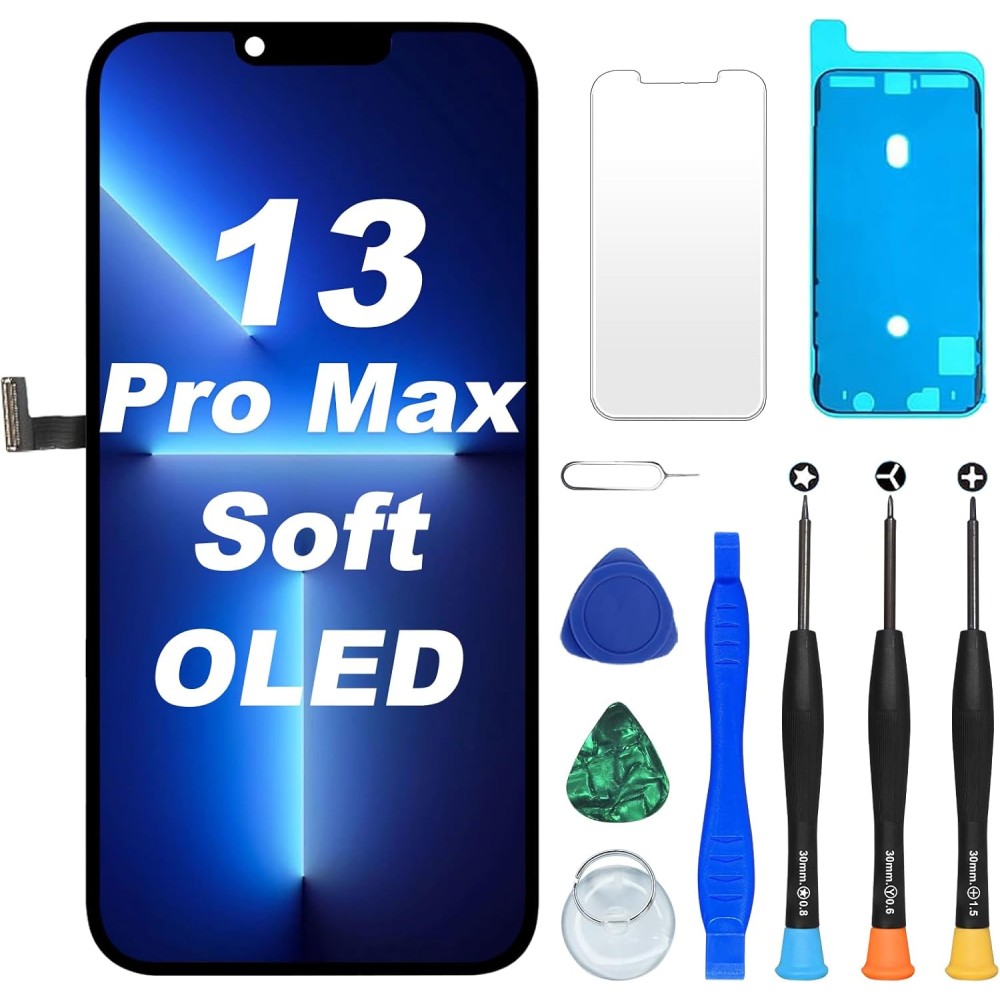
Ask how the supplier handles substitutions. A hard OLED, soft OLED, LCD and refurbished display are not interchangeable commercial descriptions, even when each option physically fits the phone. A substitute should require approval from the buyer, because it may change the customer proposition and the technician’s expected result.
Stock continuity also affects pricing decisions. A slightly lower unit price has limited value if technicians must place emergency orders elsewhere, split shipping costs or explain avoidable delays to customers.
What should a supplier explain about quality grades?
Each grade needs a stable, written definition.
Terms such as premium, original quality or OEM-style can mean different things between sellers. Ask what the term covers and what it does not.
For a display, the definition may need to address panel technology, frame option, refresh-rate support, brightness expectations, touch behaviour and whether any original component must be transferred or configured. For a battery, it may need to address the exact supported model, board or diagnostic behaviour and handling requirements. Avoid turning a marketing label into a technical assumption.
Apple’s guidance on genuine iPhone displays describes possible differences in touch, brightness, colour, sensors and other functions when a non-genuine display is used. Apple’s Parts and Service History guidance also explains the messages that can appear after repair. These sources do not define a wholesaler’s aftermarket grades; they show why a repair business must understand and communicate the specific part and process being offered.
Which testing evidence should a repair shop request?
Request evidence tied to the SKU and fault type.
A general statement that parts are tested is less useful than a clear description of what was checked, at what stage and how failures are recorded.
For screens, ask whether visual output, touch response, connectors and physical condition are checked before dispatch. For batteries and powered accessories, ask what safe-handling and functional checks apply. The relevant evidence will differ by product; one checklist should not be presented as proof for every category.
The shop should add its own pre-installation process. Test compatible functions before removing films or applying final adhesive, record the result and inspect flex cables, seals and connectors. Use the device manufacturer’s service information where available. Apple’s Self Service Repair resources, for example, begin with a model-specific repair manual and may require post-repair steps.
Testing does not remove every failure risk. Its value is that it separates shipping damage, compatibility errors, installation faults and later customer damage more consistently.

How should pricing and trade terms be compared?
Compare completed-repair cost, not unit price alone.
The correct comparison includes the exact grade, tax, delivery, technician time, failure handling and the commercial effect of a repeat visit.
Create a like-for-like basket and request the written terms that apply to your account. Do not assume that retail website pricing, a promotional offer or another buyer’s arrangement applies to your business. Where volume pricing exists, confirm which SKU, quantity, period and account status it covers.
| Decision area | Evidence to request | Operational question |
|---|---|---|
| Part specification | Exact model, grade and frame or bundle option | Are all quotes genuinely like for like? |
| Account terms | Current written trade terms | Which prices and conditions apply to this account? |
| Delivery | Dispatch method, cut-off wording and tracking process | Can the shop promise a completion date responsibly? |
| Failure handling | DOA, fitted-part and RMA procedure | What evidence and time are required when a job fails? |
| Support | Compatibility and technical contact route | Can a technician resolve ambiguity before fitting? |
Digi4u’s wholesale page is the appropriate internal route for checking its current trade-account proposition. Any buyer should confirm current terms directly rather than importing figures from an older article or third-party listing.
Why do dispatch and stock communication matter?
Repair promises depend on information quality.
The useful question is not simply whether delivery is fast. It is whether stock and dispatch information is clear enough for the shop to make a reliable customer commitment.
Ask when an order is considered accepted, how partial orders are handled, what tracking is supplied and how exceptions are communicated. Check the supplier’s current delivery information for the service being considered, then confirm any trade-specific condition in writing.
A supplier should not be judged by a single perfect or delayed parcel. Review a sample across normal weeks, busy periods and mixed baskets. Record order time, dispatch confirmation, arrival, missing lines and communication. This creates a supplier score based on the operating pattern your shop actually experiences.
For critical models, set reorder points that leave room for a late delivery. Supplier performance and internal stock discipline work together; neither can fully compensate for the other.
What should the warranty and RMA process make clear?
It should define evidence, exclusions and next steps.
A workable RMA process lets the technician know what to test, what to preserve and how to submit the claim before the repair begins.
Read the current written return terms and ask specifically how they apply to screens, batteries, electronic parts, opened packaging, removed films, installation marks and customer damage. Do not assume the same rule covers every product or fault. Digi4u publishes a return policy; trade buyers should still confirm how the current policy applies to their account and intended products.
Keep a consistent evidence record: SKU, device model, fault description, pre-installation test, photographs and the stage at which the issue appeared. This protects both parties from vague claims. It also helps the shop identify recurring installation or compatibility errors instead of sending every failed job back as a suspected part fault.
How should you test compatibility and technical support?
Test support with a real, specific question.
A generic promise of expert help is difficult to evaluate. Ask the supplier to confirm a model, regional code, frame option or connector issue from the evidence your technician would normally provide.
A useful response separates confirmed compatibility from uncertainty, requests missing identifiers and points to the listing or procedure governing the decision. Speed matters, but a fast guess creates more cost than a careful request for the A-number or component photograph.
Repeat the exercise with an RMA scenario, such as an intermittent touch fault found before final assembly. This shows whether support and purchasing use the same definitions and what evidence technicians must preserve.
How should product safety and traceability affect supplier selection?
Treat them as purchasing requirements, not slogans.
Businesses that make, import, distribute or sell consumer products in the UK have responsibilities for product safety and labelling. The Office for Product Safety and Standards summarises these responsibilities in its product safety advice for businesses.
The evidence required depends on what is being placed on the market and the business’s role. The government’s compliance advice for manufacturers and importers highlights safety information and traceability. Separate statutory guidance covers obligations under the Electrical Equipment (Safety) Regulations 2016.
Do not ask a supplier for a generic “certificate” and consider the question closed. Identify the exact product, claim, market and business role, then ask for evidence that actually relates to them. For repair activity, the Health and Safety Executive advises that work should not prevent correct operation or adversely affect equipment safety in its electrical-equipment guidance.
-1000x1000.jpg)
Supplier evaluation checklist
The final decision should be documented so that purchasing remains consistent when staff, models or market conditions change. Score evidence, not impressions.
- Define the required models, grades and acceptable substitutes.
- Build a representative test basket from real repair demand.
- Obtain written quality-grade definitions for the relevant product lines.
- Confirm model-code, connector, frame and bundle compatibility.
- Document supplier testing and your own pre-installation checks.
- Compare completed-repair cost rather than unit price alone.
- Review dispatch, tracking, shortage and partial-order communication.
- Read the current warranty, return and RMA requirements.
- Confirm the support route for compatibility and technical questions.
- Review safety and traceability evidence for the exact product and business role.
- Run a controlled trial before moving regular purchasing volume.
- Review performance by SKU and fault type, not only by supplier total.
FAQ
What should a repair shop ask a phone parts supplier before opening a trade account?
Ask how the supplier defines each quality grade, verifies compatibility, records test results, handles DOA and fitted-part claims, communicates stock status and manages RMAs. Request the written terms that apply to your account rather than relying on a sales summary.
Should a repair business use one supplier or several?
A primary supplier simplifies ordering and returns, but a controlled secondary source can reduce disruption when a critical SKU is unavailable. Keep the same qualification checks for every source and avoid changing quality grades silently between jobs.
How should a repair shop compare screen prices?
Compare like-for-like model, technology, frame option, quality grade, included accessories, tax and delivery. Then include failure handling, technician time and return friction. The lowest unit price may not produce the lowest completed-repair cost.
What evidence should be kept for a phone-parts return?
Keep the order reference, SKU, device model, pre-installation test result, photographs of seals and flex cables, fault description and the supplier’s requested diagnostic evidence. Follow the supplier’s current RMA instructions and do not assume that every fault category has the same return conditions.
A suitable UK supplier is the one whose product definitions, compatibility support, fulfilment and failure process match the repair shop’s written service standard. Trial the relationship with a representative basket and measured outcomes before treating price or catalogue size as proof of fit.