

The Ultimate iPhone 17 Battery Replacement Guide — What’s New and How to Fix It Like a Pro
Need this part? We stock tested replacement parts with same-day UK dispatch and a 12-month warranty.

An iPhone 17 battery replacement is a safety procedure before it is a repair. The cell is bonded into a chassis that leaves very little room to work, the adhesive that holds it has to be released rather than levered, and the battery has to be isolated from the board before anything conductive goes near it. The tools are ordinary; the sequence is what stops a routine job becoming a fire risk.
Last updated:
What Apple’s battery data actually reports
The numbers a customer sees in Settings are defined, and knowing the definitions makes the difference between a correct diagnosis and a replacement that solves nothing. Apple describes maximum capacity as the capacity of the battery relative to when it was new, and peak performance capability as the device’s ability to deliver the instantaneous current demanded of it.
The same page explains the behaviour that follows a chemically aged cell: a phone may shut down before the reported percentage reaches zero, and that shutdown is intentional from the device’s point of view even when it surprises the owner. A customer complaining about early shutdowns and a customer complaining about quick drain are therefore describing two different things, and only one of them is fixed by a new battery.
The sequence, and what each step protects
Six steps carry the risk, and each one exists for a reason that is worth knowing before it is skipped.
| Step | Risk if it is rushed | The control |
|---|---|---|
| Discharge the device before opening | A punctured cell at full charge releases far more energy | Work on a phone below roughly 25 per cent charge |
| Soften the perimeter adhesive | Prying a cold panel cracks the glass or the flex | Even heat around the whole frame, then a controlled lift |
| Isolate the battery connector first | Any metal tool can short a live board | Disconnect before work continues, then work one-handed near the board |
| Release the battery adhesive | Levering a bonded cell deforms or punctures it | Use the pull tabs or solvent route the adhesive is designed for |
| Test before resealing | A faulty assembly is discovered after the phone is closed | Boot, charge and health check with the panel resting in place |
| Reseal and hold pressure | Gaps and lifted panels weeks later | Fresh adhesive, even pressure and the full cure time |
The steps that decide whether the phone comes back
Battery isolation is the step that separates a technician from an amateur. The connector is disconnected first, before the cell is moved, because a cell that is still connected can be shorted by a tool that slips — and on a phone this compact there is not much room for the tool to slip into.
Adhesive release is the second. The pull tabs exist so the cell can be removed by tension rather than by leverage; if they break, the release has to be worked gradually with the approved solvent rather than forced. Deforming a lithium cell is the failure that damages the phone, the bench and occasionally the technician, and it starts with a pry bar in the wrong place.
Resealing is the third, and it is the one most often rushed at the end of the day. Fresh adhesive in a clean channel, even pressure from a clamp or press, and the full cure time is what prevents the lifted corner that brings the device back a week later.
Authentication, and why some phones show a warning
On recent iPhones the battery is identified by a management chip, so a replacement cell that the phone cannot verify produces the “unable to verify” message in Settings, and battery health may report a dash instead of a percentage. Where the original chip is intact, transferring it to the new cell restores the pairing; where the cell is healthy but unpaired, that transfer is the repair, and it is a different job from a battery replacement with its own tooling and time.
The boundary is worth stating at the counter: IC transfer restores identification, not capacity, and the replacement is still recorded in the device’s service history. A shop that says “as new” will be having the conversation again in a week.
Parts and what the job has to earn
A model with stated assumptions. The parts prices are live listings; the labour rate and retail price are yours to substitute.
Take a current iPhone battery around the £15–£19 parts point (the iPhone 16 replacement cell is £14.99 and the 16 Plus £18.99), add about £1.50 of adhesive and cleaning materials, and budget 45–60 minutes of bench time — roughly £30–£40 at a £40 rate. Cost per job lands near £47–£61.
Invoiced at £85 the contribution is £24–£38; at £99 it is £38–£52. The variable that moves the margin most is not the invoice but the repeat rate, because every reseal is a panel, a cell and an hour that come out of the same month’s profit. Substitute your own parts price before quoting.
What the counter conversation should cover
Three sentences prevent most of the arguments that follow a battery replacement. The first is that the new cell’s health figure is the cell’s own, not a restored copy of the original number. The second is that the replacement is recorded in the device’s service history even when no warning is displayed. The third is that early shutdowns and fast drain have different causes, so a phone that was shutting down under load may need more than a cell.
That is also the honest reading of the Consumer Rights Act 2015: parts and work supplied to a consumer have to be of satisfactory quality and carried out with reasonable care and skill. Naming the cell grade and the warranty period on the invoice is what turns a later disagreement into a conversation with a document attached to it, and it costs nothing at the point of sale.
References
- Apple Support: iPhone battery and performance — maximum capacity, peak performance capability and unexpected shutdowns.
- Apple: Self Service Repair — genuine parts, tool rental and the repair manuals for out-of-warranty work.
- Consumer Rights Act 2015 — satisfactory quality and reasonable care when a battery or a repair is sold to a consumer.
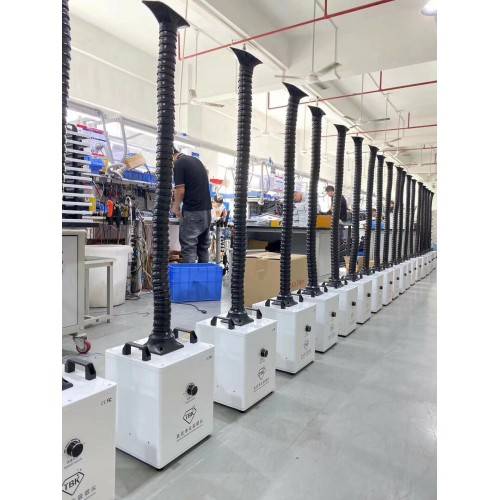
- HSE INDG249 — fume capture at the bench, which applies to any process producing vapour.
FAQ
What is different about an iPhone 17 battery replacement?
The chassis leaves less room around the cell and the adhesive holds it across a wider area, so the release has to be worked rather than levered. The safety sequence — discharge, isolate the connector, release the adhesive, test before resealing — is the same as any modern iPhone.
Will a new battery show a warning message?
It can. Recent iPhones identify the battery through a management chip, so a cell the phone cannot verify produces an unable-to-verify message and health may show a dash. Transferring the original chip to the new cell restores the pairing.
Does a new battery restore the original battery life?
It restores the capacity the cell has when new, which for a correctly matched replacement is the manufacturer’s rating for the model. It does not make the phone consume less power, so if the drain has another cause the customer will notice again quickly.
Why do some phones shut down early even with a healthy battery?
That behaviour is about peak performance capability rather than capacity: a cell that cannot deliver the current the phone asks for triggers an intentional shutdown, more often at low charge and in cold conditions.
What does a battery replacement cost to run?
Around £15–£19 for the cell plus roughly £1.50 of consumables and 45–60 minutes of bench time — about £47–£61 all in on the model above, leaving £24–£52 against an invoice of £85–£99.
Match the cell, then match the adhesive. Replacement batteries and the tooling for current iPhone models are listed in the iPhone parts range.