


Phone Repair Screwdriver Types: What Each Bit Is For
Need this part? We stock tested replacement parts with same-day UK dispatch and a 12-month warranty.
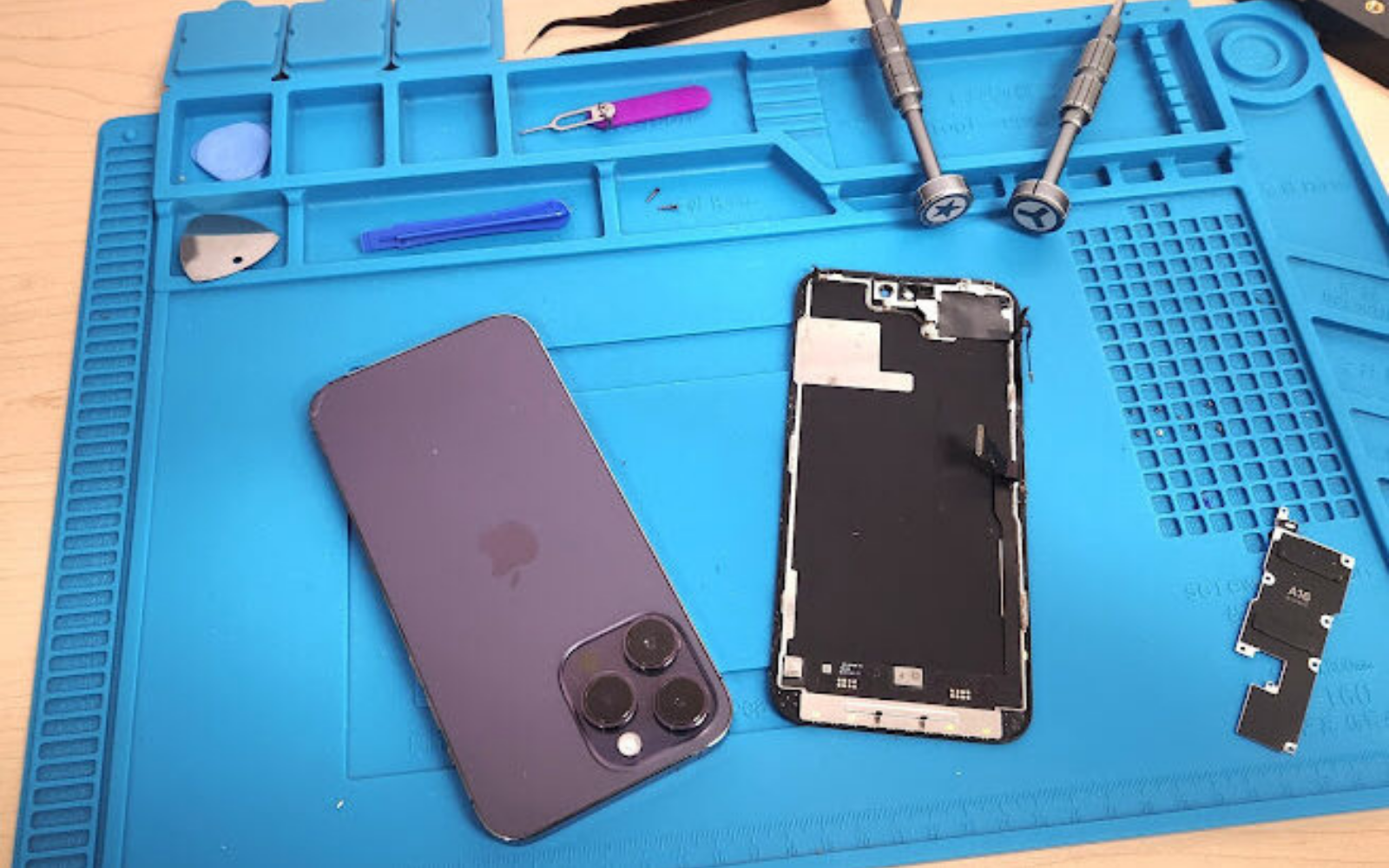
Phone repair screwdriver types are defined by the screw recess, not by the colour of the handle. Pentalobe, Phillips (and JIS-like cross tips), tri-point / Y-type, Torx / Torx Plus and occasional flat tips each belong to specific fasteners on iPhone, Samsung, Google Pixel and other handsets. Fit the full recess under magnification, keep axial pressure while turning, and retire rounded tips before they strip a pentalobe or tri-point head.
Last updated:
UK SERP results for phone screwdriver queries are dominated by marketplaces and kit category pages. This Digi4u refresh keeps a technician-first bit map, adds a starter-versus-pro kit table, and links live precision drivers from the tools catalogue so shops can stock by recess type rather than by “115-in-1” marketing counts.
Why does screwdriver choice matter on phone repairs?
Phone screws are short, shallow and often threadlocked.
A tip that only “looks close enough” cams out, rounds the recess and turns a five-minute opening into a drill-out. Tip steel, tip machining and driver ergonomics matter as much as owning every bit size in a tin. A small, well-made set with sharp tips beats a large tray of soft, worn bits.
Identify the fastener under magnification, seat the bit fully, and turn with steady downward pressure. If the tip wobbles in the recess, stop and change bit size or replace the tip.
Phone repair screwdriver bit map
Match the bit family to the fastener, then confirm the size.
The table below is a workshop map for common handsets. Exact sizes still vary by model year, so verify on the screw in front of you rather than memorising one kit list forever.
| Bit family | Typical sizes on phones | Where you meet it | Failure mode if wrong |
|---|---|---|---|
| Pentalobe | P2 / 0.8 mm class | iPhone outer bottom screws | Rounded star; forced drill-out |
| Phillips / cross | PH000 / PH00 / 1.2–1.5 mm tips | Many Android covers; some Apple internals | Cam-out; chewed cross |
| Tri-point / Y-type | Y000 / 0.6 mm class | iPhone internals (battery, display brackets) | Smoothed Y; stuck bracket screws |
| Torx / Torx Plus | T2 and nearby | Google Pixel and selected Android frames | Rounded hex lobing |
| Flat / slotted | Very small | Occasional brackets, SIM trays, prying assist | Slip damage to cosmetics |
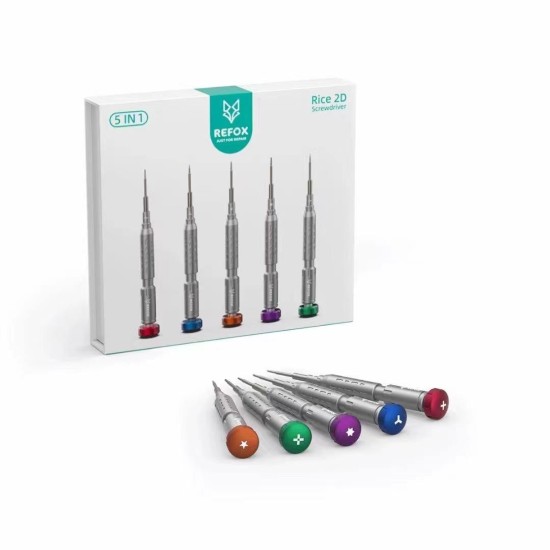
When do you use a Pentalobe driver?
Pentalobe is the common outer fastener on iPhone bottoms.
Apple popularised five-lobe external screws that a standard Phillips will not seat in. Use a dedicated pentalobe tip that fills the lobes; a worn tip will polish the screw into a circle. Keep a spare pentalobe bit on the bench because outer screws see grit from pockets and cases.
Digi4u lists a dedicated REFOX RS2 pentalobe driver for shops that prefer fixed handles over hunting through a mixed bit tube.
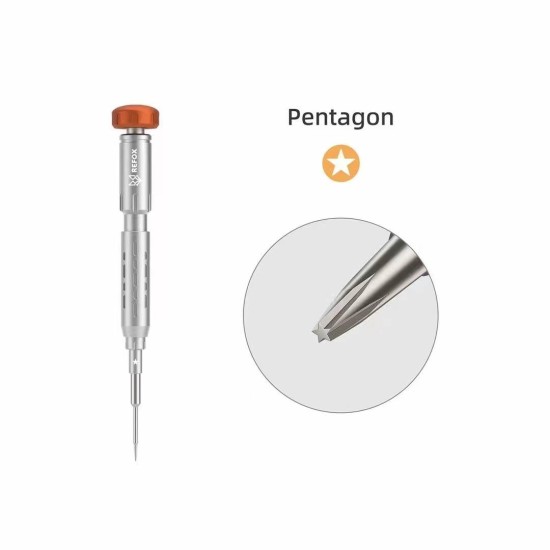
Where are tri-point and Y-type bits used?
Tri-point fasteners dominate many iPhone internal brackets.
Battery connectors, display brackets and some shield screws use a three-point recess that a Phillips tip will only damage. Stock a sharp Y000 / 0.6 mm-class tip and replace it as soon as the points look polished. The matching REFOX RS2 tri-point driver sits beside the pentalobe on many UK benches.
Never “make do” with a flathead in a tri-point screw. You will round the head and spend longer on extraction than on the original repair.
When do you use Phillips or cross tips?
Cross-recess screws remain common on Android covers and some Apple internals.
Phone work usually needs fine tips (often described as PH000 / PH00 or 1.2–1.5 mm cross tips), not household PH2 drivers. Some Japanese-influenced fasteners behave better with JIS-like tips that seat deeper before cam-out. If a cross screw refuses to break threadlock, add controlled downward force and a drop of suitable solvent where the procedure allows — do not increase tip size into a smaller recess.
Example fixed driver from the Digi4u catalogue: Mechanic iShell Max cross 1.2 Philips screwdriver.
What is the difference between Torx and Torx Plus on phones?
Both are lobed drive systems; Plus tips are not interchangeable by eye alone.
Google Pixel and several Android designs use small Torx or Torx Plus fasteners on frames and shields. A worn T2 that almost fits will still round a Plus recess. Keep labelled Torx tips separate from Phillips tubes so apprentices do not grab by colour.
If a Pixel outer screw will not seat, stop and confirm Torx versus tri-point under magnification before forcing a turn.
Starter kit versus pro kit: what should a UK phone shop stock?
Stock by recess coverage and tip quality, not by piece count.
Marketplace SERPs push 100-piece kits; many of those tips are soft and unlabelled. A repair counter needs reliable pentalobe, tri-point, fine Phillips and Torx coverage first, then duplicates of the bits that wear fastest.
| Kit level | Minimum bit coverage | Also include | Skip for now |
|---|---|---|---|
| Beginner / front counter | Pentalobe, Y000/tri-point, PH000/1.2–1.5 cross, T2 | Plastic picks, ESD mat, screw tray | Giant unlabelled bit forests |
| Daily iPhone-heavy bench | Duplicates of pentalobe + tri-point; magnetic pad | Fixed-handle drivers for speed | Relying on one shared worn tip |
| Mixed Android / Pixel shop | Add Torx/Torx Plus sizes you actually open | Model-specific notes on the shadow board | Assuming every Android is Phillips |
| Pro / training bay | Spares of every high-wear tip; torque-friendly handles | Extraction kit for already-rounded screws | Letting trainees use rounded tips “one more job” |
Browse live drivers and kits on the Digi4u tools hub. Related reading for new staff: mobile phone repair tools for beginners.
Magnetic versus non-magnetic drivers
Light magnetism helps retain tiny screws; excess magnetism fights placement.
Most phone benches prefer mildly magnetic tips so P2 and Y000 screws do not vanish into carpets. Overly strong magnetisers can make screws jump between shields. Test a new driver on a spare screw before a customer device, and demagnetise if screws refuse to sit still.
Magnetic trays still beat clothing pockets for holding fasteners during a screen swap.
When do cheap bits strip screws?
Soft tip steel and rounded edges fail before the screw does.
Budget kits often harden poorly at the tip. Once the lobes look shiny or the cross tip has a bright, rounded crown, retire the bit. Continuing with a damaged tip transfers the wear into the customer’s fastener. Threadlock, wrong size and angled driving accelerate the same failure.
| Warning sign on the tip | Likely cause | Bench action |
|---|---|---|
| Polished / rounded lobes | Wear or soft steel | Replace tip immediately |
| Tip wobbles in recess | Wrong size or worn crown | Stop turning; resize or renew |
| Paint or plating flaking at the tip | Low-grade coating | Prefer better tip stock for daily drivers |
| Handle spins before the screw moves | Poor tip seat / cam-out | Increase axial pressure; confirm bit family |
How do you prevent cam-out and remove a damaged screw?
Prevention is magnification, fit and downward force.
Seat the bit fully, keep the driver in line with the screw axis, and break threadlock with controlled torque rather than speed. For already-damaged heads, use a purpose extractor, a tiny drop of suitable adhesive on a sacrificial bit only when shop procedure allows, or escalate to a technician experienced with micro-drilling. Do not grind into a logic board to save a £0.02 screw.
How should bits be cleaned and stored?
Keep tips dry, labelled and off the floor.
Wipe metal dust and adhesive residue after messy jobs. Store bits in labelled holes or colour-coded handles so pentalobe and tri-point never share an anonymous tube. Replace missing labels the same day — anonymous tips are how the wrong bit reaches an iPhone bracket.
What is the one rule for phone repair screwdrivers?
Fill the recess completely, or change the bit.
Driver type, size and tip condition decide whether a phone opens cleanly. Stock the families you actually service, retire rounded tips early, and buy duplicates of pentalobe and tri-point before you buy another 100-piece novelty kit.
More workshop context: building a microsoldering bench, pre-heating before screen removal and ESD control in a repair shop.
Bits and drivers only matter if the right panels arrive on time; for the parts side of the bench, see our note on Digi4u as a UK phone repair parts supplier.
Bits open the frame; heat pads, plungers and blades separate glued glass — equip that lane with phone screen separation tools UK.
Bits open the case; mats, straps and safe PCB cleaning keep boards alive — equip that lane with ESD and PCB cleaning tools for UK phone repair benches.
After the bits come out, resealing decides dust and moisture outcomes — stock guidance in phone repair adhesives and waterproof seals UK.
FAQ
What screwdriver bits do I need for iPhone repair?
At minimum, a sharp pentalobe for the outer bottom screws and a tri-point / Y000-class tip for many internal brackets, plus fine Phillips tips for selected shields. Keep duplicates of the high-wear tips and replace them when the lobes look polished. Confirm sizes under magnification on the screw in front of you.
What is the difference between pentalobe and tri-point bits?
Pentalobe is a five-lobe tip commonly used on iPhone outer screws. Tri-point (Y-type) is a three-point tip used on many iPhone internal fasteners such as battery and display brackets. They are not interchangeable; using the wrong family rounds the screw head quickly.
Are large 100-piece precision kits good for phone shops?
Piece count is a weak quality signal. Many bulk kits include soft, poorly labelled tips that strip fasteners. Prefer a smaller set with hard, correctly sized pentalobe, tri-point, Phillips and Torx coverage, then add duplicates of the bits you wear out weekly.
Should phone repair screwdrivers be magnetic?
Mild magnetism helps retain tiny screws during removal and placement. Excess magnetism can make screws jump between shields. Test new drivers on spare fasteners and demagnetise if placement becomes difficult.
Where can UK shops buy individual phone screwdriver types?
Digi4u stocks precision drivers and tool kits on its tools hub, including dedicated pentalobe and tri-point handles as well as sets. Match the tip to the fastener family rather than ordering by handle colour alone, and keep spares of the tips that round first.