


Power Bank Capacity Claims: How to Compare Honestly
Need this part? We stock tested replacement parts with same-day UK dispatch and a 12-month warranty.
A customer buys a 20,000mAh power bank, charges their phone three times, and concludes the product is a lie. The product is not lying; the number is being read as something it was never measuring.
Understanding what the capacity figure describes — and what happens between the cell and the phone — turns an argument at the counter into a short explanation, and it makes a shop better at choosing what to sell.
Why does a 20,000mAh power bank only charge a phone three times?
Because the figure describes the cell, not the output.
Capacity is quoted at the nominal voltage of the cells inside the power bank, which is around 3.7 volts. The phone charges at 5 volts or higher through its connector, and the conversion from one to the other loses energy as heat. That is why the energy that reaches a device is always meaningfully less than the number on the label.
Add the losses in the phone’s own charging circuit and the natural drop as a battery fills, and a power bank that appears to have twice the capacity of another often delivers far less than twice the usable energy.
What does the capacity figure actually measure?
The energy stored in the cells, expressed in milliamp hours.
Milliamp hours describe charge, and without a voltage they describe very little. The honest unit for comparison is watt hours, because watt hours take voltage into account and can be compared directly between a power bank, a laptop battery and an airline’s limit.
Converting is simple: a 10,000mAh cell at 3.7 volts holds 37 watt hours. Two power banks with the same mAh rating can hold different amounts of energy if their cell voltages differ, which is one reason the specification sheets of reputable brands state both numbers.
What is the difference between rated and typical capacity?
One is a minimum, the other an average.
Rated capacity is the figure the manufacturer guarantees the cells will meet, and typical capacity is what an average unit measures. A brand that states both is being more honest than one that quotes only the higher number, and the gap between them is a useful indicator of how carefully the product was specified.
For a shop choosing what to stock, that distinction is more useful than the headline figure. A line that declares its rated and typical capacity is usually a line whose manufacturer expects to be measured, which is a good sign in a category full of unlabelled products.
How do you compare two power banks honestly?
By watt hours, then by measured output.
The first comparison is the watt-hour rating, converted from the stated capacity if necessary. The second is what the unit actually delivers: charge a fixed load and measure the energy that comes out, which is the only number that describes what a customer will experience.
A USB power meter turns a vague comparison into a measurement, and it is the same instrument that makes wireless charging and cable tests meaningful. The physical connector ratings involved are covered in USB-C against Lightning on the bench.
Why does fast charging drop off?
The phone decides, and it slows as the battery fills.
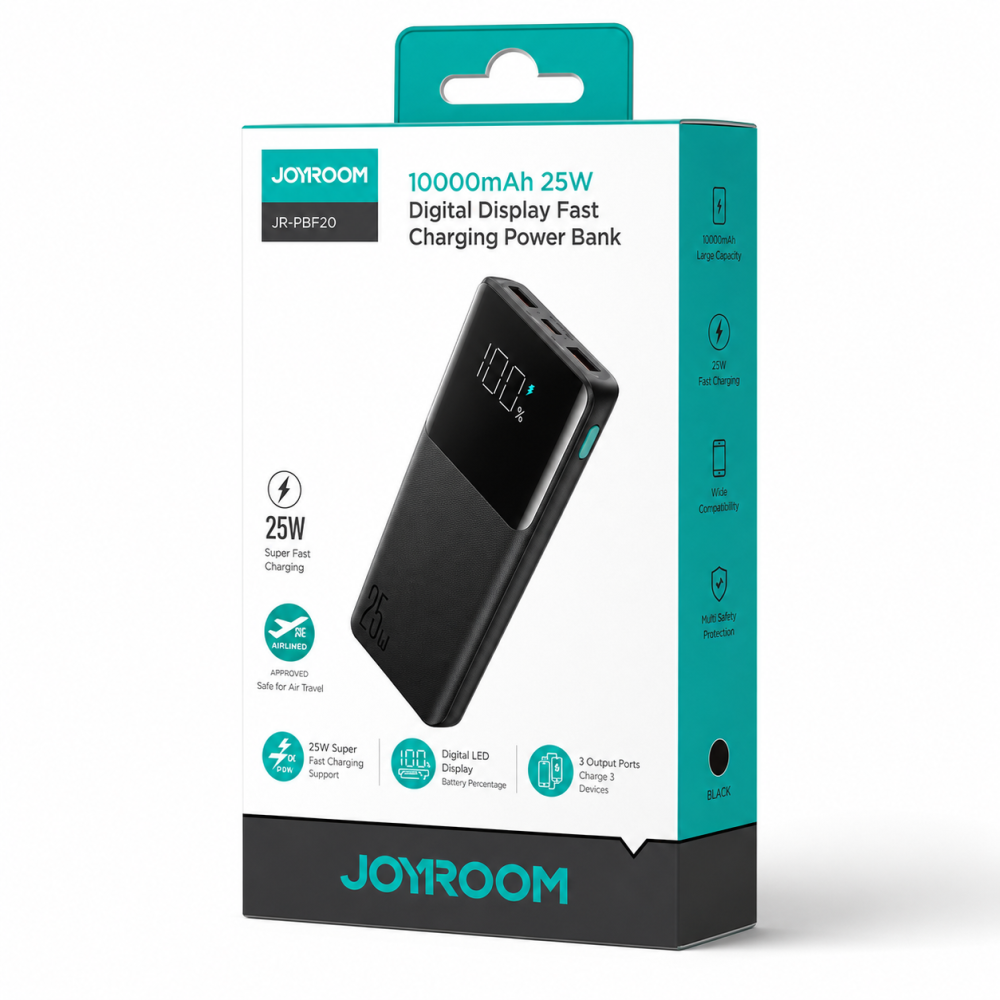
Fast charging is negotiated between the device and the power source, and the phone reduces the rate as its charge rises to protect the cell. A power bank that advertises a high output will therefore deliver it for part of the cycle and less for the rest, which is normal rather than a fault.
The same negotiation reduces the output when two devices are connected at once, because the shared budget is split. A customer charging a phone and a watch simultaneously will see a slower rate on both, and explaining that in advance prevents a complaint.
| Claim on the box | What it means | What to check instead |
|---|---|---|
| 10,000mAh capacity | Cell capacity at nominal voltage | Watt hours, and rated versus typical |
| 22.5W output | Peak negotiated rate under ideal conditions | Measured wattage during a real charge |
| Charges a phone five times | Marketing estimate on a small handset | Your own test on a real device |
| Fast charge support | The unit can negotiate a protocol | Which protocol, and with which cable |
| Wireless charging built in | An extra conversion stage | Measured output on that path |
How do you test a power bank in the shop?
Charge it fully, then measure what it delivers.
Charge the unit to full, connect a USB meter and a known load, and record how much energy comes out before it shuts down. That single figure is the honest description of the product, and it takes less than an hour on a desk while other work continues.
Doing it once per stock line is enough. The measurement does not change between units of the same product, and it gives the shop a defensible answer when a customer questions a claim.
Is it safe to leave a power bank charging overnight?
On a hard surface, with a good charger, usually.
The risk is heat, and heat accumulates when a device is charged on a bed, a sofa or anything that traps warm air. A power bank on a hard surface in a ventilated room with a reputable charger is a different proposition from one buried under a duvet.
The cell inside is the variable that matters, and it is why a swollen power bank is a serious matter rather than a cosmetic one. Warmed lithium cells carry a fire risk, and the general safety expectations around charging are set out by the HSE at electrical safety.
What should a shop stock?
Two lines, each with a stated watt-hour rating.
One compact unit for everyday use and one larger unit for travel cover most customers, and both should come from a brand that publishes its rated capacity and its supported protocols. A range of five units from the same supplier at different prices is harder to sell and harder to manage than two good ones.
Stocking also means disposing properly. Power banks are waste electrical equipment and go through a registered route under the Waste Electrical and Electronic Equipment Regulations 2013, and the carriage rules for lithium cells are set out in shipping lithium batteries for repair shops.
What should you tell a customer who says the capacity is wrong?
Show them the watt hours and the measured output.
Most capacity complaints dissolve when the customer sees that the label describes the cells and that the conversion losses are physics rather than deception. Where the measurement shows the unit is delivering far less than its specification, that is a genuine fault and a warranty claim.
Two numbers make the conversation factual: what the unit holds in watt hours, and what it actually delivered. Everything else on the packaging is a claim.
The other useful habit is to keep one measured example per stock line, with the figure written on the shelf label. When a customer questions a claim, the shop can answer from its own test rather than from the packaging, which is a much stronger position in a category where every brand claims the same numbers.
What about airline and shipping rules?
They are written in watt hours, not milliamp hours.
Airline carriage limits for lithium batteries are expressed in watt hours, which is another reason the honest comparison figure is the one to know. A customer who plans to travel with a large unit is better served by a shop that can tell them what it holds in those terms.
Carriage by post is a separate question with its own rules, and the practical guidance for a repair business is the same one that applies to the batteries it removes from devices. The carriage requirements are the ones described in the lithium shipping guide linked above.
None of that is complicated, but it does need to be said out loud. A customer who understands why a large unit cannot travel in hand luggage without checking the watt-hour figure is a customer who will come back for the smaller one rather than buying it elsewhere in a hurry.
What about a swollen power bank?
Stop using it, and do not charge it again.
A swollen cell means internal pressure has risen, and further charging or physical pressure can turn that into a fire. It should be quarantined away from anything flammable, its connector taped over, and disposed of through a registered route rather than in general waste.
That is the same handling that applies to a swollen phone or laptop battery, and the approach a shop should take to any device with a swelling cell is the one set out for devices more broadly. Plugs, chargers and power banks placed on the UK market have to meet the requirements of the Electrical Equipment (Safety) Regulations 2016.
What is the one number worth quoting?
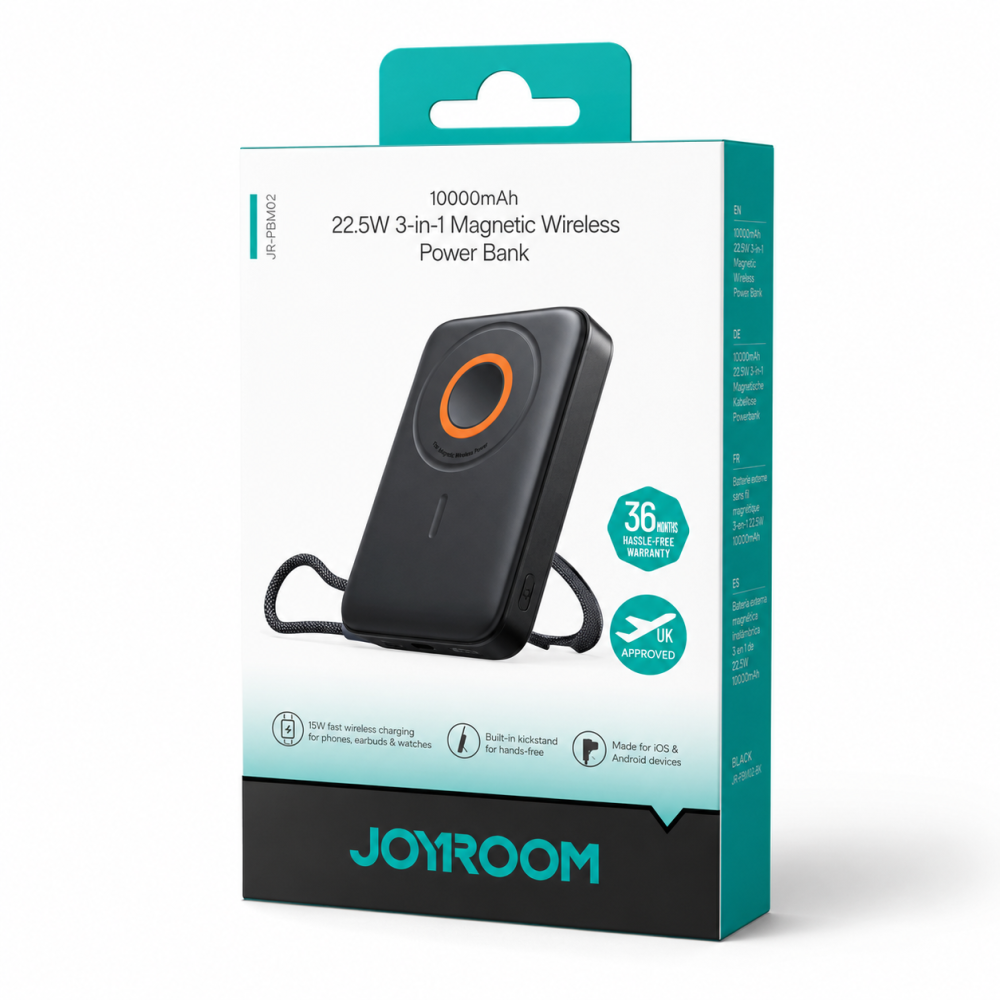
Watt hours, and then what it actually delivered.
Those two figures describe the product honestly, and they are the numbers a customer can compare between two units of different brands. Milliamp hours on their own cannot be compared, which is exactly why they are the number on the front of the box.
A shop that quotes watt hours and measures its own stock is doing something no packaging can do, and it makes the accessory range easier to sell. Retail customers keep their rights on anything bought under the Consumer Rights Act 2015, and products placed on the market fall to the Office for Product Safety and Standards.
FAQ
Why does my 20,000mAh power bank not charge a phone five times?
Capacity is quoted at the voltage of the cells inside, around 3.7 volts, while the phone charges at 5 volts or more. The conversion loses energy as heat, so the energy that reaches a device is always meaningfully less than the figure on the label.
What is the difference between rated and typical capacity?
Rated capacity is the minimum the manufacturer guarantees the cells will meet, and typical capacity is what an average unit measures. A brand that publishes both is easier to hold to a claim than one that only quotes the higher number.
Is it safe to leave a power bank charging overnight?
On a hard surface, in a ventilated room, with a reputable charger, the risk is low. Heat is the problem, and heat builds up when a unit is charged on a bed or under anything that traps warm air.
What should I do with a swollen power bank?
Stop using it and do not charge it again. Quarantine it away from anything flammable, tape over the connector, and dispose of it through a registered waste route rather than in general waste.
Accessories you can measure before you sell them. Digi4u stocks power banks, chargers and cables with their rated and typical capacity stated.
{
“@context”: “https://schema.org”,
“@type”: “FAQPage”,
“mainEntity”: [
{“@type”: “Question”, “name”: “Why does my 20,000mAh power bank not charge a phone five times?”,
“acceptedAnswer”: {“@type”: “Answer”, “text”: “Capacity is quoted at the voltage of the cells inside, around 3.7 volts, while the phone charges at 5 volts or more. The conversion loses energy as heat, so the energy that reaches a device is always meaningfully less than the figure on the label.”}},
{“@type”: “Question”, “name”: “What is the difference between rated and typical capacity?”,
“acceptedAnswer”: {“@type”: “Answer”, “text”: “Rated capacity is the minimum the manufacturer guarantees the cells will meet, and typical capacity is what an average unit measures. A brand that publishes both is easier to hold to a claim than one that only quotes the higher number.”}},
{“@type”: “Question”, “name”: “Is it safe to leave a power bank charging overnight?”,
“acceptedAnswer”: {“@type”: “Answer”, “text”: “On a hard surface, in a ventilated room, with a reputable charger, the risk is low. Heat is the problem, and heat builds up when a unit is charged on a bed or under anything that traps warm air.”}},
{“@type”: “Question”, “name”: “What should I do with a swollen power bank?”,
“acceptedAnswer”: {“@type”: “Answer”, “text”: “Stop using it and do not charge it again. Quarantine it away from anything flammable, tape over the connector, and dispose of it through a registered waste route rather than in general waste.”}}
]
}