

iPhone 17 Series Screen Replacement Preview: Key Repair Considerations for the Latest Models
Need this part? We stock tested replacement parts with same-day UK dispatch and a 12-month warranty.
The iPhone 17 series is four devices with four different panels, and the parts are already on the shelf: current UK trade prices run from £29.99 for a 120Hz FHD LCD assembly for the iPhone 17 to £59.99 for a soft OLED for the 17 Pro or 17 Pro Max. What makes the job different from earlier generations is not the disassembly — it is the front glass, the adhesive across the whole surface, and a TrueDepth assembly that has to be transferred intact. Apple’s own specification for the model describes a “durable Ceramic Shield 2 front with 3x better scratch resistance”, which is about scratches; a drop that cracks the glass still lands on your bench.
(Last modified date: October 3, 2026)
Which models are in the iPhone 17 series?
Four, and there is no “iPhone 17 Mini” whatever a listing may claim.
Apple’s UK model list runs: iPhone 17, iPhone Air, iPhone 17 Pro and iPhone 17 Pro Max, alongside the iPhone 17e below them in the range. The Air is the thin one, and it is the model where the display and housing are most tightly integrated — which is the one Apple’s own naming calls “Air” even though several supplier catalogues list it as “17 Air”. Every panel is cut for one of those four shapes, so the model number on the back cover decides the part, not the family name.
What do the replacement panels cost?
Five assemblies currently listed, and the grade matters more than the model in two cases.
| Model | Assembly | Grade | Price |
|---|---|---|---|
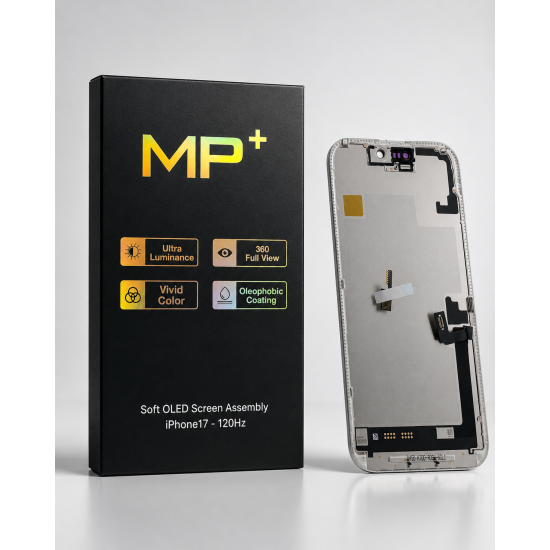
| iPhone 17 | MP+ 120Hz soft OLED | Premium | £54.99 |
| iPhone 17 | JH Value 120Hz FHD in-cell LCD | Value | £29.99 |
| iPhone 17 Pro | MP+ 120Hz soft OLED | Premium | £59.99 |
| iPhone 17 Pro | MP+ Essential 120Hz FHD LCD | Value | £34.99 |
| iPhone 17 Pro Max | MP+ 120Hz soft OLED | Premium | £59.99 |
| iPhone 17 Pro Max | MP+ Essential 120Hz FHD LCD | Value | £34.99 |
Two things follow. First, on this generation the Pro models are not automatically the expensive repair if the value grade is fitted: a 17 Pro LCD at £34.99 costs less than a standard 17 on a premium OLED at £54.99. Second, an LCD assembly is not simply worse — it keeps the 120Hz refresh rate, has a lower black level than OLED, and is the sensible answer when a customer names a budget.
What makes the job harder than earlier iPhones?
Three things, and the original preview flagged all three correctly.
The adhesive. Apple’s ingress protection is bought with a full-perimeter bond, and the higher the rating the more of the glass is held by adhesive rather than by clips. Heat has to be applied across the whole perimeter and in passes; force applied to one corner is how the panel cracks on the way out.
The TrueDepth assembly. Face ID components transfer with the display and are paired to the device. Damage a flex and no replacement panel restores it — the single most expensive mistake on this job.
Panel cost. A premium 17 Pro Max assembly at £59.99 is a part you do not want to fit twice, which is why the pre-seal test below matters more than the disassembly itself.
What tools does the job need?
- A controlled heat source — a heat mat such as the CPB CP320 at £59.99, or a laser separating machine where the volume justifies one.
- Precision drivers — the MECHANIC Mortar Mini iShell Max 6-in-1 set at £34.99 covers the pentalobe and Y000 heads.
- Plastic pry tools and a suction cup from the opening tools range, plus ESD-safe tweezers.
- Fresh adhesive strips cut for the model, and a magnetic mat so the screws keep their order.
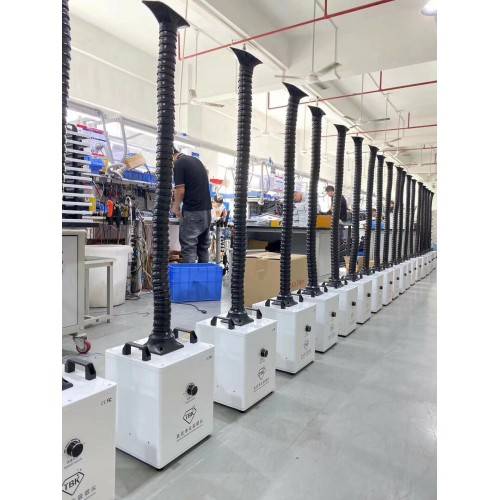
- Laser/ablation safety and extraction if a laser is used: the machine belongs behind an enclosure with extraction, and the filter is a consumable.
What should a repair shop plan for?
Three decisions, and the first is about which panels to hold.
Hold the fast-moving grade, order the rest. On this generation the value LCD (£29.99–£34.99) is the line that moves for volume repairs, with one premium soft OLED in stock for the customer who wants the closest match to the original. Holding every variant of every model ties up cash in parts that turn over slowly, and the trade terms that make this workable are set out in buying on wholesale terms.
Do not buy on the model name alone. The 17, the Air, the 17 Pro and the 17 Pro Max all take different panels, and the Air in particular is listed differently by different suppliers.
Record the batch. A panel that fails should trace to a run rather than to a date, which is what makes a DOA claim an administrative task instead of an argument — the process is in building a parts returns process.
What should be tested before the phone is sealed?
Six checks, all with the panel still loose: touch across a grid including the margins, brightness at both extremes, True Tone and automatic brightness, Face ID, both cameras, and the seal line by eye against a dark screen. Apple’s warranty position is also worth telling the customer before the job starts: opening the device ends any remaining cover, and water resistance is not restored to the factory rating by a replacement gasket.
What Apple’s own repair route offers on a new model
The first question a shop gets asked about a phone this new is whether anyone else can fix it at all, and the answer is documented. Apple’s Self Service Repair programme states that it provides access to genuine Apple parts, tools and repair manuals for out-of-warranty repairs including display replacements, with parts and tools supplied through an authorised third-party store where professional-grade tools can be rented or bought.
That matters for pricing rather than for pride. Apple also publishes the service options for iPhone on its repair page, so a customer can compare a same-day trade repair against mailing the phone away. The trade’s advantage on a 17-series handset is not price, it is that the phone is not out of the owner’s hands for a week — which is exactly the argument to lead with on a device that is usually someone’s only phone.
What the first months of 17-series repairs look like on the books
A model, not a forecast. Parts prices are the live Digi4u listings; every other figure is an assumption to be replaced with your own.
Stock a value line and one premium line per model you actually see. On an iPhone 17 that is the 120Hz FHD COF LCD at £29.99 and the MP+ soft OLED at £54.99; on the 17 Pro it is the MP FHD LCD at £34.99 against the soft OLED at £59.99. Holding one of each for four models ties up roughly £240 in stock before adhesives and tools.
At two 17-series jobs a week with a £45 average parts cost and £55 of labour, the gross contribution is about £200 a week, so the stock position pays for itself in a little over a week of that trade — provided the parts turn. The risk is not margin, it is ageing: a 17 Pro Max OLED that sits on the shelf for four months is capital doing nothing, and the model collapses the moment the panels stop being scarce.
The second number to substitute is your own failure rate. Every assembly that is scrapped during fitting is a £30–£60 loss against the job, which is why the pre-seal test and a screen removal machine are cost lines in this model rather than conveniences.
What a shop should ask before it commits to a new model
The 17 series is recent enough that the answers still change, so the questions are worth writing down before the first order rather than after the first return.
- Is the assembly the same cut across the 17 and the 17 Pro? The camera plateau and connector layout differ, so a panel that fits one body does not fit the other.
- Is the TrueDepth flex supplied with the assembly, and is it paired? On a new handset the flex carries Face ID data, and a damaged one cannot be recovered from the panel.
- Which refresh rate does the listing actually run at? The 120Hz claim is what separates the value LCD lines from an ordinary FHD panel.
- What is the DOA window, and does it cover a panel that fails after fitting? Ask before the first order, not after.
- Is there a repair manual for the model? Apple publishes them through its repair programme, and they remove most of the guesswork on a chassis nobody has seen before.
References
- Apple: Self Service Repair — genuine parts, tool rental and published repair manuals.
- Apple: Service and repair for iPhone (UK) — the official service options a customer weighs against a same-day repair.
- Apple UK: compare iPhone models — the iPhone 17, Air, 17 Pro and 17 Pro Max lineup used above.
- Apple UK: iPhone 17 — “durable Ceramic Shield 2 front with 3x better scratch resistance”.
- Apple Support: identify your iPhone model — matching the model number to the part.
FAQ
Is the iPhone 17 screen replaceable?
Yes. Assemblies are available now, from a 120Hz FHD LCD for the iPhone 17 at £29.99 to soft OLED panels for the Pro models at £59.99. The disassembly is the same sequence as earlier generations; what differs is the perimeter adhesive and the TrueDepth transfer.
Which iPhone 17 models are there?
The iPhone 17, iPhone Air, iPhone 17 Pro and iPhone 17 Pro Max, with the iPhone 17e below them in the range. There is no iPhone 17 Mini, so a listing offering one is describing a different device.
Is an iPhone 17 Pro Max LCD a good option?
It keeps the 120Hz refresh rate and costs £34.99 against £59.99 for the soft OLED, with a lower black level as the trade-off. For a customer who wants the phone repaired rather than restored to factory appearance, it is a legitimate choice — and the same logic applies to the 17 Pro.
Will Face ID survive a screen replacement?
Only if the TrueDepth assembly and its flex are transferred undamaged. The components are paired to the device, so a damaged flex cannot be fixed by a new panel; this is the reason the display is opened from the left and supported on the right throughout.
What should a shop stock for the iPhone 17?
The value LCD line for each model it sees regularly, plus one premium soft OLED for the customer who wants the closest match to the original, and fresh adhesive strips. Ordering every variant up front ties up cash; the wholesale terms and stock-turn logic are worth reading before the first large order.
Match the panel to the model, then decide the grade. Digi4u stocks iPhone 17 screen assemblies by model and grade, with the adhesives and tools the job needs.