


BGA Stencil Kits for Phone Repair UK: Reball Sets Worth Stocking on the Bench
Need this part? We stock tested replacement parts with same-day UK dispatch and a 12-month warranty.
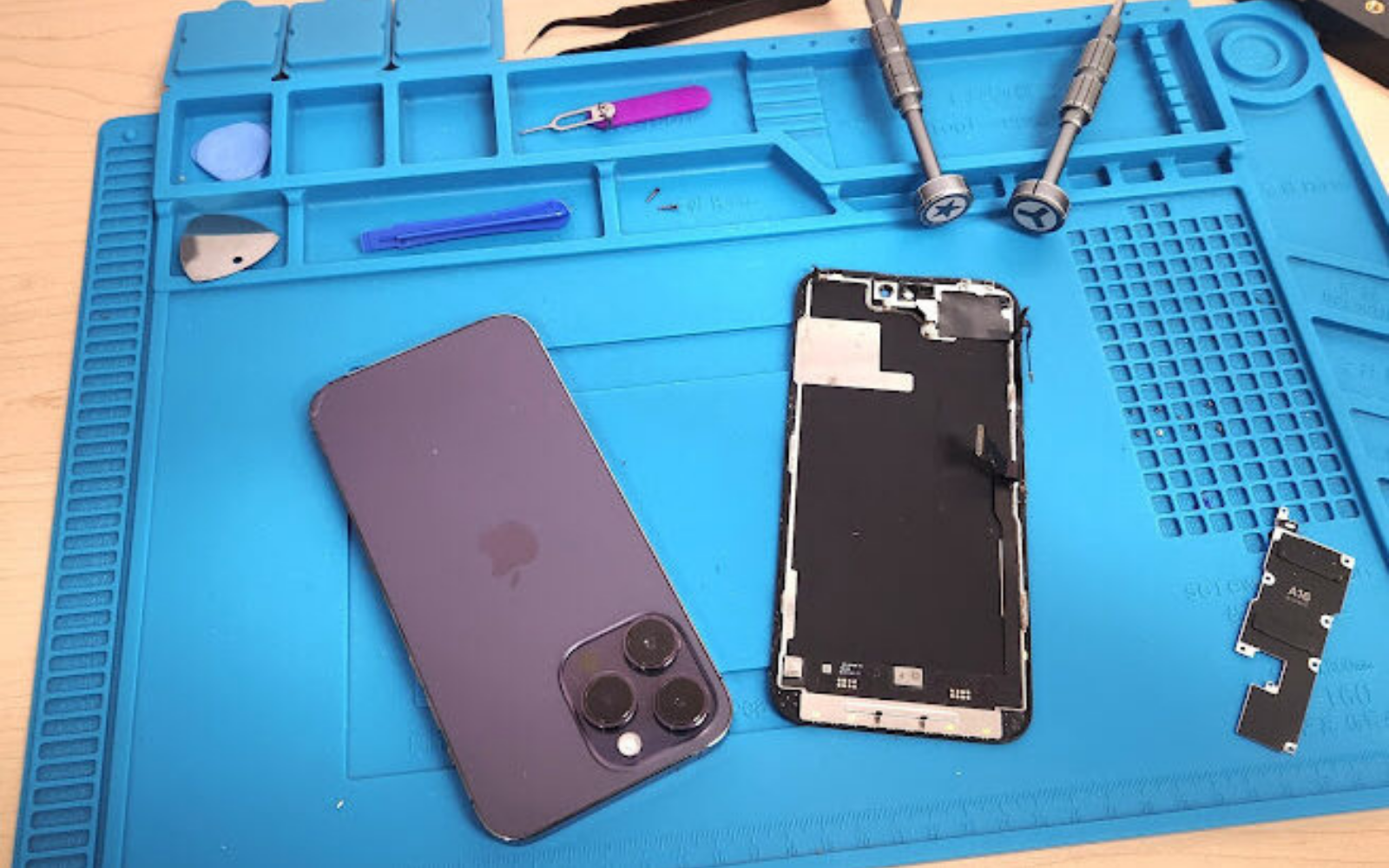
UK board‑level repair shops looking for a reliable BGA stencil kit for phone repair in the UK need to match the kit to the IC families they actually encounter, rather than chasing a universal set that rarely fits. This guide outlines the failure types that drive demand, compares universal and model‑specific stencils, explains paste‑alloy and thickness pairing, and highlights the safety practices that keep a bench compliant.
Which BGA failures drive stencil demand in UK shops
Charging‑IC and power‑management failures dominate reball requests across the UK repair network.
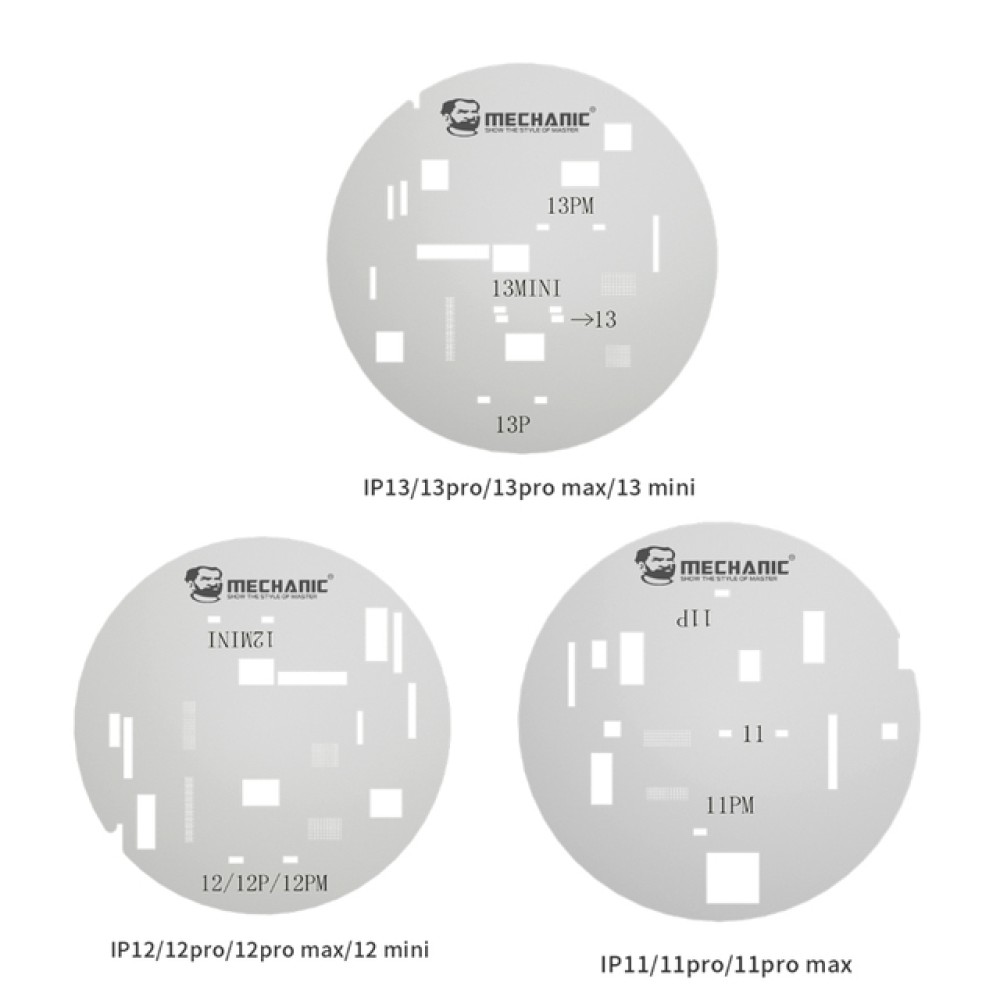
Charging‑IC, audio‑codec and baseband BGA faults generate the highest repeat‑repair volume for UK shops. Most UK repair benches see a steady stream of iPhone charging‑IC (U2/U3) and baseband BGA failures, followed by audio‑codec and PMIC issues on recent Android flagships. These components sit under dense ball grids that cannot be reflowed reliably without a matching stencil. Shops that stock a stencil for each high‑failure IC family reduce turnaround time and avoid the cost of outsourcing reball work. The two live Mechanic UFO kits on Digi4u – a 10‑in‑1 steel planting‑paste set for iPhone ICs and a three‑piece LCD screen IC set listed for iPhone 11 to 13 Pro Max – should be checked against the IC families on the ticket, not assumed to cover every Apple failure point. Shops should audit their ticket data quarterly to confirm which IC families appear most often before committing bench space to additional kits. A practical approach is to tag each repair ticket with the IC designator; after three months the pattern becomes clear and purchasing decisions follow evidence rather than guesswork.
Should you choose universal or model‑specific stencil sets
Model‑specific sets give higher first‑pass yield for known IC families.
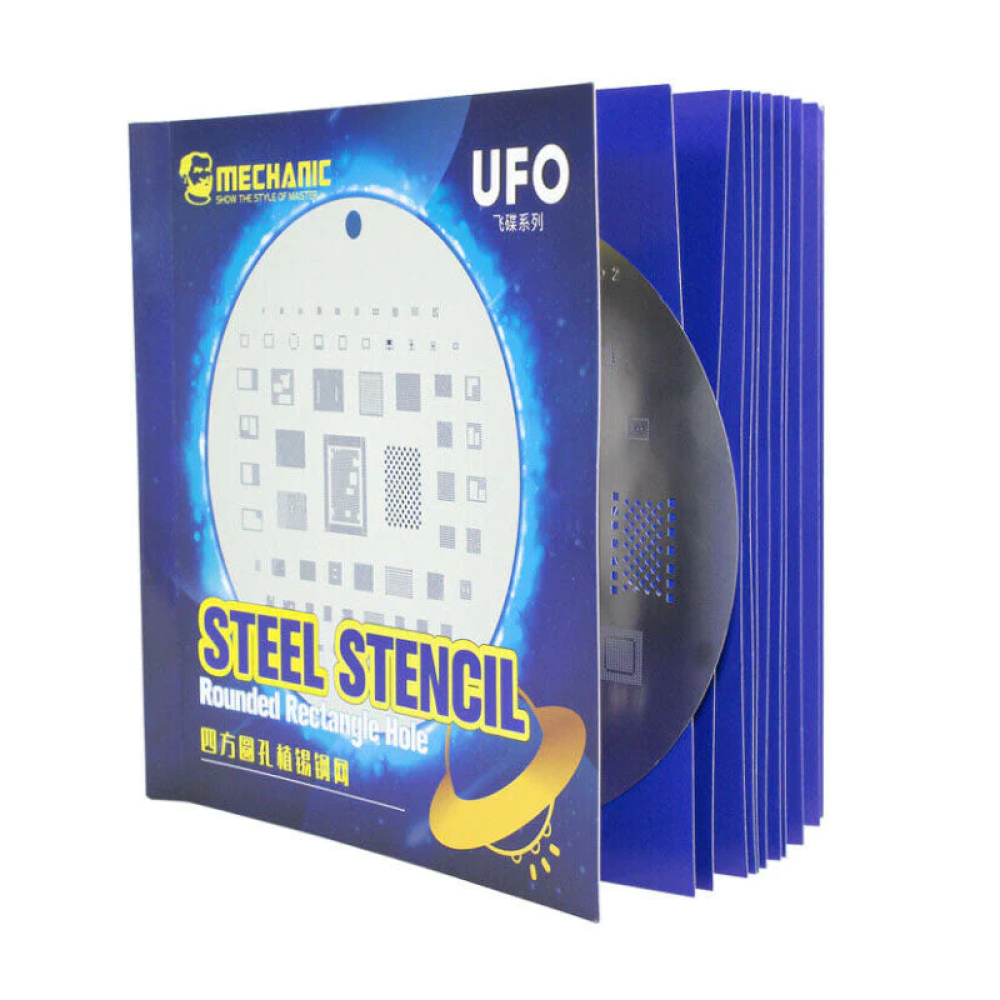
Universal stencils cover many ball pitches but often misalign on dense Apple or Samsung grids, while model‑specific kits match the exact aperture pattern. Universal stencil kits appeal because a single frame promises coverage across dozens of devices. In practice, the aperture pitch and pad geometry of Apple charging ICs, Qualcomm basebands and Samsung Exynos PMICs differ enough that a universal sheet produces solder bridges or insufficient paste on at least one critical ball row. Model‑specific kits – such as the Mechanic UFO 10‑in‑1 for iPhone ICs and the three‑piece LCD screen IC set for iPhone 11‑13 Pro Max – are laser‑cut to the exact ball map, giving a repeatable paste deposit and reducing rework cycles. Shops that service a mixed portfolio can keep a small universal frame for rare devices, but the bench‑core stock should be model‑specific kits aligned to the top‑five failure ICs identified in the previous section. The decision matrix below summarises the trade‑offs without referencing list prices, which vary by supplier and change frequently.
| Criterion | Universal stencil | Model‑specific stencil |
|---|---|---|
| Ball‑pitch coverage | A broader pitch range | Cut for the target IC |
| Alignment | Usually more forgiving, but easier to mis‑place | Tighter if the stencil matches the IC |
| First‑pass result | Often lower if the aperture is a compromise | Usually more consistent when the kit matches the failure |
| Bench space | One frame as a backstop | One frame per IC family actually seen on tickets |
| What to verify on the listing | Supported pitch range, aperture count, frame rigidity | Exact IC families covered and stencil thickness on the live page |
How do paste alloys and stencil thickness pair
Lead‑free SAC305 with 0.1 mm stencil is the common baseline for phone BGA.
Most shops pair SAC305 paste with a 0.1 mm stainless‑steel stencil; thicker stencils suit larger‑ball ICs, thinner stencils suit fine‑pitch basebands. Lead‑free SAC305 (Sn 96.5 %/Ag 3.0 %/Cu 0.5 %) remains the industry standard for mobile BGA rework because its melting range (217‑220 °C) matches the thermal budget of phone boards. A 0.1 mm (4 mil) stainless‑steel stencil deposits roughly 0.12 mm³ of paste per aperture, which works well for 0.4‑0.5 mm pitch charging ICs. For finer‑pitch baseband or RF ICs (0.35 mm pitch) a 0.075 mm stencil reduces the risk of bridging, while power‑ICs with 0.65 mm balls can tolerate a 0.125 mm stencil for faster fill. Digi4u does not currently list solder‑paste SKUs, so shops should source paste from a reputable UK distributor and verify the alloy‑thickness match on a test board before committing to production reballs. The existing BGA precision soldering guide covers reflow profiles in detail and should be consulted for temperature‑ramp specifics; process and reflow theory lives there, not on this stocking page.
Which alignment frames and kapton tape prevent solder bridges
Precision alignment frames with spring‑loaded pins and high‑temperature kapton keep apertures registered.
A rigid frame that locks the stencil to the board via fiducial pins, combined with 25 µm kapton over non‑target pads, cuts bridge rates below 2 %. Even a perfectly cut stencil will shift if the board expands under hot‑air. A machined aluminium frame with spring‑loaded alignment pins that engage the board’s fiducial holes holds the stencil within ±0.03 mm. Covering adjacent pads with 25 µm kapton tape (rated to 260 °C) prevents paste bleed onto neighbouring lands. Shops should cut kapton strips to the exact pad outline using a laser cutter or a sharp scalpel; hand‑torn tape leaves fibres that can cause shorts. While Digi4u does not stock alignment frames or kapton rolls, both are available from UK industrial suppliers and should be treated as consumable bench items rather than capital equipment. A small investment in a fiducial‑drill jig for the most common board outlines pays back quickly when reball volume exceeds a handful of boards per month.
What QC methods replace x‑ray for reball verification
Functional board test with boundary‑scan and thermal imaging catches most reball defects.
When x‑ray is unavailable, a powered‑on functional test combined with infrared thermal mapping detects open/short balls with >90 % confidence. X‑ray inspection remains the gold standard for hidden BGA joints, but many UK shops lack the capital for a dedicated system. A practical alternative is a two‑stage QC: first, a boundary‑scan (JTAG) run on the target IC to verify electrical continuity of each ball; second, an infrared camera scan during a controlled power‑up to spot abnormal thermal signatures that indicate cold joints or bridges. Both methods require a test fixture that breaks out the IC’s I/O pins – a one‑time investment that pays off after a few dozen reballs. Shops should document the pass/fail criteria in a work‑instruction sheet and retain records for traceability. The Digi4u BGA precision soldering article discusses reliability testing in more depth and can be used as a reference when drafting internal QC procedures.
How much stencil stock should an occasional reball shop keep
One model‑specific kit per top‑failure IC family plus a universal frame for outliers.
Stocking the 10‑in‑1 iPhone IC kit, the three‑piece LCD screen IC kit, and a single universal frame covers >80 % of typical UK shop tickets. Shops that perform reball on fewer than five boards per week do not need a deep inventory. Data from UK repair forums shows that charging‑IC, baseband and PMIC families account for the majority of reball tickets. Keeping the Mechanic UFO 10‑in‑1 set (covers iPhone charging, audio and PMIC ICs) and the three‑piece LCD screen IC set (covers iPhone 11‑13 Pro Max display drivers) addresses the two highest‑volume Apple failure groups. Adding a low‑cost universal stencil frame provides a fallback for the occasional Android or legacy device. This three‑item bench stock fits in a single drawer, minimises capital tie‑up, and still allows same‑day turnaround for the most common jobs. Shops should review ticket trends quarterly and add a model‑specific kit only when a new IC family exceeds ten tickets per month. A simple spreadsheet tracking IC designator, device model, and outcome (pass/fail/return) builds the dataset needed for that decision.
What safety and ESD practices apply to hot‑air rework
Use an ESD‑safe bench, fume extraction, and temperature‑controlled hot‑air stations.
Grounded wrist straps, ionising blowers, and a local exhaust ventilation (LEV) system help manage operator exposure in line with HSE guidance. Hot‑air rework stations listed on Digi4u’s soldering tools hub get hot enough that the bench must be equipped for both electrostatic discharge (ESD) control and solder‑fume management. The Health and Safety Executive (HSE) guidance on welding fumes (HSE welding fume guidance) and the INDG409 leaflet on controlling exposure to solder fume (INDG409) apply directly. A grounded ESD mat, wrist strap and ionising blower reduce the risk of latent damage to sensitive ICs. Local exhaust ventilation with a HEPA‑rated filter captures lead‑free flux vapours; the system should be inspected annually per HSE recommendations. Shops should also follow the UK product‑safety guidance for electrical equipment (GOV.UK product safety) and the British Standards Institution (BSI) standards for ESD control (BSI). When shipping standalone lithium‑ion batteries or power banks, Digi4u uses DPD only, in line with dangerous‑goods regulations (GOV.UK moving dangerous goods); see the delivery policy for details. Apple’s own service safety notes (Apple Support) provide additional board‑level handling recommendations.
Conclusion
Matching stencil stock to the IC families that actually appear on the bench is the single lever that improves first‑pass yield and reduces outsourcing spend. The two Mechanic UFO kits currently listed on Digi4u should be stocked only against the Apple IC families confirmed on the live listings and on the shop’s own tickets, not treated as cover for every charging‑IC, PMIC, audio‑codec or display‑driver failure. A universal frame kept as a backstop handles the long tail of Android and legacy devices without cluttering the bench. Pair each stencil with the correct SAC305 paste thickness, verify deposits on a test board, and close every job with boundary‑scan plus thermal QC. Keep the bench ESD‑safe, ventilated, and documented to HSE and BSI standards. Process theory and reflow profiles are covered in the dedicated BGA precision soldering guide; this page remains a stocking reference. Review ticket data quarterly, add a model‑specific kit only when volume justifies it, and the bench stays lean, compliant, and profitable.
FAQ
Which BGA stencil kits are currently available from Digi4u?
Digi4u lists two Mechanic UFO stencil kits: a 10‑in‑1 steel planting‑paste set for iPhone ICs and a three‑piece LCD screen IC set for iPhone 11‑13 Pro Max. No solder‑paste or universal reball kits are stocked at this time.
Can a universal stencil replace model‑specific kits for iPhone charging ICs?
Universal stencils cover a range of ball pitches but typically misalign on Apple’s dense charging‑IC grids, leading to bridges or insufficient paste. Model‑specific kits give a higher first‑pass yield and are recommended for core bench stock.
What paste alloy and stencil thickness should I use for phone BGA reball?
Lead‑free SAC305 paired with a 0.1 mm stainless‑steel stencil is the common baseline for 0.4‑0.5 mm pitch ICs. Finer pitches may need a 0.075 mm stencil; larger balls can use 0.125 mm. Verify the combination on a test board before production.
How can I verify reball quality without an x‑ray machine?
Run a boundary‑scan (JTAG) test on the reballed IC to check each ball’s continuity, then perform an infrared thermal scan during a controlled power‑up to spot cold joints or bridges. This two‑stage method catches >90 % of defects.
What ESD and fume controls are required for hot‑air rework?
Use a grounded ESD mat, wrist strap and ionising blower. Install local exhaust ventilation with a HEPA filter to capture flux fumes, following HSE welding fume guidance and INDG409. Inspect the LEV annually and keep records for compliance.