

Battery IC Chip Transfer Technology for iPhone and iPad | Genuine Compatibility for UK Repairs
Need this part? We stock tested replacement parts with same-day UK dispatch and a 12-month warranty.
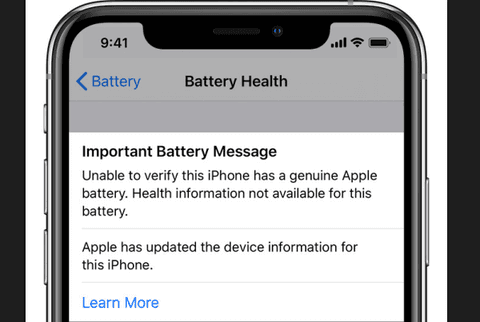
The battery message that follows a replacement is not a fault in the new cell — it is the phone refusing to accept an identification it cannot verify. Battery IC chip transfer solves that by moving the original management chip onto the new battery, and the arithmetic is simple: an iPhone 16 replacement battery is £14.99 and the JC programmer used to read and write the data is £101.66. The chip is the part that carries the identity; the cell is the part that carries the capacity, and only one of the two can be cloned.
(Last modified date: October 4, 2026)
What the battery management IC actually does
Apple describes the battery information shown in Settings as a set of measured properties rather than a single number: maximum capacity — the capacity of the battery relative to when it was new — and peak performance capability, which describes how well the battery can deliver the instantaneous current the phone asks for. The same page explains the shutdown behaviour that follows a chemically aged battery: a device may shut down before the reported percentage reaches zero, and that shutdown is intentional from the device’s point of view even when it surprises the person holding it.
Those two measurements are the reason the identification chip matters so much. The reported capacity and the performance management behaviour are tied to the chip that has been reporting them since the phone was built, so a new cell with the old chip keeps the phone’s own history intact, while a new cell with a new chip is a new identity the phone has to be taught to trust.
What IC transfer fixes, and what it does not
The honest boundary matters more than the sales claim. Transferring the original chip restores the pairing the phone expects and brings back the battery health reporting it was doing before; it does not change the capacity of the cell you fitted, and it cannot make a low-grade cell behave like a premium one. It also does not erase the fact that the battery was replaced — Apple keeps a parts and service history, so a customer checking the device before trading it in will still see that work was carried out.
A second boundary is the tool set. Manual transfer needs a hot-air station, a reballing stencil and steady hands; automated cloning needs a programmer that reads the original chip and writes the data to a replacement. A shop that owns neither should price the job as a two-visit repair or send it out, because a mangled chip costs more than the margin on the repair.
Symptom, cause, and whether the transplant is the answer
Before any tool comes out, the symptom has to be matched to the correct cause. These are the four outcomes a UK shop sees most often after a battery replacement.
| What the customer sees | What is actually happening | Does IC transfer help? |
|---|---|---|
| “Important Battery Message – unable to verify” in Settings | The phone cannot match the cell to the identification it recorded | Yes — this is the exact case the transfer exists for |
| Battery health shows a dash instead of a percentage | No valid capacity data is being reported | Yes, if the original chip is intact |
| Health reports a low percentage immediately after fitting | The new cell genuinely has reduced capacity | No — the cell is the limit, not the pairing |
| Phone shuts down early under load, health normal | Peak performance management reacting to a cell that cannot deliver current | No — replace the cell |
Only the first two rows are transplant cases. Charging a customer for a transfer to fix a genuinely tired cell is how a repair shop creates a return visit.
Manual transfer against automated cloning
Manual transfer is the traditional route: heat the original board, lift the management chip, reball it, and solder it to the new battery’s board. It costs almost nothing in tooling beyond what a micro-soldering bench already has, and it is the only option when the replacement battery has no writable chip of its own. The risk sits entirely in the technique — too much heat lifts pads, too little leaves cold joints, and a damaged chip cannot be recovered.
Automated cloning reads the original data and writes it to a programmable battery. It is faster and repeatable, and the JC programmer at £101.66 is the sort of bench tool that pays for itself across a batch rather than on one job. The limitation is compatibility: the replacement battery has to be one the programmer can address, which is why the smart batteries the shop stocks and the programmer it owns should be chosen together.
What the repair costs and what it has to earn
A model with stated assumptions. The parts prices are live Digi4u listings; the labour rate and retail price are yours to substitute.
Take an iPhone 16: the REPART Select replacement battery is £14.99 and the iPhone 16 Plus equivalent is £18.99. Adhesive strips and cleaning materials add about £1.50. With the programmer already on the bench, the transfer itself is 15–25 minutes on top of a 30–40 minute battery fit, so budget roughly an hour of technician time — about £40 at a £40 bench rate.
Cost per job lands near £56 on an iPhone 16 and £60 on the Plus. If the repair is invoiced at £95 the gross margin is around £35–£39; at £110 it is £50–£54. The tooling decision is therefore about volume: at £101.66 the programmer is repaid after roughly three transfers priced at the higher figure, and after about six at the lower one.
Two lines are easy to forget. A chip damaged during the lift is a write-off of the original identification, which usually means a replacement battery and an apology rather than a repair. And a customer who is told the phone is “back to factory” will be disappointed when the parts and service history still lists the work.
Testing before the phone goes back
Five checks in this order catch almost everything. Confirm the phone boots without the battery message; confirm Settings reports a battery health percentage rather than a dash; charge from a low percentage and watch the reported level rise steadily rather than jumping; check that the charge stops at 100 per cent and does not cycle; and leave the device on charge for twenty minutes while watching for heat around the battery area. A transfer that passes all five can be handed back with confidence.
What the customer should be told, and why it matters commercially
Two sentences at the counter prevent most of the arguments that follow a battery repair. The first is that the cell is new but the reported capacity is the cell’s own, not a restored original figure. The second is that the replacement is recorded in the device’s service history even though the warning has gone.
That is also the honest reading of the Consumer Rights Act 2015: goods supplied must be of satisfactory quality and fit for purpose, and a repair is a service performed with reasonable care and skill. A customer who was told the phone would look untouched and then finds a service entry has a complaint; a customer who was told in advance does not. The same conversation is the reason to put the panel or battery grade on the invoice — it is the document that decides whether a later claim is a conversation or a dispute.
References
- Apple Support: iPhone battery and performance — maximum capacity, peak performance capability and the cause of unexpected shutdowns.
- Apple: Self Service Repair — genuine parts, tool rental and repair manuals for out-of-warranty work.
- Consumer Rights Act 2015 — the rights that apply when a repair or a part is supplied to a consumer.
- HSE INDG249 — controlling fume at any bench process that produces it.
FAQ
Will transferring the battery IC clear the battery message on an iPhone?
Yes, when the original chip is intact and the replacement cell can accept it. The phone is matching an identity it recognises, so the message disappears and battery health reporting returns. It does not change the capacity of the cell you fitted.
Do I need a programmer, or can I move the chip by hand?
Hand transfer works and needs no programmer, but it needs a reballing stencil, controlled hot air and steady technique. A programmer such as the JC unit at £101.66 makes the job repeatable and is repaid within a handful of repairs at typical retail prices.
Will the parts and service history still show a replacement?
Yes. IC transfer restores the identification the phone expects, but the service record still notes that the battery was replaced — worth telling the customer before the work rather than after.
Does the same process work on iPads?
The principle is identical because iPad batteries use the same style of management chip, but the board layout and the adhesive differ enough that the fixtures and the working time are not the same. Treat an iPad as its own job when quoting.
What does a battery IC transfer cost to run in the UK?
Parts run from £14.99 for an iPhone 16 battery to £18.99 for the Plus, plus about £1.50 of consumables and roughly an hour of bench time including the transfer. On the model above, an invoice of £95–£110 leaves a £35–£54 margin.
Match the cell and the programmer before the job arrives. Smart batteries for current iPhone models and the programming tools that write them are listed in the iPhone parts range.