


Stocking Parts for the iPhone 17 Series: What to Hold and When
Need this part? We stock tested replacement parts with same-day UK dispatch and a 12-month warranty.
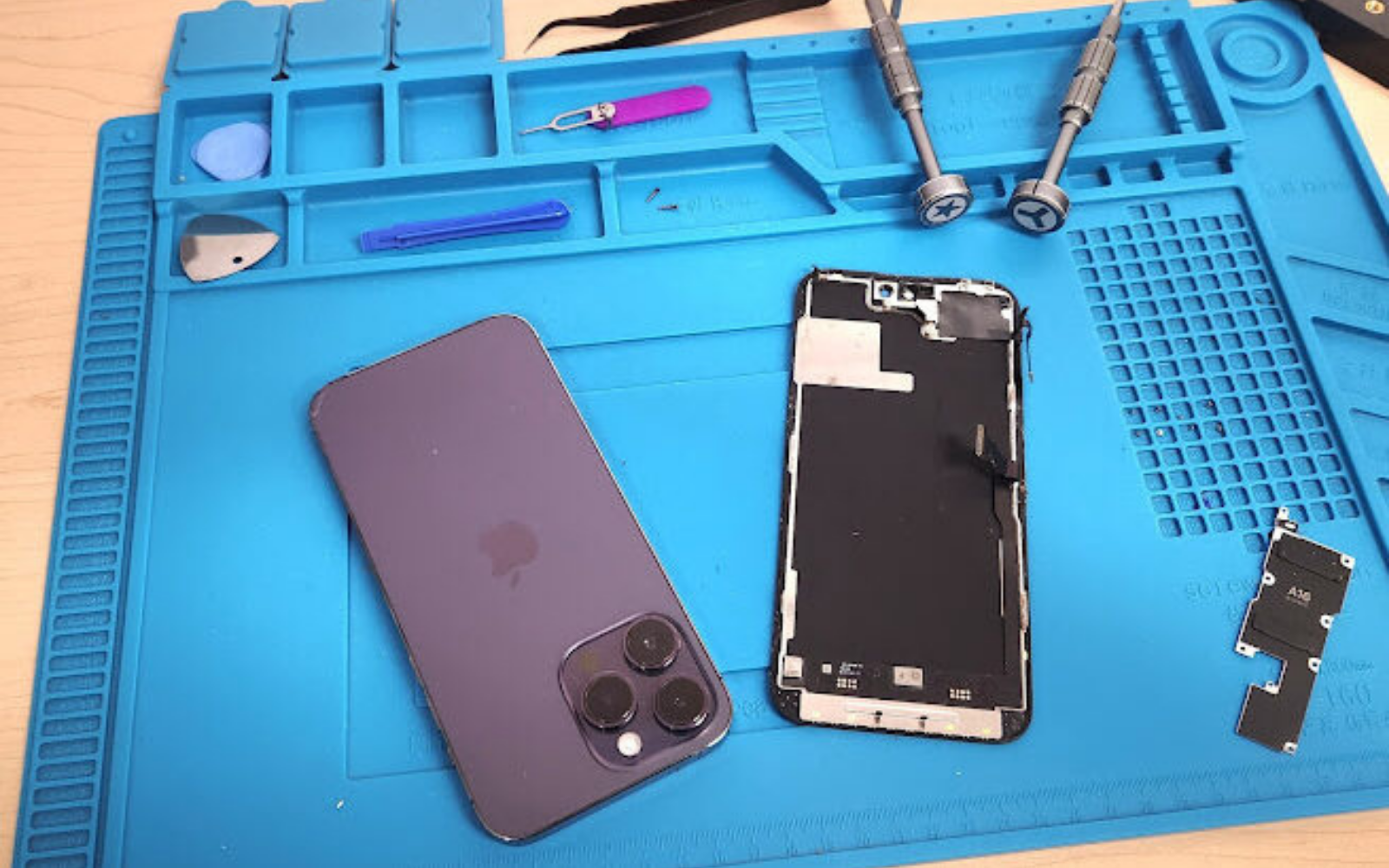
A new iPhone generation creates a stock decision that most shops make too early. Launch-week demand is for protection and cosmetic parts, not for screens and batteries, and the internal work arrives a year later once the devices are out of their first warranty. Buying for the wrong phase ties up money in parts that sit.
What follows is how demand on a new generation actually settles, and what to hold at each stage.
Why launch-week demand is not what it looks like
Because the first repairs are accidents, not failures.
New handsets break early, but they break in specific ways. Cases and screen protectors are often not fitted on the first day, so cracked glass, chipped camera lenses and marked back panels arrive within weeks. Internal failures take far longer, because the components that wear are new and the devices are still under the manufacturer’s own coverage.
That split should shape a stock position rather than being discovered from it. A shop that buys screens for a new generation in month one is holding expensive stock against demand that will not arrive until the following year.
What should you hold at each stage?
Cosmetic and protective parts first, then internal parts once the pattern is visible.
In the first months, the parts worth holding are the cheap ones that turn over: screen protectors, tempered glass, camera lens glass and, where the model is in demand, back glass. Those cover the accident work and they cost little per unit to hold.
Screens and batteries should be ordered per job until the shop has a record of which models its customers actually own. That record takes a couple of months, and it is worth more than any launch projection because it reflects the devices walking through that specific door.
| Stage | Typical work | Stock position |
|---|---|---|
| First three months | Accidental glass and cosmetic damage | Protectors, lens glass, some back glass |
| Three to twelve months | More accident work, first wear items | Add the models you see repeatedly |
| After twelve months | Batteries, charging, deeper repairs | Consider depth on your top two or three models |
| Any stage | Uncommon models | Order per job against confirmed model details |
Why early screen stock is risky
Because supply is thin, prices are high and the first batches have no history.
Parts for a newly released model arrive from a small number of sources, at prices that reflect scarcity, and they have not yet been through a full returns cycle. A shop that buys depth at launch is taking on both the price risk and the batch risk at the same time, on a model whose local demand it has not yet measured.
Ordering per job through the first months converts that risk into a small delay on occasional jobs, which is usually a better trade than holding stock that may need replacing once better batches appear. The batch scoring approach in our guide to comparing screen brands on your own bench is the tool to use once you do commit.
What is different about newer generations?
More tracked components, more expensive assemblies, and a longer diagnostic conversation.
Newer models track a wider set of components than earlier generations did, which makes the pairing conversation more common and the customer’s expectations more specific. That is covered in our guide to what the battery warning actually reports.
Their display assemblies are also more expensive, which changes the arithmetic on an ordering mistake. On an older model a wrong panel is an annoyance; on a current Pro model it is the largest single loss in a normal week. That alone justifies ordering against confirmed model details rather than holding broadly.
Which parts fail first on a new generation?
The same ones that always fail first, in the same order.
Glass breaks first, because it is exposed and because devices are dropped. Back panels and camera lens glass follow, for the same reason. Charging ports and batteries come later, after enough charging cycles have accumulated, and by then the device is usually out of its first warranty.
The order is stable across generations, which is what makes planning possible. What changes is the price of each part and the model mix, and both of those are answered by the shop’s own records rather than by a launch article.

How do you decide when to commit?
When your own records show the same model arriving repeatedly.
The signal to hold stock on a new model is not a forecast. It is three or four jobs on the same model within a month, because that is when a stock position starts paying for itself in turnaround time rather than sitting as capital.
Until that point, ordering per job costs a small delay and no capital. After it, holding the part turns a two-day turnaround into a same-day one, which is the difference most customers actually notice. The transition point should be a number from your own job sheet rather than a feeling about the model.
What should you record to make this decision?
The model, the part, the date and the outcome.
Four fields, recorded on every job, are enough to show which models recur, which parts are ordered most and which produce returns. After a quarter that record answers the stock question directly, and it continues to answer it as the model mix shifts.
For retail customers in the UK, the statutory rights you must honour sit on top of your own warranty and are set by the Consumer Rights Act 2015. Obligations around the safety of goods you place on the market sit with the Office for Product Safety and Standards. What the device records about its own parts is documented in iPhone Parts and Service History, what counts as a genuine display in About genuine iPhone displays, and the battery reporting in About genuine iPhone batteries.
How do you avoid over-committing to a generation that ages badly?
By keeping the position shallow and revisiting it quarterly.
A model’s repair demand changes as it ages. Early on it is glass; later it is batteries and ports; eventually it becomes a low-value device where the repair is questioned on cost. Holding depth through all three phases means holding parts for work that has moved on.
Reviewing the position every quarter against your own records keeps it aligned with what is actually arriving. The same discipline applies to planning a MacBook stock position, where the demand is even more concentrated and the parts even more expensive to hold.
How do you brief a customer on a new model?
With what the repair involves, not with what it costs.
Owners of a current-generation device are usually more anxious about the repair than owners of an older one, because the device is expensive and still under consideration for manufacturer coverage. The useful thing to explain is what you will do and what the device will report afterwards, rather than leading with a price that invites comparison against the manufacturer’s own service.
Two questions come up almost every time. The first is whether a repair affects any remaining manufacturer warranty, and the honest answer depends on what is being replaced and on the terms that apply, so it is worth knowing the manufacturer’s published position rather than guessing. The second is whether a notice will appear on the device afterwards, which is covered in our guide to what the battery warning actually reports and applies to displays in the same way.
How do you handle an expensive panel on a new model?
By confirming the model, quoting the job and ordering to it, rather than holding the part speculatively.
Current-generation display assemblies are the single largest part cost in a normal week, and a wrongly ordered panel is a loss that takes several jobs to recover. Confirming the exact model before the order goes out is worth more on a new generation than on an old one, because the price of the mistake scales with the price of the part.
It is also worth photographing the fault and the model label before ordering, so that a fit query can be settled with evidence rather than a description. That habit costs seconds and it is the difference between a supplier checking the order and a supplier asking you to prove it.
What about cases and protection as a revenue line?
They are the natural companion to new-model repair work.
A customer who has just had a screen replaced on a new phone is the most receptive audience for a screen protector or a case they will ever be, and the same part that broke is the one the accessory protects. Shops that treat accessories as a separate department lose that moment; shops that fit a protector as part of the handover turn a repair into a slightly larger sale and a lower chance of a repeat visit.
That matters commercially on a new generation because the parts are expensive and the margins on the repair are thinner. The accessory is where the visit becomes profitable, and it is also what the customer wanted when they walked in.
How does a new generation change the parts you keep as consumables?
It shifts the balance towards protective parts and away from repair parts, at least at first.
Tempered glass, camera lens protectors and cases are the consumables of a new generation, and on a model that is still expensive they carry better margins than they do on a device that is three years old. A shop that treats them as an afterthought on a new model is leaving the most profitable part of the visit on the table.
The ordering is worth reviewing quarterly as well, because the mix changes as the generation ages.
FAQ
Which iPhone 17 parts should a repair shop stock first?
Start with the parts that fail from handling rather than from a fault: screen protectors, back glass and camera lens glass, because they turn over quickly and cost little to hold. Screens and batteries should follow once you know which models your customers actually own, which takes a couple of months of job records rather than a guess from launch numbers.
How long before a new iPhone generation needs repairing?
Accidental damage starts within weeks of launch, because cases and screen protectors are often not fitted on day one. Battery and charging work follows a year or more later, once the devices are out of their first warranty period. That shapes the stock decision: protection and cosmetic parts first, internal parts later.
Should I buy screen stock for a new iPhone at launch?
Cautiously. Early supply of parts for a new generation is often thin and prices are high, and the first batches have not been through a full returns cycle. Order per job for the first few months and keep a record of which models come through, then commit to a stock position once the demand is visible in your own numbers.
Do newer iPhone models change what I need to stock?
They change the mix rather than the principle. Newer generations have more components that are tracked by the device, which makes the pairing conversation more common, and their display assemblies are more expensive, which raises the cost of a single ordering mistake. Both point towards ordering per job with confirmed model details rather than holding broadly.
New-generation stocking is a timing problem rather than a forecasting one. Hold the cheap parts that break first, order the expensive ones per job, and commit to depth only when your own job records show a model arriving repeatedly. That sequence keeps the capital small and the turnaround short at every stage.
Stocking for current models? Digi4u supplies screen assemblies, batteries, back glass and small parts for the current iPhone generations to UK repair shops, with trade pricing, same-day dispatch and up to 12 months warranty. Send us the model and we will confirm stock.