


Samsung A55 and A35 Screen Parts UK: LCD/OLED Economics for Volume Shops
Need this part? We stock tested replacement parts with same-day UK dispatch and a 12-month warranty.
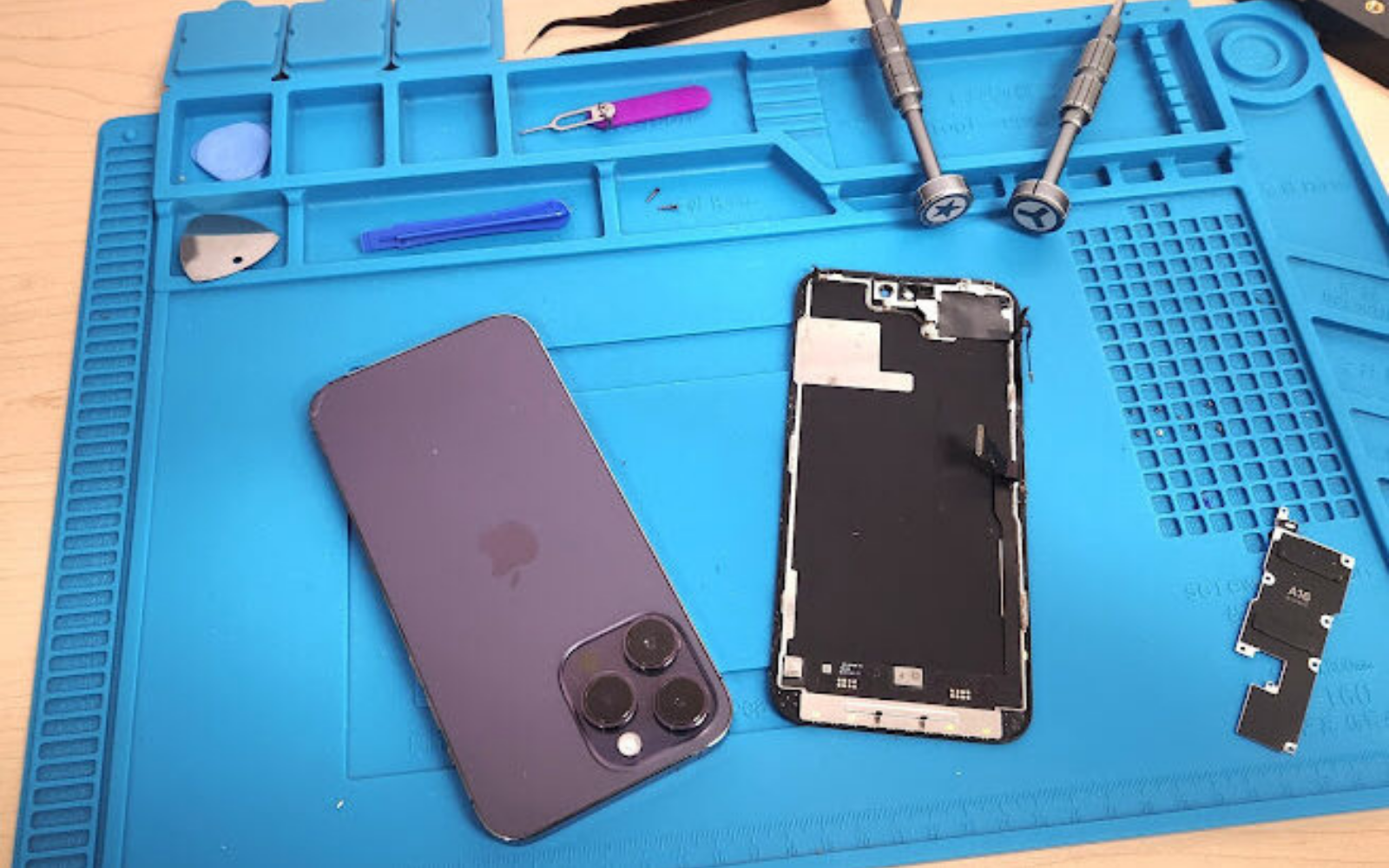
For volume Android repair businesses, sourcing Samsung A55 screen replacement parts UK is less about finding a generic “A-series screen” and more about controlling ticket accuracy, fitting time and comeback risk. The Galaxy A55 and A35 are closely positioned mid-range handsets, but their screen assemblies must be booked, picked and quality-checked as separate model-specific parts. A reliable lane starts with the SM-A code, a clear decision on assembly format, and a quote built from the current part listing plus the shop’s own labour.
Why do mid-range A models drive walk-ins?
They combine broad ownership with repairable everyday damage.
For busy repair counters, A55 and A35 jobs tend to reward repeatable intake and fitting processes rather than improvised part selection.
Mid-range Samsung handsets often stay in service long enough to accumulate cracked glass, display damage, charging issues and worn rear-cover adhesive. That makes them commercially important for shops handling practical repairs rather than only flagship work. The A55/A35 pairing is particularly useful as a planning lens because both can arrive looking similar at a glance while requiring different model-specific assemblies.
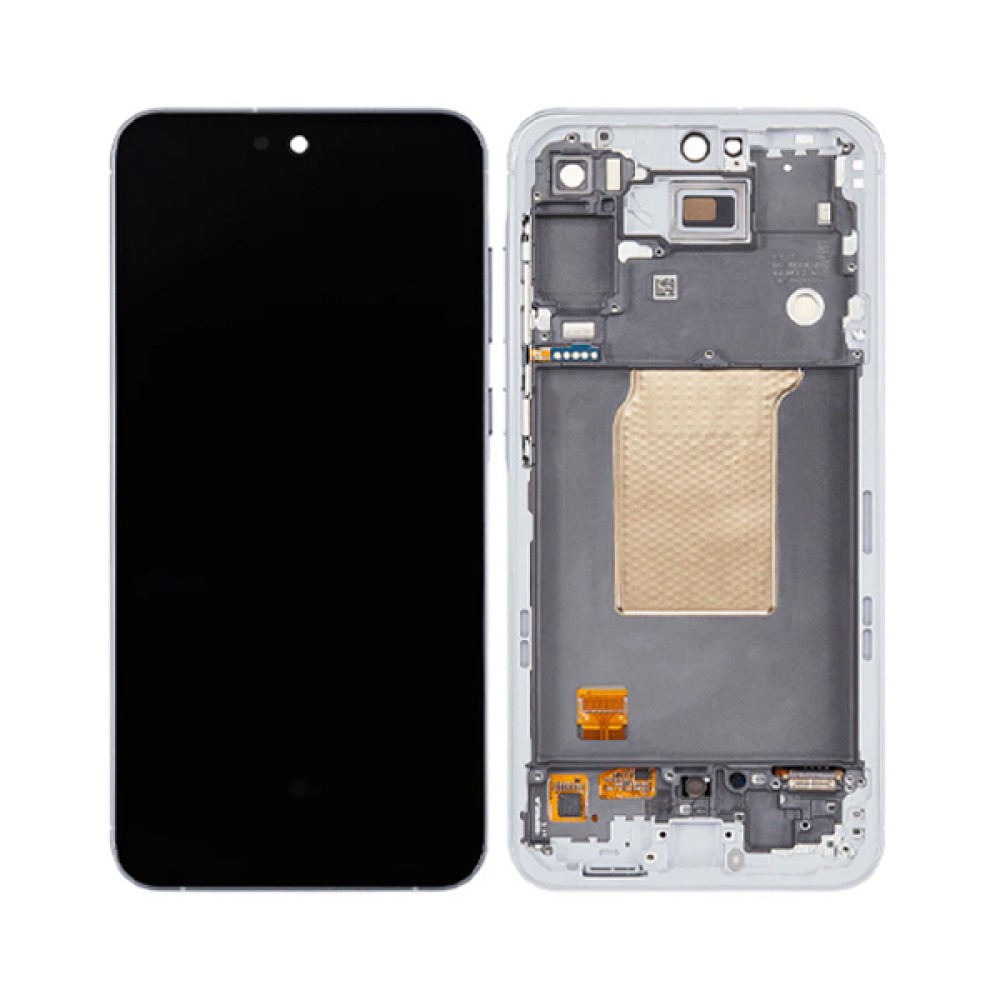
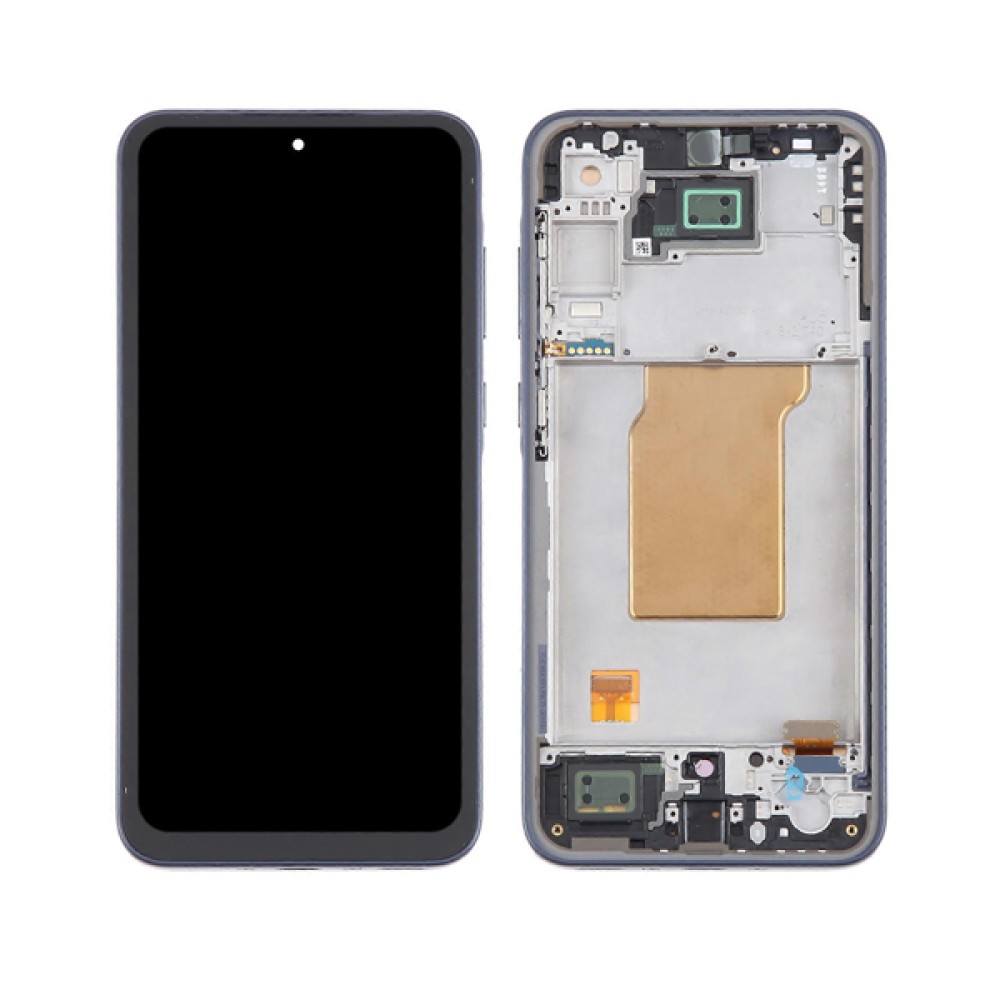
The operational point is not to treat every Galaxy A walk-in as an LCD repair. Digi4u’s live A55 A556B and A35 A356B screen listings are full OLED assemblies with frames. That changes the conversation at the counter: the technician should identify the exact handset before quoting, then assess whether the customer’s symptoms are limited to the display or indicate frame, battery, charging or rear-cover work as well. For broader category context, teams can compare the Samsung A-series screen parts guide, while keeping the A55/A35 process separate.
How do LCD and OLED economics affect A55 and A35 repairs?
For these listings, plan around OLED-with-frame assemblies.
An accurate quote combines the current model-specific part cost with your team’s labour, testing time and any related repair work.
LCD versus OLED is an economic question only after the correct model and available assembly have been established. A shop should not assume that an A-series device takes an LCD simply because lower-cost A-series parts exist elsewhere in the catalogue. Digi4u currently lists a full OLED with frame for the Galaxy A55 5G A556B and a full OLED with frame for the Galaxy A35 A356B. Neither listing should be substituted with an invented generic LCD option.
A with-frame OLED assembly can reduce the handling involved in transferring small components into a bare chassis, but it still requires careful testing and controlled reassembly. The cost to fix a Samsung screen therefore cannot be responsibly expressed as one universal figure. It varies with the current selected part, device condition, shop labour, diagnostic findings and whether adhesive or ancillary components are needed. Samsung’s own screen replacement and repair guidance is useful context for explaining why repair pricing is model dependent.
| Decision point | A55/A35 volume-shop implication | Counter action |
|---|---|---|
| Display technology | Live screen listings are full OLED with frame. | Check the listing description before quoting. |
| Assembly format | Frame inclusion can affect fitting workflow and transfer work. | Record visible frame damage at intake. |
| Labour calculation | Labour is specific to each repair business and device condition. | Quote from current part cost plus your own labour. |
| Older A-series comparisons | An A25 incell LCD with frame is a different commercial lane. | Do not use a neighbouring model as a substitute. |
How should a shop match SM-A codes to listings?
Use the exact SM-A code, not the customer’s shorthand model name.
For this pair, the key identifiers are Galaxy A55 5G A556B and Galaxy A35 A356B, verified against the phone and ticket.
Model identification belongs at intake, before a part is reserved or a repair time is promised. Customers may describe an A55 as simply “Samsung A”, while a technician working from a cracked front can mistake it for another similar-generation handset. The device settings, label information and job record should all agree before the repair enters the bench queue.
For the A55, the current relevant screen listing is described as a replacement full OLED with frame for Samsung Galaxy A55 5G A556B. The A35 counterpart is described as a replacement full OLED with frame for Samsung A35 A356B. Those descriptions support a disciplined pick process: model code, colour where relevant, assembly type and job number should be reconciled by the technician. A neighbouring A54 has its own part listing and should be quoted from its current part cost plus the shop’s labour, rather than used to estimate an A55 or A35 repair.
Samsung’s UK support resources can help a customer navigate device information, but the repair team should retain its own intake evidence and test record.
Which frame and digitiser options suit a volume lane?
A full assembly with frame favours a controlled, repeatable workflow.
For A55 and A35 jobs, verify the live OLED-with-frame specification rather than assuming a bare display or generic digitiser route.
“Screen” can mean several things in a customer conversation: front glass, touch function, OLED panel, frame or an entire fitted assembly. A repair shop needs a more precise vocabulary. The live A55 and A35 offerings described here are full OLED assemblies with frames, so the ticket should state that format clearly. It helps the buyer avoid ordering an inappropriate component and helps the technician prepare for chassis-related checks.
A with-frame assembly does not remove the need for assessment. Bent edges, loose buttons, speaker mesh, retained modules and water-resistance sealing all affect the repair workflow. Any transferred components should be inspected before final closure, and the new display should be tested before adhesive is committed. Product safety duties also remain relevant when businesses supply or handle replacement goods; teams can review the government’s product safety guidance for businesses and guidance on placing manufactured goods on the market in Great Britain.
What QC shortcuts work for high-volume A55 and A35 lanes?
Use a short fixed test sequence before and after closure.
Fast quality control comes from consistent checkpoints, not from skipping diagnostics or relying on a visual glance alone.
Volume work benefits from a checklist that every technician can follow in the same order. The purpose is to catch a mismatch, pre-existing defect or fitting issue while the device is still accessible. A clear intake note protects the customer conversation, while a final functional record helps the shop distinguish repair-related concerns from faults present before the job.
Before dismantling, document screen symptoms, touch behaviour, frame condition, cameras and charging function where practical. Before closing the handset, power-test the assembly and assess display output, touch response, brightness, proximity behaviour and fit. After reassembly, repeat the relevant tests and ensure that seals and screws are properly accounted for. This matters more than a nominally fast repair time: a preventable return consumes bench capacity, customer-service time and another round of diagnostic work.
- Confirm the SM-A code against the picked assembly.
- Photograph or note pre-existing cosmetic and frame damage.
- Test display and touch before final adhesive work.
- Recheck charging, cameras and buttons after reassembly where applicable.
- Record any limitation caused by pre-existing damage.
How should teams plan wholesale cartons without overcommitting?
Plan by repair history and model mix, not assumed stock depth.
Batch purchasing should reflect confirmed A55/A35 demand, lead times and the team’s ability to test and rotate parts promptly.
“Wholesale carton planning” does not require a fixed box quantity or a claim about high volume A55 screen stock. It is a way to organise purchasing around the jobs a business genuinely sees. A shop may track completed A55 and A35 repairs separately, compare their return patterns, and account for devices already booked into the diary. This supports more informed replenishment without treating close Samsung models as interchangeable.
Separate storage locations, clear labels and a receiving check are especially valuable when several current Samsung models are being repaired in parallel. Buyers can start from the Samsung phone touch-screen and LCD category, remembering that this is the phone parts route; the Samsung hub is for tablet parts. When timing matters, consult the live delivery policy rather than building operating assumptions around a copied rate table.
What tools are needed for glued rear covers?
Use controlled heat, suitable opening tools and fresh sealing materials.
Rear-cover access should be paced around the handset’s condition, adhesive state and technician competence rather than forced for speed.
Screen repairs on modern handsets can involve glued rear covers and adhesive paths that deserve their own preparation. Heat must be controlled to avoid unnecessary stress on the device, while opening picks and cards should be used with attention to cable locations and damaged glass. A rushed entry can create secondary cosmetic or functional issues that overshadow an otherwise straightforward display repair.
After access, remove old adhesive residue carefully and assess whether replacement sealing material is appropriate for the repair. A repaired handset should not be represented as retaining a factory condition simply because a new adhesive strip has been fitted. The guide to phone-screen adhesive and waterproof seals gives useful context for setting realistic expectations, while the tools category can support a properly equipped bench. BSI’s standards resources and Trading Standards guidance are also relevant reference points for businesses maintaining consistent processes.
Conclusion
The A55 and A35 deserve their own volume-repair lane because close product positioning does not make their parts interchangeable. Digi4u’s live listings identify both relevant screen assemblies as full OLED with-frame parts: A556B for the Galaxy A55 5G and A356B for the Galaxy A35. That gives buyers a clear starting point, but the commercial outcome still depends on correct SM-A identification, repeatable QC and a quote based on the current part selection plus the shop’s own labour.
For teams serving the UK’s large addressable market of mobile repair businesses, the practical advantage is consistency: separate the models in inventory, document the device condition, test before closure and use current listings when planning replenishment.
Browse current Samsung phone screen parts to match the next A55 or A35 ticket to its exact listing.
FAQ
Does the Samsung A55 have an OLED screen?
For repair purchasing, Digi4u’s live listing for the Samsung Galaxy A55 5G SM-A556B is a replacement full OLED with frame. A technician should still verify the exact SM-A code on the handset and confirm the listing specification on the repair ticket before ordering or fitting. It is not sound practice to assume that every Galaxy A-series device takes an LCD or that a nearby model’s assembly will fit.
How much does it cost to fix a Samsung A55 or A35 screen?
A repair business should quote from the current selected part cost plus its own labour, diagnostics, testing time and any related work required by the device condition. The total can vary if the frame is bent, the rear cover needs resealing or another fault is identified. Rather than relying on generic online figures, buyers should check the current A55 A556B or A35 A356B listing and apply their established labour calculation.
Can a repair shop use an A35 display in an A55?
No. The Galaxy A55 and Galaxy A35 should be treated as separate model-specific repairs. Digi4u’s relevant listings identify the A55 screen assembly for SM-A556B and the A35 assembly for SM-A356B. Similar styling, release timing or an A-series name does not establish compatibility. Record the exact SM-A code at intake, match it to the picked part and test the assembly before final closure.
How should a shop quote an A54 screen repair?
The Galaxy A54 is a neighbouring model with its own listing and should not be priced by borrowing an A55 or A35 figure. The shop should confirm the A54 model code, select the current compatible part and add its own labour and diagnostic allowance. This keeps the quote defensible when display format, frame condition or accessory work differs from the A55/A35 repair lane.