


Xiaomi and Redmi Screen Parts UK: Note Series LCD/OLED Buying Guide
Need this part? We stock tested replacement parts with same-day UK dispatch and a 12-month warranty.
When your team evaluates xiaomi redmi screen replacement parts uk for the Note series, the decision hinges on panel technology, codename accuracy and the logistics of high‑volume carton planning.
Why Redmi Note drives UK Android volume
The Redmi Note line consistently ranks among the top‑selling Android devices in the UK, thanks to aggressive pricing and broad carrier distribution. Repair shops therefore see a steady stream of cracked displays, making reliable stock of both LCD and OLED variants a commercial necessity. Digi4u’s catalogue reflects this demand with listings that cover the Note 10, 11 and 12 families, each mapped to the correct internal codename. Understanding the sales velocity of each generation helps your purchasing team set reorder points that avoid both overstock and stock‑outs.
LCD vs OLED Redmi/Xiaomi: cost vs labour
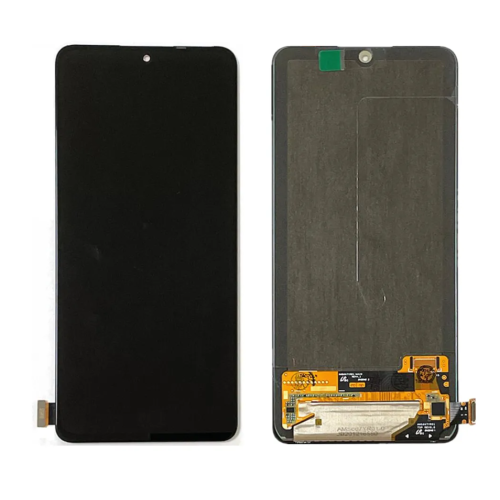
Choosing between LCD and OLED panels involves balancing unit cost against the labour required for installation. LCD modules are generally cheaper but often lack the integrated fingerprint sensor window found on OLED assemblies, adding a step for adhesive‑only replacements. OLED units, while pricier, usually ship as a complete frame kit that includes the sensor cut‑out, reducing bench time. The table below summarises the key trade‑offs for the most common Note models.
| Model | Panel type | Relative cost band | Frame kit included | Fingerprint window | Labour notes |
|---|---|---|---|---|---|
| Redmi Note 10 4G | LCD | Lower (LCD) | No | Separate adhesive | Requires separate sensor transfer |
| Redmi Note 10 Pro | OLED | Mid (OLED) | Yes | Pre‑cut | Single‑step install |
| Redmi Note 11 4G | LCD | Lower (LCD) | No | Separate adhesive | Sensor transfer needed |
| Redmi Note 11 Pro 5G | OLED | Mid (OLED) | Yes | Pre‑cut | Single‑step install |
| Redmi Note 12 4G/5G | OLED | Mid–higher (OLED) | Yes | Pre‑cut | Single‑step install |
These figures are indicative ranges based on current market listings; actual pricing varies with volume agreements and currency fluctuations.
Matching codenames to retail model names
Xiaomi uses internal codenames such as “sweet”, “sweet_k6a” or “veux” that do not appear on the retail box. A mismatch leads to ordering the wrong flex cable or backlight configuration. Digi4u’s product pages list both the retail name and the codename, allowing your team to cross‑reference with the device’s service manual. For example, the Note 12 5G carries the codename “sweet_k6a” while the Note 12 Pro 5G uses “veux”. Keeping a master spreadsheet of these mappings reduces returns and speeds up order fulfilment.
Frame kits and fingerprint windows
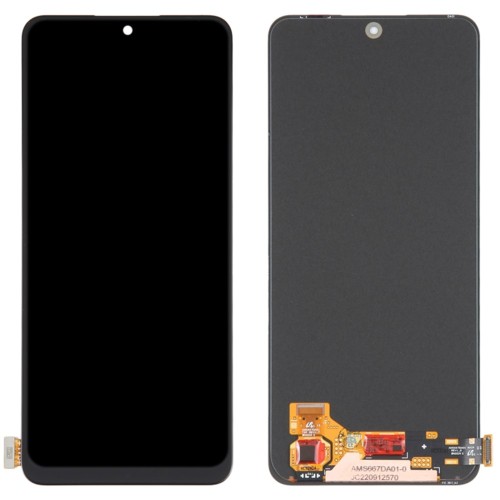
Frame kits simplify the repair workflow by delivering the display, mid‑frame and fingerprint sensor window as a single assembly. This is especially valuable for the Note 11 Pro and Note 12 series where the under‑display sensor is calibrated to the specific OLED stack. When a frame kit is unavailable, technicians must harvest the sensor from the damaged unit, a process that adds 10‑15 minutes per job and risks damaging the fragile flex. Digi4u flags frame‑kit availability on each product page, enabling quick identification of the most labour‑efficient option.
QC for high‑volume cheap panels
High‑volume shops often source lower‑cost LCD panels to protect margins, but quality variance can erode reputation. A practical QC checklist includes: visual inspection for dead pixels and backlight bleed, verification of the correct flex‑cable pinout against the codename sheet, and a functional test of touch sensitivity across the full active area. Digi4u’s wholesale phone screens UK blog outlines a batch‑sampling protocol that scales with order size, helping your team maintain consistency without testing every single unit.
Battery and back cover add‑on logic
Screen replacements on the Note series frequently coincide with battery swaps or back‑cover repairs, especially after impact damage. Bundling a compatible battery and adhesive‑backed back cover into the same shipment reduces courier trips and simplifies inventory management. Digi4u’s Xiaomi category page groups these ancillary parts alongside the display assemblies, and the delivery policy page clarifies that standalone lithium batteries ship via DPD only, ensuring compliance with transport regulations.
UK carton planning for Note screens
Carton planning translates panel dimensions and packaging constraints into pallet configurations that optimise warehouse space and courier costs. A standard Note 12 OLED frame kit measures roughly 165 mm × 75 mm × 5 mm and ships in a rigid box of 190 mm × 110 mm × 20 mm. Fitting 120 units per Euro‑pallet (1200 mm × 800 mm) yields a gross weight under 200 kg, staying within Royal Mail 48 Tracked limits for Zone 1 mainland UK. For Zone 2 destinations (Highlands, Islands, NI, ROI, IoM, Channel Islands) DPD is the default carrier, and the same pallet layout applies. Aligning your reorder quantities to full‑pallet multiples reduces per‑unit freight cost and simplifies goods‑in processing.
Conclusion
Stocking the right mix of LCD and OLED panels for the Redmi Note series demands accurate codename mapping, an understanding of frame‑kit benefits, and a QC process that scales with volume. By leveraging Digi4u’s structured listings — covering the Xiaomi, Redmi and screen categories — and aligning orders with the delivery policy for lithium‑battery shipments, UK repair businesses can maintain high fill rates while controlling labour overhead.
LCD versus OLED labour economics in a UK workshop
The labour differential between LCD and OLED assemblies becomes decisive when a bench processes ten or more Note devices per week. An LCD-only replacement on a Note 10 4G or Note 11 4G typically requires the technician to separate the damaged glass from the mid‑frame, clean residual adhesive, transfer the fingerprint sensor flex, and re‑laminate with LOCA or pre‑cut adhesive sheets. That workflow adds 15–20 minutes of skilled time per unit compared with a frame‑kit OLED swap on a Note 11 Pro 5G or Note 12 5G, where the display, mid‑frame and sensor window arrive pre‑aligned. Digi4u’s product pages for the Redmi Note 12 4G/5G AMOLED and the Note 12 Pro OLED both show frame‑kit availability, allowing purchasing managers to factor the labour saving into the effective cost per repair. When volume ramps, the cumulative bench‑time reduction often outweighs the higher unit price of the OLED kit, especially for shops that bill labour at a fixed hourly rate.
A secondary consideration is rework risk. LCD glass‑only repairs carry a higher incidence of dust traps, uneven adhesive spread, and sensor misalignment — each a potential callback. OLED frame kits eliminate the lamination step entirely, so the first‑pass yield improves. For warranty‑sensitive accounts such as insurance‑approved repair networks, that reliability gain can be the difference between retaining and losing a contract. Digi4u’s listings flag frame‑kit inclusion with a clear “Frame kit: Yes/No” attribute, enabling quick filtering when building a weekly purchase order.
Codename discipline and batch QC at scale
Xiaomi’s internal codenames — sweet, sweet_k6a, veux, fleur, garnet — map to multiple regional SKUs that share a panel but differ in flex‑cable routing or backlight driver IC. A single mis‑matched order can result in a batch of screens that power on but exhibit ghost touches or no backlight. The most reliable guard is a master spreadsheet that pairs every retail model (e.g., “Redmi Note 12 5G UK”) with its service‑manual codename (“sweet_k6a”) and the corresponding Digi4u listing URL. When a new shipment arrives, the goods‑in team scans the box label, cross‑references the codename column, and flags any discrepancy before the screens reach the bench.
For high‑volume LCD batches, a tiered sampling protocol keeps QC time proportional to order size. On pallets of 60–120 units, test 10 % (6–12 panels) for dead pixels, backlight uniformity, and full‑area touch response using a calibrated jig. On smaller boxes of 10–20 units, test 100 % — the absolute time remains low. Record pass/fail per batch code in the same spreadsheet; a rising fail rate on a specific codename triggers a supplier conversation before the next reorder. Digi4u’s wholesale phone screens UK blog outlines this batch‑sampling approach and notes that frame‑kit OLEDs historically show lower variance than bare LCD modules, so sampling intensity can be adjusted by panel type.
Finally, align reorder points to full‑pallet multiples wherever possible. A Euro‑pallet of Note 12 OLED frame kits (120 units in 190 mm × 110 mm × 20 mm boxes) stays under the 200 kg Royal Mail 48 Tracked limit for Zone 1 mainland UK, while Zone 2 destinations (Highlands, Islands, NI, ROI, IoM, Channel Islands) default to DPD with the same pallet footprint. Ordering in pallet increments reduces per‑unit freight, simplifies goods‑in counting, and keeps the warehouse layout predictable — critical when the same floor space must accommodate LCD boxes, OLED frame kits, battery packs and back‑cover kits for the same Note families.
Volume Android benches that already plan Redmi LCDs often add a Motorola G/Edge matrix next — see Motorola screen and battery stocking for UK shops.
FAQ
Which panel type is standard on the Redmi Note 12 5G?
The Redmi Note 12 5G ships with an OLED panel that includes a pre‑cut fingerprint sensor window, supplied as a complete frame kit for single‑step installation.
How do I verify the codename before ordering a screen?
Check the device’s service manual or the “About phone” section for the internal codename (e.g., “sweet_k6a” for Note 12 5G) and match it to the product listing on Digi4u, which displays both retail name and codename.
Are frame kits available for all Note models?
Frame kits are offered for the Note 10 Pro, Note 11 Pro 5G, Note 12 4G/5G and Note 12 Pro series. Earlier LCD‑only models such as the Note 10 4G do not include a frame kit.
What shipping method applies to standalone lithium batteries?
Standalone lithium batteries and power banks are shipped via DPD only, in line with UK transport regulations; they cannot be sent through Royal Mail.
Can I mix LCD and OLED panels in a single pallet order?
Yes, provided each panel type is packed in its own rigid box and the total pallet weight stays within carrier limits; Digi4u’s wholesale guide recommends keeping panel types separate for easier goods‑in checks.