


iPhone 14 Series Screen Replacement Guide
Need this part? We stock tested replacement parts with same-day UK dispatch and a 12-month warranty.
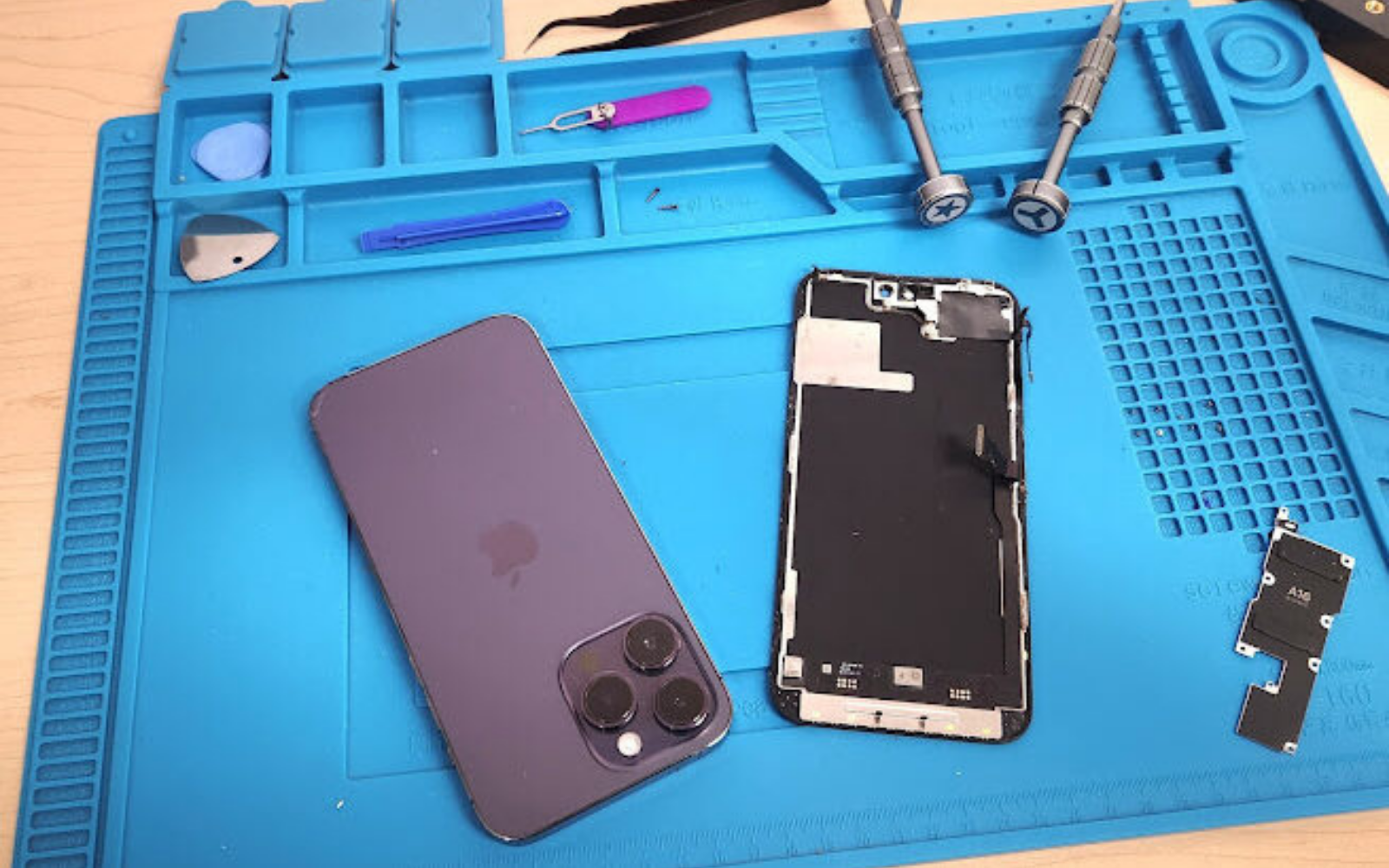
The iPhone 14 series contains four distinct screen repairs: iPhone 14, 14 Plus, 14 Pro and 14 Pro Max. Identify the exact model before ordering, then follow that model’s Apple repair manual. Screen dimensions, display features, procedures, parts and configuration requirements cannot be safely collapsed into one universal step list.
(Last modified date: September 14, 2026)
What decides the repair plan
- Match the screen to one of the four exact models.
- Diagnose display, touch and sensor symptoms before ordering.
- Use the model’s current Apple manual for tools, safety and removal details.
- Plan system configuration and Repair Assistant where Apple requires it.
- Do not promise restored factory water resistance after opening.
Identify the exact iPhone 14 model
| Model | Identification point | Planning consequence |
|---|---|---|
| iPhone 14 | Standard 6.1-inch model | Use the iPhone 14 screen and manual only |
| iPhone 14 Plus | Larger standard model | Different assembly and repair manual |
| iPhone 14 Pro | 6.1-inch Pro model | Pro-specific display and procedure |
| iPhone 14 Pro Max | Larger Pro model | Pro Max-specific assembly and procedure |
Check the model in Settings or use Apple’s identification information before buying. Do not choose by diagonal size alone. A listing should state one exact model and describe the part grade and included components.
Does the fault require display replacement?
Cracked glass, failed touch, lines, black patches, abnormal colour or a panel that remains blank after basic checks can point to display damage. First inspect for liquid exposure, frame deformation and battery swelling. Apple’s repair manuals include separate troubleshooting sections for display/image, Multi-Touch and sensor problems; use those checks before treating every symptom as a defective panel.
If you need definitions for replacement technologies and grades, use the screen grades guide. This page owns the iPhone 14 family’s model selection and repair planning rather than repeating the whole grade taxonomy.
Use the manual for the exact model
Apple publishes separate manuals for the iPhone 14, iPhone 14 Plus, iPhone 14 Pro and iPhone 14 Pro Max. Each manual contains safety information, parts, tools, screw maps, troubleshooting and a display procedure. Check the published manual immediately before the job because Apple can update procedures and system-configuration requirements.
- Back up accessible data, confirm the exact model and document pre-existing faults.
- Prepare the model-specific screen, adhesive, tools and broken-glass protection required by the manual.
- Power down and follow that manual’s display-removal procedure without substituting screw locations or cable directions from another model.
- Compare transferred components and connector seating before closing the display.
- Run post-repair diagnostics and complete the current system-configuration process where required.
The safe iPhone opening guide provides upper-level tool handling, while the Apple manual remains the authority for this model’s procedure.
Plan for pairing, configuration and customer expectations
Do not reduce every post-repair symptom to “a loose flex” or promise that an IC transfer will solve all warnings. Part provenance, iOS version, repair route and Apple’s current configuration process can affect the result. Record what part was installed, whether the configuration completed and which functions passed.
Opening the phone breaks the original adhesive seal. New model-specific adhesive is necessary for reassembly, but it does not justify guaranteeing the original ingress-resistance rating.
Post-repair test record
- Full touch grid and multi-touch gestures
- Uniform white, grey, red, green and blue screens
- Low/high brightness and automatic brightness response
- Front camera, earpiece, proximity behaviour and Face ID
- Charging, buttons and visible perimeter alignment
- Diagnostics, configuration status and any parts message
Battery condition belongs in the iPhone 14 series battery guide. Keeping that task separate prevents this screen Owner from becoming another broad iPhone 14 repair page.
Frequently asked questions
Can an iPhone 14 display fit an iPhone 14 Pro?
No. Treat all four models as separate part and procedure records. Buy only a screen explicitly listed for the exact device.
Will a new adhesive seal restore the original water resistance?
It can help reseal the enclosure, but a repair should not be represented as restoring the original factory rating without a validated ingress test.