

EU 2027 Battery Rule Explained: What It Means for Phones and Repairs
Need this part? We stock tested replacement parts with same-day UK dispatch and a 12-month warranty.
Posted on by digi4u
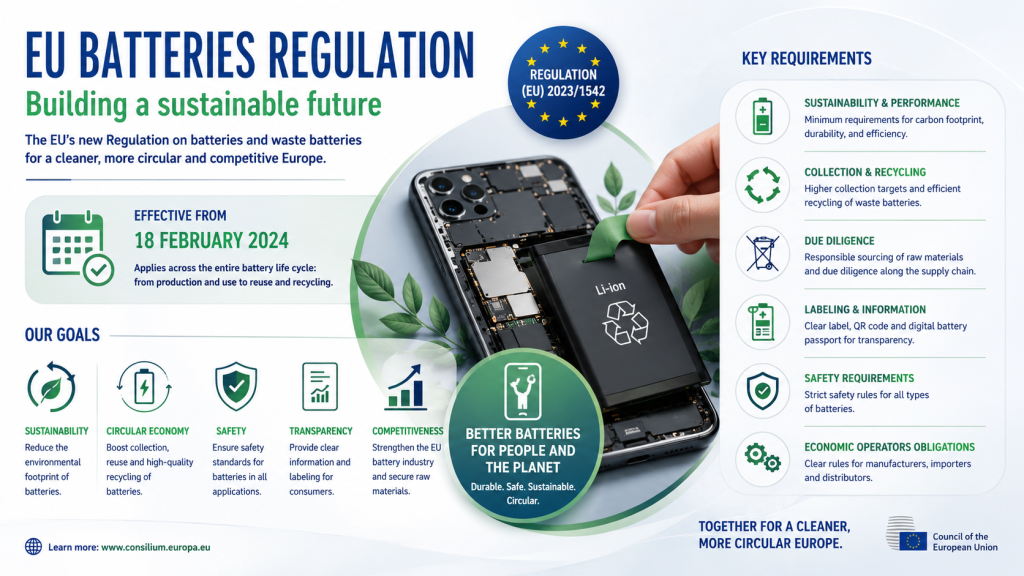
Official Reference (Authoritative Source)
- EU Battery Regulation (EU) 2023/1542 (European Council press release): EU Batteries Regulation Overview
What Is the EU 2027 Battery Rule?
The European Union has introduced a major sustainability law — Regulation (EU) 2023/1542 — that will significantly change how smartphones and other electronics are designed and repaired.
Starting February 18, 2027, all smartphones and devices sold in the EU must comply with strict battery rules:
Key Requirements
- User-replaceable batteries Batteries must be removable and replaceable by end-users using basic or commercially available tools
- No restrictive design barriers Adhesives requiring heat or solvents to remove will largely be prohibited
- No proprietary lock-in Manufacturers cannot block replacement through software (e.g., parts pairing restrictions)
- Spare parts availability Replacement batteries must be available for at least 5 years at a reasonable price
- Instructions & transparency Clear instructions for battery replacement and safety must be provided
Important Clarification
This does NOT necessarily mean “pop-out batteries” like old phones. Instead, it means:
Users should be able to replace batteries without specialized tools or destructive processes
Why Is the EU Doing This?
The regulation is part of the EU’s broader goals:
- Reduce e-waste
- Extend device lifespan
- Improve repairability
- Increase battery recycling rates
Currently, Europe generates millions of tonnes of electronic waste annually, much of it driven by battery degradation
What It Means for Different Groups
A. For Battery Parts Wholesalers (Your Business Angle)
Opportunities
- Huge increase in battery demand
- More users will replace batteries instead of upgrading phones
- Longer product lifecycle = recurring sales
- Devices stay in use longer → repeat battery replacements
- Standardization potential
- More consistent battery formats across brands
Risks / Challenges
- OEM competition may increase
- Brands might sell official replacement batteries directly
- Price pressure
- “Reasonable price” requirement may affect margins
Recommended Actions
- Expand battery inventory depth (5+ years lifecycle support)
- Focus on quality & certification (CE, safety compliance)
- Bundle DIY repair kits (tools + battery)
- Partner with content creators (YouTube / TikTok DIY repair niche) — aligns perfectly with your current strategy
B. For Phone Repair Shops
Opportunities
- More repair traffic
- Battery replacement becomes mainstream
- Lower technical barriers
- Easier disassembly → faster service times
- New customer segments
- DIY users needing partial help
Risks
- DIY competition increases
- Some users will replace batteries themselves
- Reduced labor margins
- Simpler repairs = lower service pricing
Recommended Actions
- Shift from “repair-only” → “repair + support + parts” model
- Offer:
- Battery replacement services
- DIY consultation / diagnostic services
- Upsell:
- Screen + battery combo repairs
- Emphasize:
- Safety (especially for swollen or damaged batteries — aligns with your existing stance)
C. For Individual Consumers
Benefits
- Lower repair costs
- Longer phone lifespan
- More control (Right to Repair)
- Reduced dependency on manufacturers
Downsides
- Possible design trade-offs
- Thicker phones
- Slightly reduced waterproofing
- Learning curve for DIY repair
- Battery safety risks if mishandled
Recommended Actions
- Encourage basic DIY repair knowledge
- Use proper tools and guides
- Avoid DIY if:
- Battery is swollen
- Device is damaged internally
Industry Impact: What Will Change?
Smartphone Design
- Less glue, more screws or modular structures
- Internal layouts redesigned for accessibility
- Possible shift toward semi-modular phones
Global Ripple Effect
Even though this is an EU law:
- Manufacturers may adopt global design standards
- Similar to USB-C adoption, changes may spread worldwide
Key Controversies & Loopholes
Durability Exemption
Some devices may be exempt if:
- Battery retains ≥80% capacity after 1,000 cycles
👉 This could allow brands like Apple to partially bypass redesigns.
Waterproofing vs Repairability
- Strong sealing (IP ratings) conflicts with easy removal
- Ongoing debate in industry standards
Strategic Takeaways
For the Repair Ecosystem
- This is the biggest pro-repair regulation in years
- Battery replacement will become:
- Standardized
- Consumer-driven
- High-frequency
For Your Business (Key Insight)
This regulation directly supports your model:
👉 DIY repair + parts supply = future growth driver
You’re positioned to benefit if you:
- Educate users (content marketing)
- Provide complete repair solutions (battery + tools + guides)
- Build trust around safe, high-quality components
Final Thoughts
The EU 2027 battery rule is not just a technical regulation — it’s a fundamental shift in the smartphone industry:
- From sealed → serviceable
- From replace → repair
- From manufacturer control → user empowerment
For wholesalers, repair shops, and consumers alike,
this is less a disruption — and more an opportunity.