

What Phone Parts Should UK Repair Shops Stock in 2026?
Need this part? We stock tested replacement parts with same-day UK dispatch and a 12-month warranty.
Posted on by digi4u
In the fast-paced world of mobile repairs, having the right phone parts in stock can make or break your business. For every professional phone repairer, efficiency, turnaround time, and part availability directly impact customer satisfaction and profit margins.
This guide will help UK repair shops understand:
- Why is stocking the right mobile phone replacement parts essential
- How to choose reliable wholesale suppliers
- Smart inventory planning strategies
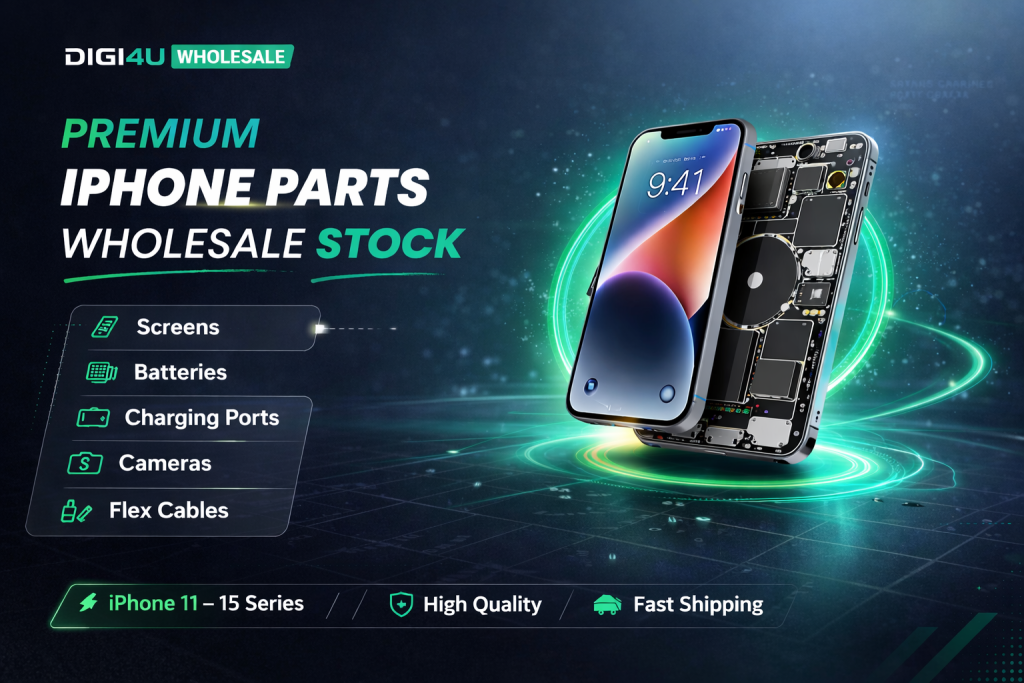
- The most important parts to stock
- Common questions answered
Why Stocking the Right Phone Parts Matters
Many repair businesses rely on just-in-time ordering—but in reality, this often leads to delays, lost customers, and reduced trust.
Key Benefits of Holding Wholesale Stock
- Faster Repairs = More Customers Customers expect same-day or next-day service. Having essential parts like iPhone replacement screens and battery units ready allows you to complete jobs instantly.
- Higher Profit Margins Bulk purchasing through wholesale stock reduces per-unit costs and increases your margins.
- Competitive Advantage Shops that can fix devices immediately outperform competitors who require waiting times.
- Reduced Supply Chain Risk Shipping delays, supplier shortages, and price fluctuations are common—stocking protects your business.
How to Identify a Reliable Phone Parts Wholesaler
Not all suppliers are created equal. Choosing the wrong one can lead to high defect rates, returns, and unhappy customers.
What to Look For:
✔ Consistent Quality Control Low defect rates, stable supply, and clear grading standards (OEM / aftermarket).
✔ Transparent Pricing: No hidden costs, and clear bulk discount structures.
✔ UK-Focused Logistics Fast shipping within the UK or Europe is critical.
✔ Product Range A good supplier should offer both:
- Internal parts (e.g., batteries, screens)
- External accessories
✔ After-Sales Support Warranty policies and responsive support are essential.
Tip: Test small batches before committing to large wholesale orders.
Smart Inventory Planning for Repair Shops
Overstocking ties up cash, while understocking loses business. The key is balance.
Practical Inventory Strategy:
- Follow Market Demand Focus on high-volume models:
- iPhone 11–15 series
- Popular Samsung Galaxy S & A series
- Use Sales Data Track, which shows you the repairs you perform most frequently and stock accordingly.
- Apply the 80/20 Rule 80% of your repairs likely come from 20% of parts—prioritize those.
- Maintain Safety Stock Levels. Keep minimum quantities for fast-moving parts to avoid stockouts.
- Rotate Inventory Regularly. Avoid aging stock, especially for batteries, which degrade over time.
Essential Phone Parts Every Repair Shop Should Stock
Here are the core categories every UK phone repairer should prioritize:
iPhone Replacement Screens
- Highest demand repair category
- Covers cracked, unresponsive, or display issues
- Focus on newer models (iPhone 13–15 series)
Batteries
- One of the most common failure points
- Especially important for devices older than 2 years
- Fast-moving and high-margin product
Charging Ports (Dock Connectors)
- Frequent issue due to wear and debris
- Essential for quick turnaround repairs
Camera Modules
- Increasing demand due to camera-heavy usage
- Rear cameras are especially popular
Small Components & Flex Cables
- Face ID flex, proximity sensors, buttons
- Low cost but high necessity for complete repairs
External Accessories (High Margin Add-ons)
- Tempered glass
- Phone cases
- Magnetic stands/holders
Why Choose Digi4u for Wholesale Stock?
For UK repair shops looking to scale, Digi4u offers a strong pricing advantage:
- ✅ Up to 15% cost reduction on internal mobile phone replacement parts
- ✅ Up to 50% discount on external accessories
- ✅ Stable quality suitable for professional repair environments
- ✅ Wide range of phone parts for different models
This allows repairers to increase margins while staying competitive in pricing.
Click here to visit our Official Website: https://www.digi4u.co.uk/
Apply for a Wholesale Account that you need: https://www.digi4u.co.uk/wholesale
Q1: How much stock should a small repair shop hold?
Start with 2–4 weeks of high-demand parts. Adjust based on sales volume and supplier lead times.
Q2: Which iPhone models should I prioritize stocking parts for?
Focus on high-volume models like the iPhone 11 to the iPhone 15 series, as they generate the most repair demand.
Q3: How often should I restock my inventory?
Ideally, review and restock weekly or bi-weekly based on sales trends and usage.
Q4: Should I stock original (OEM) or aftermarket parts?
A mix is ideal—use aftermarket parts for cost efficiency and OEM for premium customers.
Q5: What are the most profitable repair services?
Screen replacements and battery replacements typically offer the highest margins and fastest turnover.
Q6: How can I reduce return or defect rates?
Work with reliable suppliers, test parts before installation, and maintain proper storage conditions.
Q7: Is it worth stocking accessories alongside repair parts?
Yes—accessories like tempered glass and cases provide high margins and easy upsell opportunities.
Q8: What’s the best way to increase profit per repair?
- Buy through wholesale stock
- Bundle repairs with accessories
- Reduce turnaround time
Final Thoughts
Stocking the right phone parts is not just about convenience—it’s a strategic decision that directly impacts your revenue, efficiency, and customer satisfaction.
By focusing on high-demand mobile phone replacement parts like iPhone replacement screens, batteries, and essential components, and partnering with a reliable supplier, UK repair shops can scale sustainably and profitably.