

Laser Separator Machines Explained: Entering the UK’s Zero-Damage Screen Replacement Era
Need this part? We stock tested replacement parts with same-day UK dispatch and a 12-month warranty.

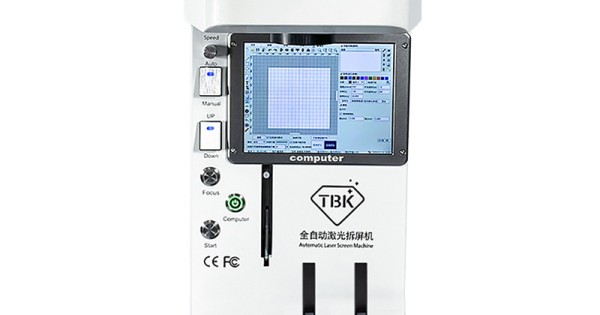
A laser separator does not cut glass — it targets the adhesive layer holding the glass to the frame, which is why it damages fewer panels than a heat plate and a wire. That single change in mechanism is what a UK shop is buying, and the entry price is concrete: the TBK-958B is listed at £1,542.56, with the Bluetooth-equipped TBK-958C at the same price.
(Last modified date: October 4, 2026)
What traditional screen removal does to a panel
Heat and force are the two inputs of the old method, and both of them damage the things that are expensive. Heat strong enough to soften adhesive around the perimeter is also heat travelling into the polariser and the OLED stack behind the glass, which is where burn marks and dark spots come from. Force applied along a cut wire concentrates stress at the corners; on a curved or edge-to-edge display that is where cracks start.
The result is a repair economy where the panel, not the labour, is the risk. A separator that removes the need for both inputs changes the economics of the job rather than the quality of the finish.
How laser separation works
The beam is absorbed by the adhesive layer and not by the glass above it. Because the energy is delivered at a controlled path rather than across a plate, the adhesive releases along the cut line while the surrounding panel stays near ambient temperature, and thin glue layers can be cleared from the housing as a second pass. The two laser types used on repair benches differ in how that energy is delivered — CO₂ systems cut and clear, UV systems work with lower heat input — and the machine’s usable power range and alignment accuracy decide which jobs it can take.
Which damage modes actually disappear
The claim worth testing is not “zero damage” but which specific failures stop happening. Four of them account for most write-offs.
| Failure on the bench | What causes it | With a laser separator |
|---|---|---|
| OLED burn marks and dark spots | Heat soaking through the panel from a plate or gun | Energy is delivered along the adhesive line, so the panel stays cool |
| Polariser lift and delamination | Sustained heat at the perimeter | Much reduced, because exposure time is short and local |
| Corner cracks on curved glass | Prying force at the corners | Little or no force is applied to the glass |
| Back glass removed with adhesive left behind | Cutting instead of releasing | A second cleaning pass clears the residue before refitting |
What the machine does not remove is operator error in the preparation stage: a dirty frame, the wrong focal distance, or a jig that lets the device move mid-pass will still ruin a panel. The machine changes the physics; it does not remove the discipline.
What the machine has to earn
A model, not a measured result. The machine price is a live listing; the panel values and volumes are assumptions you should replace with your own.
At £1,542.56, the TBK-958B has to save panels to pay for itself. If a mid-range OLED assembly is worth £30 and the machine saves one panel a week that the old method would have destroyed, that is £1,560 a year of parts not repurchased — about the purchase price, before counting the additional jobs a faster, lower-risk process brings in. If it saves one panel a month, payback stretches beyond four years, which is longer than most bench equipment stays current.
The variable to substitute is your own failure rate. If back-glass removal already succeeds nine times out of ten, the machine is improving the tenth job; if it succeeds six times out of ten, it is buying back four.
Safety and extraction are part of the purchase
A laser bench is a controlled piece of equipment in a room with people in it, and the controls come before the throughput. The Health and Safety Executive’s non-ionising radiation guidance sets the frame: the laser is classified, the class determines the controls, and the beam path is managed rather than left to reflexes. In practice that means an interlocked housing or wavelength-matched eye protection, a nominated person for the equipment, and no beam path at eye level.
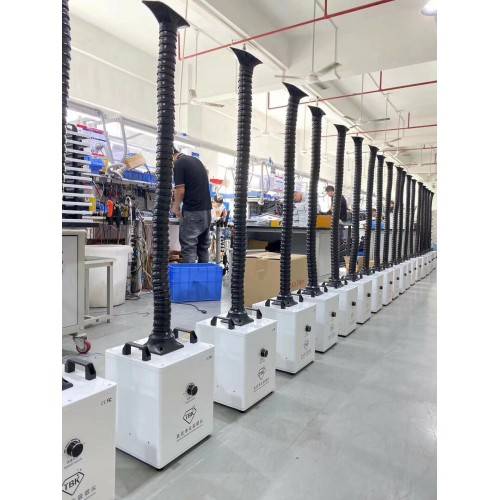
The second control is extraction, and it is the one most often missing. Separating glass releases adhesive vapour and particulate; the HSE leaflet on rosin-based solder flux fume sets out the discipline that applies to any bench process producing fume — capture at source, maintain the filter, keep the discharge away from the operator. A fume extractor such as the TBK unit at £232.91 is a cost line in the same budget as the machine, not an optional extra.
Where the glass that comes off goes
Display glass, back glass and the adhesive removed with them are waste electrical and electronic equipment once discarded, and the WEEE Regulations 2013 set the disposal route. GOV.UK sets out the practical option for a repair business: the T11 waste exemption covers repairing or refurbishing WEEE, subject to conditions including storage and record keeping, so a shop that outgrows the exemption needs a permitted site instead. Glass in general waste is neither.
What the machine choices actually are
The market splits into two price bands and it is worth knowing which one a job belongs to before spending. Full laser separating platforms for phone work sit in the four-figure band: the TBK-958B and 958C are both listed at £1,542.56 and differ mainly in the wireless control the C adds. Below that sits the laser tooling and platform range, which starts at £501.67 and covers narrower jobs — marking, spot heating and cleaning rather than full-frame separation.
A shop that separates one or two panels a week and rarely damages one does not need the platform; a shop that writes off a panel most weeks does, and the payback arithmetic above is the way to decide. The mistake in both directions is the same one: buying or refusing the machine on price rather than on the failure rate it is supposed to change.
References
- HSE: non-ionising radiation — laser classification and the controls it requires.
- HSE INDG249 — fume capture, filter maintenance and operator exposure.
- GOV.UK: T11 waste exemption — conditions on repairing or refurbishing WEEE.
- Apple: Self Service Repair — the genuine-parts and repair-manual route customers compare against.
FAQ
Are laser separator machines safe for smartphone screens?
They are safer than heat and force for the panel, because the energy is absorbed by the adhesive rather than the display stack. Operator safety is a separate question and is handled by classification, eye protection, an interlocked housing where available, and fume extraction.
Can laser separation damage an OLED or LCD panel?
It can, if the focal distance or the alignment is wrong or the device moves mid-pass. What it removes is the damage caused by soaking the panel in heat and levering at the corners, which is where most write-offs happen.
Do UK repair shops need certification to run a laser machine?
The obligation is risk control rather than a specific certificate: classify the equipment, apply the controls the class requires, nominate a responsible person and manage the beam path. The HSE guidance on non-ionising radiation is the starting point.
Is a laser separator cost-effective for a small shop?
It depends entirely on the shop’s failure rate. At one saved £30 panel a week the machine repays its £1,542.56 inside a year; at one a month the payback runs past four years, and the case has to rest on the extra work the process wins.
Do I still need a preheater with a laser separator?
For separating the glass, no — that is the point of the beam. A heat plate remains useful for other stages of a repair, and the fume extractor is not optional whatever else is on the bench.
Price the machine against your own failure rate. Laser separating machines, extraction and the tooling that goes with them are listed in the Digi4u tool range.