

iPhone 11 Series Screen Replacement Explained: Waterproof Adhesive and Flex Cable Precautions
Need this part? We stock tested replacement parts with same-day UK dispatch and a 12-month warranty.
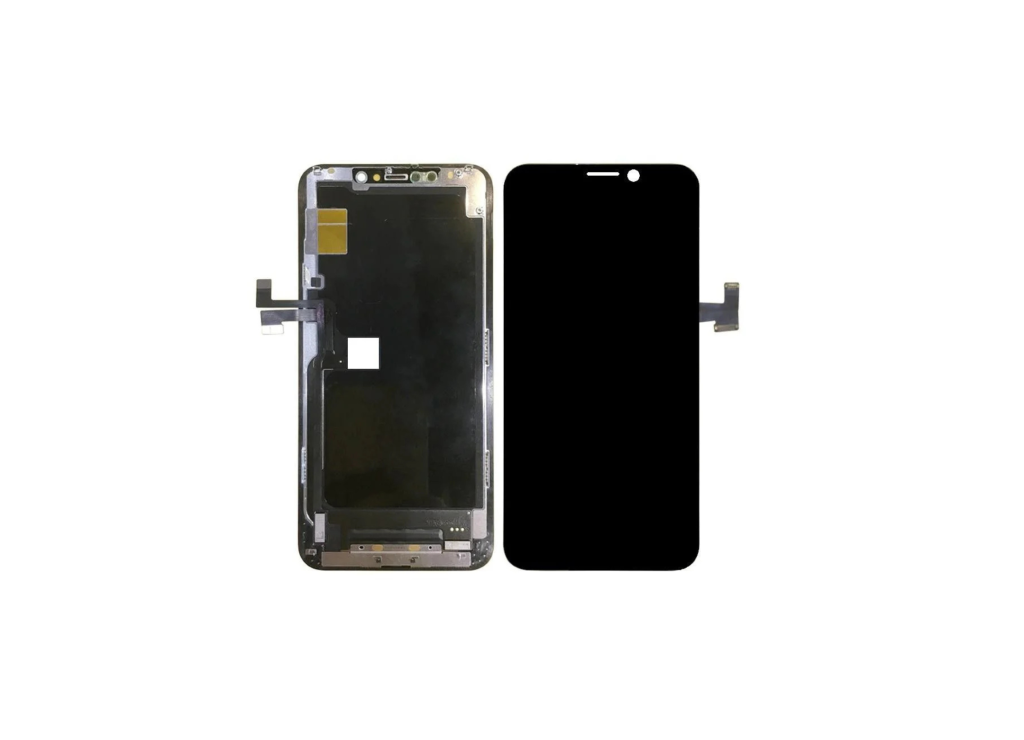
Two things define an iPhone 11 series screen replacement: the adhesive that runs around the whole perimeter, and the flex cables that sit on the right-hand side of the display. The steps are the same across the 11, 11 Pro and 11 Pro Max, but the panels are not — the 11 uses an LCD, while the Pro and Pro Max use OLED — and current UK trade prices run from £11.99 for an iPhone 11 HD+ LCD to £29.99 for a 11 Pro Max soft OLED with a removable IC. Get the adhesive and the flex handling right and the job is routine; rush either one and the second panel costs more than the first.
(Last modified date: October 3, 2026)
Which screen does each iPhone 11 model need?
Three models, two display technologies, and a price spread worth checking before the order goes in.
| Model | Display | Part listed on Digi4u | Price |
|---|---|---|---|
| iPhone 11 | LCD (HD+) | JH Essential HD+ LCD assembly | £11.99 |
| iPhone 11 | LCD (FHD, COF) | JH Value COF FHD LCD assembly | £13.99 |
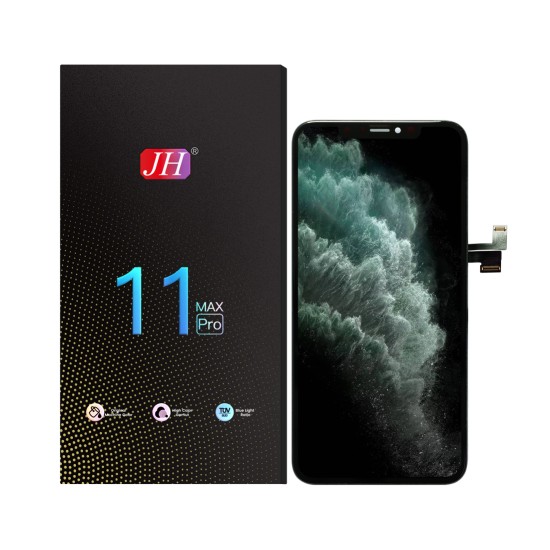
| iPhone 11 Pro Max | OLED (soft, IC removable) | DD Soft OLED IC-removable assembly | £29.99 |
| iPhone 11 Pro Max | LCD (FHD, COF) | JH Value FHD COF LCD | £19.99 |
| iPhone 11 Pro Max | LCD (HD+) | JH Essential HD+ LCD | £16.99 |
The Pro models are the ones where grade matters most: an OLED panel is thinner and more fragile than the LCD in the standard 11, and the Pro Max’s larger glass makes an even load across the perimeter more important during the lift. Where the phone has been repaired before and the display IC needs transferring, the IC-removable assemblies are the ones to look at — the reasoning behind that route is in how IC transfer solves the non-genuine display warning.
What makes this series harder than earlier iPhones?
Two things, and both are about what is holding the display on.
The perimeter adhesive. Apple seals the display all the way around to keep water resistance, so the panel does not simply lift at one corner: the whole perimeter has to be warmed and released evenly. Heat applied to one spot, or force applied to one corner, is how the glass cracks on the way out.
The flex cables. The display and Face ID modules are connected by flexes that run along the right-hand side, and they do not stretch. Opening the display “like a book” from the left — rather than pulling it clear — is what keeps them intact.
The rule that prevents most of the damage on this series: disconnect the battery before anything else. The display flexes are live until the battery connector is off.
What tools does the job need?
- Pentalobe and Y000 tri-point drivers for the two bottom screws and the connector bracket.
- A heat mat or controlled heat gun — the tool that decides whether the panel survives.
- Suction cup and plastic pry tools, never metal, to start and work the lift.
- Precision tweezers for the connectors, plus a magnetic mat so the screws keep their order.
- A fresh adhesive gasket for the model, and isopropyl alcohol with a lint-free cloth to clean the frame channel.
How does the replacement run, step by step?
- Power off the phone and discharge static before the first screw comes out.
- Remove the two pentalobe screws beside the Lightning port.
- Warm the whole perimeter and work in passes until the adhesive releases under gentle pressure. Rushing this step damages the seal — and the frame.
- Start the lift at the bottom edge with the suction cup and a plastic pry tool, then open the display like a book from the left.
- Remove the connector shield and disconnect the battery first, then the display and Face ID flexes.
- Fit the new assembly, seating each flex squarely rather than pushing a connector in at an angle.
- Test before sealing: brightness, touch across the whole panel, and Face ID.
- Clean the frame, fit fresh adhesive, close and reassemble, then re-test touch and the sensors.
What does the new adhesive actually restore?
A good chance against a splash, and not the factory rating.
Water resistance is established on a factory-sealed device. Once the phone has been opened, fresh gasket and adhesive give the best available seal, and the honest way to describe it to a customer is splash-resistant rather than saying the original rating is back. Two habits make the difference: clean every trace of old adhesive out of the frame channel before fitting the new gasket, and clamp the phone evenly for the full cure time rather than releasing it early.
What else usually needs replacing at the same time?
The charging port flex, and often the battery.
The iPhone 11 charging port flex is a known wear point and is listed at £6.11; a replacement battery is a little under a tenner. Both sit behind the same screws that are already out, and neither is worth a second strip-down later. Ask three questions before deciding: how old is the battery, does the phone charge reliably on a known-good cable, and does it hold a charge overnight.
What should you ask the supplier?
- The panel type and grade on the invoice — LCD for the 11, OLED for the Pro and Pro Max, and hard or soft on OLED.
- Whether the display IC is pre-fitted or removable, since that decides whether the job needs a transfer.
- The batch reference from the box, so a faulty panel traces to a run rather than to a date.
- Written DOA terms: the window, who pays return carriage, and what counts as faulty.
What the fresh adhesive does, and what it does not restore
The honest answer is that a new gasket restores the seal and not the rating. Apple publishes the ratings for this family, and they are not uniform across it.
| Model | Apple’s published rating | Depth and duration |
|---|---|---|
| iPhone 11 | IP68 under IEC standard 60529 | 2 metres up to 30 minutes |
| iPhone 11 Pro | IP68 under IEC standard 60529 | 4 metres up to 30 minutes |
| iPhone 11 Pro Max | IP68 under IEC standard 60529 | 4 metres up to 30 minutes |
| iPhone XR (for contrast) | IP67 under IEC standard 60529 | 1 metre up to 30 minutes |
Every one of those pages carries the same footnote: splash, water and dust resistance are not permanent conditions, resistance might decrease as a result of normal wear, and liquid damage is not covered under warranty. The practical consequence for a repair shop is simple. The Pro and Pro Max were tested to twice the depth of the plain 11, so a seal that is good enough in one is not automatically good enough in the other, and neither phone can be made better than its original rating by any amount of adhesive.
What an iPhone 11 screen job has to earn
A model, not a measured result. The inputs are the parts price from the iPhone 11 range and an assumed bench rate.
Parts: an iPhone 11 FHD COF LCD assembly at £13.99, or the black variant at £11.99; an 11 Pro Max soft OLED at £29.99 and a hard OLED at £25.99 where the customer accepts a lower black level. Consumables add about £2, and the adhesive is the reason to price the job at 45–60 minutes rather than half an hour.
At a £40 bench rate that is £30–£40 of labour, so an iPhone 11 job costs the shop roughly £44–£56 all in, and a Pro Max OLED job £62–£72. Anything invoiced below those figures is paying the customer for the technician’s afternoon.
Two lines are easy to forget when the numbers are tight. The first is the return: a DOA panel found after the old adhesive has been stripped out has still cost the bench time, which is why the pre-seal test routine belongs in the price. The second is the seal itself — if the customer is told the phone is waterproof again, the shop owns a warranty claim it cannot win.
What a customer gains from Apple’s repair route
There is a real alternative worth knowing about, because it changes how a quote is judged. Apple’s Self Service Repair page states that the programme provides access to genuine Apple parts, tools and repair manuals for out-of-warranty work such as display replacements, with the parts and tools supplied through an authorised third-party store where professional-grade tools can be rented as well as bought.
What that route does not supply is the 45 minutes of bench time, the diagnosis, or anyone to hand the phone back to. That is what a shop sells, and it is why the trade part is not automatically the lesser choice: an IC-removable assembly fitted well can leave a customer with a working phone the same afternoon, while a genuine-part order means waiting for delivery and doing the work themselves.
References
- Apple: iPhone 11 Pro technical specifications — IP68, 4 metres up to 30 minutes.
- Apple: iPhone 11 Pro Max technical specifications — IP68, 4 metres up to 30 minutes.
- Apple: Self Service Repair — the genuine-parts route a customer will compare a trade quote against.
- Apple Support: identify your iPhone model — confirming which 11-series model is on the bench.
- Apple Support: iPhone 11 technical specifications — the published display and ingress-protection figures.
- Consumer Rights Act 2015 — the rights that apply to a repair or a part sold to a consumer.
FAQ
Can I do an iPhone 11 screen replacement at home?
Yes, if you accept that the adhesive is the hard part. The job needs a heat source, plastic pry tools and patience around the whole perimeter; a first attempt usually takes 45–90 minutes and the risk is a cracked panel if the lift is forced.
Is it necessary to replace the waterproof adhesive?
Yes, and the honest framing is that fresh adhesive gives the phone a good chance of surviving a splash rather than restoring the original rating. Clean the frame channel completely first, because new adhesive over old residue sits proud and lifts.
What is the difference between the iPhone 11 LCD and the Pro OLED screens?
The iPhone 11 uses an LCD, which is cheaper and slightly thicker; the 11 Pro and Pro Max use OLED for higher contrast and a true black level, and those panels are thinner and more fragile to handle. On a Pro Max the larger glass also makes even heat across the perimeter more important.
What should be tested before the phone is closed?
Brightness at both extremes, touch across the whole panel including the margins, the proximity and ambient sensors, both cameras and Face ID. Testing with the display resting in position, before any adhesive goes down, is what turns a fault into a part claim instead of an argument.
Where can I buy iPhone 11 series screens in the UK?
Digi4u lists iPhone 11 LCD assemblies from £11.99 in the iPhone 11 range, with LCD and OLED options for the 11 Pro and Pro Max including IC-removable assemblies for devices that have been repaired before.
Buy the panel by model and grade, and the gasket with it. Digi4u stocks iPhone 11, 11 Pro and 11 Pro Max screen assemblies, adhesives and the small parts a screen job uncovers.