


Power Bank Repair: What Is Worth Fixing and What Is Not
Need this part? We stock tested replacement parts with same-day UK dispatch and a 12-month warranty.
Most power-bank “repairs” fail the safety and economics test before they reach a soldering iron. Refuse swollen, hot or mystery packs; separate cable/port faults from cell and USB-board failures; compare labour to a replacement unit; and when the pack is done, dispose of lithium through proper battery recycling — not the household bin.
Last updated:
Digi4u sells power banks, cables and chargers from Cardiff for UK shops and customers; we do not position power-bank cell rebuilds as a standard catalogue service. Standalone power banks ship under Digi4u’s lithium rule on the delivery policy (DPD only — Royal Mail does not carry standalone lithium batteries/power banks).
What belongs on the safety refuse list?
Do not open or charge a pack that is swollen, hissing, smoking, leaking electrolyte, too hot to hold, or has a crushed case. Do not puncture cells to “test voltage with bare probes”. Do not promise a same-day cell swap on glued multi-cell bricks when your bench lacks proper isolation, fire containment and disposal routes. DIY videos make cell swaps look casual; a shop invoice makes you responsible for the aftermath. When in doubt, refuse the repair and offer a retail replacement path.
| Finding | Shop action | Do not |
|---|---|---|
| Case bowed / cell swell | Refuse open repair; quarantine; recycle | Press flat or keep charging |
| Hot under no load / smell of burn | Stop; refuse; isolate outdoors/safe area | Leave on charge “to see” |
| Unknown prior water / puncture history | Refuse invasive work | Ultrasonic “maybe” |
| Customer wants cheapest cell transplant | Explain labour vs new unit; likely refuse | Quote hobby rates as trade warranty |
Cells versus USB board: what actually fails?
A power bank is typically one or more lithium cells plus a charge/boost board with USB input and output. External failures — worn cable, dirty port, broken USB shell — are the only repairs that routinely make commercial sense. Board faults (no input negotiate, no output under load, LED stuck) and aged cells (capacity collapse, swell) usually cost more in skilled time than a mid-range replacement pack. Anker’s public charging-issue guidance for power banks also starts with cable, adapter and port checks before deeper assumptions — honour that order at the counter.
| Symptom | Likely block | Commercial path |
|---|---|---|
| Pack charges phone only with one lead | Output cable / customer lead | Test known-good cable; sell retail lead |
| Will not take charge from wall | Input cable/port or board input | Try known adapter; if fails, replace unit |
| LEDs on, output collapses under load | Cell wear or boost stage | Usually replace pack |
| No LEDs, no input/output | Board or protection trip | Replace unless simple fuse/port skill quoted |
| Swelling / heat | Cell safety event | Refuse repair; recycle |
How do labour costs compare with buying a new unit?
Time-box diagnosis: confirm input with a known adapter, confirm output into a phone on a USB meter, inspect ports, and stop. If the fault is not an external cable or obvious mechanical port shell, show the customer the shelf price of a comparable pack. A glued 20 000 mAh brick that needs cell matching, spot-welding and case reassembly rarely wins against a new sealed unit with warranty. Parts for internal cells are rarely stocked as standard shop SKUs for good reason — voltage, chemistry and protection must match, and liability sits with whoever reassembles the pack.
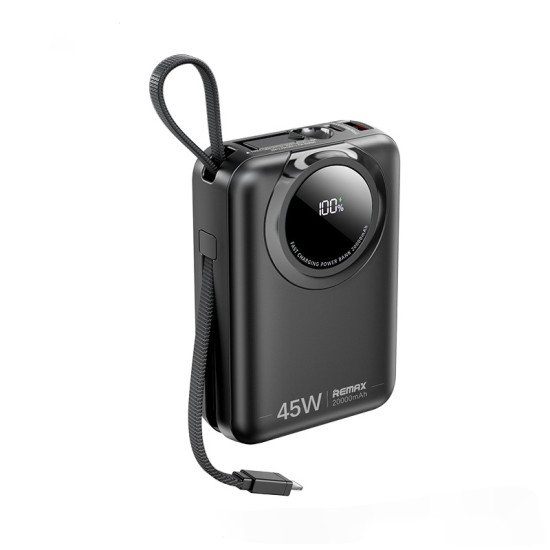
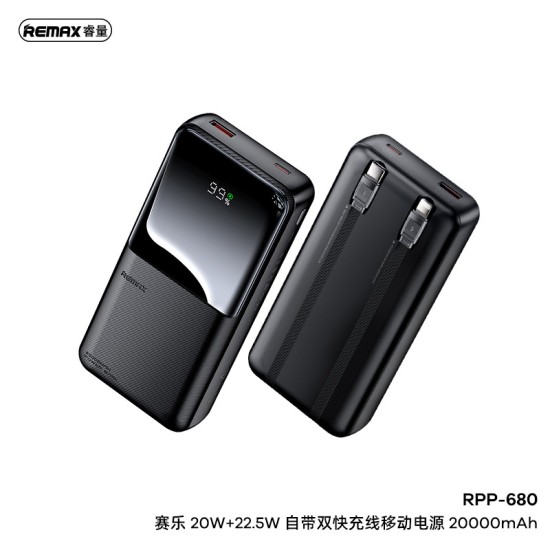
When the customer only needs a working lead, sell from Digi4u’s cable range and point them to the shop guide on charging cable stock logic rather than opening the bank. Replacement pack examples on the live catalogue include the REMAX FC-02 20000mAh 45W and REMAX RPP-680 20000mAh lines — confirm live stock and specs on the product pages.
What should you tell the customer?
Use plain scripts: “We can test the cable and ports; we do not rebuild swollen or sealed multi-cell packs.” “A new unit with warranty is safer and usually cheaper than opening this.” “If the pack is failed, we can advise recycling — we will not put it in general waste.” Offer a retail replacement only when it fits their capacity and connector needs; do not upsell fantasy wattage. If they insist on DIY cell work, decline to supply ad-hoc cells as a “repair kit” without clear competence — your risk is not theoretical.
How should failed lithium packs be disposed of?
High level only: lithium batteries and power banks should not go in household residual waste or loose in a recycling lorry. UK public guidance (for example Recycle Now’s batteries advice) points people to local battery recycling points and local-authority rules; retailers and civic sites often provide drop-offs. Shops should quarantine failed packs, tape exposed terminals where appropriate, and use their licensed waste or take-back route. Digi4u’s delivery policy explains outbound shipping constraints for lithium; inbound customer disposal is a local compliance topic — do not invent a national courier disposal claim here.
What is the one rule for power bank repair?
Test cables and ports, refuse unsafe packs, and replace rather than rebuild when cells or boards fail. Keep loaner/test leads healthy using the same discipline as the charging cable stock article, sell sealed replacements from the live catalogue, and send dead lithium through proper recycling. Digi4u stocks power banks and cables; we do not sell board-level miracles for glued bricks.
FAQ
Can a power bank be repaired?
Sometimes externally — cables and worn ports. Cell and main-board faults are rarely worth shop labour compared with a new sealed unit, and swollen or hot packs should be refused for open repair.
Why is my power bank not charging?
Try a known-good wall adapter and cable first, inspect the input port for debris or damage, then test output into a phone on a meter. If input and output both fail, replacement is usually the sensible path.
Can you replace power bank battery cells?
Technically possible on some models, but shops should treat cell transplants as specialised, high-risk work — not a standard counter service. Matching chemistry/protection and safe reassembly rarely beats buying a new pack.
When should you throw away a power bank?
When it is swollen, overheats, will not hold a safe charge, or fails economically against a replacement. Recycle through proper battery/WEEE routes — do not bin loose lithium in household rubbish.
Does Digi4u repair power banks in-house?
Digi4u is a parts and accessories supplier. We sell replacement power banks and cables; we do not market glued-cell rebuilds as a standard service. Check live product pages and the delivery policy for lithium shipping rules.