


Selling Refurbished Devices Online: eBay, Marketplace and Beyond
Need this part? We stock tested replacement parts with same-day UK dispatch and a 12-month warranty.
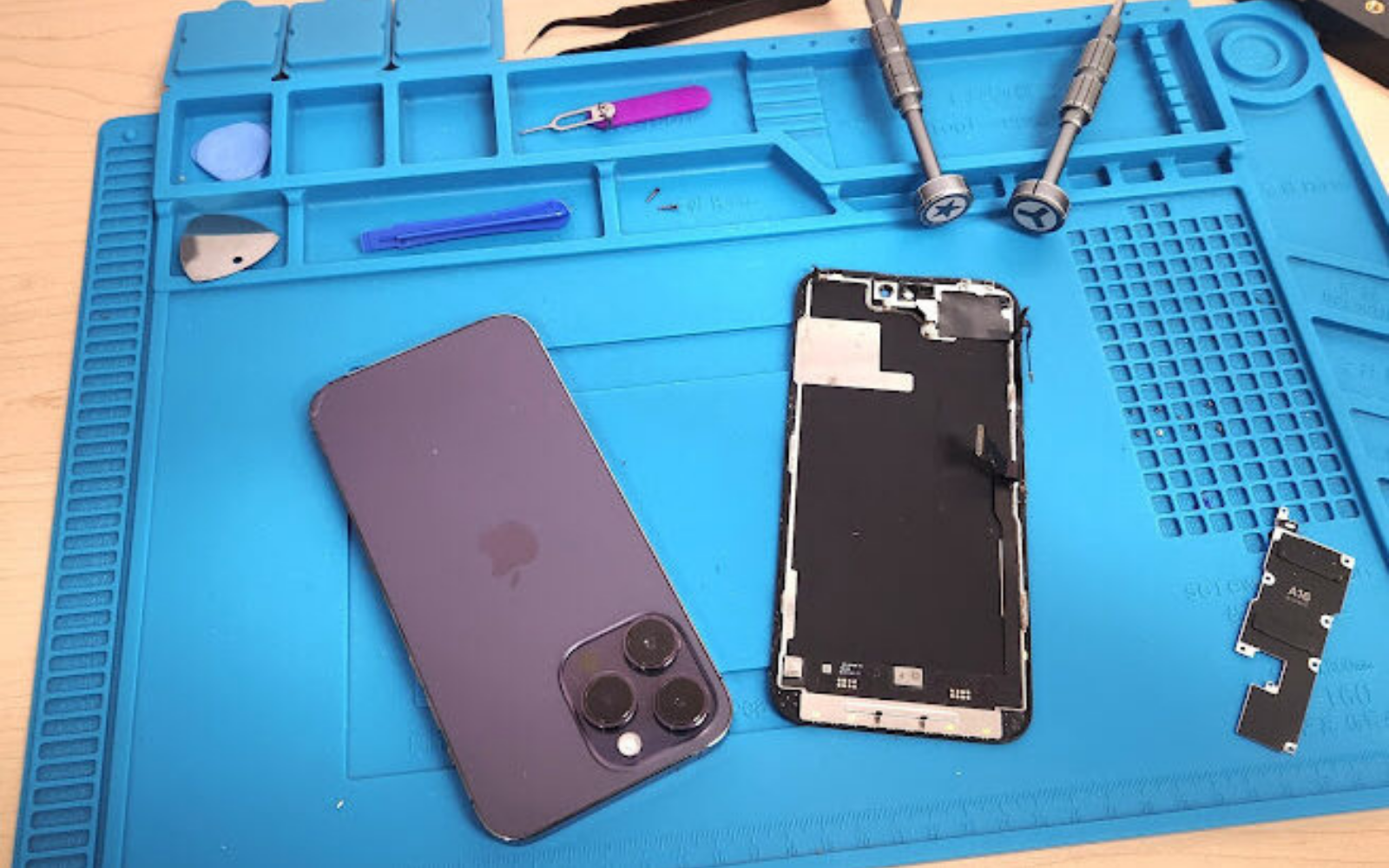
Selling refurbished devices online is the logical extension of a repair business, and it is where a lot of shops lose money slowly rather than quickly. The margin looks attractive until returns, postage and disputes are counted.
The discipline that makes it work is the same one that makes counter sales work: describe the device accurately, photograph what you are selling, and price from evidence. Online, that discipline matters more because the buyer cannot see the device first.
Which platform suits which device?
Marketplace for local, eBay for reach.
A local collection platform removes postage and returns risk entirely, which suits mid-value handsets. A national marketplace reaches more buyers and suits anything with a wide market, at the cost of fees and a returns process.
Trade-in and recycling sites are the fallback for devices that are not worth retailing. Knowing which route a device will take before buying it in is what stops the shop holding stock it cannot sell.
How should a device be graded and described?
By describing it rather than labelling it.
Terms like “good condition” mean whatever the buyer wants them to mean. A listing that states which parts are original, which have been replaced and where the marks are leaves nothing to interpretation.
The grading language worth using is the one described in what to replace and what to leave when refurbishing: describe the cosmetic condition, name the replaced parts and state the battery condition. Every one of those is a question a buyer would otherwise ask.
What should the photographs show?
The device, its marks and its screen.
A listing with four photographs of the front and none of the edges invites a dispute. The useful set shows both faces, all four edges, the screen switched on and any specific mark mentioned in the description.
Photographs taken on the same neutral surface, in the same light, become a reference if a buyer later claims the device arrived damaged. That record is worth more than any amount of careful packaging on its own.
How do you price an online listing?
From completed sales, and from the fee structure.
The price a device achieves is a market fact, and the evidence is what comparable devices actually sold for recently rather than what sellers are asking. Asking prices are aspirations; sold prices are information.
Fees have to come out of that figure before the margin is calculated, along with postage and the cost of a possible return. A device that looks profitable at the asking price can be marginal once those are subtracted, and the pricing method is the one described in pricing a repair so the parts margin survives.
How do you handle returns?
Accept them, and price them in.
Online selling carries a returns rate, and the cost of that has to be part of the pricing rather than a shock. A returns policy that is clear and easy to use produces fewer disputes than one that is restrictive, because buyers fight hardest when they feel trapped.
Retail customers keep their rights under the Consumer Rights Act 2015, and distance selling brings additional rules on cancellation and returns. A shop selling online is a retailer, whether or not it feels like one.
What about devices with pairing notices?
Disclose them in the listing.
A device that reports an unidentified part is not faulty, but it is worth less to a buyer, and a buyer who discovers it after purchase is a dispute. Stating which parts have been replaced and what the device reports turns that risk into a described feature.
The behaviour of those notices is documented by Apple at iPhone parts and service history, and the wider implications for a shop are described in what pairing and serial matching mean for a shop.
How do you avoid data problems on sold devices?
Wipe properly and verify before listing.
Every device sold should be reset and have the previous owner’s account removed, then verified by completing a fresh setup far enough to prove it is not locked. That step prevents the most common online disaster, which is a handset that the buyer cannot activate.
The obligations are the ones set out under the Data Protection Act 2018, with practical guidance for small businesses published at ICO guidance for organisations. Erasing properly, and being able to describe what was done, is part of running the resale side responsibly.
How should the device be packaged?
Like a part you are sending to another shop.
The packaging that protects a screen also protects a handset, and the approach is described in the shipping guidance for parts. A device sent in a padded envelope will arrive damaged eventually, whatever the listing said.
Including the charging cable and a printed receipt builds feedback and reduces questions. Small details like that are what separate a shop’s listing from a private seller’s, and they cost very little.
What should a listing’s terms say?
The condition, the warranty and the returns route.
The buyer needs to know what they are getting, what happens if it fails and how to return it. A stated warranty on the parts the shop fitted, with clear exclusions for damage, is a selling point rather than a cost.
Offering a warranty also keeps the shop’s own standard consistent with its counter sales, which matters if a customer deals with both. The terms that work are the ones described in the warranty guidance for shops.
What are the common mistakes?
Optimistic grading and missing photographs.
Those three cause almost every dispute. A device described as excellent with a visible scratch, a listing with two photographs of a scratched phone, or a repaired device sold as original all end the same way: a return, a fee and a lost margin.
The remedy is unglamorous. Describe more than you think is necessary, photograph more than you think is needed, and mention the repair history. It produces fewer sales and far fewer problems.
Should a shop sell online at all?
Only if the counter is already selling devices successfully.
Selling online adds photography, listings, postage, returns and customer messages to a business that is already busy. A shop that has not yet learned how to buy in and grade devices at the counter will find the online version harder rather than easier.
The sensible sequence is to run a successful local resale operation first, then extend the same listings to a national platform. The accessories equivalent of that decision is described in building attach rate on accessories, and the same logic applies: master the channel you already have.
Online selling is as much a customer service job as a retail one. Buyers ask questions, expect quick replies and judge the listing partly on how it is written. A shop that answers in an hour sells more than one that answers the next day, and the difference costs nothing but attention.
The full cost of a sale is worth calculating once, properly. Listing fees, final value fees, postage, packaging, the returns rate and the value of the time spent on messages all come out of the sale price, and the margin that remains is frequently smaller than the listing suggests.
Knowing that number is what decides whether a device is worth retailing online or selling locally instead. It is a business decision rather than a preference, and the shops that work it out early are the ones that keep doing it.
Negotiation is part of the channel. Buyers will ask for a discount, and a shop that has a policy decides in advance what it will accept rather than negotiating each time. A small, stated discount for a quick purchase is easier to administer than an open conversation about price.
A device that does not sell is a decision, not a problem. Re-listing at a lower price, selling it locally or moving it to a trade buyer are all reasonable outcomes, and the worst option is leaving it listed at a price the market has already rejected.
Feedback builds slowly and matters more than most shops expect. Accurate listings, quick dispatch and clear communication produce reviews that make the next sale easier, and a single badly handled return can undo months of that work.
Where a device is returned in a different condition from the one it was sent in, the photographs taken before dispatch are what allow the shop to discuss it factually. Without them, the return is simply accepted and the loss absorbed.
A listing that attracts no interest is giving the shop information. Either the price is above the market, the photographs are not convincing or the description is not being found, and each of those is a fixable problem rather than a reason to stop selling online.
What is the one rule for online resale?
Describe the device you are actually selling.
Every dispute traces back to a gap between what the listing said and what the buyer received. Closing that gap with photographs and plain descriptions removes the returns, the fees and the arguments in one step.
Around it sit the ordinary disciplines: price from sold listings, wipe and verify devices, state the warranty, package properly and keep records. Devices and parts that are discarded are waste under the Waste Electrical and Electronic Equipment Regulations 2013, and products placed on the market fall to the Office for Product Safety and Standards.
FAQ
Is it worth selling refurbished phones online?
It can be, but only after the counter version is working. Online adds photography, postage, returns and disputes, so the shop should already know how to buy in, grade and price devices before extending to a national platform.
How should I describe a refurbished phone online?
Describe it rather than labelling it. State which parts are original, which have been replaced, where the marks are and what the battery condition is, and show all of that in photographs including both faces and all four edges.
What happens if a buyer returns a device?
Build the returns rate into the pricing rather than treating it as a shock. A clear, easy returns policy produces fewer disputes than a restrictive one, and distance selling brings additional cancellation rights.
Do I have to disclose that parts were replaced?
Yes, in practice. A buyer who discovers an unidentified part or a replaced panel after purchase will treat it as misdescription, so naming the parts fitted and what the device reports is the safer and more honest approach.
Stock for resale as well as repair. Digi4u carries the parts that raise a device’s grade, on the same account as your repair stock.