


Samsung Galaxy S-Series Screen Replacement: S21 to S25
Need this part? We stock tested replacement parts with same-day UK dispatch and a 12-month warranty.
Samsung’s S-series is where the highest-value screen repairs live, and where a wrong order costs the most. The range runs from compact models with flat screens to Ultra handsets with curved edges and under-display readers, and the assemblies are not interchangeable.
The work itself is familiar to anyone who has replaced a Galaxy panel. What changes is the price, the risk and the number of decisions that have to be right before the part is ordered, which is what this guide covers.
Why does the model code matter more on the S-series?
Because the range spans several different panel types.
A base model, a Plus and an Ultra in the same generation use different sizes, different brightness specifications and, on the Ultra, a curved edge and a bundled stylus layer. The screens are matched by the model code rather than by the name, and the suffix identifies the regional variant.
That is the same discipline that applies across the Galaxy range, described in matching a Samsung panel to the model. On a repair where the part costs several hundred pounds, reading the code is what makes the difference between a profitable job and a shelf of stock nobody can fit.
Which S-series models come in most often?
The three-to-five-year-old models, Ultras first.
Ultra handsets are kept longest, repaired most readily and cost the most to replace, which makes them the most common high-value screen job a UK shop sees. The base and Plus models arrive too, usually with a lower panel price and a faster decision for the customer.
The pattern is worth knowing for stock, because it means the models worth holding are rarely the newest ones. The reasoning behind that position is set out in a stock plan built on evidence.
What is included in an S-series screen assembly?
The panel, digitiser, frame and usually the reader.
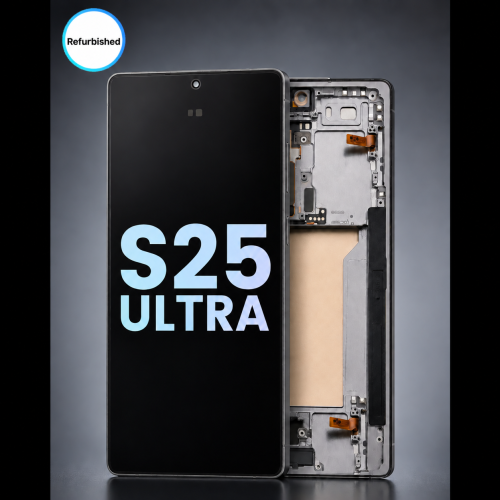
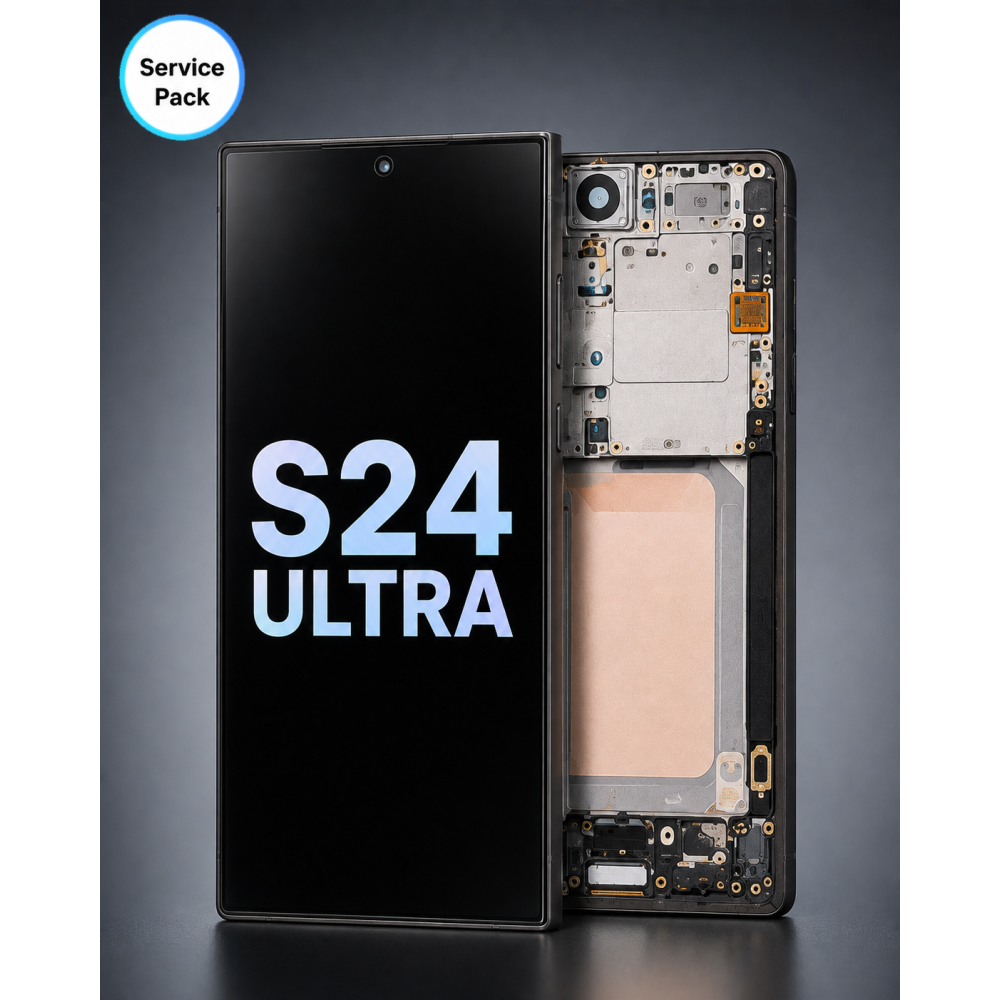
Original and refurbished original assemblies arrive as complete units with the frame and the adhesive already in place, and on models with an under-display reader the sensor is part of the assembly. The battery, board and cameras stay with the customer’s device.
Confirming what is included before ordering matters as much as the price. An assembly without the reader will fit and display perfectly and leave the customer without a fingerprint sensor, which is a return rather than a repair.
How much does an S-series screen repair cost?
Enough that the panel dominates the quote at every tier.
On an Ultra the assembly is the largest component in the device, and the repair-versus-replace calculation is the whole conversation. On the base and Plus models the part is a smaller share of the device’s value, which makes the repair an easier recommendation.
What customers should compare is what is included: which grade of panel, whether the frame is new, whether the reader is present and what warranty applies. Two quotes a hundred pounds apart usually describe two different products rather than two different profit margins.
| Model | Panel type | Reader | Ordering note |
|---|---|---|---|
| S21 / S22 | Flat OLED | Under display | Base and Plus assemblies differ |
| S21 Ultra / S22 Ultra | Curved OLED | Under display | Frame-based assembly preferred |
| S23 / S24 | Flat OLED | Under display | Confirm the region suffix |
| S23 Ultra / S24 Ultra | Curved OLED | Under display | Highest part cost in the range |
| S25 range | OLED | Under display | Newest, check availability first |
Should you buy an assembly with or without a frame?
With a frame, unless the original is genuinely sound.
Curved panels are bonded under tighter tolerances than flat ones, and an error at the edge shows as a light leak or a touch dead zone. A frame-based assembly removes that risk entirely, which on an Ultra is worth considerably more than the part price difference.
The decision table for that choice is set out in with-frame versus bare panel. On a bent chassis the question does not arise, because a bare panel will never sit flat on a distorted frame.
What changes on the bench with a curved panel?
More heat, more patience and a tighter margin for error.
The adhesive runs around a longer perimeter and the glass curves away from the frame at the edges, so the tool has to follow a curve rather than a straight line. Local heat is the mistake that cracks these panels, which is why a mat is better than a nozzle.
The same principles that govern any bonded display apply, and the method is described in what temperature to pre-heat to and why. On a curved panel the consequences of getting it wrong are simply more expensive.
How do you test an S-series screen before sealing?
Display, touch margins, reader and sensors.
Touch has to be checked across the curved edge and not only the flat centre, because that is where a fitting error shows first. The fingerprint reader then needs a freshly enrolled finger, followed by automatic brightness and the proximity sensor on a call.
All of that before the adhesive goes down, on an unbonded assembly. The routine is the same one described in testing a replacement screen before sealing it, extended to cover the reader on models that have one.
What are the common returns on S-series screens?
Fingerprint faults, edge touch faults and lifting corners.
The fingerprint return usually follows an assembly without a compatible reader or a repair closed without re-enrolling the finger. Edge touch faults follow a curved panel fitted slightly off centre, and lifting corners follow a frame that was not cleaned or an adhesive that was not fresh.
All three are process or procurement faults rather than manufacturing defects, which means they are within the shop’s control. Recording which one occurred, against which supplier, is what turns the returns log into a buying decision.
Colour is part of the part number, not a detail. An S-series assembly is supplied in the finishes the model shipped in, and a silver frame on a black handset is visible from across the room. Confirming colour with the model code takes seconds and prevents the most obvious kind of return.
Water resistance is the other thing to get right. These devices are rated for immersion, but a handset that has been opened is no longer in the condition the manufacturer tested, and the rating depends on a fresh gasket being fitted correctly. The honest position is to describe the seal rather than promise the original number.
When should you decline the job?
When the frame is bent or the device has been in liquid.
A distorted chassis will not let an expensive panel sit flat, and the honest answer is a frame-based assembly or nothing. Liquid contact makes the diagnosis open-ended, and a device that fails a week later will be blamed on the screen repair regardless of the real cause.
The third case is a device whose repair cost approaches its value, which happens more often on older base models than on Ultras. Showing both numbers and letting the customer decide is better than deciding for them.
Turnaround is worth mentioning on Ultra models in particular. Because the panel is expensive, many shops order it against the job rather than holding it, which means the repair is a few days rather than a few hours. A customer who expects a while-you-wait repair on a flagship panel will be disappointed by a promise nobody could keep.
What should the customer be told before the repair?
Which panel, the price, and the reader.
On a device with an under-display fingerprint sensor, the reader question is the one customers care about most, and it should be answered before the work rather than after. Naming the grade of the panel matters too, because brightness and colour differences are visible on a bright screen.
Retail customers keep their rights on the finished work under the Consumer Rights Act 2015, and Samsung’s own service routing and pricing are published at Samsung UK support, which is useful context when a customer is weighing up the options.
Ultra models add one more consideration. The S Pen works through a separate digitiser layer bonded to the panel, and on those handsets the screen assembly carries it. A replacement without that layer will display perfectly and leave the stylus useless, which is why the assembly has to be specified as stylus-compatible rather than merely size-compatible.
Stock is the other half of the decision. Ultra panels are expensive enough that holding one speculatively ties up a great deal of cash, so most shops order them against a confirmed job with a deposit. Where a generation is arriving regularly, one assembly on the shelf converts the second job into same-day work; where it is not, the money is better held.
Two further points are worth building into the quote. The first is that a repair on a flagship panel carries a higher risk of a second attempt than a mid-range one, simply because the part is more expensive and the tolerances are tighter. The second is that the customer is far more likely to approve the work when the alternative — the cost of replacing the handset — is stated alongside it.
What is the one habit that keeps S-series work profitable?
Confirm the code, then confirm the reader.
Two checks before the order, every time. They prevent the two most expensive mistakes available in this category, which are an assembly for the wrong variant and an assembly without the fingerprint sensor.
Around them sit the ordinary disciplines: buy the frame rather than fighting a bare panel, clean the frame completely, test every function before sealing, and record what was fitted. Replaced panels are waste under the Waste Electrical and Electronic Equipment Regulations 2013, parts placed on the market fall to the Office for Product Safety and Standards, and the safety expectations around heat-based glass work are set out by the HSE at electrical safety.
FAQ
How much does a Samsung S-series screen replacement cost?
It depends on the tier. An Ultra assembly is the largest component in the device, so the panel dominates the quote, while a base or Plus model is a smaller share of the device’s value. Compare what is included rather than the headline figure alone.
Do the S21, S22, S23 and S24 use the same screen?
No. Each generation and tier has its own assembly, and within a generation the base, Plus and Ultra models differ in size, panel type and reader arrangement. Order against the model code, including the regional suffix.
Will the fingerprint reader work after an S-series screen replacement?
Only if the assembly includes a compatible under-display sensor. Confirm that the listing states the reader is fitted, then delete and re-enrol the fingerprint and test it before the device is sealed.
Is an S-series screen repair worth doing?
On Ultra models, usually yes, because the device is worth far more than the assembly even at the highest panel price. On older base models the arithmetic is closer, and the customer should see both the repair cost and the replacement cost before deciding.
S-series panels matched to the code. Digi4u supplies Samsung screen assemblies by model and variant, with the grade and reader dependency stated on the listing.
{
“@context”: “https://schema.org”,
“@type”: “FAQPage”,
“mainEntity”: [
{“@type”: “Question”, “name”: “How much does a Samsung S-series screen replacement cost?”,
“acceptedAnswer”: {“@type”: “Answer”, “text”: “It depends on the tier. An Ultra assembly is the largest component in the device, so the panel dominates the quote, while a base or Plus model is a smaller share of the device’s value. Compare what is included rather than the headline figure alone.”}},
{“@type”: “Question”, “name”: “Do the S21, S22, S23 and S24 use the same screen?”,
“acceptedAnswer”: {“@type”: “Answer”, “text”: “No. Each generation and tier has its own assembly, and within a generation the base, Plus and Ultra models differ in size, panel type and reader arrangement. Order against the model code, including the regional suffix.”}},
{“@type”: “Question”, “name”: “Will the fingerprint reader work after an S-series screen replacement?”,
“acceptedAnswer”: {“@type”: “Answer”, “text”: “Only if the assembly includes a compatible under-display sensor. Confirm that the listing states the reader is fitted, then delete and re-enrol the fingerprint and test it before the device is sealed.”}},
{“@type”: “Question”, “name”: “Is an S-series screen repair worth doing?”,
“acceptedAnswer”: {“@type”: “Answer”, “text”: “On Ultra models, usually yes, because the device is worth far more than the assembly even at the highest panel price. On older base models the arithmetic is closer, and the customer should see both the repair cost and the replacement cost before deciding.”}}
]
}