


iPhone Charging Port Replacement: What the Job Really Costs
Need this part? We stock tested replacement parts with same-day UK dispatch and a 12-month warranty.
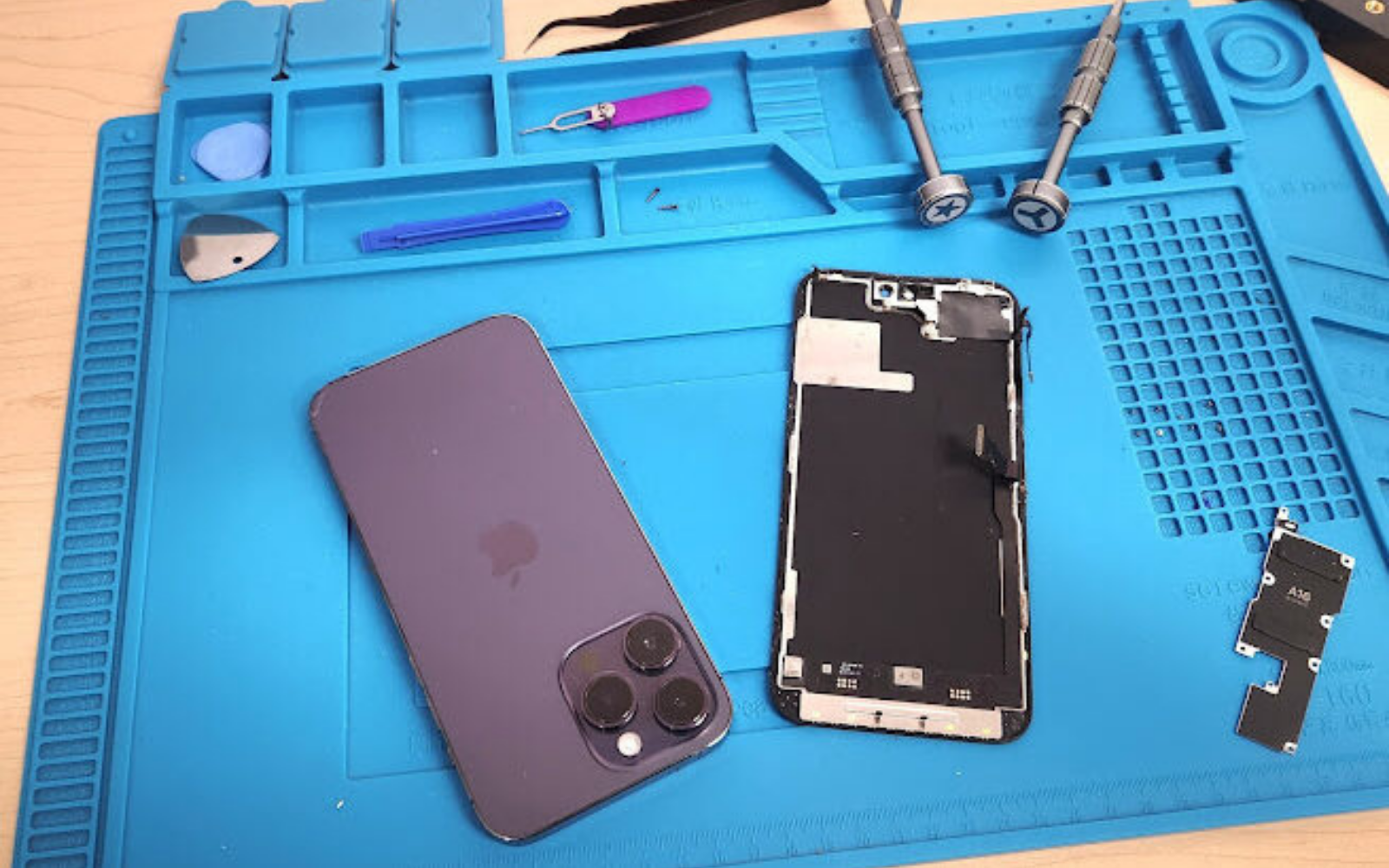
A charging port replacement is the repair most often quoted without being diagnosed. The fault presents as “it will not charge”, the customer has already decided it is the port, and a shop that agrees too quickly changes a part that was never faulty.
Understanding what the job actually costs starts with that sequence. The price of the part is small, the labour is real, and the diagnosis is what determines whether either of them was necessary.
How much does an iPhone charging port replacement cost in the UK?
Typically £45 to £120 depending on the model.
The lower end covers older models with a simple port flex and accessible routing. The upper end covers newer devices where more of the phone has to come out to reach the connector, which on recent generations includes the display and sometimes the battery.
What customers should compare is not only the figure but what it includes. A quote that covers diagnosis, the assembly, fresh adhesive and a warranty on the work is a different product from a price for the part alone, and the difference shows up when the fault returns.
Why do port quotes differ so much between shops?
Because the labour varies more than the part.
On a model where the port sits on an accessible flex, the job is quick and the quote is low. On a model where the assembly is buried under the display and the battery, the same part takes far longer, and a shop that quotes the same price for both is either very efficient or about to lose money.
The other variable is diagnosis. A shop that tests the charging path properly before quoting sometimes finds the fault is a cable, a charger or a blocked port, which changes the repair entirely. A shop that quotes from the customer’s description is guessing, and the guess is usually expensive for someone.
Is it worth replacing a charging port?
Usually yes, unless the device needs more work.
The port is a small, inexpensive part relative to almost any modern handset, so replacing it is ordinarily the sensible option. The calculation changes where the device also needs a screen or a battery, or where liquid damage has reached the board, because then the port is one line in a larger repair.
The honest answer for a customer with an older device is that the port replacement only makes sense if the phone is otherwise sound. That is a judgement, and making it openly is better for the shop’s reputation than taking the job anyway.
How do you tell a port fault from a cable fault?
Substitute the cable and charger first.
The sequence is the same on every model: known-good cable on a known-good charger, then a known-good device, changing one variable at a time. If the fault follows the cable, it is the cable; if it stays with the device, the diagnosis moves on to the port.
That test takes ninety seconds and eliminates the most common cause of a charging complaint. It is described in more detail in testing a charging cable before blaming the port, and it is the step that separates a shop that fixes charging problems from one that replaces parts and hopes.
What is involved in replacing the port?
Access, replacement and resealing.
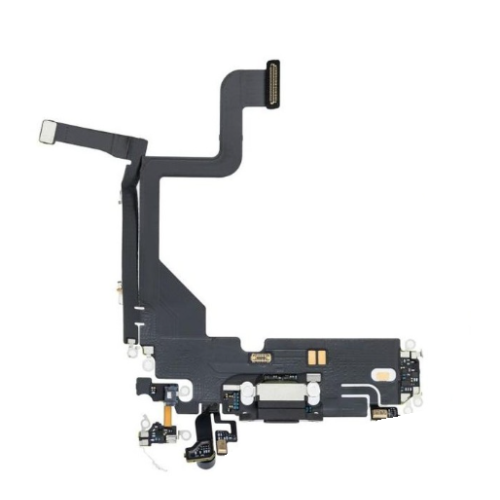
The device is opened, the display is removed on most modern models, and on some the battery has to come out to release the port flex. The new assembly is fitted, the device is tested with the customer’s own cable and charger, and it is closed with fresh adhesive and a gasket.
The testing before closing is what makes the repair safe. A port that charges but does not carry data, or that fast-charges on one charger and not another, has to be identified before the device is sealed, because the second visit costs more in goodwill than the first repair earned.
Which models are harder than they look?
The newer ones, and anything with liquid history.
Recent iPhones use a USB-C assembly with a complex flex that sits under several other components, which makes the labour closer to a mid-sized repair than a quick swap. The connector itself is also more fragile, so the risk of damaging the tongue during the job is real.
Liquid-damaged devices are harder in a different way. Corrosion around the connector can look like a failed flex and behave like a failed board, and the assessment has to come before the quote. The approach is set out in assessing a liquid-damaged device.
What changes on the newer USB-C models?
Cleaning and tongue damage replace bent pins.
On Lightning, the common physical faults are contaminated pins and a worn cavity. On USB-C, the cavity is shallower and the central tongue is exposed, so compacted lint affects contact sooner and the tongue can be bent or cracked far more easily. The connector switch and what it changed for shops is covered in USB-C against Lightning on the bench.
The practical response is a change of cleaning habit. A USB-C port should be inspected under magnification and cleaned with a plastic tool and no lateral pressure, and a bent tongue should be quoted as an assembly replacement rather than treated as debris.
How long does the repair take and what delays it?
An hour or two, once the part is in stock.
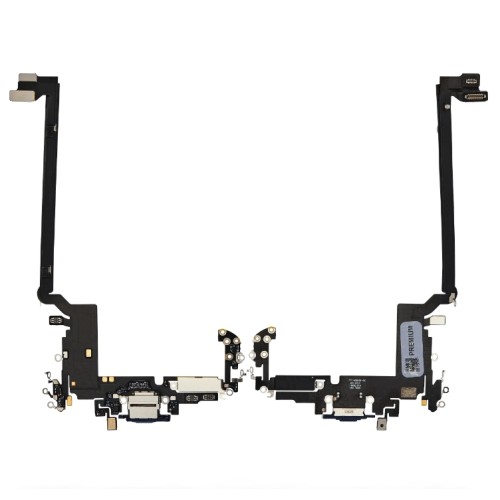
On an older model the job can be done while the customer waits. On a newer device with more disassembly, it is usually a same-day or next-day repair. The delays come from the part rather than the work, which is why shops that hold one port flex per top model win more of these jobs.
The other delay is the testing window. A port replacement should be charged and discharged on the customer’s own charger before handover, which takes time that a quote should include. Rushing that step is how a shop ends up with a device returned the following morning.
What should the customer be told before the repair?
That the fault was confirmed, and what the price includes.
A customer who watched their own cable fail a test is a customer who understands why they are paying for a port. A customer who was simply told the port needs replacing is a customer who may suspect the fault was invented, particularly when a cheaper cable would have solved it.
The warranty position should be stated at the same time. Port flexes are wear parts, so cover is usually shorter than on a screen, and the exclusion for impact or liquid damage after the repair is standard. Retail customers keep their rights under the Consumer Rights Act 2015, and the shop’s own terms sit on top of that position.
How do you price the job so it survives a return?
Include the diagnostic time and a failure allowance.
The part is cheap enough that the price is really the shop’s time, and the time includes the diagnosis, the disassembly, the testing and the possibility of doing it again. A price built only on the part cost will look competitive and will not survive the first return.
Where a diagnostic fee is charged separately, it should be credited against the repair if the customer proceeds. That structure is normal in the trade and it protects the shop’s time on devices where the honest answer is that nothing needs replacing. The wider pricing model is set out in pricing a repair so the parts margin survives.
When should you decline the repair?
When the fault is on the board rather than the port.
A device with a failed charging circuit presents exactly like a port fault until the port is replaced and the fault remains. Those cases belong with a board-level specialist, and declining them openly is cheaper than absorbing the cost of a repair that was never going to work.
The same applies where liquid damage has reached the board or where the device is bent. Explaining what was found and what the options are keeps the customer, even when the shop does not take the job.
What warranty applies to a port replacement?
Usually shorter than a screen, and it should say so.
Port assemblies are wear parts and they carry a shorter window than a display in most trade agreements. Matching the customer-facing period to the cover the shop receives is the same discipline that applies everywhere else, and the gap between the two is risk rather than generosity.
Where a port is replaced, the shop should also tell the customer about the cable. A worn cable is often what damaged the connector surface in the first place, and the conversation that prevents a repeat repair is worth more than the accessory sale. Replaced parts are waste under the Waste Electrical and Electronic Equipment Regulations 2013, and where parts are placed on the market the Office for Product Safety and Standards is the relevant regulator.
One further point belongs in that conversation. Where a charging assembly is replaced, the device may report the change, and Apple documents the behaviour at iPhone parts and service history. A customer who is told before the repair will not treat a notification as a fault afterwards.
What is the one habit that prevents unnecessary port replacements?
Test before you quote, every time.
Ninety seconds of testing at the counter removes the most common cause of a charging complaint and, in a meaningful share of cases, changes the repair from a port to a cable. The cable rating standards behind that test are published by USB-IF, and knowing them is what lets a shop sell the right accessory rather than an unlabelled one.
The habit costs nothing and it protects the shop from the most expensive kind of mistake in this repair: changing a part that was never faulty, and then explaining to a customer why the problem came back.
FAQ
How much does it cost to replace a charging port on an iPhone in the UK?
Typically between about £45 and £120 depending on the model, with newer devices at the upper end because more of the phone has to be dismantled to reach the connector. The figure should cover diagnosis, the assembly, fresh adhesive and a warranty on the work.
Is it worth replacing an iPhone charging port?
Yes on most devices, because the port is an inexpensive part relative to the handset. It stops being straightforward when the phone also needs a screen or battery, or when liquid damage has reached the board, in which case the port is one line in a larger repair.
How do I know if my charging port is broken or my cable?
Test with a cable and charger you know are good, changing one item at a time. If the fault follows the cable it is the cable; if it stays with the device, the port is the next suspect. Cleaning compacted debris out of the cavity comes before any quote.
Is an iPhone charging port easy to replace?
On older models with an accessible port flex, yes. On recent devices, including the USB-C models, the assembly sits beneath several other components and the connector is more fragile, so the job is closer to a mid-sized repair than a quick swap.
Quote the port job from a real diagnosis. Digi4u carries charging port flexes for Lightning and USB-C models, on the same trade account as the cables you test with.
{
“@context”: “https://schema.org”,
“@type”: “FAQPage”,
“mainEntity”: [
{“@type”: “Question”, “name”: “How much does it cost to replace a charging port on an iPhone in the UK?”,
“acceptedAnswer”: {“@type”: “Answer”, “text”: “Typically between about £45 and £120 depending on the model, with newer devices at the upper end because more of the phone has to be dismantled to reach the connector. The figure should cover diagnosis, the assembly, fresh adhesive and a warranty on the work.”}},
{“@type”: “Question”, “name”: “Is it worth replacing an iPhone charging port?”,
“acceptedAnswer”: {“@type”: “Answer”, “text”: “Yes on most devices, because the port is an inexpensive part relative to the handset. It stops being straightforward when the phone also needs a screen or battery, or when liquid damage has reached the board, in which case the port is one line in a larger repair.”}},
{“@type”: “Question”, “name”: “How do I know if my charging port is broken or my cable?”,
“acceptedAnswer”: {“@type”: “Answer”, “text”: “Test with a cable and charger you know are good, changing one item at a time. If the fault follows the cable it is the cable; if it stays with the device, the port is the next suspect. Cleaning compacted debris out of the cavity comes before any quote.”}},
{“@type”: “Question”, “name”: “Is an iPhone charging port easy to replace?”,
“acceptedAnswer”: {“@type”: “Answer”, “text”: “On older models with an accessible port flex, yes. On recent devices, including the USB-C models, the assembly sits beneath several other components and the connector is more fragile, so the job is closer to a mid-sized repair than a quick swap.”}}
]
}