

Boost Your Repair Business: The TBK Automatic Screen Removal Machine Explained
Need this part? We stock tested replacement parts with same-day UK dispatch and a 12-month warranty.


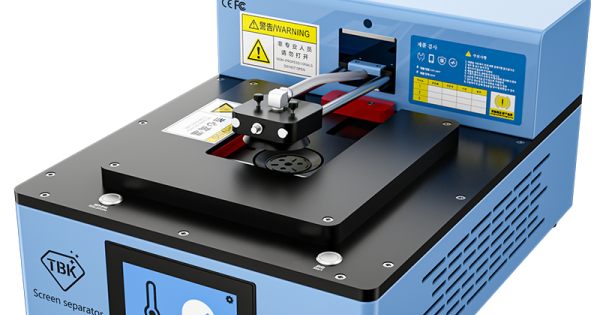
A heat gun and a steady hand are the two most expensive tools in screen removal, because the damage they cause is not visible until the job is closed. An automatic removal machine replaces both with a temperature-controlled platform and a mechanically controlled lift, and the price of that control is concrete: the TBK automatic screen removal separator is listed at £501.67.
Last updated:
What changes when the lift is mechanical
Removal fails in three ways, and all three are consequences of doing it by hand. Heat applied unevenly leaves one corner still bonded while the other is soft, so the panel flexes as it comes away. Lifting with a tool concentrates force at the point of contact, which is where the glass cracks. And the whole process runs at the speed of the operator, which means a busy bench takes more risk, not less.
A platform solves the first two by holding a set temperature across the frame and pulling the panel up along its own axis rather than levering it. The speed advantage is real but secondary: the machine does not get tired at four o’clock.
Three ways to remove a screen, compared honestly
The choice is not “machine or nothing” — it is which of three methods fits the volume and the panels being handled.
| Method | Temperature control | Where it stops working |
|---|---|---|
| Heat gun and pry tool | Operator judgement, measured at the gun not the frame | Anything curved or expensive; the failure is invisible until the seal is closed |
| Heated plate and manual lift | Plate temperature is set, but the lift is still by hand | Panels that are already compromised, and any job where two people are working at once |
| Automatic platform with controlled lift | Constant-temperature frame heating with a sensing chip | Nothing in the removal itself — the limit is mould coverage for the model |
The middle row is where most UK shops actually sit, and it is a reasonable place to stay if removal volumes are low. The case for moving up rests on how often a panel is damaged and on what that panel costs.
How the removal sequence runs
The device is placed on the platform inside a mould, which supports the frame so that heat and force are applied evenly. Constant-temperature heating is switched on and the frame is allowed to reach it — the sensing chip is what stops the platform overshooting on a small device with a large frame. Separation then begins with the controlled lift rather than a tool, and rear-cover removal can run through the same sequence when the job needs it. The panel is lifted clear, the frame is cleaned of the old adhesive, and the phone is ready for the new assembly.
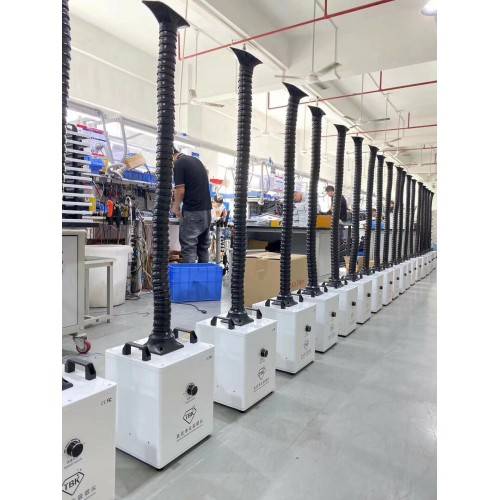
Two habits make the difference between a machine that pays and one that does not. The mould has to match the device, because a loose fit lets the frame move and defeats the controlled lift. And the bench still needs extraction: heated adhesive releases vapour, and the HSE leaflet on rosin-based solder flux fume sets out the principle that applies to any bench process producing fume — capture at source, maintain the filter, keep the discharge out of the operator’s breathing zone.
What the machine has to earn
A model with stated assumptions. The machine price is a live listing; the panel values and volumes are assumptions.
At £501.67, the machine pays for itself by not breaking things. If it saves one mid-range panel a fortnight that a heat gun would have destroyed, and that assembly is worth £30, the annual saving is roughly £780 — a payback inside nine months. At the same one-panel-a-month rate the saving is £360 a year and payback runs to seventeen months, still inside the life of the tool.
The second line in the model is time. If the platform removes five minutes of careful manual heating from each of ten devices a week, that is fifty minutes — more than one extra repair slot a week at no extra labour. Substitute your own panel values and device counts; the decision rests on those two numbers rather than on the specification.
What to check before ordering
Ask for the mould list and its update policy, because model coverage is the machine’s real limit and it changes every time a handset is released. Ask how the frame temperature is measured and controlled — at the plate or at the sensor in the frame itself — since the second is what stops a small device overheating. Ask whether rear-cover removal is supported on the same platform or needs a separate fixture. And ask for the response time and parts availability for the lift mechanism, because that is the assembly that wears.
The second job hiding in the same machine
Rear-cover removal is the work most shops turn away, and it is the same process the platform already performs: heat the frame, release the adhesive, lift the panel. A back glass that is shattered but leaves the camera and the wireless charging coil intact is a repair a customer will pay for, and the alternative — a full housing swap — costs several times as much in parts and bench time.
Two limits belong in the quote. The first is model coverage: rear-cover work needs its own fixture, and not every platform supports every handset, so confirm the model before promising it. The second is what sits underneath — if the coil or the camera lens is damaged as well, the job is a housing replacement and should be priced as one. Quoting it as a simple back-glass job is how a profitable repair becomes an argument at collection.
References
- HSE INDG249 — fume capture, filter maintenance and operator exposure at the bench.
- Apple Support: identify your iPhone model — confirming the model before a mould is selected.
- Apple: Self Service Repair — the genuine-parts and repair-manual route customers compare against.
FAQ
Can an automatic machine remove screens from all iPhone models?
Only with a mould that fits. The platform handles the heat and the lift, but model coverage comes from the mould list, which changes as new handsets are released. Check the current list before quoting a model you have not removed before.
Will the heating damage internal components?
Less than a heat gun, because the platform holds a set frame temperature instead of the operator guessing. Reaching that temperature and no further is the purpose of the sensing chip.
How long does one screen removal take?
A few minutes of heating plus the controlled lift, with preparation and cleaning either side. The gain over manual removal is consistency more than raw speed — the tenth device of the day is removed the same way as the first.
Does it also remove rear covers?
On models where the platform supports it, using the same heating sequence with a different fixture. Confirm the specific models before promising it as a service, because the back glass is bonded differently from the display.
Is the machine suitable for a shop that is new to repairs?
It removes the two skills beginners find hardest — even heating and a clean lift — but not the need for mould discipline and an extracted bench. That is exactly why it is a reasonable first capital purchase.
Match the mould to the model, then buy the machine. Screen removal platforms and the tooling around them are listed in the Digi4u tool range.