

Most Repairable Smartphones in 2026 – Which Brands Are Easier to Fix?
Need this part? We stock tested replacement parts with same-day UK dispatch and a 12-month warranty.
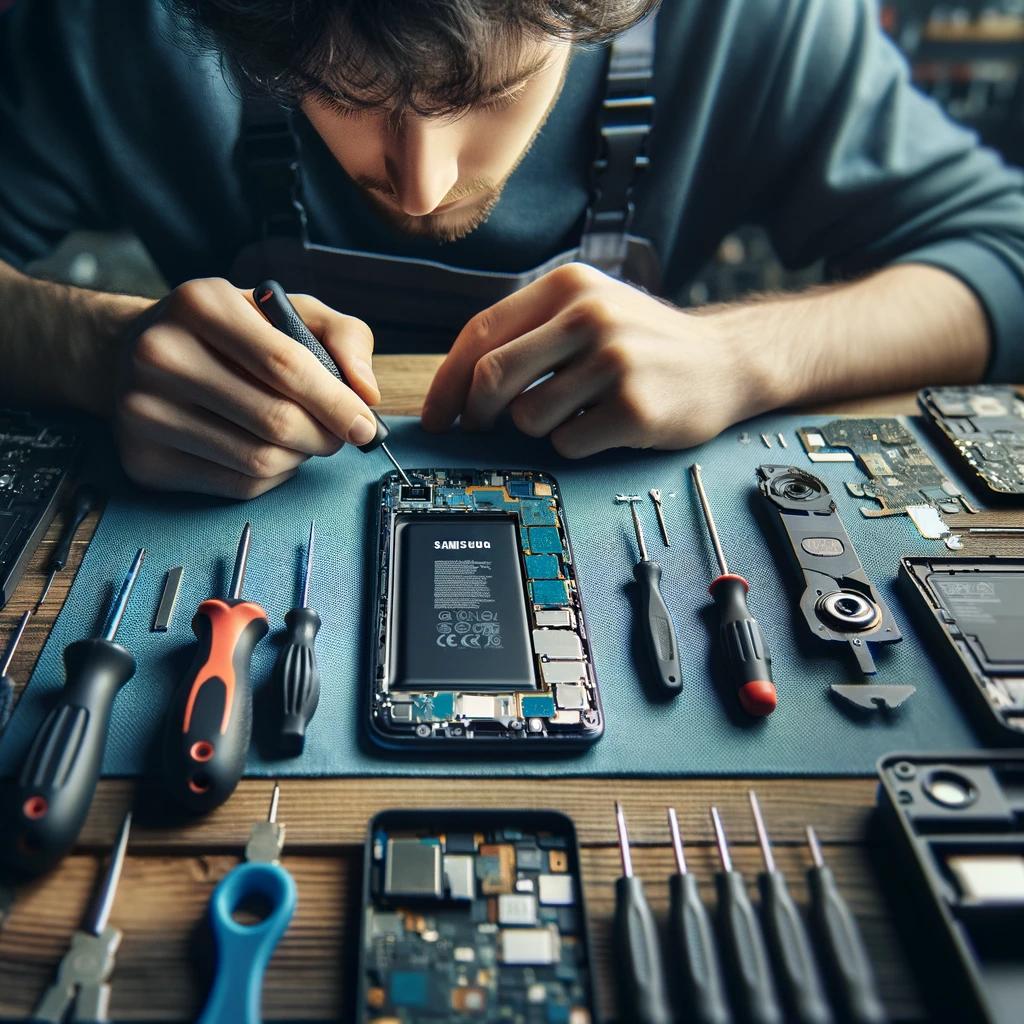
For UK repair shops and careful DIY users, the most repairable smartphones in 2026 are usually Samsung and Google Pixel models, while modular and rugged brands prioritise serviceability from the outset. iPhones remain widely repairable, but parts pairing and service-history warnings make them less straightforward. The best choice depends on parts supply, documentation and long-term access.
Last updated:
What “repairable” means for UK shops in 2026
Repairability is not simply about whether a phone can be opened. For a UK repair shop or DIY user, a genuinely repairable phone is one where the required replacement parts can be sourced, the repair process is documented clearly, and the device can be reassembled without destroying its battery, display or structural seals.
Software also matters. A screen, battery or camera may fit physically but still trigger warnings, lose a feature or require additional configuration after installation. This is particularly relevant to iPhones, where parts and service information can appear after a repair.
A practical assessment therefore includes five questions:
- Are screens, batteries and other common parts actually available in the UK aftermarket?
- Can a technician find workable service information for the specific model?
- Can the battery or screen be accessed without causing unnecessary damage?
- Will software pairing or calibration create extra work after the swap?
- Is there enough demand for the model to justify keeping parts and tools available?
These factors matter because a high-end phone may still be worth keeping after a damaged screen, worn battery or faulty charging port. Repairability can extend useful life, reduce unnecessary replacement and help shops serve customers who want to keep familiar devices for longer.
Brand comparison: Samsung, Apple, Google Pixel and modular lines
The following comparison gives a practical, brand-level view for 2026. Individual models can differ considerably, so it should guide research rather than replace model-specific checks before ordering parts.
| Brand or category | Parts availability | Documentation | Battery and screen access | Software pairing friction | UK aftermarket depth |
|---|---|---|---|---|---|
| Samsung | Strong aftermarket for OLED assemblies, batteries, back glass, charge flexes and cameras | Workable information is available for many commonly repaired Galaxy models | Varies by model; many remain familiar bench work | Usually a manageable consideration, but check the exact model and part | Deep, supported by a large UK installed base |
| Apple / iPhone | Extensive demand and supply for screens, batteries and other common components | Apple publishes model-specific Self Service Repair manuals for experienced technicians | More sealed and pairing-aware than many Android lines | Higher; non-genuine or unfinished repairs can show service-history labels | Very deep, with frequent independent repairs |
| Google Pixel | Batteries and screens are commonly stocked in the UK aftermarket | Repair information and parts support are available for popular generations | Often treated as comparatively approachable, but ease varies by model | Check model-specific software behaviour after parts replacement | Strong and widely used by independent repairers |
| Modular and rugged lines | Serviceability and spare-parts support are central to the category | Often designed around clearer repair access and longer use | Usually prioritise replaceable components, subject to model design | Generally less central than physical access, but still verify compatibility | Smaller than Samsung, Apple or Pixel, with more model-specific sourcing |
Samsung: the practical high-volume choice
Samsung is one of the safest starting points for shops considering the most repairable smartphones 2026. Its large UK installed base means that many Galaxy models remain regular bench work. That demand supports an established aftermarket for OLED screen assemblies, batteries, back glass, charging flexes and camera modules.
Samsung should still be assessed model by model. A popular flagship, mid-range Galaxy and older handset may have very different construction, adhesive and parts availability. Nevertheless, the breadth of the range means repairers are likely to encounter Samsung jobs frequently, and common components are often easier to identify and source than parts for less widely used brands.
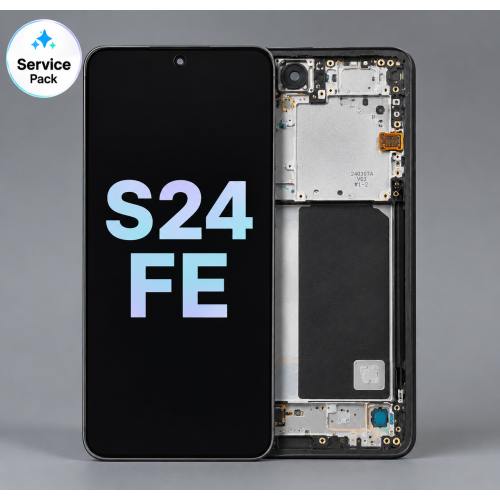
The image below shows a Samsung Galaxy S24 FE service-pack OLED screen with frame. It is an example of a stocked Samsung display part, not evidence that every Galaxy model has identical access or repair difficulty.
For UK buyers, Samsung’s strongest advantage is often not one particular internal design feature. It is the combination of widespread ownership, regular repair demand and a mature supply chain. Shops can build experience around recurring models, while buyers have a reasonable chance of finding replacement parts during the phone’s useful life.
Apple and iPhone: repairable, but pairing-aware
iPhones remain highly repairable in the sense that independent shops regularly replace their screens, batteries, cameras and charging-related components. However, they are still more sealed and pairing-aware than many Android lines. Physical access, adhesive removal and post-repair software behaviour all need to be considered before work begins.
Apple publishes Self Service Repair information, including model-specific manuals intended for experienced technicians. Digi4u supplies replacement parts and tools; it is not an Apple Authorised Service Provider and it is not Apple Self Service Repair.
Apple’s own guidance explains that Parts and Service History can display labels such as Genuine, Used, Unknown or Unverified, depending on the device and repair circumstances. Shops should explain this honestly to customers before beginning work. A completed physical repair does not necessarily mean that every software message will disappear.
For model-specific screen sourcing, see iPhone replacement screens. For Apple’s information on parts and service history, consult Apple’s official support guidance.
Google Pixel: a strong aftermarket alternative
Google Pixel phones are widely repaired in the UK aftermarket. Batteries and screens are commonly stocked, making popular Pixel generations practical choices for shops and buyers who want access to ordinary replacement work.
Pixel models are often described as easier to open or more modular than some competing phones, but those claims should be treated qualitatively. Repair difficulty varies by generation, adhesive arrangement, component layout and the exact part being replaced. There is no single teardown result that tells a shop how every Pixel will behave on the bench.
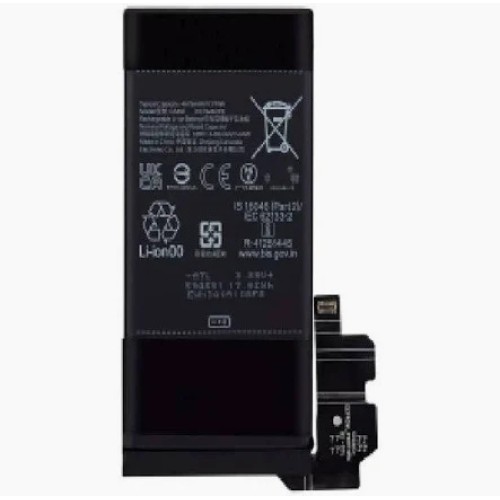
The image below is an example of a stocked replacement cell for the Google Pixel 8 Pro. It demonstrates parts availability for a specific model, rather than promising identical battery access across the whole Pixel range.
Pixel is therefore a sensible middle ground: a recognised brand with meaningful UK repair demand, commonly available screens and batteries, and a growing body of repair knowledge. Before ordering, check the exact model number, connector arrangement and any software requirements associated with the replacement component.
Modular and rugged repair-first brands
Some modular and rugged brands appeal directly to buyers who prioritise serviceability over the thinnest possible design. Fairphone positions easy repair as a core benefit, while Crosscall publicly emphasises spare parts and longevity. These phones can be attractive to organisations, field workers and consumers who want to keep a handset for longer.
The trade-off is market depth. A repair-first phone may be straightforward to service but less common in UK shops, so parts, tools and experience may be more model-specific. Buyers should confirm that the replacement components they are likely to need can be sourced before committing to a less widely supported handset.
Parts UK shops actually replace most often
The most frequently requested replacement parts remain screens, batteries, back glass or housings, charging ports and camera modules. Adhesive and seals are also important because a repair is not complete if the device cannot be reassembled securely.
| Part type | Why it fails | Who buys it |
|---|---|---|
| Screen assemblies | Cracks, impact damage, touch faults, display lines or dead areas | Repair shops, owners of premium phones and careful DIY users with suitable tools |
| Batteries | Capacity loss, rapid drain, swelling or unexpected shutdowns | Owners keeping phones longer, repair shops and users restoring older devices |
| Back glass and housings | Drops, shattered rear panels, damaged frames or cosmetic wear | Shops handling accidental damage and customers preserving otherwise working phones |
| Charging ports | Debris, worn contacts, liquid exposure or repeated cable stress | Repair shops and users whose phone no longer charges reliably |
| Camera modules | Impact damage, focus faults, lens damage or failed stabilisation | Shops repairing camera failures and owners of otherwise usable handsets |
Apple pairing and service-history labels deserve a short, honest note. A shop may fit a compatible or replacement component successfully while the phone still records a service event or displays a label. That does not automatically describe the physical quality of the work, but it should be discussed before the repair so the customer understands the possible outcome.
Software pairing and warnings after a repair
Modern repairability has two layers: mechanical access and software acceptance. A display can be the correct shape and connector type yet still require additional checks after installation. Batteries and cameras may also need model-specific handling, depending on the device.
Apple is the clearest example for UK shops because Parts and Service History may show Genuine, Used, Unknown or Unverified labels. Shops should record the handset’s condition before opening it, test relevant functions after the repair and tell customers which warnings may remain. Clear documentation protects both sides.
Android phones are not automatically free from compatibility concerns. Parts can differ between generations or regional variants, and a component that appears similar may not be suitable for the exact model. Confirm the model reference, connector, frame or housing compatibility and any supplied repair guidance before fitting.
DIY versus bench repair: who should attempt what?
DIY repair can make sense when the user has patience, a clean workspace and the correct tools. A straightforward battery or screen project may be manageable for someone who understands adhesive, cable routing and the risk of damaging a display during opening.
However, a phone is a compact layered assembly. Opening it can damage flex cables, fingerprint or biometric components, seals, the replacement screen or the battery itself. A swollen battery should not be punctured or forced out. Anyone uncertain about safe handling should use a competent repair shop.
Professional bench repair is usually the better option when the phone is valuable, the fault is intermittent, the frame is bent, the battery is swollen, biometric functions are involved or post-repair software behaviour needs to be checked. Shops should use model-specific procedures and test charging, display, touch, cameras, microphones and speakers before handover.
How to choose a phone you can keep longer
Start with the repair ecosystem, not just the specification sheet. A fast processor or excellent camera is less useful if a damaged screen cannot be sourced when the phone is several years old.
- Check whether screens, batteries and charging parts are available for the exact model.
- Look for service information that a competent technician can actually use.
- Consider how adhesive, seals and screen access affect the likely repair.
- Ask whether parts pairing or service-history warnings could affect your decision.
- Prefer models with meaningful UK ownership and aftermarket demand if easy sourcing matters.
- Think about the repair you are most likely to need, rather than an abstract teardown score.
For shops, supplier quality is part of the repairability decision. Digi4u, based in Cardiff and trading since 2011, supplies replacement parts and tools across Apple, Samsung, Google Pixel and other lines. Qualifying orders placed before 4:00 pm Monday to Friday are eligible for same-day dispatch. Shops comparing suppliers can also review this guide on choosing a UK mobile phone parts supplier.
To browse parts by major brand, explore Samsung replacement parts, Apple replacement parts and Google Pixel replacement parts.
Frequently asked questions
Which smartphone brands are easiest to repair in 2026?
Samsung and Google Pixel are practical choices for many UK shops because their screens and batteries are commonly available and their installed bases support regular aftermarket work. Modular and rugged brands prioritise serviceability, while iPhones are widely repairable but more affected by sealing and software pairing.
Are iPhones repairable for independent shops?
Yes. Independent shops commonly repair iPhone screens, batteries, cameras and charging-related components. However, iPhones are more sealed and pairing-aware than many Android phones, and non-genuine or unfinished repairs can result in Parts and Service History labels.
Is Google Pixel easier to repair than Samsung?
Not universally. Google Pixel batteries and screens are commonly stocked and some models are treated as comparatively approachable, but repair difficulty varies by generation. Samsung has a deeper UK aftermarket and many Galaxy models remain familiar bench work, so the exact model matters more than the brand alone.
What replacement parts are in highest demand?
The highest-demand parts in UK shops are screen assemblies, batteries, back glass or housings, charging ports and camera modules. Adhesive and seals also matter during reassembly. Demand reflects common failures such as drops, battery wear, charging faults and camera or lens damage.
Does right-to-repair make every phone easy to fix?
No. UK and EU right-to-repair pressure has encouraged longer parts support and better documentation in general terms, but it does not make every phone equally accessible. Repairability still depends on the model’s construction, available parts, documentation and software behaviour after a component swap.