

Eliminate Gaps and Lifted Screens: Inside the TBK 201P Phone Pressure Holding Machine
Need this part? We stock tested replacement parts with same-day UK dispatch and a 12-month warranty.

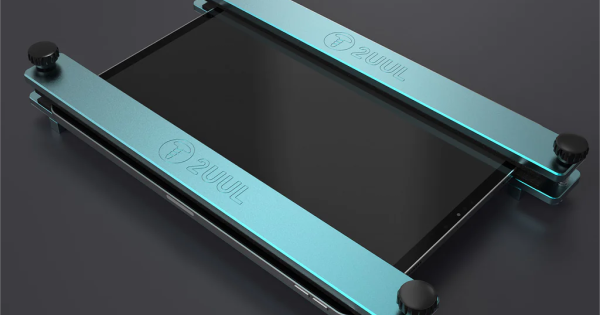
A screen that lifts at one corner a week after a repair was not fitted badly — it was bonded badly. Modern phones hold the display with adhesive rather than clips, so reassembly is a pressure-and-temperature process, and a press that applies uneven force or cures at the wrong temperature produces a repair that fails slowly. Doing it properly starts at £26.66 for an oversize press clamp and goes up to a dedicated holding machine for a shop doing volume.
Last updated:
Why the last step of a repair is the one that fails
Adhesive bonding has replaced mechanical fastening because it seals, it distributes load and it allows a thinner device. The trade-off is that the bond is only as good as the two conditions under which it was made. Pressure has to be even across the whole panel, and the adhesive has to reach its cure temperature with both the panel and the frame at the same temperature — a heated top plate over a cold frame cures one side of the bond and not the other.
That is why the failures appear where they do. A lifted corner is where pressure was lowest. A gap that opens along one edge is where the frame was not flat. Dust and moisture under the glass are what happen when the seal never cured evenly in the first place.
Symptom, cause, control
The four failures that come back through the door map onto four controls.
| What comes back | What caused it | The control that prevents it |
|---|---|---|
| Corner lifting days after collection | Uneven clamping pressure, or pressure applied before the panel was seated | Even force across the whole assembly, applied after the panel is aligned |
| Gap along one edge | A frame that was not flat, or old adhesive left in the channel | Clean the channel completely and check the frame before bonding |
| Dust or a smudge under the glass | Sealing before the panel was inspected and cleaned | Function and cleanliness checks while the panel is still loose |
| Moisture ingress months later | A bond that cured unevenly and never sealed | Upper and lower heat so both sides of the joint reach cure temperature |
Pressure and heat: the two variables worth controlling
Constant pressure means the machine holds the force rather than a stopwatch deciding when it is enough, which is the difference between a clamp and a press. The lighter press clamp at £22.49 covers occasional jobs; a machine with adjustable constant pressure and a gauge is what makes the process repeatable across a day of work, because the same reading can be reproduced on the next device.
Temperature is the second half. Curing adhesive from above only heats the panel, so a machine that heats the frame from below as well brings both surfaces of the joint to the same temperature and cures it through. That is why upper and lower control exists on a holding machine rather than a single heated plate.
What to look for in a holding machine
Five specifications decide whether a machine is useful. Adjustable constant pressure with a readable gauge, so a setting can be repeated. Independent upper and lower temperature control, so the joint cures through rather than at one surface. A digital control interface with a timer, because curing is a time-and-temperature pair. A built-in air pump or compressor system with stable output, since fluctuating pressure is the same defect as uneven pressure. And a platform size that accepts the largest device the shop services — a 17 Pro Max will not sit properly on a jig built for a 6-inch phone.
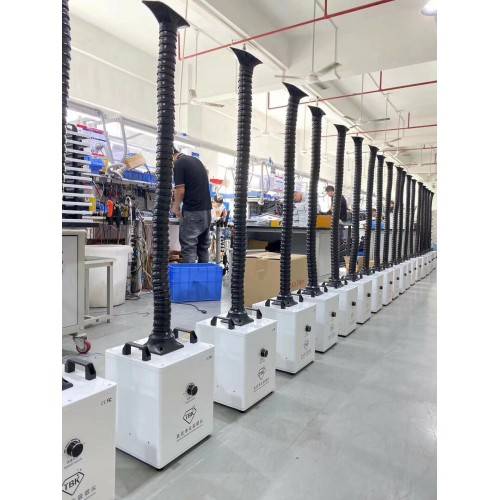
Extraction belongs in the same purchase. Adhesive curing and any solvent used in cleaning release vapour, and the HSE guidance on fume control at the bench applies to the process regardless of whether solder is involved: capture at source, keep the filter working, and keep the discharge away from the operator.
Does a shop need one?
A model with stated assumptions. The tool prices are live listings; the volumes and the cost of a failure are yours to substitute.
A press clamp at £26.66 handles the occasional reseal. The case for a holding machine is built from the cost of the failures it prevents. If a shop reseals twenty screens a month and one in twenty lifts afterwards, that is one failed job a month: the panel, the adhesive and the bench time are lost, and the repair has to be redone at the shop’s expense. At a £59.99 panel and an hour of labour, a single repeat a month costs roughly £100 — more than the price of the better clamp every month.
Now substitute the real numbers: how many reseals a month, and how many come back. If the answer to the second is “almost none”, the clamp is enough. If it is one or two, the machine is not a tool purchase, it is a warranty-claims purchase.
Where a reseal belongs in the workflow
The order that produces consistent results is: clean the frame channel completely; fit the new adhesive; seat the panel and check function, touch and cleanliness while it is still loose; clamp or press it at the machine’s setting for the adhesive’s cure time; and leave it undisturbed afterwards rather than handing it back immediately. The last step is the one that gets skipped when the shop is busy, and it is the reason a repair that passed inspection on the bench is reported as lifting the following week.
References
- HSE INDG249 — fume capture at source and filter maintenance.
- Apple: Self Service Repair — genuine parts and the repair manuals that specify reassembly.
- Consumer Rights Act 2015 — satisfactory quality and reasonable care for work sold to a consumer.
FAQ
Why does a screen lift after a repair?
Almost always uneven pressure or an incomplete cure. Adhesive needs even force across the whole panel and both surfaces of the joint at cure temperature, so a heated top plate over a cold frame cures one side and leaves the seal incomplete.
Is a press clamp enough, or do I need a machine?
A clamp at £26.66 is enough for occasional reseals. A machine earns its place when enough jobs come back that a single repeat a month costs more than the tool — on the model above, roughly £100 per repeat.
What does constant pressure actually mean?
It means the machine holds a set force for a set time rather than an operator guessing when the clamp is tight enough, which is what makes a reading reproducible on the next device.
Why does the machine heat from below as well as above?
To cure the adhesive through the joint. Heat from the panel side alone leaves the frame side cool, and an unevenly cured bond is the one that fails months later rather than on the bench.
How long should a device be left after sealing?
For the adhesive’s stated cure time, undisturbed. Handing the phone back immediately after pressing is the most common reason a repair that tested well on the bench is reported as lifting the following week.
Buy the control, not just the clamp. Press clamps, holding machines and the consumables that go with them are listed in the Digi4u tool range.