

Screen Removal Machine vs Suction Cup: Which iPhone Repair Tool is Best for iPhone?
Need this part? We stock tested replacement parts with same-day UK dispatch and a 12-month warranty.

The screen removal machine is the right purchase for a repair shop and the wrong one for almost everyone else. A suction cup or a manual screen opener costs a few pounds and lifts a panel that is already cracked or lightly bonded; an automatic heat-and-vacuum separator costs several hundred pounds and lifts panels that are intact, every time, in minutes. If you repair a handful of phones a month, buy the opener. If screen work is a daily queue, the machine pays for itself in weeks — and the arithmetic is below.
(Last modified date: October 2, 2026)
When it comes to iPhone repairs, screen removal is one of the most common tasks. Whether you are fixing a broken screen on your iPhone 12, iPhone 13, iPhone 14, iPhone 15 or the latest iPhone 16, choosing the right screen removal tool is crucial for ensuring a safe and efficient repair. The two most common tools used for this process are suction cup tools and automatic screen removal machines. This article compares the screen removal machine vs suction cup, analysing their pros, cons and how well they work with iPhone 12-16 models, so that a DIY enthusiast and a professional repair shop can both decide which tool is right for them.
Suction Cup Tools: The Classic, Budget-Friendly Option
How Suction Cup Tools Work
Suction cup tools use vacuum pressure to lift the screen away from the phone’s body. The tool is placed on the screen, and when the handle is pulled, the suction lifts the screen, allowing for separation.
Digi4u’s own opener range starts at £4.99 in the REFOX tool range, with opening tools from £25.00 in the opening tools category.
Pros of Suction Cup Tools
Affordable: a suction cup or manual opener is inexpensive, which makes it the sensible first purchase for DIY work and occasional repairs. Easy to use: the process is straightforward and beginner-friendly, allowing almost anyone to perform the task with minimal effort. Portable: these tools are compact and lightweight, easy to store and carry, which suits home repairs and emergency fixes.
Cons of Suction Cup Tools
Low efficiency: if the screen is strongly bonded to the phone, the suction cup can take a long time to detach it, especially on models like the iPhone 14, iPhone 15 or iPhone 16. Higher risk of damage: improper handling can lead to screen cracks or damage to internal components such as the flex cables. Not ideal for frequent use: for professionals or high-volume repairs, suction cups lack the speed and durability required to keep up with demand.
If you are looking for a reliable suction cup tool for occasional repairs, see the Digi4u opener range.
Automatic Screen Removal Machine: Efficient and Professional
How Automatic Screen Removal Machines Work
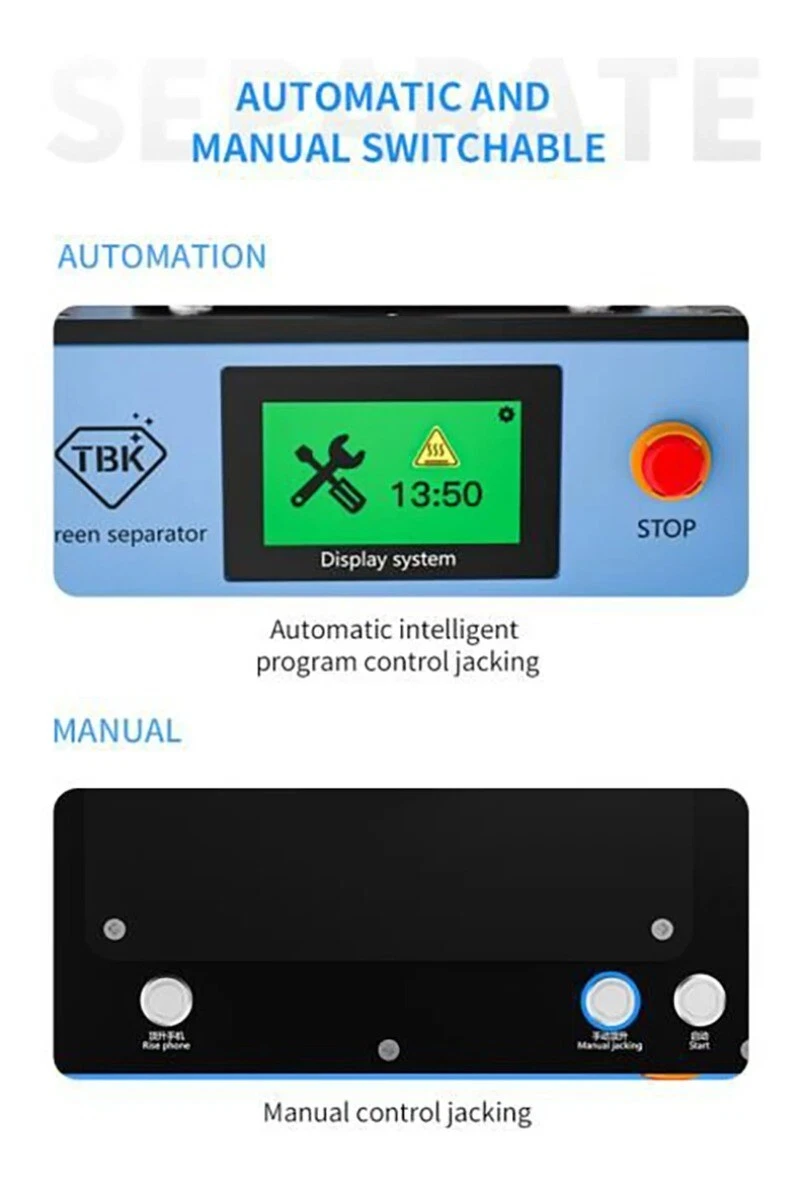
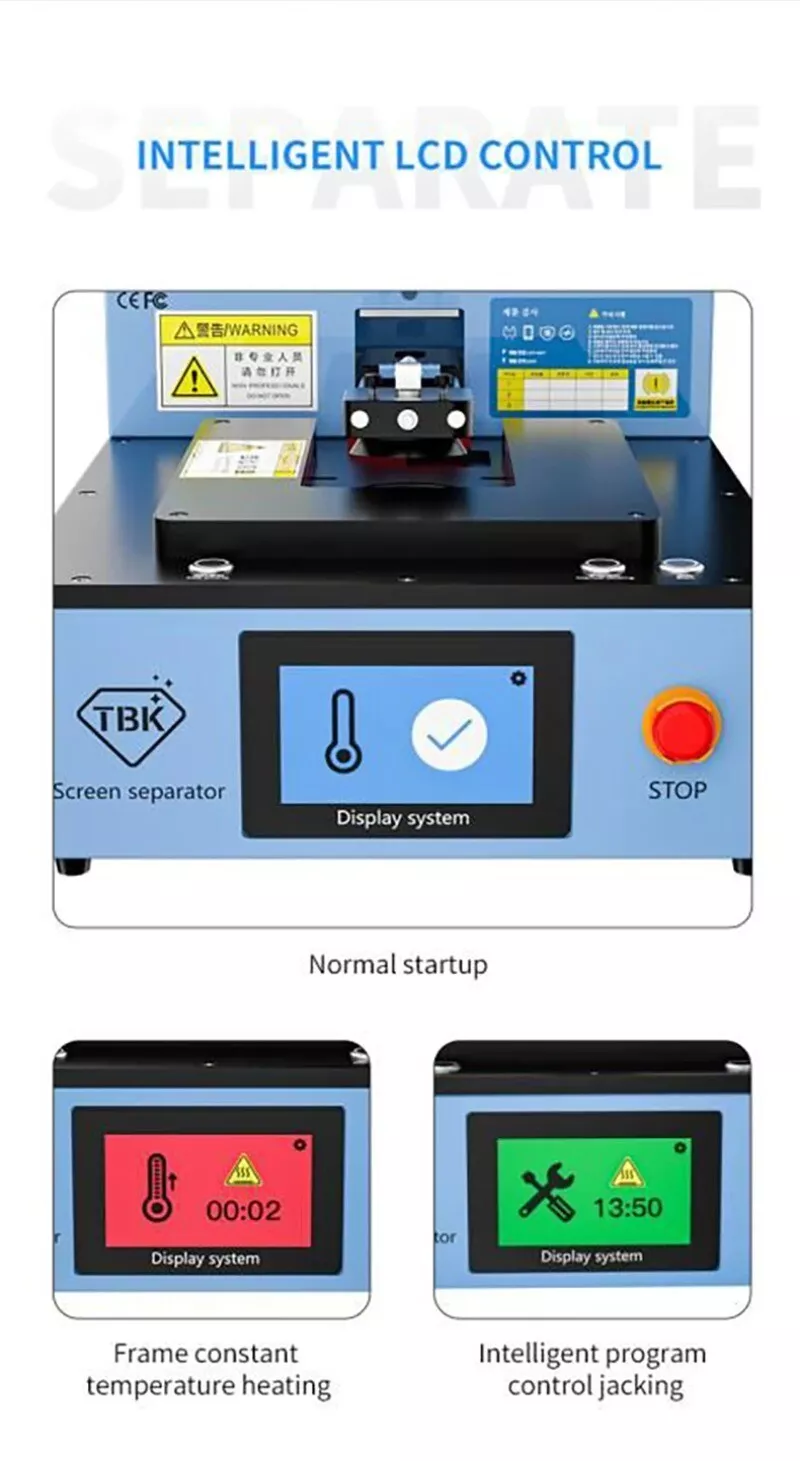
An automatic screen removal machine uses heat and vacuum suction to separate the screen from the body. First, the screen is heated to soften the adhesive, then the machine uses vacuum pressure to remove the screen safely and quickly. Digi4u lists the TBK automatic intelligent control screen removal separator at £501.67.
Pros of Automatic Screen Removal Machines
High efficiency: an automatic separator can release a screen in minutes, which shortens the whole repair. High safety: heat and suction are applied evenly, which reduces the risk of cracking the panel or straining the flexes. Suitable for high-volume repairs: this is the tool for a shop that runs several screen jobs a day. Compatible with multiple models: it works beyond iPhone 12-16 and covers other brands and devices.
Cons of Automatic Screen Removal Machines
Higher cost: these machines are a one-time investment that starts in the hundreds of pounds, so they suit professionals rather than occasional use. Bulkier size: they need a dedicated bench space. Learning curve: while easy to operate, the settings take practice, particularly for anyone new to repair work.
For the machine itself, see the Digi4u automatic screen removal separator.
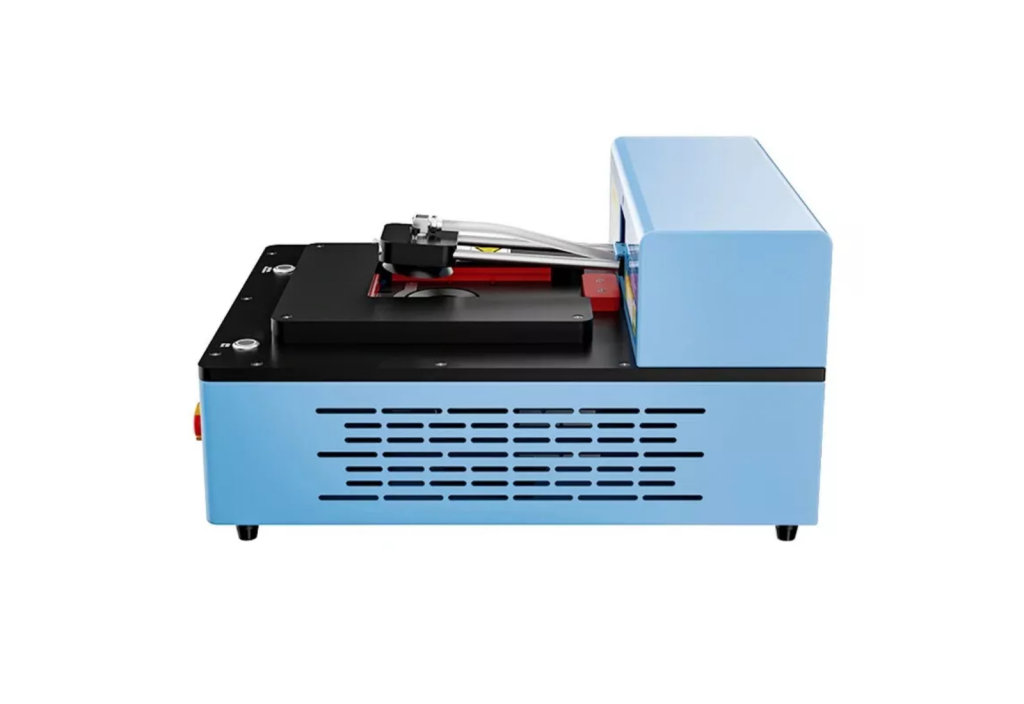
Suction Cup vs Automatic Screen Removal Machine: A Detailed Comparison for iPhone 12-16
| Feature | Suction cup or manual opener | Automatic screen removal machine |
|---|---|---|
| Price | From £4.99 in the REFOX range; opening tools from £25.00 | £501.67 for the TBK automatic separator listed on Digi4u |
| Ease of use | Very easy; ideal for beginners | Needs practice and a settled procedure |
| Efficiency | Slower, and slower still when the adhesive is stiff | Fast; the panel is heated and released in minutes |
| Risk | Higher — force is applied by hand | Lower — heat and vacuum are applied evenly |
| Best for | DIY, occasional repairs, cracked panels | Shops with a daily queue of screen work |
| Compatibility | iPhone 12-16 and other handsets | iPhone 12-16, other brands and tablets |
What does not change, whichever tool you buy
A machine does not remove the technique from the job. Three limits are worth knowing before you spend anything.
A shattered panel cannot be suctioned. If the glass is broken at the edges, there is nothing for a cup or a vacuum seal to grip, and the release has to be worked with a thin pry tool and heat instead. This is the case where the machine earns its price in avoided second panels, because an even heat cycle does not add load to glass that is already cracked.
Heat has to be controlled, not maximised. A heat pad or machine warms the adhesive so it releases; the same heat softens the OLED substrate and the polariser if it is left too long. On the 14 and 15 generations, where the display is bonded across the whole surface, the risk of damage comes from dwell time rather than from the tool.
The machine changes the bench. It needs a permanent space and a power supply, and its pads and seals are consumables. The tool decision is therefore a bench-layout decision as well as a spending one.
Does a machine pay for itself?
Work it out per job rather than per month.
Take a shop running three screen jobs a day where the separator saves ten minutes on each, against a notional labour cost of £45 an hour. Ten minutes saved is £7.50 a job, or £22.50 a day across three jobs. A £501.67 machine therefore repays its price after about 22 working days of that workload — roughly a month.
That is a model with stated assumptions, not a measured result. Substitute your own job count, minute saving and hourly rate: at one screen a day the same machine takes about 67 working days to repay, which is still a season, and at six a day it repays in about eleven days.
What should you ask the supplier before buying?
- The temperature range and the control method — preset levels or a settable curve.
- Which models and sizes the vacuum frame actually holds, and whether adapters are included.
- The spare parts list: seals, pads and heating elements, with prices.
- Whether operator instructions and a maintenance schedule are supplied.
- The warranty length and the DOA position on a machine of this size.
FAQ
Q1: Which tool is better for iPhone 12-16 screen removal: a suction cup or an automatic screen removal machine?
If you are a DIY enthusiast or only repair your iPhone occasionally, the suction cup or manual opener is the budget-friendly, easy-to-use choice. For professionals dealing with high-volume repairs, the automatic screen removal machine is faster, safer and more efficient on iPhone 12-16 models.
Q2: Can automatic screen removal machines be used for other phone brands?
Yes. Automatic screen removal machines are compatible with various phone brands, including Samsung and Huawei, so they handle multiple devices beyond iPhone models.
Q3: Are suction cup tools safe to use?
They are generally safe, but the risk of damage is higher if they are used improperly. The primary concerns are cracking the screen and damaging internal components, particularly on newer models like the iPhone 15 and 16.
Q4: Can I use a suction cup on an iPhone 12, 13, 14, 15 or 16?
Yes, but the adhesive on these models is stronger, so more patience and a controlled heat cycle are needed for a clean release. Where the glass is already broken at the edge, use a thin pry tool rather than a cup.
What should the machine’s specification include?
Five lines on a specification sheet decide whether the machine suits your bench.
- Temperature range and control method. Preset levels are quicker to train on; a settable curve is what lets you match the heat to a bonded 14 or 15 display rather than to the machine’s default.
- Chamber or frame size. It has to hold the largest device you accept, with the adapters included rather than sold separately.
- Vacuum behaviour. How the suction is applied and released, because a panel that is lifted unevenly is the failure the machine exists to prevent.
- Consumables. Pads, seals and heating elements, with part numbers and prices. A machine with no spares list becomes scrap the first time a seal perishes.
- Bench footprint and power. Where it sits, what it draws, and whether it needs a dedicated circuit.
Those five are also the questions to put to a supplier, and any supplier who cannot answer the fourth one is selling a machine you will have to replace rather than maintain.
How do you run the first job on a new machine?
On a dead panel, not on a customer’s phone.
- Practise on a scrap display. Every shop has one. Learn where the heat sits, how the frame holds the device, and how the release feels before there is anything at stake.
- Start at the lower end of the temperature range and step up. Adhesive that releases at a lower temperature leaves the polariser and the panel substrate alone; the same release at a higher temperature takes a minute off the job and a grade off the panel.
- Log the setting per model. A note on the wall for each generation in for repair turns a machine that needs a skilled operator into a process a new starter can follow.
- Check the released panel before it goes back on the phone. Heat and vacuum do not damage the display invisibly, but a panel that was lifted unevenly shows it as a flex under load or a display that flickers at one brightness.
What does the machine not do?
Three jobs that still belong to the technician.
It does not help with a shattered panel. Where the glass is broken at the edges there is no seal for the vacuum, and the release has to be worked with heat and a thin tool — which is where an even heat cycle still earns its place, because it avoids adding load to glass that is already cracked.
It does not remove the adhesive. Cleaning the frame back to bare metal, fitting the new gasket and closing the phone are still manual, and they are the part of the job the customer judges.
It does not straighten a frame. A device that arrives bent needs a housing, not a separator. The same distinction runs through rear housing and back glass repair.
What changes on the bench?
Four things, and only one of them is the machine.
- Space. The separator needs a permanent position with room to load and unload, which usually means rearranging a bench rather than adding to it.
- A power point you can reach and a surface that stays clear, because a machine that has to be unpacked before every job is a machine that gets used only for the awkward ones.
- Consumables on the shelf — pads and seals — so a maintenance item does not stop the bench for a week.
- Training that is written down. The payback model above assumes a ten-minute saving on every screen job; that saving only appears when the settings are known rather than rediscovered.
Read together, the tool and the bench are one decision. A shop that buys the machine and leaves the bench as it was gets the capital cost without the throughput, which is the most common way a sensible purchase stops paying for itself.
What does the machine cost to run?
Two running costs, and neither is large next to a ruined panel.
The first is consumables: pads and seals that compress and perish, and heating elements that eventually fail. A machine with a published spares list costs a few pounds a year to keep working; one without it costs the price of a replacement machine the first time a seal goes.
The second is power and time. A separator draws real current while it heats, and it holds its temperature between jobs, so the sensible routine is to switch it on when the first screen job of the session arrives rather than at the start of the day. That is a bench-discipline point rather than a technical one, but it is the difference between a machine that pays for itself and one that quietly adds to the electricity bill.
Against both, the alternative is a cracked panel. A replacement assembly for an iPhone 11 starts around £11.99, and the same mistake on a current flagship costs several times that before the labour of a second repair. The machine does not need to be cheap to run; it needs to prevent one panel a month, and the arithmetic is settled there.
References
- Digi4u: TBK automatic intelligent control screen removal separator — the machine priced in the table above.
- Digi4u: REFOX tool range — the opener and suction range priced in the table above.
Conclusion & Recommendation
For iPhone 12-16 repairs, the choice between a suction cup tool and an automatic screen removal machine depends on your workload. A suction cup or manual opener is the right answer for DIY enthusiasts and occasional repairs because of its low cost and simplicity. An automatic screen removal machine is the right answer for professional repair shops and anyone who needs to release panels quickly, safely and repeatedly. Browse Digi4u repair tools for both.