


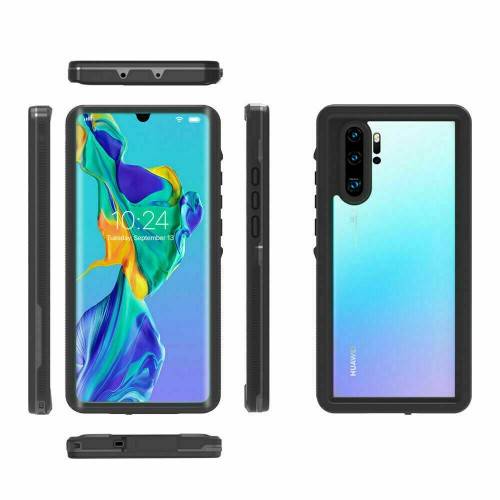
A waterproof case is not what keeps a phone dry. The seal is, and the seal is the part nobody inspects until the phone has already been in the sea. The Digi4u listing this article refits is a full-body Redpepper case for the Huawei P40 family, and it carries a set of manufacturer test figures — a 10 ft / 3 m immersion held for an hour and repeated 1,000 times, a 6.6 ft / 2 m drop test repeated 1,000 times, and a snap-on and off durability test repeated 1,000 times, alongside a claim to exceed Military Standard 810G method 516. Those numbers describe the case as it was designed. What happens on a customer’s phone depends on whether the gasket was clean when it was closed, and that is entirely in the hands of the person who closed it.
(Last modified date: October 2, 2026)
What does an IP or military rating actually promise?
A test condition, not a warranty.
An ingress protection rating describes a laboratory test: an IP68 rating, for instance, is defined under IEC standard 60529 and, on Apple’s own published figures for the iPhone 11, reads as a maximum depth of 2 metres for up to 30 minutes. Nothing in that sentence covers a dropped phone with a hairline crack in the frame, a gasket with sand in it, or a case that has been opened and closed two hundred times. Apple states plainly that liquid damage is not covered under warranty, and the same logic applies to any case: the rating describes the test the product passed, not the condition of the unit in your hand.
That is why the useful question is not “is this case waterproof” but “what kind of protection do I need, and what will I do to keep it working”.
Which type of case fits which job?
Three families, and they are not substitutes for one another.
The table below compares the protection people ask for against what each design actually delivers. It is the comparison a customer would make if they were choosing between products rather than being sold one.
| Design | Protects against | Does not protect against | Suits |
|---|---|---|---|
| Sealed full-body case (the Redpepper TRE and dot series are this type) | Immersion, spray, dust, snow, and impact from a closed height | Use with a damaged seal, salt water left to dry on the seals, or operation of the touchscreen through a wet membrane | Diving, snorkelling, surfing, rafting, site work, winter sports |
| Water-resistant pouch or dry bag | Rain, splash and short accidental immersion | Impact; repeated opening; a pouch whose closure has picked up grit | Commuting, walking, occasional beach use |
| Rugged bumper or armour case | Drops, scuffs and dust on exposed surfaces | Immersion of any kind | Trade work, cycling, general drops |
The mismatch that causes the most returns is the last row being bought for a water activity, or the first row being bought and then opened every day at the beach.
What do the manufacturer’s test figures mean?
They mean the design was tested, and they tell you exactly which claims to hold the supplier to.
The listing states that the case passed a three-part test. Read it as a specification to be matched to the job, not as a promise about your phone.
| Claim in the listing | What it describes | What to verify before relying on it |
|---|---|---|
| 10 ft / 1 hour underwater test, repeated 1,000 times | Repeated immersion at the stated depth for a stated duration | Whether the test was on a sealed empty case or on a case containing a device, and the depth the customer will actually use |
| 6.6 ft / 2 m height drop test, repeated 1,000 times | Repeated corner and face drops from 2 metres | Whether the device inside survived as well as the case |
| Snap-on and off durability, 1,000 cycles | Seal and latch life across repeated opening | What maintenance the manufacturer specifies across that life, and how the seal is cleaned |
| Military Standard 810G method 516 | The shock method within a US Department of Defense environmental test standard that covers many separate methods | Which method and which severity level, because “810G” alone is not a pass mark. [VERIFY] |

What has to be checked every time the case is closed?
Three things, and they take fifteen seconds.
First, the gasket: it has to be clean, dry and sitting flat in its channel. Sand, salt crystals and the fibres from a pocket are what break a seal, not depth. Second, the closure: every latch fully home before the phone goes near water, and none of them stiff or gritty. Third, the membrane over the screen and ports: a pinched or creased membrane is a leak path even when the latches are tight.
Then test it. The routine is worth doing properly once and is set out in how to check a waterproof phone case before taking it near water: close the empty case, immerse it, look for water ingress and for air escaping, and only then put a device inside. It takes minutes and it is the only test that reflects the case in the customer’s hand.
Does the case pay for itself?
Work it out against the repair it is meant to prevent.
Assume a customer takes the phone on two coastal trips a year, with perhaps one realistic incident every three years, and that a liquid-damaged P40-series handset is more often replaced than repaired because the damage is not covered by any warranty and a corroded board is rarely economic to save. If the replacement handset costs £250 and the case costs £30, the case needs to prevent one incident every eight years to break even on price alone.
Set the numbers against the alternative, which is a case that is never tested: if the seal fails on the first trip, the case has cost £30 and a handset. That is a model with stated assumptions, not a measured result. Put your own figures in, including what a replacement handset actually costs the customer, and the decision usually becomes obvious.
What should be asked before buying a case for a specific phone?
- Written confirmation of the exact model the case is cut for, including whether it is the P40 or the P40 Pro, because the camera housing differs.
- The test report or the manufacturer’s stated test conditions behind any immersion or drop claim.
- Whether a replacement gasket or membrane is available as a spare part, since these are the items that wear.
- The care instructions the manufacturer specifies — fresh water rinse, air dry, and whether any lubricant is permitted.
- The warranty position on a case that leaks, and what the customer must produce to claim.
Which case suits which activity?
Match the design to what the phone is going to be near, rather than to the highest number on the packaging.
- Snorkelling, kayaking and beach use. Immersion, sand and salt: a sealed full-body case, tested empty before every trip and rinsed after every trip.
- Commuting, walking and general daily carry. Rain, pockets and occasional knocks: a slim or rugged case, because a sealed case adds bulk for protection the phone rarely needs.
- Site work, cycling and winter sports. Drops, grit and cold wet hands: a rugged case with a raised lip and a lanyard point, plus a screen protector.
- Photography near water. Spray and repeated handling: a sealed case with a clean membrane, or leave the phone out of the bag altogether.
The mismatch worth avoiding is the sealed case bought for daily use and then opened twenty times a week, because every opening is a chance to trap a grain of grit in the gasket.
How do you look after the seals?
Four habits, and none of them needs a product to buy.
- Rinse in fresh water after salt or sand. Salt crystals left to dry in a gasket channel are abrasive, and they hold the seal open the next time the case is closed.
- Dry the gasket before closing, not after. A wet gasket can lift a corner of the membrane seal, and a sealed case full of humid air fogs the screen under a cold sun.
- Keep the case empty when it is not in use. A case stored closed with grit inside is a case that will need a new gasket sooner.
- Treat the gasket as a consumable. A seal that has been compressed for a couple of seasons stops returning to shape; if a replacement is not sold separately, the case is effectively disposable and that is worth knowing before you buy it.
What do you do if the phone gets wet anyway?
Five steps, and the first one is the one people skip.
- Power it off and leave it off. Water plus current is what corrodes the board, so the phone should not be turned on to check whether it still works.
- Do not charge it. Charging a wet phone is the most reliable way to turn a drying job into a board repair.
- Dry the outside, then drain the ports. Blot the phone, then hold it with the ports facing down and shake gently; do not push anything into the charging port.
- Skip the rice. Rice does not pull water out of a sealed phone, and the dust it leaves behind is a second problem. Air movement and time are what actually dry a device.
- Get it looked at, even if it seems fine. Corrosion continues after the phone dries, and a phone that works on the day it gets wet can fail a fortnight later.
The repair side matters here because water rarely damages one part: a P40 that has been submerged may need a screen and a battery, and in the worst case board work. The parts picture for that family is covered in Huawei screen replacement parts in the UK, and the honest framing for a customer is that a water-damaged phone is a diagnosis before it is a quote.
What a case cannot protect against
Four limits worth saying out loud before a customer relies on one.
Pressure at depth. A case tested at 10 ft for an hour is not a diving case, and the seal behaviour changes as depth and duration increase. Dive housings are a different product class.
Heat and steam. Hot water, saunas and steam rooms attack the adhesive and the gasket material far faster than cold water does, and no case is sold as steam-proof.
Chemicals and solvents. Sunscreen, insect repellent and cleaning alcohol all degrade the membrane over time, which is why the manufacturer’s care instructions matter more than they sound.
A phone that is already compromised. A cracked screen, a distorted frame or a device that has been opened means the phone itself is no longer sealed, and a case cannot restore that.
References
- Apple Support: iPhone 11 technical specifications — the published IP68 test conditions under IEC standard 60529, and the exclusion of liquid damage from warranty.
- Consumer Rights Act 2015 — the statutory rights that apply when a case or a repair is sold to a consumer.
FAQ
Is the Huawei P40 Pro waterproof?
Handsets in this family are sold with a water-resistance rating, but a rating is a laboratory test result, not a warranty. Apple states on its own specifications that liquid damage is not covered under warranty, and the same caution applies here: a rating describes the test the device passed when new, not the condition of a phone that has been dropped, opened or used in salt water.
Which waterproof case is best?
The one whose seals you will actually maintain. A sealed full-body case gives the highest level of protection against immersion, spray and dust; a pouch is fine for rain and splashes; a rugged bumper protects against drops but not water at all. Match the design to the activity rather than to the highest number on the packaging.
How do I test a waterproof case before I use it?
Close it empty, immerse it, and look for water inside and for air escaping from the seals. Only then put a device in. Checking the gasket for grit, the latches for full engagement and the screen membrane for pinching takes fifteen seconds and catches most failures.
How old is the Huawei P40 Pro, and are parts still available?
It is a 2020 handset, so it sits in the generation where panel supply is thinning but still workable. Screen and back-cover parts for the P40 family are still listed; the sourcing picture is covered in Huawei screen replacement parts in the UK.
Does a waterproof case work with a cracked phone?
No. A break in the glass or a distorted frame means the phone is no longer a sealed object, so water entering the case can still reach the interior. Get the glass repaired first, then use the case for protection.
Buy the protection that matches the activity. Digi4u stocks Redpepper waterproof cases alongside Huawei screens, back covers and the bench parts a water-damaged handset needs.